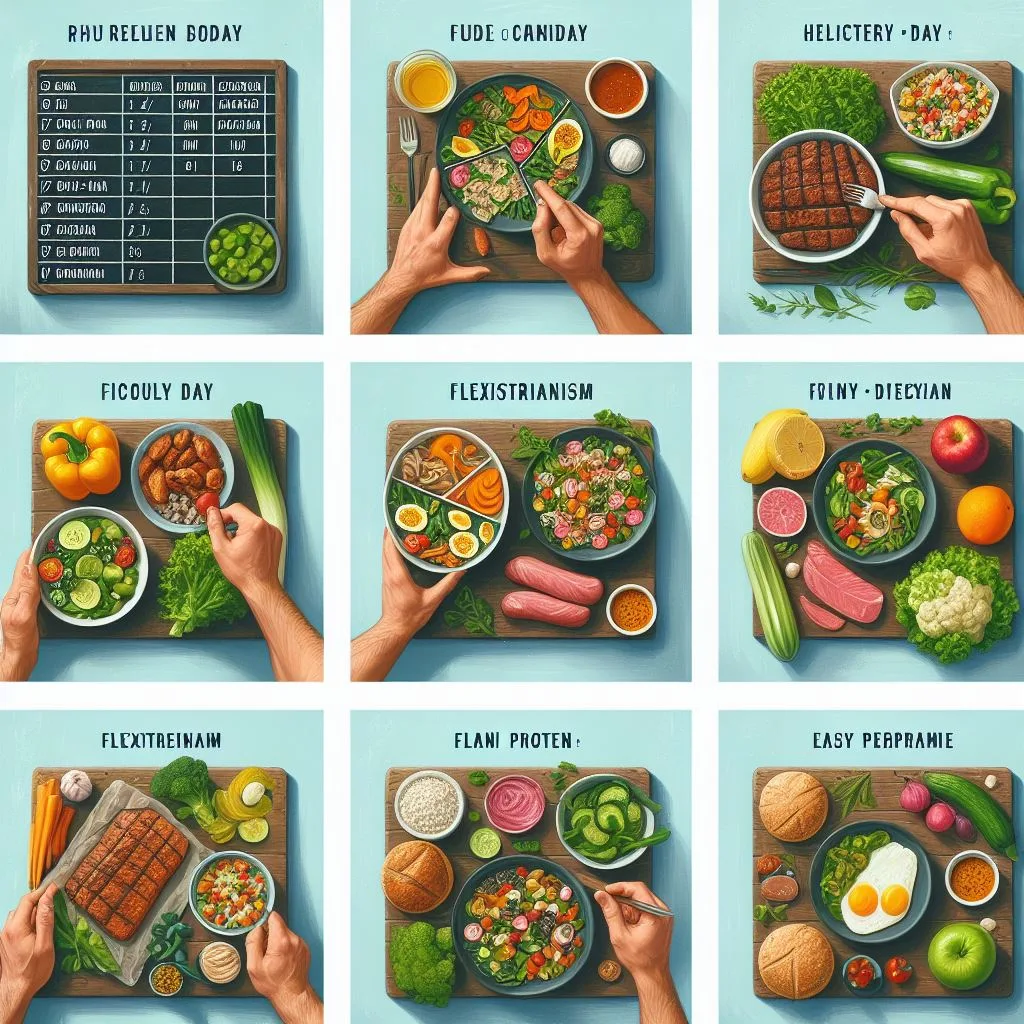
Are you looking to incorporate more plant-based meals into your diet without giving up meat entirely? The flexitarian diet might be the perfect fit for you. This 1-week flexitarian meal plan is designed to provide a balanced mix of vegetarian and meat-inclusive meals, ensuring you get a wide variety of nutrients while reducing your meat consumption. Let’s dive into a meal plan that will tantalize your taste buds and contribute to a healthier lifestyle.
What is a Flexitarian Diet?
The flexitarian diet is a marriage of two words: flexible and vegetarian. This diet style emphasizes plant-based foods while allowing meat and other animal products in moderation. It’s about adding to your diet more than subtracting from it and is known for its health benefits and environmental sustainability. Whether you’re a seasoned flexitarian or just starting, this meal plan is your guide to a balanced diet.
Monday: Kickstart Your Week
- Breakfast: Oatmeal with mixed berries and a drizzle of honey
- Lunch: Quinoa salad with chickpeas, cucumbers, and a lemon-tahini dressing
- Dinner: Grilled chicken with roasted vegetables and wild rice
Tuesday: Tasty Twists
- Breakfast: Greek yogurt with granola and sliced bananas
- Lunch: Turkey and avocado wrap with a side of carrot sticks
- Dinner: Vegetarian stir-fry with tofu, broccoli, bell peppers, and brown rice
Wednesday: Midweek Balance
- Breakfast: Smoothie bowl with spinach, banana, almond milk, and chia seeds
- Lunch: Lentil soup with a slice of whole-grain bread
- Dinner: Baked salmon with a quinoa and arugula salad
Thursday: Flavor Fusion
- Breakfast: Avocado toast with poached eggs
- Lunch: Asian-style kale salad with edamame and ginger dressing
- Dinner: Whole wheat pasta with roasted tomato sauce and seasonal vegetables
Friday: End the Week Strong
- Breakfast: Chia pudding with fresh mango and coconut flakes
- Lunch: Black bean burger with sweet potato fries
- Dinner: Grilled shrimp skewers with a mixed greens salad
Saturday & Sunday: Weekend Variety
Weekends are perfect for experimenting with new recipes or indulging in your favorite dishes. Try making a vegetarian pizza on Saturday and enjoy a family barbecue with lean cuts of meat on Sunday.
Mastering the Flexitarian Pantry Essentials
Transitioning to a flexitarian lifestyle is significantly easier when your kitchen is stocked with versatile staples that bridge the gap between plant-based and meat-inclusive cooking. Unlike a strictly vegan pantry, a flexitarian one focuses on longevity and flavor density. Start with high-quality grains that provide a robust texture, such as farro, freekeh, or pearled barley. These grains offer a chewy, satisfying mouthfeel that mimics the density of meat, making them excellent bases for bowls where meat is used sparingly or omitted entirely.
Legumes are the backbone of this diet, but the key is variety. Beyond the standard chickpeas and black beans mentioned in the initial meal plan, consider keeping red lentils for quick-cooking soups and beluga (black) lentils for salads, as they hold their shape remarkably well. Nutritional yeast is another essential; its nutty, cheesy flavor provides an umami punch to roasted vegetables and popcorn, satisfying cravings for dairy without the heavy saturated fats. For those days when you do incorporate meat, keep high-impact animal fats like ghee or a small jar of high-quality anchovies in the fridge. Anchovies, when melted into a tomato sauce or sautéed with kale, provide a deep savory note that allows you to use less actual meat while still achieving a rich, complex flavor profile.
Don’t overlook the importance of “flavor bridges.” These are ingredients like miso paste, soy sauce, smoked paprika, and liquid smoke. These items can make plant proteins like tofu or tempeh taste remarkably similar to grilled or smoked meats. For example, marinating tempeh in a mixture of maple syrup, soy sauce, and smoked paprika creates a “bacon” alternative that pairs perfectly with the avocado toast mentioned for Thursday’s breakfast. By having these tools at your disposal, you reduce the psychological friction of choosing a meatless meal over a traditional one.
Strategic Meal Prepping for the Hybrid Kitchen
The biggest challenge for many new flexitarians is the perceived complexity of preparing two different styles of food. The solution lies in “component prepping” rather than full-meal prepping. Instead of making five identical containers of a single dish, focus on preparing large batches of neutral bases that can be customized with either plant or animal proteins throughout the week. For instance, roast a massive tray of seasonal vegetables—think Brussels sprouts, sweet potatoes, and red onions—tossed only in olive oil, salt, and pepper. Half of these can be tossed with the Monday quinoa salad, while the other half can serve as the bed for Wednesday’s baked salmon.
Another effective strategy is the “Mother Sauce” technique. Prepare one large batch of a versatile sauce, such as a lemon-tahini dressing or a spicy peanut sauce, at the start of the week. This sauce can unify disparate ingredients, making a bowl of leftover chicken and rice feel cohesive with a bowl of tofu and broccoli. When prepping grains, cook them in vegetable or chicken bone broth rather than plain water. This adds a layer of collagen and minerals to your plant-based meals, providing some of the nutritional benefits of animal products even on your meatless days.
Edge cases often arise during busy weeknights when you might be tempted to grab fast food. To combat this, always keep a “flexitarian emergency kit” in your freezer. This should include high-quality frozen vegetables and a mix of protein options: perhaps a bag of frozen edamame and a small portion of pre-cooked grass-fed ground beef or turkey. This allows you to assemble a balanced meal in under ten minutes, whether you decide to go fully vegetarian that night or include a small amount of meat for extra satiety.
The Art of Meat as a Condiment
One of the most sustainable ways to approach flexitarianism is to stop viewing meat as the “hero” of the plate and start treating it as a high-value condiment. This shift in perspective allows you to enjoy the flavors and textures of animal products while drastically reducing the total volume consumed. For example, instead of a whole chicken breast per person, try dicing a single breast and folding it into a large pot of vegetable-heavy fried rice or a Mediterranean pasta dish. The meat provides bursts of flavor and protein, but the bulk of the meal comes from fiber-rich plants.
Consider using cured meats for this purpose. A small amount of high-quality pancetta, chorizo, or smoked ham can flavor an entire pot of white bean stew. This method, often found in traditional Mediterranean and Asian cuisines, maximizes the sensory experience of meat. When applying this to the Friday dinner of shrimp skewers, you might alternate one shrimp with three or four chunks of bell pepper, zucchini, and pineapple. You still get the grilled seafood experience, but the vegetable-to-meat ratio is shifted in favor of plants.
This approach also helps with budgeting. By using meat as a garnish, you can afford to buy higher-quality, ethically raised, or organic meats that might be too expensive if they were the primary component of every meal. It turns a luxury ingredient into a functional flavor enhancer, making the transition to a plant-forward diet feel like an upgrade in culinary sophistication rather than a sacrifice of favorite foods.
Navigating Social Dynamics and Dining Out
Social situations can be a hurdle when you are the only one at the table following a flexible dietary pattern. The key is clear communication without being prescriptive. When invited to a dinner party, you don’t need to label yourself; simply mention that you are “eating mostly plant-based lately” but are happy to eat whatever is served. Flexitarianism’s greatest strength is its lack of rigidity. If a host serves a traditional pot roast, you can enjoy a smaller portion of the meat and load up on the accompanying vegetables and grains without breaking your “rules.”
When dining out, look for cuisines that naturally favor flexitarian principles. Middle Eastern restaurants are excellent, offering spreads of hummus, baba ganoush, and tabbouleh that can be supplemented with a single side of grilled lamb or chicken for the table to share. Similarly, at a steakhouse—often the most difficult environment for plant-forward eaters—you can create a gourmet meal by ordering several vegetable side dishes (like creamed spinach, roasted mushrooms, and a baked potato) and perhaps sharing a small appetizer-sized portion of steak with a partner.
In professional settings or while traveling, the “Sides as Mains” strategy is invaluable. Most menus have a wealth of plant-based side dishes that are often more creatively prepared than the standard meat-heavy entrees. Combining a side of sautéed greens, a small salad, and a bowl of soup often results in a more nutritionally diverse and satisfying meal than a single large burger. This flexibility ensures that your diet adapts to your life, rather than forcing your life to revolve around your diet.
Optimizing Nutrient Absorption in a Plant-Forward Diet
While the flexitarian diet is inherently healthy, reducing meat intake requires a more conscious approach to certain micronutrients, particularly iron, zinc, and Vitamin B12. Plant-based iron (non-heme iron) is not as easily absorbed by the body as the heme iron found in meat. To optimize absorption, always pair iron-rich plant foods like lentils, spinach, and pumpkin seeds with a source of Vitamin C. For the Monday lunch of quinoa and chickpeas, adding a squeeze of fresh lemon juice or serving it with sliced bell peppers significantly increases the amount of iron your body can utilize.
Zinc is another mineral to watch. It is found in legumes and whole grains, but these foods also contain phytates, which can bind to zinc and prevent its absorption. You can mitigate this by soaking dried beans and grains before cooking or by choosing leavened whole-grain breads (like the one suggested for Wednesday’s lunch), as the fermentation process breaks down phytates. Since flexitarians still eat some meat and shellfish, these animal products act as a “safety net,” providing highly bioavailable zinc that bridges the gap left by plant sources.
Vitamin B12 is only naturally found in animal products. While a flexitarian diet includes meat, eggs, and dairy, the frequency might not be high enough for everyone to maintain optimal levels, especially for those on the more restrictive end of the flexitarian spectrum. Including fortified foods like certain plant milks or nutritional yeast can help. If you find yourself eating meat less than twice a week, it may be worth discussing a B12 supplement with a healthcare provider to ensure your energy levels and neurological health remain peak.
Sustainability and Ethical Sourcing of Animal Products
A primary motivation for many flexitarians is environmental impact. Reducing meat consumption is one of the most effective ways to lower your individual carbon footprint, as plant-based proteins generally require significantly less water and land. However, the *type* of meat you choose for your “flex” meals also matters. When you do buy meat, look for labels like “Pasture-Raised,” “Grass-Fed,” or “MSC Certified” for seafood. These certifications generally indicate farming and fishing practices that are more respectful of ecosystems and animal welfare.
Supporting local regenerative agriculture is another way to align your diet with environmental goals. Regenerative farming focuses on soil health, which can actually sequester carbon back into the earth. By purchasing meat from a local farmer’s market, you reduce the “food miles” associated with your meal and support a system that prioritizes long-term ecological balance over short-term industrial yield. This turns your occasional meat consumption into an intentional act of environmental stewardship rather than a mindless habit.
Furthermore, consider the “lower on the food chain” principle when selecting animal products. Small fish like sardines or mackerel are highly nutritious, rich in Omega-3s, and have a much lower environmental impact than large predatory fish like tuna or swordfish. Similarly, bivalves like mussels and oysters are among the most sustainable animal proteins on the planet, as they actually filter and clean the water they live in. Integrating these into your weekend variety can satisfy cravings for animal protein while maintaining a very low ecological impact.
Weekend Culinary Exploration: Detailed Recipes
The original meal plan suggests experimenting on the weekends, but having a concrete starting point can prevent the “what’s for dinner?” fatigue. For Saturday, try a **Mushroom and Walnut “Bolognese.”** By pulsing mushrooms and walnuts in a food processor until they reach a crumbly consistency and then sautéing them with onions, garlic, and tomato paste, you create a hearty, meaty texture that satisfies the soul. Serve this over whole-wheat pasta or polenta. The walnuts provide essential Omega-3 fatty acids, while the mushrooms offer that deep umami flavor often associated with beef.
For Sunday’s family barbecue, instead of traditional heavy burgers, try **Lamb and Lentil Koftas.** Mix a half-pound of ground lamb with two cups of cooked brown lentils. Season heavily with cumin, coriander, and fresh parsley. The lentils stretch the meat, making it leaner and higher in fiber, while the lamb provides the signature richness and aroma of a classic grill. Serve these in pita pockets with the lemon-tahini dressing you prepped earlier in the week. This dish perfectly encapsulates the flexitarian philosophy: it doesn’t ask you to give up the flavors of a barbecue, but it rebalances the ingredients to favor health and sustainability.
If you prefer a seafaring weekend, consider a **Sheet Pan Roasted Branzino with Fennel.** Roasting a whole fish is often more sustainable and flavorful than buying processed fillets. Surround the fish with thick slices of fennel and citrus. The vegetables roast in the juices of the fish, creating a sophisticated, one-pan meal that feels like a celebration. These weekend experiments help you build a repertoire of “crowd-pleaser” meals that prove a plant-forward diet is never about deprivation, but rather about discovering a wider world of culinary possibilities.
FAQ Section
What are the benefits of a flexitarian diet?
A flexitarian diet can lead to weight loss, improved heart health, and a lower risk of diabetes. It can also contribute to sustainability by reducing your carbon footprint.
Can I still eat dairy and eggs on a flexitarian diet?
Yes, a flexitarian diet allows for dairy and eggs. The focus is on moderation and plant-based nutrition, but animal products are not completely excluded.
How can I ensure I’m getting enough protein on this diet?
Incorporate a variety of protein sources, such as legumes, nuts, seeds, tofu, and occasional servings of meat and fish.
Is a flexitarian diet expensive?
Not necessarily. Plant-based foods like beans and lentils are often less expensive than meat. Planning and preparing meals at home can also help save money.
Can children follow a flexitarian diet?
Yes, children can follow a flexitarian diet. Ensure they get a variety of foods to meet their nutritional needs. Consulting a pediatrician or a dietitian is recommended when making significant dietary changes for children.
Related posts:
 Magic Avocado Sauce Recipe
 The Plant-Based Revolution Is Just Getting Started
 TGI Friday’s Just Started Serving Beyond Meat and Everything Has Changed
 Beyond Breakfast: The Plant-Based Sausage That’s Changing the Morning Game
 Understanding Meat Extenders
 Pegan Diet Explained: The Paleo-Vegan Hybrid Taking Over
 Vegan vs Plant-Based: Which is Healthier?
 4 Soy Sauce Substitutes for Cooking