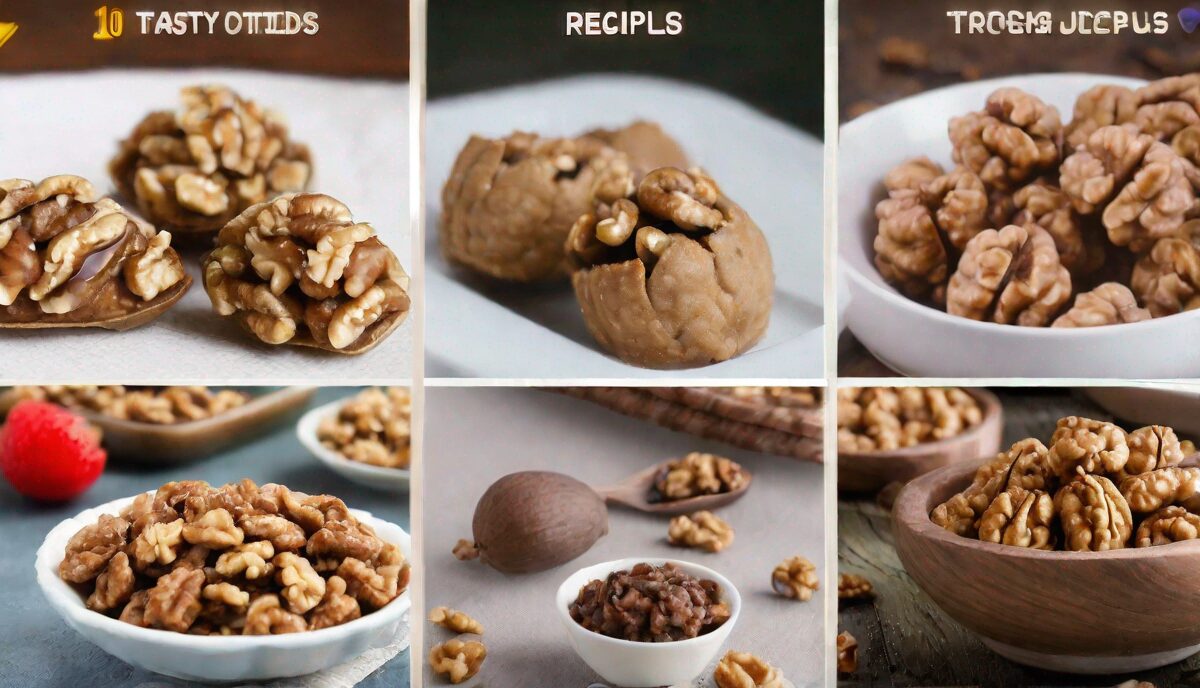
The Nutritional Benefits of Walnuts
Walnuts are full of healthy fats, protein, fiber, vitamins, and minerals. They are considered a superfood because they provide important health benefits like improving heart health, brain function, and anti-inflammatory properties.
10 Tasty Walnut Recipes
1. Walnut Pesto Pasta
This sauce is creamy, nutty, and full of flavor thanks to fresh basil, garlic, and grated parmesan. Simply toss it with your favorite pasta shape like farfalle or penne.
2. Walnut-Stuffed Dates
A healthy sweet snack made by stuffing dates with a creamy walnut filling. Kids will love the natural sweetness.
3. Walnut Granola
Crunchy granola is made extra nutritious with the addition of chopped walnuts. Eat with yogurt or milk for breakfast.
4. Fig and Walnut Crostini
An elegant appetizer featuring fig jam, goat cheese, and chopped walnuts atop toasted baguette slices.
5. Maple Walnut Blondies
Buttery blondies dotted with toasted walnuts and swirled with maple syrup for a delicious dessert or snack.
6. Autumn Apple and Walnut Salad
Fresh apples, celery, dried cranberries, and crunchy walnuts make this seasonal salad special.
7. Candied Walnuts
Coated in a sweet and spicy mixture, these crunchy candied walnuts make a perfect party snack.
8. Walnut Pancakes
Fluffy whole wheat pancakes dotted with chopped walnuts is a tasty and nutritious breakfast the whole family will love.
9. Walnut Bread
This whole grain quick bread is packed with chopped walnuts for great texture and full nutty flavor.
10. Walnut Cookies
Chewy oatmeal cookies full of walnuts and raisins make a classic after school snack for kids.
Elevating Flavor Profiles: The Science of Toasting and Soaking Walnuts
While raw walnuts are incredibly healthy, mastering the preparation techniques of toasting and soaking can fundamentally change their culinary application. Toasting walnuts initiates the Maillard reaction, a chemical process between amino acids and reducing sugars that creates a complex, savory depth and a more brittle, satisfying crunch. To achieve an even toast, spread the halves on a rimmed baking sheet in a single layer and bake at 350°F (175°C) for 8 to 10 minutes. The key is to rely on your sense of smell; once the kitchen fills with a rich, nutty aroma, they are ready. For a more controlled approach, stovetop toasting in a dry cast-iron skillet over medium heat allows you to toss the nuts frequently, ensuring the delicate oils don’t scorch.
Beyond toasting, many culinary enthusiasts and nutritionists recommend “activating” walnuts through soaking. This process involves submerging the nuts in filtered water with a pinch of sea salt for 4 to 8 hours. Soaking helps reduce the concentration of phytic acid and tannins found in the skins, which can sometimes interfere with nutrient absorption and contribute to a bitter aftertaste. After soaking, the walnuts must be dehydrated at a very low temperature (around 115°F or 46°C) until they are completely crisp again. This results in a “cleaner” flavor profile that is particularly beneficial when using walnuts in delicate desserts or creamy purees where the natural astringency of the skin might otherwise be overpowering.
Walnuts as a Savory Plant-Based Meat Alternative
One of the most versatile uses for walnuts in a modern kitchen is their ability to mimic the texture and richness of ground meat. Because walnuts are high in fat and have a dense structure, they provide a satisfying mouthfeel that many other plant-based proteins lack. To create a “walnut meat” base, pulse raw walnuts in a food processor with browned cremini mushrooms in a 1:1 ratio. The mushrooms provide umami and moisture, while the walnuts provide the “chew” and structural integrity. This mixture can be seasoned with cumin, smoked paprika, and chili powder for taco fillings, or with oregano, garlic, and fennel for a plant-based Bolognese sauce.
When cooking with walnut-based meat substitutes, it is important to add them toward the end of the browning process if you are making a sauce, or to bake them if you are making crumbles. Unlike animal proteins, walnuts do not need to reach a specific internal temperature to be safe, but they do benefit from a brief period of high heat to develop a crust. For a “walnut chorizo,” try blending the nuts with rehydrated guajillo chilies and apple cider vinegar. The acidity of the vinegar cuts through the richness of the walnut oils, creating a balanced flavor profile that holds up beautifully in breakfast burritos or atop loaded sweet potatoes. This approach not only caters to vegan diets but also provides a heart-healthy alternative for those looking to reduce their saturated fat intake.
International Inspirations: Traditional Walnut-Based Sauces and Stews
While many people view walnuts primarily as a snack or a baking ingredient, several global cuisines treat them as a foundational element for savory sauces. In Persian cuisine, the dish *Fesenjan* is a masterclass in walnut utility. This rich, dark stew utilizes finely ground walnuts that are simmered for hours with pomegranate molasses and chicken or duck. As the walnuts cook, they release their natural oils, thickening the sauce into a velvety, complex gravy that is simultaneously sweet, tart, and deeply savory. The secret to a perfect Fesenjan is the slow release of these oils; if the heat is too high, the sauce can break, but a gentle simmer transforms the ground nuts into a luxurious emulsion.
Similarly, the nation of Georgia is famous for its use of walnuts in *Satsivi*, a cold poultry dish served in a thick walnut sauce. Unlike the cooked-down walnuts in Persian stews, Satsivi relies on a paste of raw walnuts blended with garlic, dried marigold (Georgian saffron), cloves, and cinnamon. The sauce is thinned with broth but remains thick enough to coat the back of a spoon. Another notable mention is the Middle Eastern dip *Muhammara*, made from roasted red peppers, walnuts, breadcrumbs, and Aleppo pepper. Here, the walnuts act as both a thickener and a flavor balancer, tempering the heat of the peppers and the acidity of the lemon juice. Incorporating these international techniques into your repertoire allows you to move beyond the “sprinkling” of nuts and instead use them as a structural culinary component.
The Science of Baking with Walnut Flour and Oils
For those looking to experiment with gluten-free or grain-free baking, walnut flour (often called walnut meal) offers a rich, moist alternative to traditional flours. You can make your own walnut flour by pulsing cold walnuts in a food processor until they reach a fine, sandy consistency. However, a common pitfall is over-processing, which quickly turns the meal into walnut butter due to the high oil content. To prevent this, add a tablespoon of the dry flour from your recipe (or a bit of sugar) to the processor; the dry granules will absorb the oil as it is released, keeping the meal light and fluffy.
In terms of chemistry, walnut flour behaves differently than wheat flour because it lacks gluten and has a much higher fat content. When substituting walnut meal for all-purpose flour, it is generally best to start with a 25% substitution to maintain the structural integrity of the bake. For 100% walnut-based cakes, such as a traditional Italian *Torta di Noci*, eggs are the primary leavening and binding agent. Furthermore, don’t overlook walnut oil as a finishing touch or a partial fat replacement. While it has a low smoke point and shouldn’t be used for deep frying, substituting a portion of the butter in a cake recipe with walnut oil can produce a more tender crumb and a persistent nutty aroma that lingers long after the cake has cooled. Always store your walnut oil in the refrigerator, as its high polyunsaturated fat content makes it highly susceptible to oxidation.
Sophisticated Cheese and Charcuterie Pairings
The relationship between walnuts and cheese is one of the most celebrated pairings in the culinary world, rooted in the contrast between the nut’s earthy tannins and the creamy, salty profile of various cheeses. To create a professional-grade charcuterie board, it is essential to understand which walnuts suit which cheese families. For instance, the sharpness of an aged Blue Cheese, such as Roquefort or Gorgonzola Dolce, is perfectly countered by the slight bitterness of a raw walnut. The fat in the nut coats the palate, allowing the complex molds of the cheese to shine without being overwhelming.
For hard, aged cheeses like Manchego or Parmigiano-Reggiano, consider using honey-roasted or lightly salted walnuts. The crunch of the nut mirrors the crystalline texture of the aged cheese, while the sweetness of a honey coating provides a bridge to the cheese’s nutty, pineapple-like notes. When pairing with soft, bloomy-rind cheeses like Brie or Camembert, try a walnut conserva—walnuts preserved in a light syrup or brandy. The softness of the preserved nut complements the gooey texture of the cheese. To round out the pairing, include acidic elements like sliced Granny Smith apples or pickled grapes, which cut through the heavy fats of both the walnut and the cheese, refreshing the palate for the next bite.
Creating Homemade Walnut Dairy Alternatives
As plant-based milks continue to grow in popularity, walnut milk stands out for its distinctively creamy texture and high Omega-3 content. Unlike almond milk, which can sometimes feel thin, walnut milk has a natural viscosity that makes it an excellent addition to coffee or lattes, as it froths surprisingly well. To make it at home, blend one cup of soaked walnuts with three to four cups of filtered water, a pinch of salt, and a date for sweetness. Straining the mixture through a fine-mesh nut milk bag is crucial to achieve a silky consistency. The leftover pulp shouldn’t be discarded; it can be stirred into oatmeal, added to muffin batters, or seasoned and dried into “crackers.”
For a thicker application, walnut cream can be used as a vegan substitute for heavy cream in savory soups or as a base for dairy-free ice cream. To make walnut cream, simply reduce the water-to-nut ratio to 1.5:1. This thick liquid can be whisked into a wild mushroom soup or a butternut squash puree to add richness without the heaviness of dairy. Because walnuts contain natural emulsifiers, the cream stays stable even when introduced to acidic environments, such as a tomato-based vodka sauce. This makes it a superior choice for vegan cooking compared to some other nut milks that may separate or curdle when heated or mixed with acid.
Troubleshooting Common Issues with Walnut Quality and Texture
Working with walnuts requires a degree of quality control to ensure the best results, particularly because their high oil content makes them prone to spoilage. The most common issue is rancidity, which occurs when the unsaturated fats are exposed to heat, light, or oxygen. You can identify rancid walnuts by a sharp, paint-thinner-like smell or a distinctively harsh, soapy taste. To prevent this, always buy walnuts from a high-turnover source and store them in the freezer if you don’t plan to use them within a month. Cold temperatures significantly slow down the oxidation process, preserving the delicate flavor of the oils for up to a year.
FAQ
What are some health benefits of walnuts?
Walnuts provide important nutrients like healthy fats, protein, fiber, magnesium, and antioxidants. They are good for heart health, brain health, anti-inflammatory benefits, and balancing blood sugar.
Are walnuts good for weight loss?
Yes, walnuts can be part of a healthy weight loss plan because they provide satiety from protein and fiber so you feel fuller longer. The healthy fats also curb cravings. Just watch portion sizes.
What is the best way to store walnuts?
Store walnuts in an airtight container in the refrigerator or freezer to prevent them from going rancid. They will keep for 6-12 months properly stored.
Can you eat walnut shells?
No, you should not eat the hard outer shell of walnuts. Only the edible meat inside the shells should be consumed. The shell can be very difficult to digest.
Are walnuts good for the environment?
Yes, walnuts have a very positive environmental impact! As native trees requiring no irrigation, walnut orchards actively sequester carbon dioxide as the trees grow. Supporting sustainable local walnut farming is earth-friendly.
Related posts:
 Guilt-Free Cinnamon Roll Recipe
 Almond Flour or Meal: How to Use It and Where to Get It
 4 Soy Sauce Substitutes for Cooking
 Beyond Breakfast: The Plant-Based Sausage That’s Changing the Morning Game
 Magic Avocado Sauce Recipe
 Sweet Tooth Salvation: Sugar-Free Keto Dessert Bites That Actually Taste Amazing
 Mark Hyman’s Guide to Good Fats That Heal Your Body
 15-Minute Dairy-Free Dinner Ideas