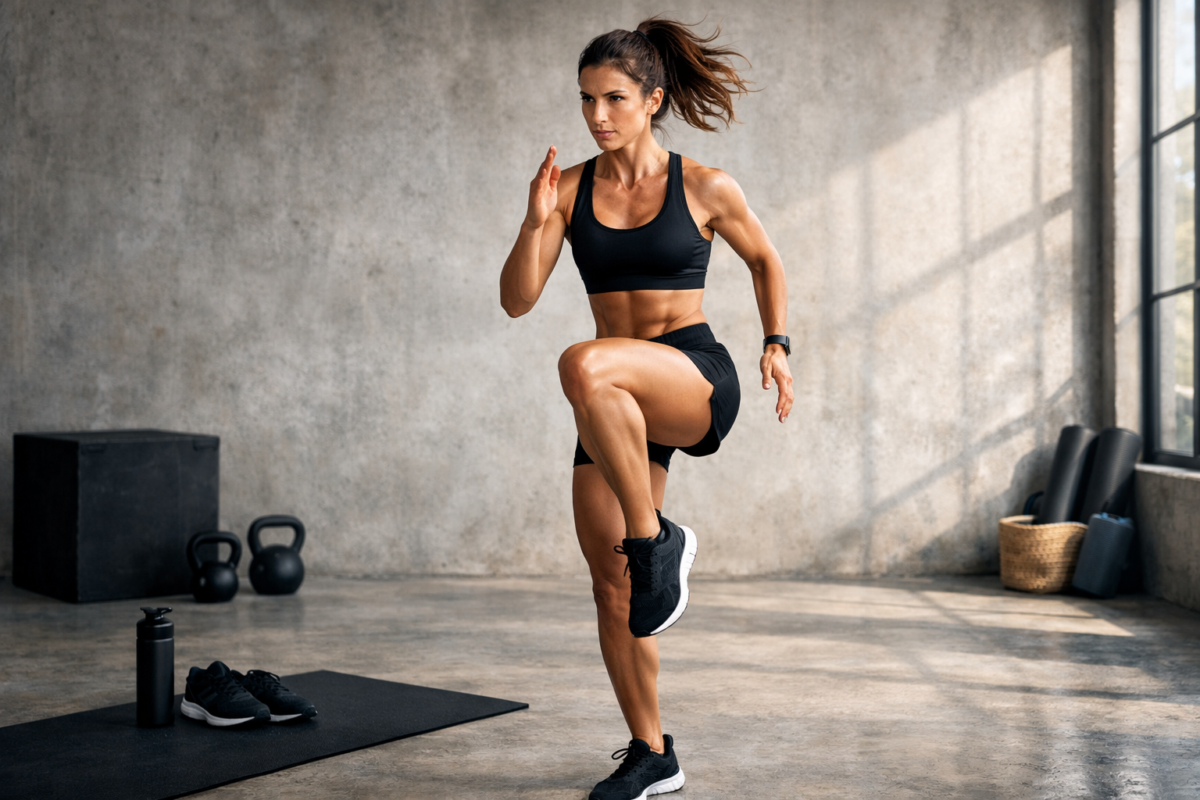
When time is tight but you still want an effective workout, a 15-minute no-equipment HIIT (High-Intensity Interval Training) session can be the perfect solution. HIIT workouts are designed to maximize calorie burn, improve cardiovascular health, and build strength in minimal time. By alternating between short bursts of intense exercise and brief recovery periods, you can achieve impressive results without stepping into a gym or using any equipment.
This guide will walk you through the benefits of HIIT, how to structure a 15-minute session, and a full workout plan you can follow at home. Whether you’re a beginner or an experienced exerciser, these routines are adaptable to your fitness level and can be done anywhere.
Why Choose a 15-Minute No-Equipment HIIT Workout?
HIIT workouts are incredibly efficient. Research shows that even short sessions can improve endurance, boost metabolism, and promote fat loss. Unlike steady-state cardio, which requires longer durations to achieve similar benefits, HIIT delivers results in a fraction of the time. Additionally, the lack of equipment means you can do these workouts at home, while traveling, or during a lunch break, making them highly accessible.
Another advantage is the afterburn effect, or Excess Post-Exercise Oxygen Consumption (EPOC). This means your body continues to burn calories at a higher rate even after the workout is over, as it works to recover and return to its resting state. For busy individuals, this makes HIIT an ideal choice for fitting fitness into a packed schedule.
The Science Behind HIIT
HIIT alternates between high-intensity exercises and low-intensity recovery periods. This approach challenges both your aerobic and anaerobic systems, leading to improvements in cardiovascular fitness and muscle endurance. Studies have shown that HIIT can:
- Increase VO2 max (a measure of cardiovascular fitness) more effectively than moderate-intensity exercise.
- Improve insulin sensitivity, which helps regulate blood sugar levels.
- Enhance fat oxidation, allowing your body to use fat as fuel more efficiently.
Because these workouts are so intense, they also stimulate muscle growth, particularly in fast-twitch muscle fibers, which are engaged during explosive movements.
Structuring Your 15-Minute HIIT Workout
A well-structured HIIT session includes a warm-up, the main workout, and a cool-down. Here’s how to break it down:
- Warm-Up (2-3 minutes): Prepare your body for the intense effort ahead with dynamic movements like jumping jacks, high knees, or arm circles. This increases blood flow to your muscles and reduces the risk of injury.
- Main Workout (10-12 minutes): Alternate between 30-45 seconds of high-intensity exercise and 15-30 seconds of rest or low-intensity movement. Aim for 3-4 rounds of 4-5 exercises each.
- Cool-Down (2-3 minutes): Gradually lower your heart rate with static stretches or gentle movements like walking in place or deep breathing.
This structure ensures you get the most out of your 15 minutes while minimizing the risk of overtraining or injury.
15-Minute No-Equipment HIIT Workout Plan
Here’s a full-body HIIT routine you can do anywhere. Perform each exercise for 40 seconds, followed by 20 seconds of rest. Complete 3 rounds of the following circuit:
- Jump Squats: Start in a squat position, then explode upward, jumping as high as you can. Land softly and immediately lower back into a squat. This exercise works your legs, glutes, and core while getting your heart rate up.
- Push-Ups: Place your hands shoulder-width apart and lower your chest to the ground, then push back up. If standard push-ups are too challenging, modify by keeping your knees on the ground. This targets your chest, shoulders, and triceps.
- Mountain Climbers: Start in a plank position and alternate bringing your knees to your chest as quickly as possible. This engages your core, shoulders, and hips while elevating your heart rate.
- Burpees: Drop into a squat, place your hands on the ground, kick your feet back into a plank, do a push-up, then jump your feet back to your hands and explode upward with a jump. Burpees are a full-body exercise that combines strength and cardio.
- Plank Shoulder Taps: In a plank position, tap your right hand to your left shoulder, then your left hand to your right shoulder. Keep your hips stable to avoid rocking. This works your core, shoulders, and glutes.
If you’re a beginner, reduce the intensity by slowing down the movements or shortening the work intervals to 20-30 seconds. For a greater challenge, extend the work intervals to 45-50 seconds or add a fourth round.
Modifications for All Fitness Levels
HIIT workouts are highly adaptable. Here’s how to tailor the exercises to your fitness level:
For Beginners:
- Replace jump squats with bodyweight squats to reduce impact.
- Do push-ups on your knees or against a wall to decrease difficulty.
- Slow down mountain climbers or step one foot at a time instead of running them.
- Skip the push-up in burpees and simply step back into a plank and step forward.
- Shorten the plank shoulder taps to 10-15 seconds if holding a plank is challenging.
For Intermediate/Advanced:
- Add a tuck jump at the top of your jump squats for extra intensity.
- Try diamond push-ups (hands close together) or decline push-ups (feet elevated) to increase difficulty.
- Speed up mountain climbers or add a knee drive to your chest for more core engagement.
- Add a jump at the end of your burpees to increase the cardio challenge.
- Hold a weighted object (like a backpack or water bottle) during plank shoulder taps for added resistance.
Common Mistakes to Avoid
To get the most out of your HIIT workout and prevent injury, avoid these common pitfalls:
- Skipping the Warm-Up: Jumping into high-intensity exercises without warming up can lead to muscle strains or joint stress. Always take 2-3 minutes to prepare your body.
- Poor Form: Sacrificing form for speed or reps increases the risk of injury. Focus on quality over quantity, especially in exercises like push-ups or squats.
- Overtraining: HIIT is demanding on your body. Limit these workouts to 2-4 times per week, with rest days in between to allow for recovery.
- Ignoring Recovery: The rest intervals are just as important as the work intervals. Use this time to catch your breath and prepare for the next round.
- Not Listening to Your Body: If you feel dizzy, overly fatigued, or experience pain (not to be confused with discomfort), stop and rest. Pushing through extreme fatigue can lead to injury.
Maximizing Results with Nutrition and Hydration
To support your HIIT efforts, fuel your body with the right nutrients and stay hydrated. Here are some tips:
- Pre-Workout: Eat a light, carbohydrate-rich snack 30-60 minutes before your workout for energy. Examples include a banana, a handful of nuts, or a small bowl of oatmeal.
- Post-Workout: Consume a mix of protein and carbohydrates within 30-60 minutes after your workout to aid muscle recovery and replenish glycogen stores. A smoothie with Greek yogurt and fruit or a chicken and veggie wrap are great options.
- Hydration: Drink water before, during, and after your workout. Dehydration can lead to fatigue, dizziness, and reduced performance. Aim for at least 8 ounces of water 20-30 minutes before exercise and sip throughout the day.
Avoid heavy meals right before a HIIT session, as they can cause discomfort or sluggishness.
Tracking Progress and Staying Motivated
Consistency is key to seeing results from HIIT. Track your progress to stay motivated and celebrate small wins. Here’s how:
- Log Your Workouts: Keep a journal or use a fitness app to record the exercises, intervals, and how you felt during each session. Over time, you’ll notice improvements in endurance and strength.
- Set Goals: Whether it’s completing an extra round, increasing your work interval time, or nailing a difficult exercise, set specific, achievable goals to keep pushing yourself.
- Mix It Up: Prevent boredom by trying new exercises or varying the workout structure. For example, swap out burpees for jumping lunges or add a new exercise each week.
- Find a Buddy: Partnering with a friend for virtual or in-person workouts can add accountability and make the experience more enjoyable.
- Celebrate Milestones: Reward yourself for sticking to your routine, whether it’s a new workout outfit, a rest day, or a fun activity.
Advanced HIIT Techniques for Seasoned Athletes
Once you’ve mastered the basics of 15-minute no-equipment HIIT, you can incorporate advanced techniques to further challenge your body and break through plateaus. These methods are designed to push your limits, improve athletic performance, and keep your workouts fresh. Below are some of the most effective strategies, along with examples of how to integrate them into your routine.
Pyramid Intervals
Pyramid intervals involve gradually increasing and then decreasing the duration or intensity of your work periods while keeping rest intervals consistent. This approach builds endurance and mental toughness by forcing you to adapt to changing demands. For example:
- 30s work / 15s rest (e.g., burpees)
- 45s work / 15s rest (e.g., mountain climbers)
- 60s work / 15s rest (e.g., jump squats)
- 45s work / 15s rest (e.g., push-ups)
- 30s work / 15s rest (e.g., plank shoulder taps)
This structure can be repeated for 2-3 rounds, with a 1-minute rest between rounds. Pyramid intervals are particularly effective for improving cardiovascular capacity and teaching your body to sustain effort under fatigue.
EMOM (Every Minute on the Minute)
EMOM workouts require you to complete a set number of reps or a specific task at the start of every minute, then rest for the remainder of the minute. This method keeps your heart rate elevated while allowing for brief recovery periods. Here’s an example of a 10-minute EMOM circuit:
- Minute 1: 15 jump squats
- Minute 2: 12 push-ups
- Minute 3: 20 mountain climbers (10 per leg)
- Minute 4: 8 burpees
- Minute 5: 30-second plank hold
- Repeat for a second round.
EMOM workouts are highly customizable. For a greater challenge, increase the reps or add more complex movements, like pistol squats or handstand push-ups (if you have the strength and space).
AMRAP (As Many Rounds As Possible)
AMRAP workouts challenge you to complete as many rounds of a circuit as possible within a set time frame. This method is excellent for building mental resilience and pushing your physical limits. For example, set a timer for 12 minutes and complete the following circuit repeatedly:
- 10 jump squats
- 10 push-ups
- 10 mountain climbers (per leg)
- 5 burpees
Track your rounds and aim to beat your personal best in future sessions. To increase difficulty, add more reps or include advanced variations, such as clap push-ups or single-leg burpees.
Tabata-Style HIIT
Tabata is a form of HIIT that follows a strict 20 seconds of work / 10 seconds of rest protocol, repeated for 8 rounds (4 minutes total per exercise). This method is backed by research and is known for its efficiency in improving both aerobic and anaerobic fitness. Here’s a full-body Tabata workout:
- Round 1-2: Burpees
- Round 3-4: Jump lunges
- Round 5-6: Plank to push-up (alternate between plank and push-up position)
- Round 7-8: High knees
Rest for 1 minute between exercises, then repeat the circuit for a second set. Tabata workouts are intense, so focus on maintaining proper form even as fatigue sets in.
Ladder Workouts
Ladder workouts involve incrementally increasing or decreasing the number of reps or time spent on an exercise. For example, a descending ladder might start with 10 reps of an exercise, then 9, 8, and so on, down to 1. Here’s an example of a ladder workout using bodyweight exercises:
- Burpees: 10, 9, 8, …, 1 reps
- Push-ups: 10, 9, 8, …, 1 reps
- Squat jumps: 10, 9, 8, …, 1 reps
Perform each exercise in sequence, with no rest between reps but a 30-second rest between exercises. This format is great for building endurance and mental focus.
These advanced techniques can be rotated into your routine to prevent adaptation and keep your body guessing. Experiment with different formats to find what challenges you the most and aligns with your fitness goals.
Incorporating Mobility and Flexibility into HIIT
While HIIT is primarily focused on strength and cardiovascular fitness, integrating mobility and flexibility exercises can improve your performance, reduce the risk of injury, and enhance recovery. Poor mobility can limit your range of motion, leading to inefficient movement patterns and increased strain on joints. By incorporating dynamic and static stretches into your HIIT routine, you can address these limitations and move more effectively.
Dynamic Mobility Drills for Warm-Ups
Dynamic mobility drills are ideal for warming up before a HIIT session. These movements take your joints through their full range of motion while increasing blood flow and muscle temperature. Here are some effective dynamic drills to include in your warm-up:
- Leg Swings: Stand on one leg and swing the other leg forward and backward, then side to side, for 10 reps per leg. This targets your hips and hamstrings.
- Arm Circles: Extend your arms out to the sides and make small to large circles, first clockwise, then counterclockwise, for 10 reps in each direction. This warms up your shoulders and upper back.
- World’s Greatest Stretch: Step into a lunge, place your opposite hand on the ground, and rotate your torso upward, reaching your arm toward the ceiling. Hold for 2-3 seconds, then switch sides. This stretch engages your hips, hamstrings, and thoracic spine.
- Inchworms: From a standing position, bend down and walk your hands out to a plank, then walk them back to your feet. This targets your hamstrings, shoulders, and core.
- Hip Openers: Perform deep squats with your elbows inside your knees, gently pressing your knees outward. This opens up your hips and groin.
Spend 3-5 minutes on dynamic mobility drills before diving into your HIIT workout. These movements will prime your body for the demands of high-intensity exercise and help you move more efficiently.
Static Stretches for Cool-Downs
Static stretching is best reserved for the cool-down phase of your workout, as it helps relax your muscles and improve flexibility. Hold each stretch for 20-30 seconds, focusing on deep breathing to enhance relaxation. Here are some key static stretches to include:
- Downward Dog: From a plank position, lift your hips toward the ceiling, forming an inverted V with your body. Press your heels toward the ground to stretch your hamstrings and calves.
- Pigeon Stretch: From a downward dog, bring one knee forward and place it behind your wrist, extending the other leg behind you. Lower your torso toward the ground to stretch your hip flexors and glutes.
- Cobra Stretch: Lie on your stomach, place your hands under your shoulders, and lift your chest off the ground while keeping your pelvis down. This stretches your abdominals and lower back.
- Seated Forward Fold: Sit with your legs extended, hinge at your hips, and reach for your toes. This targets your hamstrings and lower back.
- Butterfly Stretch: Sit with the soles of your feet together, gently press your knees toward the ground, and lean forward slightly. This stretches your inner thighs and groin.
Incorporate 3-5 static stretches into your cool-down to promote recovery and maintain flexibility. Avoid bouncing or forcing stretches, as this can lead to injury.
Integrating Mobility into HIIT Circuits
You can also weave mobility exercises directly into your HIIT circuits to keep your joints limber and prevent stiffness. For example, add a 20-second mobility drill between rounds of high-intensity exercises. Here’s how you might structure it:
- Round 1: 40s jump squats / 20s rest / 40s push-ups / 20s rest / 20s hip openers (dynamic)
- Round 2: 40s burpees / 20s rest / 40s mountain climbers / 20s rest / 20s arm circles
- Round 3: 40s plank shoulder taps / 20s rest / 40s jump lunges / 20s rest / 20s world’s greatest stretch
This approach ensures that mobility work doesn’t feel like an afterthought and instead becomes a seamless part of your workout.
HIIT for Specific Goals: Strength, Endurance, and Fat Loss
While HIIT is a versatile training method, you can tailor your workouts to emphasize specific goals, such as strength, endurance, or fat loss. By adjusting variables like exercise selection, work-to-rest ratios, and intensity levels, you can create a HIIT program that aligns with your objectives.
HIIT for Strength
To focus on strength, prioritize exercises that target major muscle groups and incorporate progressive overload. This can be achieved by increasing the difficulty of movements or adding resistance (e.g., using a weighted backpack). Here’s a strength-focused HIIT workout:
- Pistol Squats (Single-Leg Squats): 30s per leg / 20s rest. Use a chair for support if needed.
- Archer Push-Ups: 30s / 20s rest. Shift your weight to one side as you lower, keeping the other arm extended.
- Single-Leg Glute Bridges: 30s per leg / 20s rest. Lift one leg and perform glute bridges to target your hamstrings and glutes.
- Plank to Side Plank: 30s per side / 20s rest. Rotate from a standard plank to a side plank to engage your obliques and shoulders.
- Burpee with Jump Tuck: 30s / 20s rest. Add a tuck jump at the top of the burpee to increase explosive power.
Complete 3-4 rounds, focusing on controlled movements and proper form. For added resistance, use a backpack filled with books or water bottles.
HIIT for Endurance
Endurance-focused HIIT workouts emphasize sustained effort and cardiovascular capacity. These workouts typically involve longer work intervals and shorter rest periods to simulate the demands of endurance sports. Here’s an example:
- Jump Rope (Imaginary or Real): 60s / 15s rest. If you don’t have a rope, mimic the motion.
- High Knees: 60s / 15s rest. Drive your knees as high as possible while maintaining a fast pace.
- Butt Kicks: 60s / 15s rest. Kick your heels toward your glutes to engage your hamstrings.
- Squat Jumps: 60s / 15s rest. Explode upward from a squat position to build leg endurance.
- Plank Jacks: 60s / 15s rest. Jump your feet in and out while in a plank position to elevate your heart rate.
Complete 3 rounds, with a 1-minute rest between rounds. To increase difficulty, reduce the rest time to 10 seconds or add a fourth round.
HIIT for Fat Loss
Fat loss-focused HIIT workouts prioritize calorie burn and metabolic conditioning. These workouts often incorporate full-body movements and minimal rest to maximize energy expenditure. Here’s a fat-burning HIIT circuit:
- Burpees: 45s / 15s rest
- Mountain Climbers: 45s / 15s rest
- Jump Squats: 45s / 15s rest
- Plank with Shoulder Taps: 45s / 15s rest
- Sprint in Place: 45s / 15s rest. Pump your arms and drive your knees high to simulate a sprint.
Complete 4 rounds, with a 30-second rest between rounds. For an extra challenge, add a finisher, such as 1 minute of maximum-effort burpees at the end of the workout.
By tailoring your HIIT workouts to your specific goals, you can optimize your results and stay motivated. Experiment with different formats to find what works best for you.
Mindset and Mental Strategies for HIIT Success
HIIT workouts are as much a mental challenge as they are a physical one. The high-intensity nature of these workouts can push you out of your comfort zone, making mental resilience a key factor in your success. Developing the right mindset and employing mental strategies can help you push through tough moments, stay consistent, and get the most out of every session.
The Power of Visualization
Visualization is a powerful tool used by elite athletes to enhance performance. Before starting your HIIT workout, take a few minutes to visualize yourself completing each exercise with perfect form and energy. Imagine the feeling of accomplishment as you finish the last round and the pride of pushing through the challenge.
During the workout, if you feel your energy waning, close your eyes briefly (if safe to do so) and visualize yourself powering through the remaining intervals. This mental rehearsal can help you stay focused and motivated, even when your body is screaming for a break.
Breaking Workouts into Manageable Chunks
HIIT workouts can feel overwhelming, especially when you’re staring down multiple rounds of intense exercises. To make them more manageable, break the workout into smaller, bite-sized chunks. Instead of thinking about the entire 15 minutes, focus on completing one exercise or one round at a time.
For example, tell yourself, “I only need to get through these 40 seconds of jump squats, then I can rest.” Once you’ve completed that interval, shift your focus to the next one. This approach prevents you from feeling overwhelmed and makes the workout feel more achievable.
Using Mantras and Affirmations
Mantras and affirmations are short, powerful phrases that can help you stay motivated and push through discomfort. Choose a mantra that resonates with you and repeat it to yourself during tough moments. Some examples include:
- “I am strong.”
- “This is temporary.”
- “I can do hard things.”
- “One more rep.”
- “Pain is weakness leaving the body.”
Say your mantra out loud or in your head during the most challenging parts of the workout. This can help you stay focused and remind you of your inner strength.
Embracing Discomfort
HIIT workouts are designed to be uncomfortable, and learning to embrace that discomfort is key to making progress. Instead of resisting the feeling of fatigue or breathlessness, acknowledge it and remind yourself that it’s a sign you’re pushing your limits.
Reframe your mindset to view discomfort as a positive indicator of growth. For example, when your legs burn during jump squats, think, “This is my body getting stronger.” When your lungs feel like they’re on fire, remind yourself, “This is my cardiovascular system improving.”
Over time, you’ll begin to associate the discomfort of HIIT with the satisfaction of knowing you’re making progress toward your goals.
The 5-Second Rule
Mel Robbins’ 5-Second Rule is a simple but effective mental strategy for overcoming procrastination and self-doubt. The rule states that when you have an instinct to act on a goal (e.g., starting your HIIT workout), you must physically move within 5 seconds or your brain will talk you out of it.
Apply this rule to your HIIT workouts by committing to start the moment you think about it. Count down from 5 and begin your warm-up as soon as you hit 1. This prevents you from overthinking or making excuses and ensures you follow through on your intentions.
You can also use the 5-Second Rule during the workout itself. When you feel like quitting, count down from 5 and push yourself to keep going. This small mental hack can make a big difference in your ability to power through tough moments.
HIIT for Busy Professionals: Time-Saving Tips
For busy professionals, finding time for a 15-minute HIIT workout can still feel like a challenge, especially when juggling work, family, and other commitments. However, with a little creativity and planning, you can seamlessly integrate HIIT into your daily routine. Below are practical tips to help you stay consistent, even on your busiest days.
Lunch Break Workouts
Your lunch break is a prime opportunity to squeeze in a quick HIIT session. If you have access to a private space (e.g., an empty conference room, a park, or even your home office), use 15 minutes of your break to complete a workout. Here’s how to make the most of this time:
- Prep Ahead: Keep a set of workout clothes and a towel in your car or at your desk so you can change quickly. If you’re at home, lay out your workout clothes the night before to eliminate barriers.
- Use Bodyweight Exercises: Stick to exercises that require no equipment, such as the ones outlined in this guide. This allows you to work out anywhere without needing to bring additional gear.
- Optimize Your Time: Skip the small talk and dive straight into your workout. Use a timer app on your phone to keep track of intervals, and avoid distractions like checking emails or scrolling social media.
- Shower Strategically: If you don’t have time to shower after your workout, use a fitness wipe or dry shampoo to freshen up. Keep a change of clothes and deodorant at work for a quick transition back to your professional attire.
If you can’t spare 15 minutes, even a 7-10 minute HIIT session can provide benefits. Focus on quality over quantity and push yourself to work at maximum effort during the time you have.
Desk and Office HIIT
If you’re stuck at your desk for most of the day, you can still incorporate HIIT principles into your routine with micro-workouts. These short bursts of activity can be done in as little as 2-3 minutes and can add up over the course of the day. Here are some desk-friendly HIIT exercises:
- Chair Squats: Stand up from your chair, lower back down, and repeat for 30-45 seconds. Add a jump at the top for extra intensity.
- Desk Push-Ups: Place your hands on your desk and perform push-ups at an incline. This targets your chest, shoulders, and triceps.
- Seated Leg Lifts: While seated, extend one leg at a time and lift it to hip height, then lower. Alternate legs for 30-45 seconds to engage your core and hips.
- Standing Calf Raises: Stand behind your chair, lift your heels off the ground, and lower. Repeat for 30-45 seconds to work your calves.
- Wall Sits: Lean against a wall and lower into a seated position, holding for 30-45 seconds. This builds leg endurance.
Aim to complete 2-3 rounds of these exercises every hour or during breaks. This approach keeps your metabolism elevated and combats the negative effects of prolonged sitting.
Commuting HIIT
If you commute by walking, biking, or taking public transportation, you can turn your commute into a HIIT opportunity. Here’s how:
- Walk or Bike Intervals: Alternate between a fast pace and a slower pace every 1-2 minutes. For example, walk or bike as fast as you can for 1 minute, then slow down for 1 minute of recovery.
- Stair Sprints: If your commute involves stairs, use them as a HIIT tool. Sprint up a flight of stairs, then walk down slowly for recovery. Repeat for 5-10 minutes.
- Bus or Train HIIT: If you take public transportation, use the time to do seated or standing exercises. For example, perform seated knee lifts, standing calf raises, or isometric holds (e.g., squeezing your glutes or engaging your core).
If you drive to work, try parking farther away from your destination to add a few extra minutes of walking. Use this time to incorporate intervals of faster and slower walking.
Early Morning or Late-Night HIIT
For some busy professionals, the only available time for a workout is early in the morning or late in the evening. While these times may not be ideal, they can still be effective for fitting in a HIIT session. Here’s how to make the most of these slots:
- Morning HIIT: If you’re not a morning person, prepare the night before by laying out your workout clothes and setting up your space. Keep your workout simple and stick to a routine you know well to avoid decision fatigue. A 15-minute HIIT session can be a great way to start your day with energy and focus.
- Evening HIIT: If you work out at night, use your HIIT session as a way to decompress and release stress from the day. However, be mindful of how late you exercise, as intense workouts too close to bedtime can interfere with sleep for some people. Aim to finish your workout at least 1-2 hours before bed.
Consistency is more important than timing, so choose the time of day that works best for your schedule and stick with it.
Weekend HIIT Boost
If weekdays are too hectic, use the weekend to fit in longer or more frequent HIIT sessions. For example, you might do a 20-30 minute HIIT workout on Saturday and Sunday, or break it up into two 15-minute sessions per day. Weekend workouts can also be an opportunity to try new formats, such as outdoor HIIT (e.g., sprint intervals at a park) or partner HIIT (e.g., completing a workout with a friend or family member).
Additionally, use the weekend to plan and prep for the upcoming week. Schedule your HIIT workouts in your calendar, just as you would any other appointment, to increase accountability.
Recovering from HIIT: Active Recovery and Rest Days
Recovery is a critical component of any HIIT program, as it allows your body to repair and adapt to the demands of high-intensity exercise. Without adequate recovery, you risk overtraining, which can lead to fatigue, decreased performance, and increased injury risk. Incorporating active recovery and rest days into your routine ensures you can continue to train at a high level while minimizing the risk of burnout.
The Importance of Active Recovery
Active recovery involves engaging in low-intensity activities that promote blood flow and muscle repair without adding significant stress to your body. These activities help flush out metabolic waste products (e.g., lactic acid) and deliver nutrients to your muscles, speeding up the recovery process. Here are some effective active recovery options:
- Walking: A leisurely walk (e.g., 20-30 minutes) increases circulation and helps your muscles recover without straining them.
- Yoga: Gentle yoga flows (e.g., Yin or Restorative Yoga) improve flexibility, reduce muscle soreness, and promote relaxation. Focus on poses that target tight or overworked muscles, such as downward dog for hamstrings or pigeon pose for hips.
- Swimming: Swimming is a low-impact, full-body activity that allows you to move without stressing your joints. The water’s buoyancy also helps reduce muscle tension.
- Cycling: A light bike ride (e.g., 30-45 minutes at a comfortable pace) can help loosen up stiff muscles and improve circulation.
- Foam Rolling: Use a foam roller to perform self-myofascial release on tight or sore muscles. This technique helps break up adhesions and improve mobility. Focus on areas like your quads, hamstrings, calves, and upper back.
Aim to incorporate active recovery on the days following your HIIT workouts. For example, if you do a HIIT session on Monday, follow it up with a yoga class or a walk on Tuesday.
Rest Days: When and How to Take Them
Rest days are just as important as workout days, especially when it comes to HIIT. These days give your body time to repair muscle tissue, replenish energy stores, and restore hormonal balance. Without rest, you may experience symptoms of overtraining, such as:
- Persistent muscle soreness or fatigue
- Decreased performance or strength
- Increased resting heart rate
- Irritability or mood swings
- Trouble sleeping
- Frequent illnesses or injuries
As a general guideline, aim for at least 1-2 full rest days per week, depending on your fitness level and the intensity of your HIIT workouts. On rest days, avoid structured exercise and focus on activities that promote relaxation and recovery, such as:
- Sleep: Prioritize 7-9 hours of quality sleep per night to support muscle repair and overall health.
- Hydration: Drink plenty of water to rehydrate your body and flush out toxins.
- Nutrition: Eat a balanced diet rich in protein, healthy fats, and complex carbohydrates to fuel recovery. Include anti-inflammatory foods like berries, leafy greens, and fatty fish (e.g., salmon).
- Stress Management: Practice stress-reducing techniques such as meditation, deep breathing, or journaling to lower cortisol levels and promote relaxation.
Listen to your body and adjust your rest days as needed. If you’re feeling particularly fatigued or sore, take an extra day off or swap a HIIT session for active recovery.
Sleep and HIIT Recovery
Sleep is one of the most important factors in recovery, as it’s during deep sleep that your body repairs muscle tissue, releases growth hormone, and restores energy levels. Poor sleep can hinder your ability to recover from HIIT workouts, leading to decreased performance and increased injury risk.
To optimize sleep for recovery:
- Stick to a Schedule: Go to bed and wake up at the same time every day (including weekends) to regulate your body’s internal clock.
- Create a Bedtime Routine: Wind down with relaxing activities, such as reading, taking a warm bath, or practicing gentle yoga. Avoid screens (e.g., phones, TVs, computers) for at least 1 hour before bed, as the blue light emitted can interfere with melatonin production.
- Optimize Your Sleep Environment: Keep your bedroom cool, dark, and quiet. Invest in a comfortable mattress and pillows, and use blackout curtains or a white noise machine if needed.
- Limit Caffeine and Alcohol: Avoid caffeine (e.g., coffee, tea, soda) for at least 6-8 hours before bedtime, as it can disrupt sleep. Similarly, limit alcohol consumption, as it can interfere with sleep quality.
- Eat a Light Evening Snack: If you’re hungry before bed, opt for a light snack that combines protein and complex carbohydrates, such as Greek yogurt with berries or a small bowl of oatmeal. Avoid heavy or greasy foods, which can cause discomfort.
Aim for 7-9 hours of sleep per night, and prioritize sleep quality just as much as quantity. If you struggle with sleep, consider tracking your sleep patterns with a fitness tracker or journal to identify areas for improvement.
Listen to Your Body: Signs You Need More Recovery
Your body provides clear signals when it needs more recovery, and learning to recognize these signs is key to preventing overtraining and injury. Pay attention to the following red flags:
- Persistent Muscle Soreness: While some muscle soreness (DOMS) is normal after a HIIT workout, it should subside within 24-48 hours. If soreness lingers for days or worsens, it’s a sign you need more recovery time.
- Decreased Performance: If you notice a drop in your strength, endurance, or speed during workouts, it may be a sign of overtraining. Take a step back and focus on recovery.
- Increased Heart Rate: If your resting heart rate is consistently elevated (e.g., 10+ beats per minute higher than usual), it could indicate that your body is under stress and needs more rest.
- Fatigue or Lethargy: Feeling unusually tired or sluggish, even after a good night’s sleep, is a sign that your body hasn’t fully recovered.
- Mood Changes: Overtraining can lead to irritability, anxiety, or depression. If you notice changes in your mood or mental state, take a break from intense workouts.
- Frequent Illness or Injury: A weakened immune system and increased injury risk are common signs of overtraining. If you’re getting sick often or experiencing nagging injuries, prioritize recovery.
If you experience any of these symptoms, take a step back from HIIT and focus on active recovery, rest, and proper nutrition. It’s better to take a few extra days off than to push through and risk a more serious setback.
FAQ About 15-Minute No-Equipment HIIT Workouts
1. Can I do HIIT every day?
While HIIT is effective, it’s also demanding on your body. Doing it every day without rest can lead to overtraining, fatigue, or injury. Aim for 2-4 HIIT sessions per week, with at least one rest day in between. On off days, consider low-impact activities like walking, yoga, or stretching.
2. Will HIIT help me lose weight?
HIIT can be a helpful tool for weight loss due to its calorie-burning potential and the afterburn effect. However, weight loss also depends on factors like diet, overall activity level, and metabolism. For best results, combine HIIT with a balanced diet and other forms of exercise, such as strength training or steady-state cardio.
3. What if I don’t have 15 minutes?
Even shorter HIIT sessions can be effective. A 7-10 minute workout with high intensity and minimal rest can still deliver benefits. Focus on quality over duration. For example, try a Tabata-style workout: 20 seconds of work followed by 10 seconds of rest, repeated for 4 minutes per exercise.
4. Is HIIT suitable for people with joint issues?
HIIT can be adapted for joint issues by choosing low-impact exercises. Replace jumps with steps (e.g., step squats instead of jump squats) and avoid high-impact movements like burpees. Focus on exercises like seated leg lifts, wall push-ups, or standing knee drives. Always consult a healthcare provider before starting a new workout routine if you have joint concerns.
5. How do I know if I’m doing HIIT correctly?
A good HIIT workout should leave you feeling challenged but not completely exhausted or in pain. During the high-intensity intervals, you should be working at 80-95% of your maximum effort, making it difficult to carry on a conversation. During rest intervals, your heart rate should come down slightly, but not return to a complete resting state. If you’re able to talk comfortably throughout the entire workout, you may need to increase the intensity.
Related posts:
 Understanding Gym Equipment
 J.Lo’s Glider Plank Technique
 Perfect Your Jump Lunge Technique
 Quick Cardio Fix: Tracy Anderson’s 7-Minute Heart-Pumping Workout Video
 5-Minute Core Blast Workout
 Perfect Your Jump Lunge Technique
 Kayla Itsines Brings Her Famous Bootcamp to NYC
 Reverse Plank Power: The Backwards Move That’s Forward-Thinking Fitness