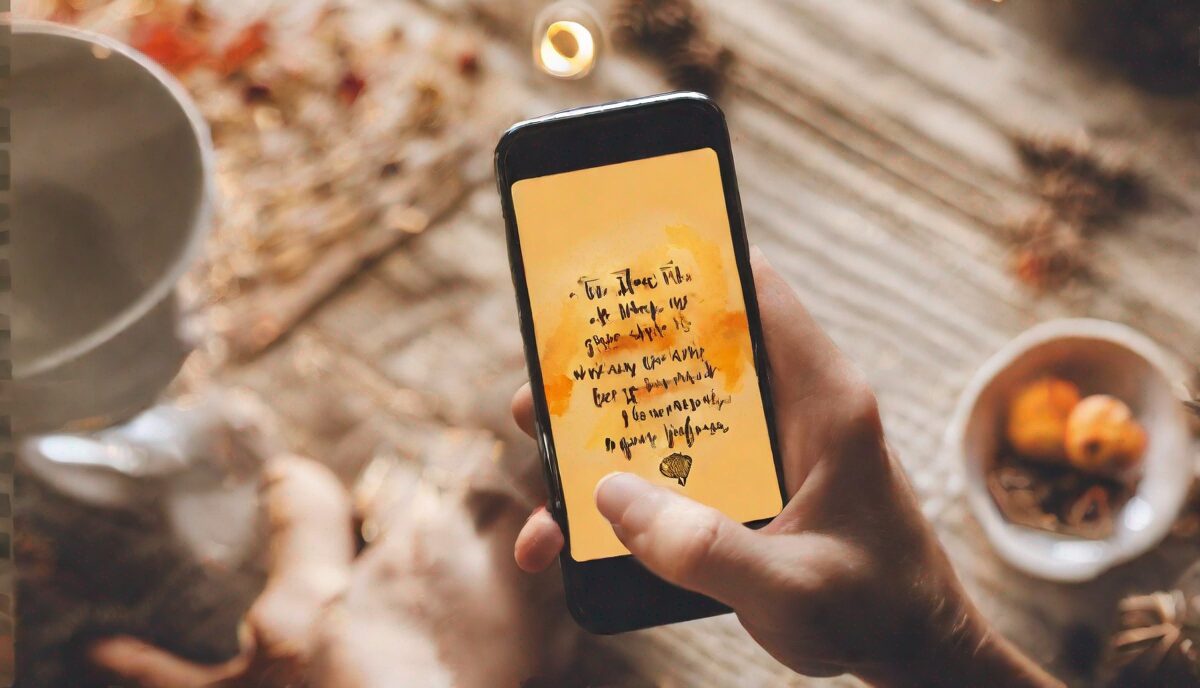
Benefits of Practicing Gratitude
Cultivating thankfulness and appreciation for the blessings in our lives has been shown to boost happiness and wellbeing. Some benefits of regular gratitude practice include:
- Increased positive emotions like joy and contentment
- Decreased negative feelings like envy, resentment, and frustration
- Stronger relationships through appreciation of loved ones
- Reduced symptoms of depression and anxiety
- Improved self-esteem and resilience
Gratitude Journal Apps
Keeping a daily gratitude journal is one of the simplest ways to incorporate more gratefulness. Here are some top-rated journal apps:
1. Gratitude Journal
This app allows you to maintain a photo journal of things you’re grateful for. Customizable prompts and reminders available.
2. Happier
Gamifies gratitude with over 10 million users. Share entries and see how your happiness scores improve.
3. Day One Journal
Flexible journaling app with gratitude templates and the ability to embed photos, videos, and more.
Gratitude Meditation Apps
Meditation focused specifically on thankfulness can deepen feelings of appreciation.
4. Smiling Mind
Features short audio-guided mindfulness practices for cultivating gratitude.
5. Insight Timer
Offers thousands of gratitude-themed meditations submitted by users worldwide.
6. Oak
Personalized meditations on thankfulness and joy available for subscription.
Apps to Share Thankfulness
Spread good vibes by expressing gratitude to others digitally.
7. Thankful
Send personalized thank you e-cards to friends and family.
8. Postable
Mail sweet handwritten cards or make social media posts to acknowledge someone.
9. Gratitude Tree
Creative way for groups to share what they are thankful for on a virtual tree.
Gamified Gratitude Apps
Game mechanics can motivate you to appreciate life more fully.
10. GG – Gratitude Game
Uses points and levels to encourage consistent gratitude practice.
11. 3000 Gifts
Faith-based app helping you count one thousand gifts of thanks.
12. Gratitude Habit
Build up an automatic habit of appreciating the positive through this app.
Gratitude Reminder Apps
Prompt yourself to count your blessings throughout the day.
13. Gratitude Reminder
Schedule customized alerts for reflection and thankfulness.
14. Stop, Breathe & Think
Get notifications for brief gratitude breathing breaks.
15. Motivate: Daily Motivation
Upbeat reminders to be more appreciative through quotes and images.
Community-Building Gratitude Apps
Bond with others through shared gratefulness.
16. Bonjour
Exchange virtual gratitude cards within an online community.
17. Believe – Gratitude Journal
Share thankfulness stories and inspiration with a supportive network.
18. WeGratitude
Post gratitude moments to this visual community space.
Kid-Friendly Gratitude Apps
Instill thankfulness from an early age with these playful apps.
19. Blessing Bowl
A digital gratitude jar for children to fill with illustrated blessings.
Optimizing Your Digital Workflow for Consistent Gratitude
One of the primary reasons people struggle to maintain a gratitude practice is the “friction” of opening a dedicated app. To overcome this, many modern gratitude tools have integrated deeply into mobile operating systems through widgets and automation. For instance, rather than searching for an icon, users can now place a large-format widget on their home screen that displays a rotating gallery of past entries or a quick-entry field. This constant visual cue serves as a passive reminder to scan the environment for something positive. For power users, integrating gratitude into a broader productivity stack is essential. By using tools like Apple Shortcuts or Android Tasker, you can set a trigger that opens your gratitude app automatically when you plug your phone in to charge at night or when your morning alarm is silenced.
Furthermore, wearable technology has changed the landscape of how we record thankfulness. High-end gratitude apps now offer Apple Watch complications that allow for “one-tap” gratitude. Imagine walking through a park and noticing a beautiful sunset; instead of pulling out a phone and getting distracted by notifications, you can tap your wrist and dictate a quick note: “Grateful for the orange glow on the oak trees.” This lowers the barrier to entry significantly. For those who use digital planners or Notion for their daily lives, the edge case is often data fragmentation. To solve this, look for apps that offer API access or Zapier integrations, allowing your gratitude entries to be automatically funneled into a master life-log or a monthly summary document. This ensures your reflections aren’t trapped in a silo but are part of your larger personal growth narrative.
Scientific Frameworks and Evidence-Based App Methodologies
While the initial list covers general journaling, many advanced apps are built on specific psychological frameworks like Cognitive Behavioral Therapy (CBT) and the “Three Good Things” (TGT) intervention. The TGT method, popularized by Martin Seligman, requires listing three positive events and explaining why they happened. Apps that utilize this framework don’t just provide a blank page; they provide a structured two-step prompt. This forces the brain to move from simple recognition to causal analysis, which research suggests is more effective for long-term neuroplasticity. When selecting an app, look for those that incorporate “Savoring” techniques. Savoring is the act of stepping outside of an experience to review and appreciate it while it is happening. Some apps facilitate this by prompting you to describe the sensory details—the smell of the coffee, the warmth of the mug, the sound of the cafe—rather than just writing “I’m thankful for coffee.”
Another psychological layer found in premium apps is “Mental Subtraction.” This is an exercise where you imagine what your life would be like without a specific blessing, such as your health or a specific friendship. Apps that offer these “negative visualization” prompts can actually produce a higher spike in immediate happiness than standard gratitude prompts because they combat hedonic adaptation. For users dealing with high levels of stress, look for apps that use the “Gratitude Letter” framework. This involves writing a detailed note of thanks to someone from your past whom you never properly thanked. Even if you never send the digital note, the act of composing it within the app triggers a significant release of dopamine and oxytocin, providing a biological boost to your mood that can last for several days.
Corporate and Professional Gratitude Ecosystems
Gratitude isn’t just a personal endeavor; it is increasingly being recognized as a vital component of workplace culture and professional retention. Many organizations are now moving away from top-down recognition and toward peer-to-peer gratitude platforms like Bonusly, Kudos, or specialized Slack integrations like HeyTaco. These apps gamify appreciation by giving employees a monthly allowance of “gratitude tokens” or digital icons (like tacos or stars) that they can give to colleagues for helping with a project or providing moral support. The edge case here is the “lonely worker”—the employee whose contributions are behind the scenes and often go unnoticed. These apps solve this by making appreciation public, allowing the entire team to “boost” or comment on a gratitude post, thereby magnifying the positive impact.
For the individual professional, using a gratitude app can be a shield against burnout. By maintaining a “Work Wins” or “Professional Appreciation” folder within a journaling app, you create a repository of evidence for your own competence. This is particularly useful during annual performance reviews or moments of imposter syndrome. Some apps allow you to tag entries with specific professional skills, such as “Leadership” or “Problem Solving.” Over time, the app can generate a word cloud or a chart showing which areas of your work life bring you the most satisfaction. This data-driven approach to gratitude can help you make more informed career decisions, such as identifying which types of projects make you feel most valued and fulfilled.
Combatting Gratitude Fatigue through Advanced Variety
A common pitfall in gratitude practices is “gratitude fatigue,” where the user begins to repeat the same three things every day—usually family, health, and home. While these are important, the brain eventually stops responding to them with the same emotional intensity. Advanced gratitude apps combat this by using AI-driven prompt engines. These engines analyze your past 100 entries and, if they detect a pattern of repetition, will pivot to “micro-gratitude” prompts. Instead of asking what you are thankful for generally, the app might ask, “What is a small object in your kitchen that makes your life easier?” or “What is a piece of technology you often take for granted?” This forces the user to look at their environment with fresh eyes, preventing the practice from becoming a mindless chore.
Another way apps prevent boredom is through the use of “Challenges” and “Streaks.” Much like a fitness app, a gratitude app might offer a “7-Day Nature Gratitude Challenge” or a “21-Day Mindfulness and Thankfulness Sprint.” These time-bound goals provide a sense of urgency and accomplishment. Some apps even incorporate “Photo-a-Day” challenges where you are tasked with finding a visual representation of a specific theme, such as “Texture,” “Light,” or “Connection.” This multimodal approach—combining photography with text—engages different parts of the brain and makes the practice feel more like a creative hobby than a psychological exercise. For those who find writing tedious, look for apps that offer “Voice Journaling” with automatic transcription, allowing you to vent your gratitude while driving or walking.
Technical Safeguards: Privacy and Data Ownership in Journaling
Because gratitude journals often contain our most intimate thoughts, fears, and vulnerabilities, the technical architecture of the app is a critical consideration. Users should look for apps that offer end-to-end encryption, meaning that not even the app developers can read your entries. Many top-tier apps now include biometric locks (FaceID or Fingerprint) as a standard feature. An often-overlooked edge case is “data permanence.” If a gratitude app goes out of business, what happens to your three years of reflections? To avoid losing your history, prioritize apps that allow for easy data portability. Look for features that let you export your entire journal as a PDF, a CSV file, or even a printed book. Some apps specialize in this, offering a “Print Your Year” service that turns your digital entries into a high-quality coffee table book.
Additionally, the location of data storage matters. Some users prefer “local-only” apps that store all data on the physical device rather than in the cloud. While this increases privacy, it also increases the risk of data loss if the phone is stolen or broken. The ideal middle ground is an app that uses encrypted cloud syncing (like iCloud or Google Drive) where you own the storage space. This ensures that your gratitude practice remains private while still being accessible across your tablet, phone, and desktop. Before committing to a subscription, check the app’s privacy policy to ensure they do not anonymize and sell your “mood data” to third-party advertisers, a common practice in the free-app ecosystem.
Specialized Gratitude for Life Transitions and Mental Health Recovery
Gratitude is a powerful tool during periods of grief, recovery, or major life transitions, but standard apps can sometimes feel too “toxic-positive” during these times. Specialized apps have emerged that acknowledge the difficulty of finding things to be thankful for when life is hard. For those in recovery from addiction, gratitude is often a core pillar of the 12-step philosophy. There are apps specifically designed for the recovery community that link gratitude lists with sobriety counters and daily reflections. These tools help users reframe their struggle not as a failure, but as a journey they are grateful to be on one day at a time.
In the context of grief, some apps focus on “Legacy Gratitude.” These tools prompt users to record memories of a lost loved one, focusing on the gratitude for the time spent together rather than just the pain of the loss. For students, gratitude apps can be tailored to combat academic anxiety. These versions often include prompts about “Learning Moments”—reframing a failed test as a grateful opportunity to identify areas for growth. By targeting specific demographics, these niche apps ensure that the practice of thankfulness feels authentic and grounded in the user’s current reality, rather than a forced exercise in optimism that ignores their actual challenges.
The Future of Gratitude: AI Coaching and Sensory Feedback
The next frontier for gratitude technology involves Artificial Intelligence that acts as a “Gratitude Coach.” Instead of just storing your entries, these AI-integrated apps can read your reflections and provide insightful feedback. For example, if you write about a difficult interaction with a coworker but mention a small moment of kindness, the AI might respond, “I noticed you found a silver lining in a stressful situation; how did that shift your mood for the rest of the day?” This interactive element mimics a therapeutic conversation, deepening the impact of the reflection. These apps can also identify “Blind Spots” in your gratitude—areas of your life you never mention—and gently nudge you to explore them.
We are also seeing the rise of sensory-based gratitude tools. Some apps are experimenting with haptic feedback and binaural beats to create a “Gratitude State” before you even begin writing. By using specific sound frequencies, the app helps calm the nervous system, making it easier to access feelings of appreciation. Future iterations may even integrate with biofeedback devices like heart rate monitors. Imagine an app that notices your heart rate variability (HRV) is low—a sign of stress—and sends a notification: “Your body seems stressed; let’s take 60 seconds to find one thing you’re grateful for right now.” This proactive, physiological approach moves gratitude from a scheduled task to a real-time intervention for emotional regulation.
FAQ
What are some benefits of practicing gratitude regularly?
Some benefits include increased happiness, stronger relationships, reduced anxiety and depression, and greater self-esteem.
What’s an easy way to cultivate gratitude daily?
Keeping a simple gratitude journal where you write down a few things you’re thankful for each day is an easy habit to build.
Can gratitude apps be helpful?
Yes, gratitude apps can provide useful tools like reminders, meditations, community sharing features, and game elements to motivate consistency.
What types of gratitude apps are there?
Some common categories are gratitude journals, meditation apps, apps to share thanks with others, gamified apps, reminder apps, and community apps.
Are gratitude apps suitable for children?
Yes, there are great kid-friendly gratitude apps that use illustrations, stories, and game elements to teach children the value of thankfulness.
Related posts:
 App-solutely Essential: Why Self-Care Apps Are Taking Over Our Phones
 UV Index Tracking with Apple Watch
 Sex Toys with Apps: High-Tech Pleasure at Your Fingertips
 95+ Gratitude Exercises to Bring More Thankfulness & Joy
 Beautiful Journals That Make Setting Intentions Feel Like Art
 Gratitude Practices for Food Appreciation
 JetSweat Digital Fitness App
 This Rowing App Promises to Replace Your Gym Membership