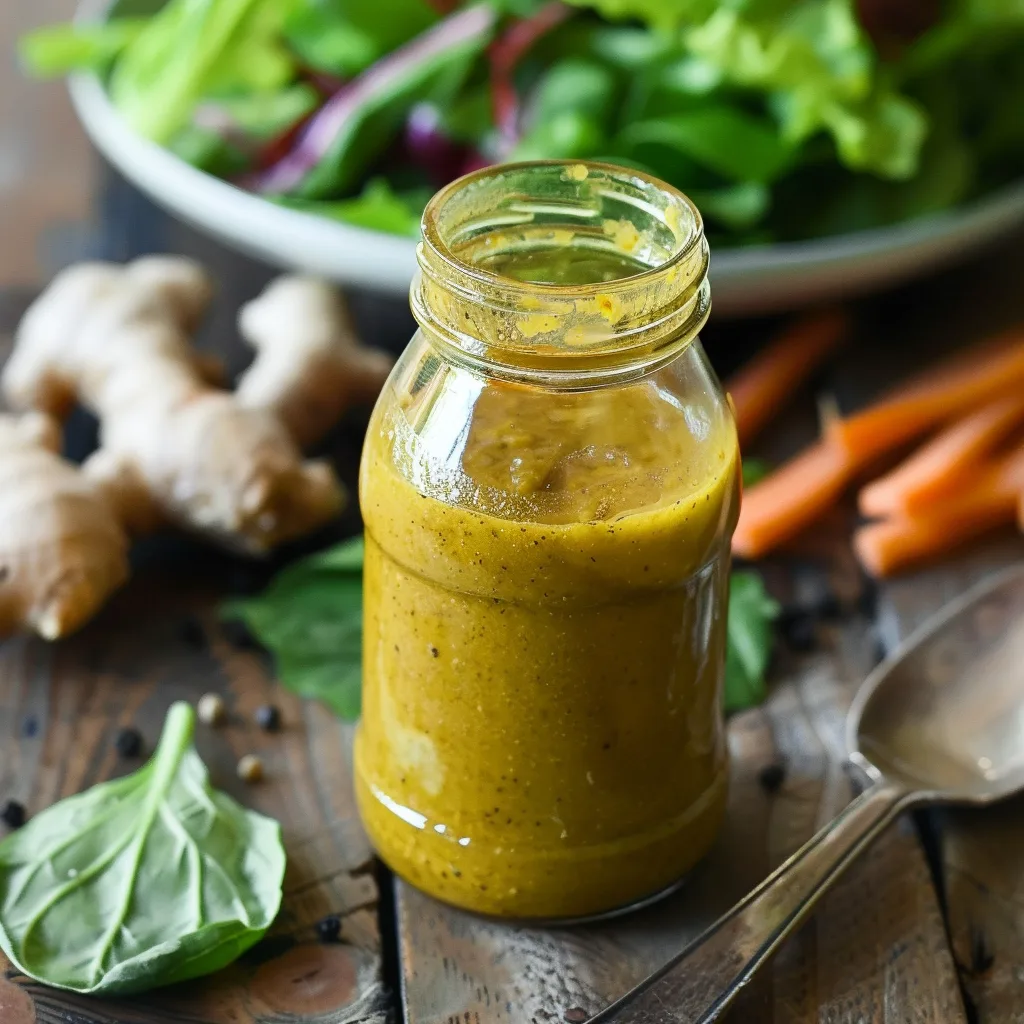
Looking for a way to elevate your salads from mundane to magnificent? Ginger dressing might just be your secret weapon. With its zesty and fresh flavor, ginger dressing can transform even the simplest greens into a culinary delight. In this article, we’ll share four easy-to-make ginger dressing recipes that will make your salads sing with flavor!
Classic Ginger Soy Dressing
This traditional ginger dressing is a favorite for its versatility and delightful tang. To make it, you’ll need:
- 1/4 cup soy sauce
- 2 tablespoons grated fresh ginger
- 1 tablespoon honey
- 2 tablespoons rice vinegar
- 1/3 cup sesame oil
- 1 clove garlic, minced
Whisk together all ingredients until well combined. This dressing pairs wonderfully with mixed greens or a crunchy Asian slaw.
Carrot Ginger Dressing
This creamy and vibrant dressing is not just tasty but also visually appealing. Here’s what you need:
- 1 medium carrot, peeled and chopped
- 2 tablespoons grated ginger
- 1 tablespoon soy sauce
- 1 tablespoon apple cider vinegar
- 1 tablespoon sesame oil
- 1/4 cup olive oil
- Water to thin, if necessary
Blend all ingredients until smooth, adding water as needed to reach your desired consistency. Drizzle over your favorite mixed greens or a cold noodle salad.
Spicy Ginger Lime Dressing
For those who like a bit of heat, this dressing brings a spicy kick to your salads. Gather these ingredients:
- Juice of 2 limes
- 1/4 cup fish sauce or soy sauce for a vegetarian option
- 1 tablespoon sugar
- 2 tablespoons grated ginger
- 1 small chili, finely chopped
- 1/3 cup vegetable oil
Mix all the ingredients together, adjusting the chili to your heat preference. This dressing goes great with a Thai beef salad or a fresh cucumber salad.
Citrus Ginger Vinaigrette
This light and refreshing dressing is perfect for summer salads. You’ll need:
- Juice of 1 orange
- Juice of 1 lemon
- 2 teaspoons grated ginger
- 1 teaspoon honey
- 1/2 cup extra virgin olive oil
- Salt and pepper to taste
Combine all ingredients in a jar and shake vigorously. This vinaigrette pairs well with a spinach and strawberry salad or a quinoa and avocado bowl.
Mastering the Art of Ginger Preparation
The flavor profile of any ginger dressing relies heavily on how you process the rhizome. While a standard box grater is functional, it often leaves behind fibrous, woody strands that can ruin the texture of a delicate vinaigrette. For the smoothest possible dressing, use a ceramic ginger grater or a microplane to create a fine ginger paste. This ensures the essential oils and juice are fully extracted into the emulsion, rather than leaving large, spicy chunks that might overwhelm a single bite. If you are preparing a large batch, consider using a high-speed blender to pulverize the ginger completely with your liquid base. Pro tip: you do not need to peel young, organic ginger; simply scrub the skin thoroughly, as the skin contains concentrated flavor. However, if using older, tougher ginger, a quick scrape with the edge of a spoon is the most efficient way to remove the skin without wasting the flesh.
The Science of Emulsification for Creamy Results
To achieve that restaurant-style, opaque consistency found in high-end Japanese steakhouses, you must master the art of emulsification. Simply whisking ingredients in a bowl often results in a dressing that separates within minutes. To stabilize your ginger dressings, start by combining your acidic components—such as rice vinegar, lime juice, or citrus—with your aromatics like garlic and ginger. Slowly drizzle your oil into the mixture while whisking vigorously, or better yet, use a small food processor. The mechanical shearing action of the blades forces the oil droplets to disperse into the vinegar, creating a stable, creamy suspension. If your dressing still separates, add a teaspoon of Dijon mustard or a small amount of miso paste; these act as natural emulsifiers, binding the water-based ginger juice and oil-based fats together for a professional, velvet-like mouthfeel.
Balancing Sweetness and Acidity
Ginger is naturally pungent and spicy, which requires a careful hand when balancing the sweetness and acidity of your dressing. If your dressing feels one-dimensional, the culprit is often a lack of contrast. If the ginger is too aggressive, add a touch more honey, maple syrup, or agave to round out the sharp edges. Conversely, if the dressing feels heavy or oily, increase the acidity with an extra splash of rice vinegar or a squeeze of fresh citrus. For a more complex flavor profile, experiment with different sweeteners: brown sugar provides a caramel-like depth that works beautifully with soy sauce, while agave is neutral and allows the bright, floral notes of the ginger to shine through. Always taste your dressing on a piece of the lettuce you plan to serve, as the bitter notes of certain greens can significantly alter how the dressing hits your palate.
Beyond the Salad: Ginger Dressing as a Culinary Tool
While salads are the natural home for these dressings, their utility extends far into the kitchen. Ginger-soy and carrot-ginger varieties make exceptional marinades for white fish, shrimp, or tofu. Because ginger contains enzymes that help tenderize meat, a 30-minute soak in these dressings can significantly improve the texture of poultry. For a quick weeknight dinner, toss roasted root vegetables in a citrus-ginger vinaigrette right after they come out of the oven; the heat helps the vegetables absorb the aromatics, creating a caramelized glaze. You can also thicken your dressings with a bit of Greek yogurt or tahini to transform them into a decadent dipping sauce for potstickers, spring rolls, or even as a spread for a grilled chicken sandwich.
Selecting the Right Ginger for Your Needs
Not all ginger is created equal, and your choice of variety can change the final outcome of your recipe. Young, or “baby” ginger, has a thin, translucent skin and is much milder, making it ideal for delicate citrus vinaigrettes where you want a floral, subtle heat. Mature ginger, which is what you find in most grocery stores, is robust and spicy, perfect for bold dressings involving fish sauce or deep, savory soy components. If you find yourself in an Asian specialty market, look for galangal or turmeric to mix into your ginger base. Galangal offers a piney, citrusy note that pairs perfectly with the spicy lime dressing, while adding a small amount of fresh turmeric provides an earthy depth and a vibrant golden color that makes your salad presentation look truly professional.
Troubleshooting Common Dressing Failures
Even the simplest dressing can go awry. If your dressing becomes too salty, do not reach for more water, which will dilute the flavor; instead, increase the volume of the oil and acid proportionally. If you have accidentally added too much chili and the dressing is unpalatably spicy, a tablespoon of creamy nut butter, such as cashew or almond butter, can act as a buffer, mellowing the heat while adding a luxurious texture. If you find your dressing has a metallic or “off” taste, check your soy sauce quality; switching to a naturally brewed tamari can often solve this, as it provides a cleaner, less processed flavor. Finally, if the ginger taste is fading after a few days in the fridge, it is likely because the ginger was not finely enough grated to release its oils; next time, try macerating the grated ginger in the vinegar for ten minutes before adding the oils.
Storage and Flavor Development
While most dressings are best consumed fresh, ginger dressing is one of the few that actually benefits from a “resting period.” If you have the time, let your dressing sit in the refrigerator for at least two hours before serving. This allows the ginger to infuse the oil and vinegar, creating a more cohesive and rounded flavor. To maintain the integrity of the fresh ingredients, store your dressings in glass Mason jars rather than plastic containers, as plastic can hold onto the pungent aromas of ginger and garlic. Always give your dressing a vigorous shake before each use, as the fresh components will naturally settle over time. If you notice the dressing has become cloudy, this is simply the oil solidifying; let it sit on the counter for five minutes to return to room temperature, and it will be as vibrant and delicious as the day you made it.
FAQs About Ginger Dressing
Can I store homemade ginger dressing?
Yes, homemade ginger dressing can be stored in an airtight container in the refrigerator for up to a week.
Is ginger dressing healthy?
Ginger dressing can be a healthy addition to your diet, especially when made with fresh ingredients and healthy oils like olive or sesame oil.
Can I make ginger dressing without oil?
Yes, for an oil-free option, try blending ginger with citrus juices or vinegar and a little bit of water for consistency.
How can I use ginger dressing aside from salads?
Ginger dressing is versatile and can be used as a marinade for proteins, a dipping sauce for appetizers, or drizzled over steamed vegetables.
Can I freeze ginger dressing?
It is not recommended to freeze ginger dressing as the emulsion can break and separate when thawed.
Related posts:
 Delicious Ground Chicken Recipes
 Golden Summer: Creative Turmeric Recipes to Spice Up Your Season
 Keep Bugs Out of Your House Using This Kitchen Staple
 Essential Korean Condiments
 15-Minute Dairy-Free Dinner Ideas
 4 Soy Sauce Substitutes for Cooking
 Magic Avocado Sauce Recipe
 The One-Ingredient Swap That Makes Any Salad Dressing Healthier