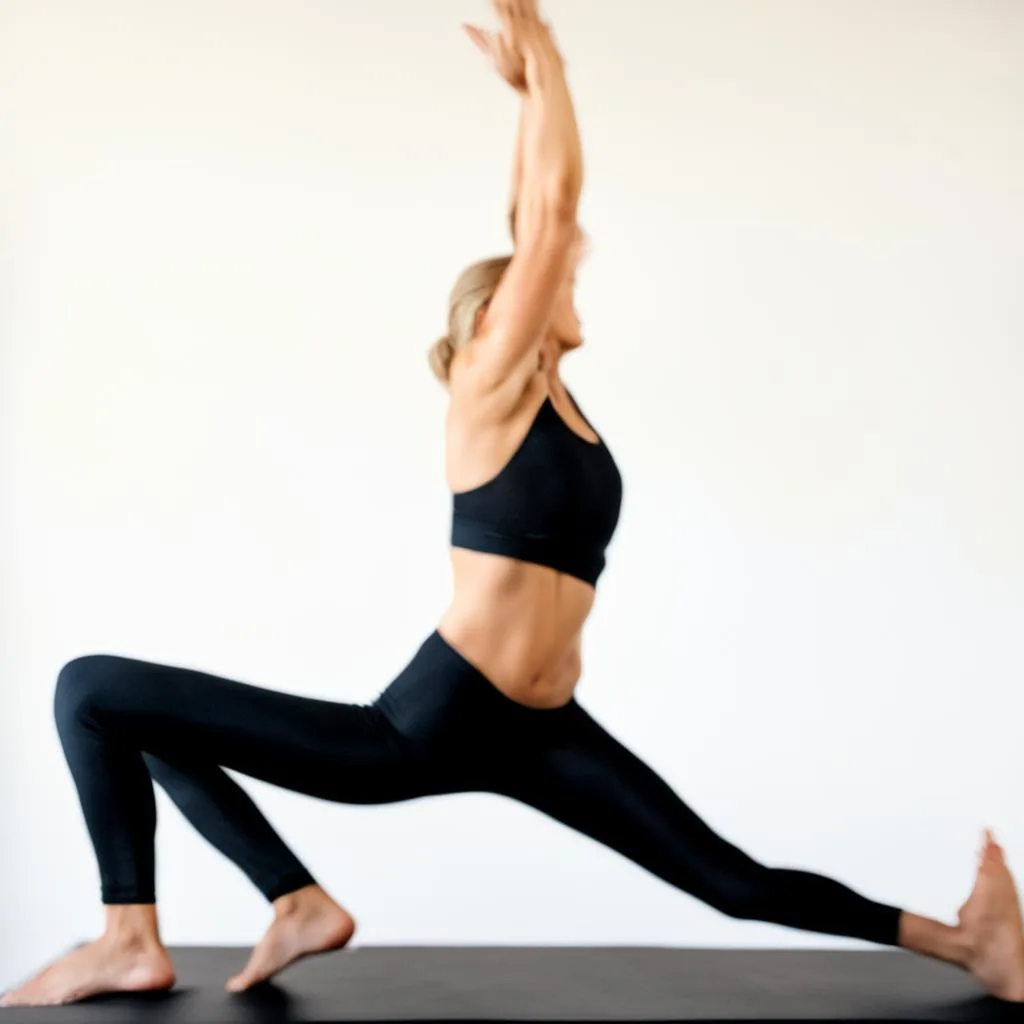
What are some good pilates moves to improve my posture?
There are many pilates moves that can help improve posture when done regularly. Here are 5 great options to practice at home:
1. The Hundred
The Hundred targets core muscles to strengthen the back and abdomen. Lie on your back with legs lifted to a 45 degree angle. Flatten lower back into the floor and lift head/shoulders slightly. Pump arms up and down, inhaling for 5 counts and exhaling for 5 counts. Do 10 sets of this pumping motion.
2. Shoulder Bridge
The shoulder bridge improves spine flexibility and alignment. Lie on your back with knees bent and arms at your side. Keeping shoulders on the mat, lift hips toward ceiling, squeezing glutes at the top. Slowly lower back down without fully resting on the floor. Repeat 10-15 times.
3. Cat/Cow Stretch
Cat/cow opens the spine and improves posture over time. Get on hands and knees in a tabletop position. Inhale as you drop belly toward floor, lifting chin/chest (cow pose). Exhale as you arch back and tuck chin toward chest (cat pose). Repeat 5-10 times, moving fluidly between poses.
4. Standing Side Kick
The standing side kick strengthens obliques to support the spine. Stand with feet hip-width apart, holding onto a chair if needed. Keeping both legs straight, lift top leg out to the side and up, keeping abs engaged. Kick leg slightly higher before lowering with control. Repeat 10 times then switch sides.
5. Full Roll Down
The full roll down promotes proper spinal alignment through full range of motion. Sit tall near front edge of mat with legs straight out. Inhale to lift arms overhead. As you exhale, slowly roll down through spine, peeling back off mat until shoulders/upper back reach the floor. Finish by rolling back up with core control. Repeat 5 times.
Here are 5 commonly asked questions about using Pilates for better posture:
What muscles does Pilates target to improve posture?
Pilates targets deep core stabilizing muscles like the transverse abdominis, multifidus, pelvic floor, and diaphragm. It also works larger muscles like the erector spinae, glutes, and shoulder stabilizers that support proper posture.
How often should you do Pilates to see a difference in posture?
Aim to do Pilates at least 2-3 times per week for 30-60 minutes to start seeing improvements in posture over 4-8 weeks. Be patient and consistent for best results.
Which Pilates moves are best for correcting rounded shoulders and neck pain?
Shoulder rolls, shoulder circles, swimming, and standing side kick target muscles between the shoulder blades and can help realign rounded shoulders over time. For neck pain, avoid over-arching.
Can Pilates help improve forward head posture?
Yes, moves like shoulder bridge, cat/cow stretch, and full roll down can strengthen upper back muscles and improve spinal flexibility to counteract forward head positioning.
Is it safe to do Pilates with poor posture?
It’s generally safe to do basic Pilates with poor posture as long as you avoid over-arching the neck and listen to your body’s limits. Work within your range of motion and consider private lessons to learn proper form.
Establishing the Foundation: Neutral Spine and Pelvic Alignment
Before diving into advanced movements, it is essential to understand the concept of the neutral spine, which serves as the blueprint for all Pilates-based postural correction. Many people unknowingly live in a state of either excessive lumbar arching (anterior pelvic tilt) or a flattened, tucked-under tailbone (posterior pelvic tilt). To find your neutral spine at home, lie on your back with your knees bent and feet flat on the floor. Place the heels of your hands on your hip bones and your fingertips on your pubic bone, creating a small triangle. In a perfectly neutral position, this triangle should be level, parallel to the ceiling. There should be a small, natural daylight gap between your lower back and the mat, just enough for a few blades of grass to pass through without being crushed.
Mastering this position is the key to protecting your vertebrae during more strenuous exercises. If you find that your back arches painfully during movement, you may need to utilize an “imprinted” spine. This involves a slight engagement of the obliques to gently lengthen the lower back toward the floor, closing that gap without aggressively jamming the spine into the mat. For those with a pronounced swayback, practicing the transition between neutral and imprint builds the deep abdominal control necessary to support the torso against gravity. A helpful cue is to imagine your pelvis as a bowl of water; your goal is to keep the water level, preventing it from spilling toward your toes or splashing back toward your belly button. Once you can maintain this stability while breathing, your posture will naturally begin to shift from a collapsed state to one of supported height.
Scapular Power: Strengthening the Upper Back to Combat the Desk Hunch
The modern lifestyle often leads to “upper cross syndrome,” characterized by tight chest muscles and weak, overstretched muscles in the upper back. To counteract this, Pilates emphasizes scapular stability—the ability to control the movement of your shoulder blades. An excellent addition to your routine is the “Scapular Isolation” series. While lying prone (on your stomach) with your forehead resting on a small towel, reach your arms long by your sides. Practice drawing your shoulder blades together and down toward your back pockets, lifting only the tips of your shoulders off the mat. This small, subtle movement targets the mid-trapezius and rhomboids, the very muscles responsible for keeping your shoulders from rolling forward.
To progress this, transition into “The Dart.” Keep your legs squeezed together and your core pulled away from the mat. As you inhale, lift your chest slightly, reaching your fingertips toward your heels and rotating your palms to face your thighs. The focus here is not on how high you can lift, but on how much length you can create from the crown of your head to your toes. If you feel a pinch in your lower back, you are lifting too high or failing to engage your glutes. This exercise specifically addresses the thoracic spine (the middle back), which is often the stiffest part of the body. By increasing mobility and strength in this region, you alleviate the pressure on your neck and lower back, creating a more balanced and upright silhouette.
The Science of Lateral Breathing for Postural Stability
In Pilates, breathing is not just a biological necessity; it is a tool for structural support. Most people are “chest breathers,” which causes the shoulders to rise and creates tension in the neck, or “belly breathers,” which can lead to a distended abdominal wall and a lack of spinal support. Pilates utilizes lateral thoracic breathing. To practice this, place your hands on the sides of your ribcage. As you inhale through your nose, try to expand your ribs outward into your palms, like an accordion opening. As you exhale through pursed lips, feel the ribs knit back together and the navel pull inward and upward.
This breathing technique allows you to maintain deep abdominal engagement even while taking full, oxygenating breaths. From a postural standpoint, this is revolutionary. It creates internal pressure that acts like a natural corset for your spine. When you are sitting at a desk and feel yourself starting to slouch, three deep lateral breaths can often reset your alignment more effectively than simply trying to “sit up straight.” It expands the intercostal muscles between the ribs, which often become tight and restrictive, pulling the ribcage down toward the hips. By lengthening the torso from the inside out, you provide the necessary space for your internal organs and allow your spine to reach its full vertical potential.
Wall-Assisted Pilates: Using Vertical Surfaces for Alignment Feedback
One of the challenges of practicing Pilates at home is the lack of tactile feedback that a studio instructor or a Reformer machine provides. You can solve this by using a wall as a “plumb line.” Stand with your back against a flat wall, heels about three to four inches away from the baseboard. Ideally, your sacrum (the back of your pelvis), your shoulder blades, and the back of your head should all make contact with the wall. For many, this will feel exaggerated or even difficult, which is a clear indicator of postural deviations like forward head posture or rounded shoulders.
While in this position, perform “Arm Slides” or “Wall Angels.” With the backs of your hands against the wall, slowly slide your arms up into a ‘V’ shape and then back down, keeping your elbows and wrists in contact with the surface. If your ribs pop forward or your lower back arches away from the wall, it indicates a lack of core control and thoracic mobility. This exercise is a diagnostic tool and a corrective movement rolled into one. It forces the external rotators of the shoulder to engage and the pectorals to stretch. Practicing this for just two minutes after a long stint on a laptop can immediately reset the nervous system’s perception of what “straight” feels like, making it easier to maintain that posture once you step away from the wall.
Strengthening the Posterior Chain: The Glute-Back Connection
Posture is often discussed in terms of the upper body, but the foundation of a tall spine lies in the posterior chain—the glutes, hamstrings, and erector spinae. If the glutes are weak, the pelvis often tilts forward, dragging the lower back into an exaggerated arch that eventually causes the upper back to compensate by rounding. To address this, incorporate the “Prone Leg Lifts” into your home routine. Lying on your stomach with your forehead on your hands, engage your abdominals so there is a sense of lifting your belly button away from the floor. Keeping the leg perfectly straight, lift one leg just a few inches off the mat using only the glute and hamstring.
The common mistake here is “hiking” the hip or using the lower back to heave the leg up. The movement should be pure and isolated. By strengthening the connection between the glutes and the lower spine, you create a stable base for the rest of your posture. Furthermore, consider the “Single Leg Kick,” which adds a stretch for the hip flexors. While propped up on your forearms (in a sphinx-like position), kick one heel toward your glute twice with a pulsed breath, then switch. This requires you to keep your chest open and proud while resisting the urge to let your lower back sag. It builds the endurance of the back extensors, which are the muscles that keep you from collapsing into a chair at the end of a long day.
Integrating Pilates Principles into Daily Ergonomics
The true benefit of Pilates for posture is not found solely on the mat, but in how you carry yourself throughout the day. You can apply the principle of “axial elongation”—the feeling of being pulled upward by a string attached to the crown of your head—regardless of whether you are standing in line or sitting in a meeting. When sitting, find your “sit bones” (the ischial tuberosities). Many people sit back on their tailbones, which rounds the lumbar spine. By rocking slightly forward until you feel the sharp bones in your glutes connecting with the chair, you create a vertical stack for your vertebrae.
Another applicable principle is the “powerhouse” engagement. You don’t need to contract your abs at 100% all day, which would be exhausting and counterproductive. Instead, aim for a 10-20% gentle engagement, a subtle drawing in of the lower abdominals. This provides a constant, low-level support system for your spine. When reaching for objects or lifting groceries, use the Pilates “hinge”—bending at the hips and knees while keeping the spine long—rather than rounding over. These micro-adjustments turn your entire day into a functional Pilates session, ensuring that the postural gains you make during your dedicated workout time are not lost the moment you put away your mat.
Advanced Proprioception: Developing an Internal Plumb Line
Proprioception is your body’s ability to sense its position in space. Often, people with poor posture feel like they are standing straight when they are actually leaning forward or tilting to one side. To refine this, practice Pilates moves with your eyes closed. Closing your eyes removes visual cues and forces the brain to rely on the spindles in your muscles and the nerves in your joints. Try the “Standing Balance”: lift one knee to a tabletop position while maintaining a perfectly level pelvis and a long spine. Hold for 30 seconds with your eyes open, then attempt it with your eyes closed.
You will likely feel your ankles and core firing rapidly to maintain stability. This “wobble” is actually your nervous system recalibrating. As you get better at sensing these tiny deviations, you will begin to notice when your posture slips in real-time. You’ll feel the moment your chin drifts toward your phone or your weight shifts onto one hip while standing. This heightened awareness is the final stage of postural correction. It moves the process from a conscious effort to an unconscious habit. By combining the physical strength of the movements with this deep internal awareness, you create a permanent shift in how your body inhabits space, leading to a taller, more confident, and pain-free presence.
Related posts:
 Effective Workouts You Can Do While Lying Down
 Stretch Your Way to a Pain-Free Upper Back: A Step-by-Step Guide
 Perfect Your Glute Bridge
 Pelvic Floor Expert’s Advice
 Pilates: The Secret to Core Strength and Stability
 Desk Yoga for Back Pain Relief
 5 Shoulder Exercises That’ll Remedy Rounded Shoulders Fast
 Kate Hudson’s Safe Pilates Moves for Pregnancy