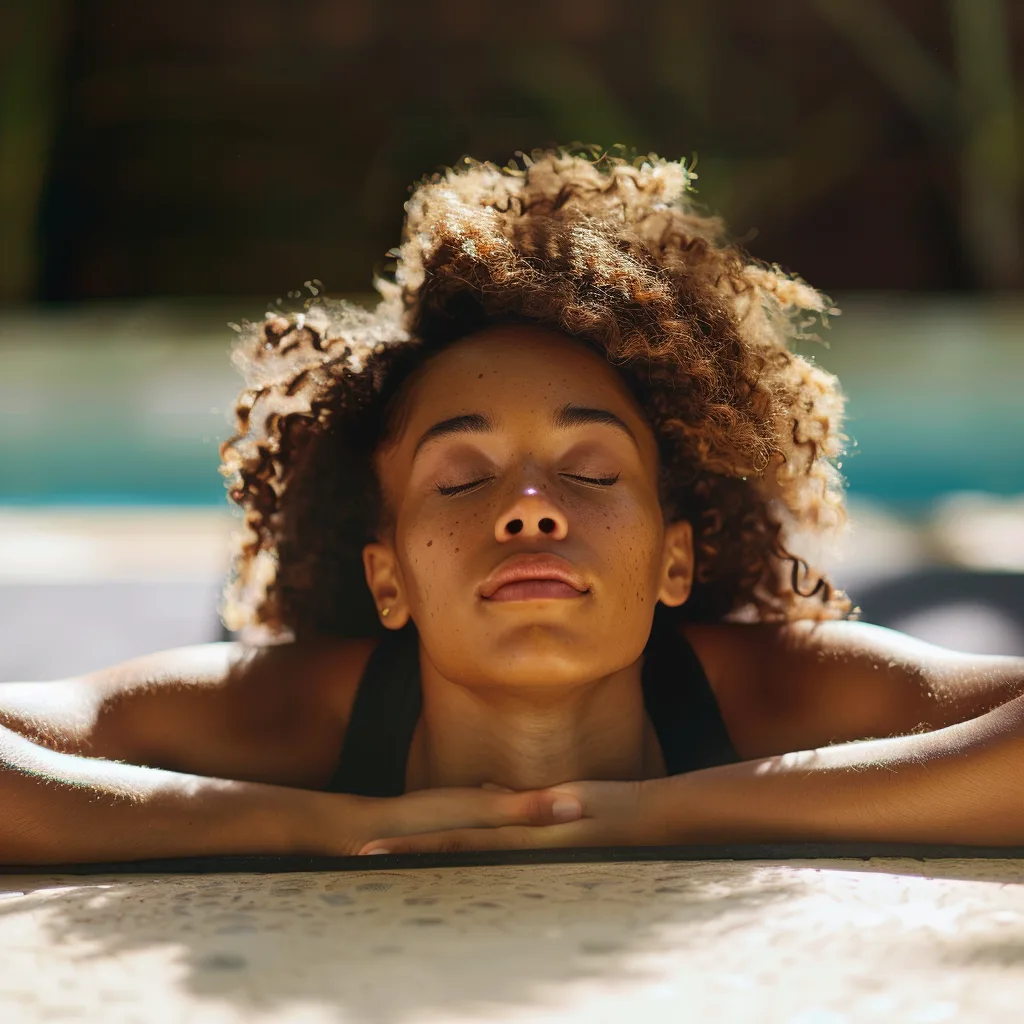
De-stress from the summer heat
As the temperatures climb, it’s easy to feel irritated, impatient, and stressed. Rather than reaching for unhealthy coping mechanisms, restorative yoga offers a compassionate way to settle the nervous system and restore balance.
Key takeaways
- Practice restorative yoga for 10 to 30 minutes, one to two times per week, to lower stress hormones.
- Use props like bolsters, blankets, and blocks to support the body and avoid unnecessary muscle strain.
- Beginner-friendly poses include Legs Up the Wall, Supported Child's Pose, and Corpse Pose.
- Perform these poses in the evening to stimulate the relaxation response and improve overall sleep quality.
Benefits of restorative yoga
- Lowers stress hormones
- Releases muscle tension
- Calms the mind
These slower paced poses, often supported by props like blankets and bolsters, help stimulate the parasympathetic nervous system for deeper relaxation.
5 Soothing Poses
Legs Up the Wall
This gentle inversion calms the mind and reduces fatigue.
Reclined Bound Angle
This pose gently opens the hips and stretches the inner thighs and groin.
Supported Fish
By supporting the body with props, this pose opens the chest and shoulders without strain.
Supported Child’s Pose
Blankets elevate the hips and head in this mild forward fold to release upper and lower back tension.
Corpse Pose
The final relaxation pose allows all effort to dissolve as you bask in stillness.
Ready to unwind?
As little as 5-10 minutes in these shapes can reset the nervous system. Support your body, close your eyes, and simply breathe.
The Physiology of Thermal Stress and the Parasympathetic Pivot
When the external temperature rises, the human body undergoes significant physiological stress that extends far beyond simple discomfort. High heat triggers a sympathetic nervous system response, often referred to as the “fight or flight” mode. As your body works overtime to thermoregulate—dilating blood vessels and increasing heart rate to move heat toward the skin’s surface—your internal resources become depleted. This biological exertion often manifests as the “summer slump,” a state of lethargy combined with a shortened temper. Restorative yoga serves as a physiological intervention, deliberately pivoting the body back toward the parasympathetic nervous system, or the “rest and digest” state.
During a restorative practice in high heat, the goal is to lower the heart rate and reduce the metabolic heat generated by muscular effort. By utilizing props to carry 100% of the body’s weight, you signal to the brain that it is safe to cease the stress response. This is particularly effective for cooling the “jets” because it addresses the systemic inflammation that heat can exacerbate. When you remain in a supported pose for fifteen minutes, your cortisol levels drop, and your core temperature begins to stabilize. This isn’t just about feeling relaxed; it’s about giving your internal cooling systems the opportunity to recalibrate without the interference of physical or mental exertion.
Ayurvedic Cooling Strategies: Balancing Pitta through Restorative Practice
In the tradition of Ayurveda, summer is the season of Pitta, characterized by the elements of fire and water. When Pitta becomes excessive due to environmental heat, it can lead to physical symptoms like skin rashes, acid reflux, and inflammation, as well as emotional symptoms like frustration and impatience. Restorative yoga is one of the most effective tools for pacifying an aggravated Pitta. To maximize the cooling effect of your poses, focus on “grounding” and “spreading” movements. While active yoga might involve heat-building twists or inversions, restorative cooling focuses on expansive, open shapes that allow heat to escape from the armpits, groin, and neck.
To deepen the Pitta-balancing effect, consider the materials of your props. While synthetic yoga mats can trap heat against the skin, laying a 100% cotton sheet or a bamboo towel over your setup can facilitate better airflow. Avoid heavy wool blankets during a summer session; instead, use thin cotton throws or even silk wraps. These natural fibers allow the skin to breathe, preventing the sticky, humid sensation that can distract you from your practice. Additionally, focusing your gaze downward or keeping the eyes closed with a chilled eye pillow can help quiet the “fire” in the mind, as the eyes are considered a primary seat of Pitta energy.
Cooling Pranayama: Integrating Internal Air Conditioning
While the physical shapes of restorative yoga provide the structure for relaxation, the breath acts as the internal thermostat. Integrating specific cooling pranayama (breathing techniques) into your held poses can significantly accelerate the cooling process. One of the most effective techniques is Sitali, often called the “Cooling Breath.” To practice Sitali while in a supported pose, curl the sides of your tongue into a tube and inhale deeply through the tongue as if sipping through a straw. You will feel a distinct cooling sensation on the tongue and the back of the throat. Close your mouth and exhale slowly through the nose. This technique cools the blood as it passes through the mouth and throat, eventually lowering the temperature of the entire circulatory system.
If you cannot curl your tongue—a trait determined by genetics—you can practice Sitkari. In this variation, keep your teeth gently pressed together and part your lips. Inhale through the teeth with a soft hissing sound, feeling the cool air pass over the gums and tongue, then exhale through the nose. For those seeking a more subtle approach, Chandra Bhedana, or Moon Piercing Breath, is highly effective. This involves inhaling exclusively through the left nostril (associated with the cooling, lunar energy of the body) and exhaling through the right. Practicing these techniques during long holds in Supported Fish or Reclined Bound Angle creates a synergistic effect that cools the body from the inside out, making even the most humid afternoon feel manageable.
Targeted Relief for Heat-Induced Edema and Inflammation
One of the most common physical complaints during the summer months is peripheral edema—the swelling of the feet, ankles, and hands caused by fluid retention and dilated blood vessels. This can make the body feel heavy and the joints feel stiff. Restorative yoga offers targeted relief through gravity-assisted drainage. While the existing article mentions Legs Up the Wall, you can enhance this for summer by adding a slight elevation to the pelvis with a firm, thin folded blanket. This encourages lymphatic drainage and helps move pooled blood back toward the heart, effectively reducing the “heavy leg” sensation common after a day in the heat.
For those experiencing heat-induced inflammation in the joints, particularly the knees or lower back, a modified Supported Side-Lying Pose can be transformative. Lie on your left side (to aid digestion and cooling) with a long bolster between your knees and ankles. This alignment keeps the hips neutral and prevents the skin-to-skin contact that can cause overheating and irritation. Ensure your bottom arm is extended and your head is supported by a pillow at a height that keeps your neck in line with your spine. This lateral opening allows for deep diaphragmatic breathing without the pressure on the back that can sometimes feel restrictive during humid weather.
Advanced Prop Engineering: Creating Airflow and Support
The key to a successful summer restorative practice lies in the architecture of your props. In cooler months, we wrap ourselves in blankets to create a cocoon; in summer, the goal is to create a scaffold that supports the body while allowing maximum air circulation. Instead of a solid bolster under the entire length of the spine in Supported Fish, try using two yoga blocks with a thin, folded towel over them. This creates a “bridge” that supports the shoulder blades and head but leaves the mid-back and sides of the torso open to the air. This minimal contact approach prevents the buildup of sweat and allows the skin to stay cool.
Another “prop hack” for summer involves the use of weighted items. While a heavy sandbag might feel too hot, a chilled flaxseed eye pillow placed on the palms of the hands or the arches of the feet can have a profound grounding effect. The palms and soles are “glabrous skin” zones—areas rich in blood vessels that are particularly efficient at heat exchange. By cooling these specific points, you can lower your overall core temperature more quickly. If you are practicing in a room with a fan, position yourself so the airflow moves across your body horizontally rather than blowing directly down on you, which can sometimes cause the muscles to tense up in a protective reflex.
The Psychological Component: Managing Heat-Related Irritability
Heat doesn’t just affect the body; it significantly impacts the psyche. High temperatures are statistically linked to increased irritability and decreased cognitive patience. Restorative yoga addresses this by providing a “sensory fast.” In our modern summer, we are often bombarded by the hum of air conditioners, the glare of the sun, and the frantic energy of summer activities. A restorative session is an opportunity to withdraw the senses (Pratyahara). To facilitate this, use a dark, cool room and consider using a lavender-scented spray on your props, as lavender has been shown to lower heart rate and blood pressure.
During your poses, practice a mental cooling meditation. Visualize a mountain stream or a cool, blue light entering the body with every inhalation. When the mind begins to race with the “heat” of daily To-Do lists or frustrations, gently redirect your focus to the sensation of the breath in the nostrils. The air entering is typically cooler than the air exiting; focusing on this subtle temperature difference can be an anchor that prevents the mind from overheating. This mental discipline builds emotional resilience, allowing you to carry the “cool” of your practice into the rest of your day, making you less reactive to external stressors.
Evening Rituals: Transitioning from Heat to Sleep
Summer nights can be particularly difficult for those who struggle with sleep, as the body needs to drop its core temperature by about two degrees Fahrenheit to initiate deep sleep. A restorative practice performed shortly before bed can act as a bridge to a restful night. Focus on poses that emphasize the “exhale.” In the restorative tradition, lengthening the exhalation relative to the inhalation stimulates the vagus nerve, which immediately slows the heart rate and prepares the brain for sleep. A Supported Forward Fold, where the forehead is rested on a chair or a stack of bolsters, is particularly effective here. Pressure on the forehead (the frontal lobe) has a sedative effect on the nervous system.
To ensure you don’t overheat during this pre-sleep practice, keep your movements between poses exceptionally slow and fluid. Rapid movement generates friction and heat in the muscles. Think of your transitions as moving through water. Once you finish your final Corpse Pose, try to move directly to bed without turning on bright lights or checking electronic devices. By maintaining the “cool” state you’ve cultivated on the mat, you allow your body’s natural circadian rhythms to take over, ensuring that despite the outdoor temperature, your internal environment remains a sanctuary of stillness and rest.
FAQ
What is restorative yoga good for?
Restorative yoga is excellent for reducing stress, easing anxiety, releasing chronic muscle tension, improving sleep quality, and encouraging a state of deep rest.
How often should you practice restorative yoga?
Aim for 10-30 minutes of restorative yoga postures at least 1-2 times per week. You can practice daily for maximum stress-relieving benefits.
What props do you need?
The most useful props include yoga bolsters, blankets, blocks, and straps. These allow support and comfort in the poses without muscle strain.
Which poses are best for beginners?
Legs Up the Wall, Supported Child’s Pose, and final Corpse Pose are accessible restorative shapes for beginners to start unwinding tension.
Can restorative yoga help me sleep?
Yes, by stimulating relaxation response, these quietly held poses can improve sleep quality. Practice in the evening can be especially beneficial before bed.
Related posts:
 Wake Up Zen: The Gentle Yoga Alarm That’s Replacing Jarring Morning Buzzers
 Simple Restorative Yoga
 Lindsay Ellingson’s Stress-Relieving Yoga Move
 Yoga Tips for Beginners
 Summer Workout Survival Guide
 PHA Bodyweight Workout: Efficient Fitness Anywhere, Anytime
 Instagram’s Period Yoga Phenomenon
 Master Chair Pose Without Falling Over: A Yoga Guide for Real People