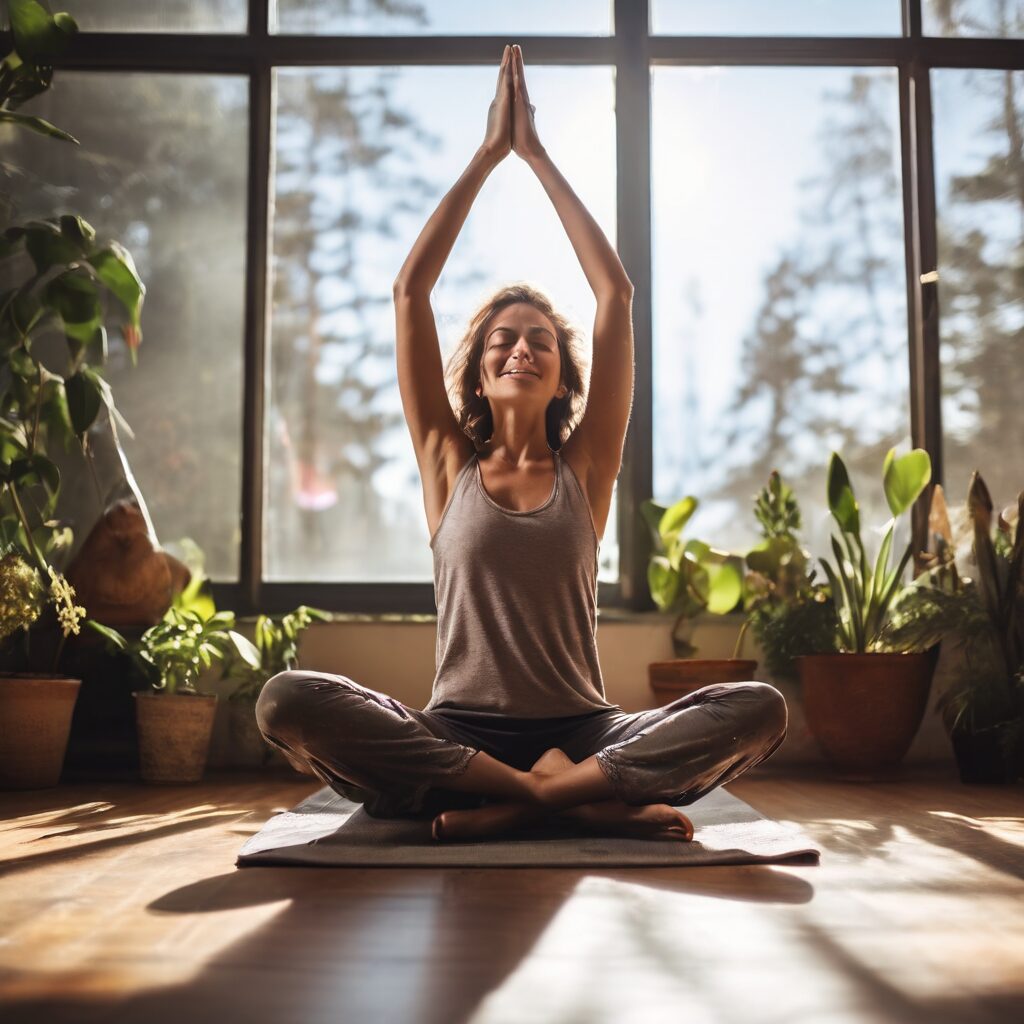
Incorporating yoga into your daily routine can significantly improve your mood and overall well-being. By practicing specific yoga poses, you can release tension, boost your energy, and enhance your mental state. Here are five yoga poses that are guaranteed to put you in a good mood.
1. Child’s Pose (Balasana)
Child’s Pose is a gentle resting pose that helps to calm the mind and relieve stress. This pose stretches the hips, thighs, and ankles while promoting relaxation.
- How to do it: Kneel on the floor, touch your big toes together, and sit on your heels. Lay your torso down between your thighs and extend your arms forward.
- Benefits: Reduces anxiety, stretches the back, and alleviates fatigue.
2. Cat-Cow Pose (Marjaryasana-Bitilasana)
The Cat-Cow Pose is a dynamic flow between two poses that warms up the spine and eases tension in the back and neck.
- How to do it: Start on your hands and knees in a tabletop position. Inhale, arch your back and lift your head and tailbone (Cow Pose). Exhale, round your spine and tuck your chin to your chest (Cat Pose).
- Benefits: Improves posture, promotes relaxation, and increases coordination.
3. Downward-Facing Dog (Adho Mukha Svanasana)
Downward-Facing Dog is a foundational pose that helps to energize and rejuvenate the body. It stretches the hamstrings, calves, and shoulders.
- How to do it: Start on your hands and knees. Lift your hips up and back, straightening your legs and forming an inverted V shape with your body.
- Benefits: Increases blood flow, relieves stress, and strengthens the arms and legs.
4. Cobra Pose (Bhujangasana)
Cobra Pose is a backbend that opens the chest and strengthens the spine. This pose can help to boost your mood by relieving fatigue and stress.
- How to do it: Lie on your stomach with your hands under your shoulders. Press into your palms and lift your chest off the ground while keeping your lower ribs on the floor.
- Benefits: Improves posture, alleviates back pain, and increases flexibility.
5. Bridge Pose (Setu Bandhasana)
Bridge Pose is a backbend that stretches the chest, neck, and spine. It can help to boost your mood by promoting relaxation and reducing anxiety.
- How to do it: Lie on your back with your knees bent and feet flat on the floor. Lift your hips towards the ceiling, interlace your fingers under your back, and press your arms into the mat.
- Benefits: Reduces anxiety, relieves back pain, and improves digestion.
The Physiological Connection Between Asana and Serotonin
To truly understand how yoga shifts your mood, it is essential to look beneath the surface of the skin at the complex interplay between the nervous system and the endocrine system. When we engage in mindful movement, we are not just stretching muscles; we are communicating with the vagus nerve, the longest cranial nerve in the body, which serves as the primary component of the parasympathetic nervous system. This “rest and digest” system acts as a natural brake on the “fight or flight” response that characterizes modern stress. By stimulating the vagus nerve through specific physical alignments and deep, rhythmic breathing, yoga helps lower cortisol levels and promotes the release of GABA (gamma-aminobutyric acid), a neurotransmitter that has a direct calming effect on the brain.
Research suggests that a single session of yoga can lead to a measurable increase in GABA levels, which is often low in individuals experiencing anxiety or depression. This chemical shift provides a biological explanation for the “yoga high” many practitioners feel after class. Furthermore, the physical act of expanding the chest and lengthening the spine counters the slumped posture often associated with low moods. This is known as the “embodied cognition” theory, which posits that our physical state can dictate our mental state. When you stand tall and open your heart space, you are sending a signal to your brain that you are safe, confident, and open to the world. For those dealing with chronic fatigue, these physiological shifts can provide a much-needed energy boost without the subsequent crash associated with caffeine or sugar.
Deepening Emotional Release with Camel Pose (Ustrasana)
While the existing article covers the foundational Cobra Pose, Camel Pose (Ustrasana) takes heart-opening to a much deeper level, targeting the entire front body and the emotional centers often guarded during times of stress. This pose is a powerful antidote to the “protective slouching” we do over computers and smartphones. Because it exposes the throat, chest, and solar plexus—areas we instinctively protect when we feel vulnerable—it can trigger a significant emotional release. It is not uncommon for practitioners to feel a sudden surge of joy, or even a brief moment of vulnerability, when first exploring this deep backbend.
To practice Ustrasana safely, kneel on the floor with your knees hip-width apart. Place your hands on your lower back, fingers pointing down, as if you were putting them in your back pockets. Inhale and lift your chest toward the ceiling, drawing your shoulder blades together. If you feel stable, you can reach back and hold your heels. Edge Case: If you have a sensitive neck, do not drop your head back; instead, keep your chin tucked slightly toward your chest. If reaching your heels feels too intense, place yoga blocks on either side of your ankles to bring the floor closer to you. The key to maintaining a good mood in this pose is to breathe into the space around your heart, visualizing the breath dissolving any tightness or emotional blockages stored in the ribcage.
Cultivating Mental Clarity Through Standing Balance Poses
When our minds are cluttered with intrusive thoughts or the “monkey mind” of daily anxieties, standing balance poses like Tree Pose (Vrksasana) or Warrior III (Virabhadrasana III) offer an immediate path to clarity. Balance requires total presence; the moment your mind wanders to your to-do list, your physical center of gravity shifts, and you may find yourself wobbling. This feedback loop is an excellent tool for training mindfulness. By focusing your gaze on a single, unmoving point (a Drishti), you quiet the visual cortex and encourage the brain to enter a state of flow.
In Tree Pose, the act of rooting one foot into the earth while reaching the crown of the head upward creates a sense of stability and growth. If you find your balance is particularly challenged on a given day, try placing your hand on a wall for support. This is not “cheating”; rather, it is an act of self-compassion that allows you to reap the benefits of the pose without the frustration of falling. For an advanced mood-boosting challenge, try closing your eyes for a few seconds while in the pose. This shifts the focus from external visual cues to internal proprioception, deepening the mind-body connection and fostering a sense of inner peace that remains long after you step off the mat.
The Restorative Power of Inversions for Anxiety Relief
Inversions, or poses where the head is below the heart, are renowned in the yoga world for their ability to flip one’s perspective—both literally and figuratively. While Downward-Facing Dog is a great starting point, more restorative inversions like Legs-Up-The-Wall (Viparita Karani) are specifically designed to soothe an overactive nervous system. This pose is particularly effective for those who feel “tired but wired,” as it encourages lymphatic drainage and reduces swelling in the legs, which can be a physical manifestation of stagnant energy.
To set up Viparita Karani, sit sideways against a wall and gently swing your legs up as you lie back. Your sit-bones should be as close to the wall as is comfortable. If you have tight hamstrings, move your hips a few inches away from the wall. This pose works by activating the baroreceptors in the neck and upper chest, which signal the brain to slow down the heart rate and lower blood pressure. Practical Tip: Place a weighted eye pillow over your eyes and a folded blanket under your hips to enhance the grounding effect. Staying in this position for 10 to 20 minutes can be more rejuvenating than a mid-afternoon nap, leaving you feeling refreshed and mentally buoyant rather than groggy.
Unlocking Stored Stress in the Hips with Pigeon Pose (Eka Pada Rajakapotasana)
In the world of yoga, the hips are often referred to as the “junk drawer” of the body because they tend to store emotional stress and trauma. The psoas muscle, which connects the torso to the legs, is closely linked to the diaphragm and the startle response. When we are stressed, our hips tighten as if we are preparing to run or fight. Pigeon Pose is a deep hip opener that targets these muscles, allowing for a profound sense of relief. Because this pose can be intense, it provides a unique opportunity to practice “staying with” discomfort, a skill that translates directly to emotional resilience in daily life.
To enter Pigeon Pose, start in a tabletop position or Downward-Facing Dog. Bring your right knee forward toward your right wrist and angle your right foot toward your left hip. Extend your left leg straight back behind you. If your right hip is lifted significantly off the floor, slide a block or a folded blanket under it for support. This prevents the body from tensing up in response to the stretch. Edge Case: If you have knee issues, avoid the traditional version and opt for “Eye of the Needle” (reclined pigeon) on your back. As you fold forward over your front leg, focus on exhaling twice as long as you inhale. This specific breathing pattern further signals the nervous system to let go, often resulting in a noticeable “sigh” of relief from the body as the mood lightens.
Integrating Nadi Shodhana for Hemispheric Balance
While the physical poses (asanas) are vital, the integration of Pranayama, or breath control, acts as the catalyst that binds the mood-boosting effects together. Nadi Shodhana, also known as Alternate Nostril Breathing, is a foundational technique designed to balance the solar and lunar energies within the body—corresponding to the logical left brain and the creative, emotional right brain. When these two hemispheres are in harmony, we experience a state of equanimity and heightened focus.
To practice Nadi Shodhana, sit in a comfortable upright position. Use your right thumb to close your right nostril and inhale deeply through the left. Close the left nostril with your ring finger, release the thumb, and exhale through the right. Inhale through the right, close it, and exhale through the left. Continue this cycle for 5 to 10 rounds. This practice is especially useful before tackling a stressful task or after a long day of sensory overload. By focusing the mind on the intricate pattern of the breath, you create a mental “buffer” against external stressors, making it easier to maintain a positive outlook regardless of external circumstances.
Navigating Emotional Resistance and the “Edge”
It is important to acknowledge that yoga does not always produce an immediate “good mood” in the middle of a session. Sometimes, as we move through poses that open the chest or hips, we may encounter resistance, frustration, or even sadness. This is a natural part of the process known as “the edge.” The edge is the boundary between where you are comfortable and where you are challenged. In a mood-boosting practice, the goal is not to push past the edge with force, but to sit at the edge with curiosity and breath.
If you find yourself feeling irritated during a long hold in Bridge Pose or Pigeon Pose, observe the sensation without judgment. Often, the irritation is simply the physical sensation of tension leaving the body. By staying present and avoiding the urge to jump out of the pose, you teach your brain that you can handle temporary discomfort. This builds a type of “emotional grit” that makes you less reactive to the minor frustrations of life, such as traffic or a difficult email. Over time, this practice of non-reactivity leads to a more stable, resilient, and naturally positive mood that isn’t easily swayed by the ups and downs of the day.
FAQ
1. How often should I practice these yoga poses?
For the best results, try to practice these poses daily. Even a short session of 10-15 minutes can significantly improve your mood and overall well-being.
2. Can beginners do these yoga poses?
Yes, these poses are suitable for beginners. They are gentle and can be modified to fit your level of flexibility and strength.
3. What should I do if I feel pain while doing these poses?
If you feel pain, stop immediately and consult with a healthcare professional. Yoga should not cause pain, and it’s important to listen to your body.
4. Can I do these yoga poses at any time of the day?
Yes, you can practice these poses at any time. However, doing them in the morning can help to set a positive tone for the day, while practicing them in the evening can help you unwind and relax.
5. Do I need any special equipment to do these yoga poses?
No, you don’t need any special equipment. A yoga mat can provide cushioning and support, but it’s not essential.
Related posts:
 Pelvic Floor Expert’s Advice
 PHA Bodyweight Workout: Efficient Fitness Anywhere, Anytime
 Master Chair Pose Without Falling Over: A Yoga Guide for Real People
 Yoga Tips for Beginners
 Lindsay Ellingson’s Stress-Relieving Yoga Move
 Instagram’s Period Yoga Phenomenon
 Yoga Poses for Lower Back Pain
 Standing Yoga Sequence