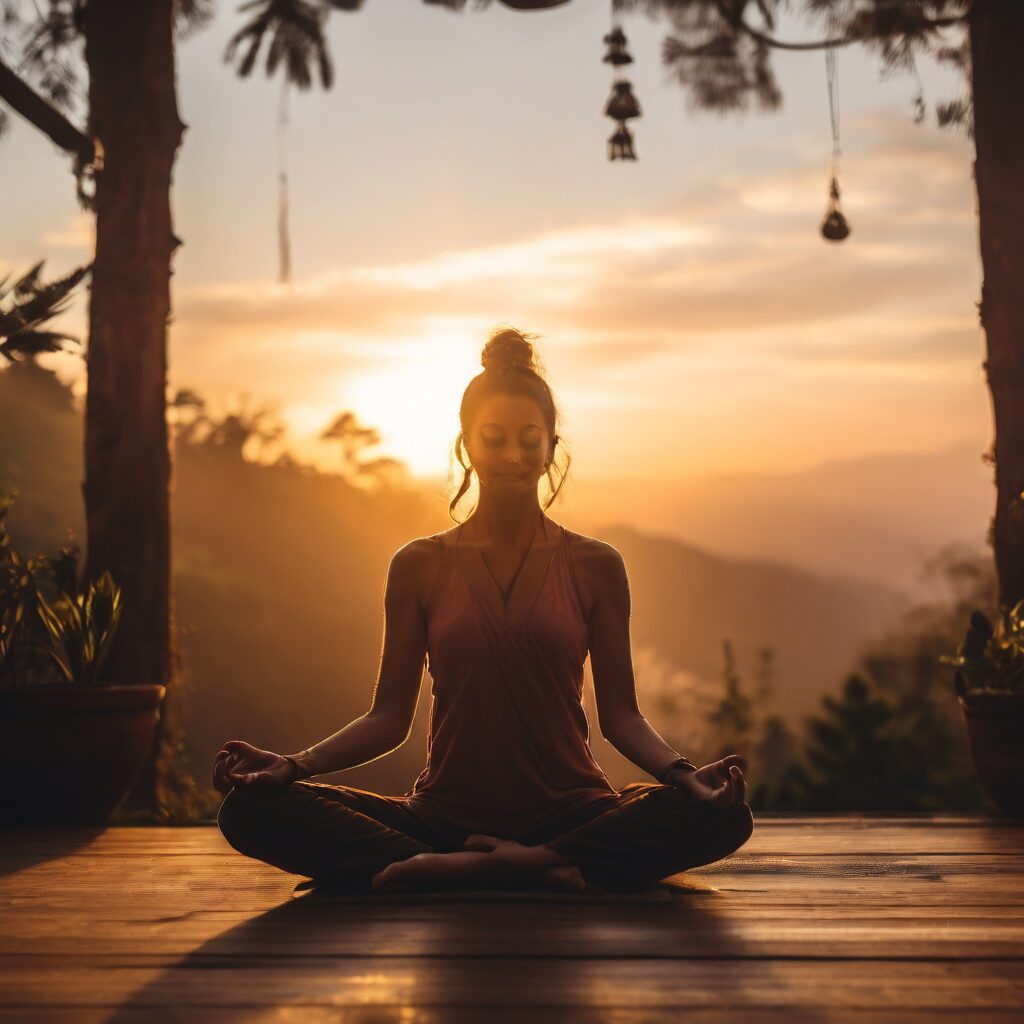
As we usher in a new year, many seek to rejuvenate their minds and bodies through yoga and meditation. Attending a retreat allows you to disconnect from the hustle of everyday life and focus on your well-being. Here are six yoga and meditation retreats that promise to help you start the new year on a serene note.
1. Ananda in the Himalayas, India
Located in the tranquil foothills of the Himalayas, Ananda is a world-renowned wellness retreat. This retreat offers a variety of yoga and meditation programs tailored to individual needs. The serene environment, combined with expert guidance, ensures a transformative experience.
- Focus: Yoga and Ayurveda
- Duration: 7-21 days
- Highlights: Personalized wellness programs, organic cuisine, spa treatments
2. Shambhala Mountain Center, Colorado, USA
Nestled in the Rocky Mountains, the Shambhala Mountain Center offers an idyllic setting for deep meditation and yoga practice. The center provides various retreats throughout the year, making it a perfect destination for those looking to start the year with mindfulness.
- Focus: Meditation and Mindfulness
- Duration: 3-14 days
- Highlights: Buddhist teachings, nature hikes, contemplative arts
3. Kamalaya, Koh Samui, Thailand
Kamalaya is an award-winning wellness sanctuary and holistic spa resort located on the tropical island of Koh Samui. Their New Year’s retreat focuses on detoxification and rejuvenation, blending yoga, meditation, and nutritional guidance.
- Focus: Detox and Rejuvenation
- Duration: 5-14 days
- Highlights: Detox programs, wellness cuisine, holistic therapies
4. Spirit Rock, California, USA
Spirit Rock is known for its intensive meditation retreats inspired by Buddhist teachings. Located in the serene hills of Marin County, this retreat offers a peaceful environment to deepen your meditation practice and embrace mindfulness.
- Focus: Insight Meditation
- Duration: 7-30 days
- Highlights: Silent retreats, Dharma talks, walking meditation
5. Blue Spirit, Costa Rica
Blue Spirit, located in Nosara, Costa Rica, offers a perfect blend of yoga, meditation, and nature. Their New Year’s retreat focuses on renewal and transformation, providing participants with tools to embrace the new year with a fresh perspective.
- Focus: Yoga and Transformation
- Duration: 7-14 days
- Highlights: Beachfront yoga, eco-luxury accommodations, organic meals
6. Esalen Institute, California, USA
The Esalen Institute, perched on the stunning cliffs of Big Sur, offers a range of retreats that combine yoga, meditation, and personal growth workshops. Their holistic approach ensures a comprehensive experience that nurtures both mind and body.
- Focus: Personal Growth and Healing
- Duration: 3-15 days
- Highlights: Hot springs, workshops, bodywork sessions
Logistics and Travel Planning for Remote Wellness Destinations
Booking a retreat for the New Year requires more than just picking a location; it demands a strategic approach to travel logistics, especially when dealing with remote sanctuaries like Ananda in the Himalayas or the secluded cliffs of Big Sur. Many of these centers are located several hours from major international airports. When planning your journey, prioritize booking “meet and greet” transfer services directly through the retreat provider rather than relying on local taxis. This ensures that you arrive at your destination safely, especially if you are traveling during winter storms or peak holiday traffic. Furthermore, research the “micro-climate” of your destination. While Costa Rica in January is warm, the high altitude of the Colorado Rockies requires specific gear, such as thermal base layers and high-traction footwear for walking meditations in the snow. Always check if the facility provides yoga mats and props; if you are particular about your practice equipment, consider bringing a high-quality travel mat that can be folded into a suitcase to avoid the bulk of a standard mat.
Navigating the Digital Detox: Preparing Your Life for Disconnection
The most profound challenge for modern retreat-goers is the transition from a hyper-connected daily life to a state of sustained mindfulness. To truly reap the benefits of a New Year’s retreat, you must prepare your environment before you leave. Set an “out-of-office” email auto-responder that covers the entire duration of your stay, plus an extra 24 hours on either side to allow for a gentle re-entry. If you struggle with the urge to check your phone, consider using a “digital lockbox” or leaving your laptop at home entirely. Many participants find that the anxiety of disconnection peaks within the first 48 hours; acknowledge this as a normal physiological withdrawal from dopamine-heavy digital stimuli. Use the “pre-retreat” phase to finish pending projects and settle outstanding financial or domestic obligations. By clearing your mental deck, you allow the retreat’s meditation practices to penetrate deeper into your subconscious, rather than having your mind preoccupied with tasks left undone back home.
The Anatomy of a Silent Retreat: What to Expect Beyond the Silence
For those considering intensive options like Spirit Rock, it is vital to understand that “silence” in a retreat context is not merely the absence of speech. It is a structured container for introspection. You will likely be asked to refrain from eye contact, reading, writing (unless it is journaling), and listening to music. This is designed to reduce external sensory input so that you can observe the habitual patterns of your own mind. Expect “Dharma talks” or lectures in the evenings where the silence is broken by a teacher; these sessions are essential for contextualizing the mental agitation that often arises during silent practice. If you find yourself experiencing intense emotions—which is common when the “noise” of daily life is removed—remember to utilize the support staff. Most centers have experienced practitioners available for one-on-one sessions to help you process any difficult memories or sensations that surface during your silence.
Nutritional Alignment and the Post-Retreat Transition
Many New Year’s retreats, particularly those in Thailand or India, emphasize Ayurvedic or plant-based detox diets. While these menus are designed to flush toxins and reset your digestive system, they can be a shock to a body accustomed to caffeine, sugar, and processed foods. A week before your departure, begin a “tapering” process: reduce your caffeine intake to avoid withdrawal headaches during your retreat, and shift toward more whole foods. Once the retreat concludes, the transition back to your “real life” diet should be equally mindful. Returning home and immediately consuming heavy, processed meals can cause physical distress and negate the digestive benefits you gained. Plan your first three days back home by stocking your fridge with easy-to-digest, clean meals that mimic the nutritional profile of your retreat, allowing your body to acclimate slowly to your normal schedule.
Creating a “Home Sanctuary” to Extend the Retreat Experience
The greatest risk of a New Year’s retreat is that the peace you cultivate dissipates within days of returning to your office. To prevent this, treat your home environment as a continuation of your practice. Before you leave for your retreat, designate a specific corner or room in your house that is strictly for yoga and meditation. Clear out the clutter, add a soft rug, a few plants, and perhaps a small altar or meaningful object. When you return, immediately establish a “morning anchor” ritual—even if it is just ten minutes of the breathing techniques you learned. By physically returning to the same spot every day, you create a Pavlovian response that triggers your nervous system to drop into a state of relaxation. If you enjoyed a specific type of guided meditation at the retreat, download those tracks or find similar ones to use as your daily soundtrack, bridging the gap between the sanctuary and your living room.
Addressing Potential “Retreat Fatigue” and Social Dynamics
Retreats can be emotionally taxing, and it is common to experience “retreat fatigue” around the third or fourth day. This is the point where the initial excitement fades, and the reality of the intensive schedule sets in. If you find yourself feeling irritable or socially exhausted, give yourself permission to skip an optional workshop or afternoon session. It is often during these “missed” moments of rest that the most significant internal shifts occur. Furthermore, be mindful of the social dynamics. While it is wonderful to bond with fellow travelers, some participants may be processing heavy personal trauma. Set clear boundaries regarding your own energy levels; it is perfectly acceptable to participate in group meals while remaining quiet if you are in a process of introspection. Remember, you are there for your own transformation, and protecting your inner space is a fundamental part of the work.
FAQ
What should I bring to a yoga and meditation retreat?
Comfortable clothing, a yoga mat, reusable water bottle, journal, and any personal items that help you relax and focus.
Are these retreats suitable for beginners?
Yes, most retreats offer programs for all levels, from beginners to advanced practitioners.
How much do these retreats typically cost?
Prices vary depending on the location and duration but typically range from $500 to $5000.
Can I attend a retreat alone?
Absolutely. Many people attend retreats solo to focus on their personal growth and well-being.
How do I choose the right retreat for me?
Consider what you hope to achieve, the location, duration, and the types of programs offered. Research and read reviews to find a retreat that aligns with your goals.
Related posts:
 New Year’s Eve Yoga Retreats for Ultimate Reset
 Cannabis Retreats Are the New Wellness Getaway (And They’re Coming to Your State)
 Best Summer Weekend Retreats 2017
 Inside the Wellness Retreat That’s Redefining Healthy Luxury
 An Introvert’s Guide to She Recovers Retreats
 Well+Good Retreats Announcement
 Balencyoga: Luxury Yoga Wear
 Wellness Retreats for Black Women