
Starting a new fitness routine can be daunting, especially if you’re new to exercise. However, cardio workouts are an excellent way to get your heart pumping and improve your overall health. This beginner-friendly cardio workout is designed to be easy to follow and effective in helping you achieve your fitness goals.
Why Cardio is Important
Cardiovascular exercise, commonly known as cardio, is any exercise that raises your heart rate. It is essential for maintaining a healthy heart and lungs, improving circulation, and increasing your overall fitness level. Regular cardio exercise can also help with weight loss, reduce stress, and improve mental health.
Getting Started: Warm-Up
Before diving into the workout, it’s crucial to warm up your muscles and prepare your body for exercise. A proper warm-up can prevent injuries and improve performance. Spend 5-10 minutes doing light activities such as:
- Walking in place
- Arm circles
- Leg swings
- Gentle stretching
The Beginner-Friendly Cardio Workout
1. Jumping Jacks
Start with 1 minute of jumping jacks. This classic exercise helps to increase your heart rate and warms up your entire body.
2. Marching in Place
Next, march in place for 2 minutes. Lift your knees high and swing your arms to increase the intensity.
3. High Knees
Perform high knees for 1 minute. This exercise targets your lower body and core while also raising your heart rate.
4. Butt Kicks
For 1 minute, do butt kicks. This exercise works your hamstrings and glutes, and keeps your heart pumping.
5. Side Steps
Step side to side for 2 minutes, adding a slight squat for extra intensity. This move works your legs and glutes while keeping your heart rate up.
6. Cool Down
End your workout with a 5-minute cool-down. Walk in place and do some gentle stretching to bring your heart rate down gradually.
Tips for Success
Here are some tips to help you get the most out of your cardio workout:
- Stay hydrated: Drink water before, during, and after your workout.
- Wear appropriate footwear: Ensure you have supportive shoes to prevent injury.
- Listen to your body: If something doesn’t feel right, stop and rest.
- Start slow: If you’re new to exercise, begin with shorter workouts and gradually increase the duration and intensity.
Deepening Your Practice: The FITT Principle for Beginners
Once you have mastered the basic movements of a cardio routine, the next step is understanding how to evolve that routine so your body continues to adapt and improve. This is where the FITT principle—Frequency, Intensity, Time, and Type—becomes an essential tool for any beginner. By adjusting these four variables, you can ensure that your heart health continues to trend upward without hitting a frustrating plateau.
Frequency refers to how often you perform your cardio sessions. While the initial recommendation might be three days a week, a natural progression involves moving toward five days of moderate activity. However, the key is not just adding days, but strategically placing them. For instance, instead of doing three days in a row and then resting for four, try an ‘on-off-on’ schedule to allow your muscle glycogen stores and nervous system to recover. This prevents the ‘burnout’ phase many beginners experience in week three or four.
Intensity is perhaps the most misunderstood variable. Many beginners assume they must be gasping for air for a workout to be effective. In reality, staying within a ‘moderate’ intensity zone—where you are breathing harder than usual but can still carry on a fragmented conversation—is often more beneficial for building a foundational aerobic base. You can measure this using the Rate of Perceived Exertion (RPE) scale, where 1 is sitting on a couch and 10 is an all-out sprint. For this beginner routine, aim for an RPE of 4 to 6.
Time and Type are the final pieces. If you have been doing the 15-minute circuit provided, try adding just two minutes to the total duration every week. This ‘10% rule’ is a gold standard in fitness to prevent overuse injuries. As for Type, don’t be afraid to swap one of the exercises for something similar. If ‘Butt Kicks’ feel repetitive, try ‘Skaters’ or ‘Mummy Kicks’ to engage different stabilizing muscles while keeping the cardiovascular demand high.
Mastering the “Talk Test” and Heart Rate Monitoring
Understanding how your heart responds to stress is the cornerstone of effective cardio. While many people use high-tech smartwatches, beginners can benefit immensely from learning to read their body’s internal signals. The ‘Talk Test’ is a scientifically validated method to ensure you are working in the correct zone. If you can sing a song while doing your high knees, you are likely in a low-intensity zone (Zone 1). If you can speak in full sentences but can’t sing, you are in the ideal aerobic zone (Zone 2). If you can only manage one or two words at a time, you have crossed into anaerobic territory, which might be too intense for a daily beginner routine.
For those who prefer data, calculating your Maximum Heart Rate (MHR) is a great starting point. A simple, though generalized, formula is 220 minus your age. As a beginner, your ‘sweet spot’ for improving cardiovascular health is typically between 50% and 70% of that number. For example, a 40-year-old would have an estimated MHR of 180 beats per minute (BPM). Their target range for this workout would be 90 to 126 BPM. Monitoring this helps you avoid the common mistake of ‘gray zone’ training—working too hard to recover quickly, but not hard enough to trigger significant athletic gains.
It is also important to note the phenomenon of ‘cardiac drift.’ You might notice that while your pace or intensity stays the same during the 20-minute workout, your heart rate slowly climbs. This is often due to rising core body temperature or slight dehydration. If you see your heart rate spiking toward the end of the session, don’t panic; simply slow down the tempo of your marching or side steps to bring it back into a manageable range. This awareness helps you finish the workout feeling energized rather than depleted.
Low-Impact Modifications for Joint Longevity
Cardio should strengthen your heart, not damage your joints. Many beginners carry extra weight or have previous injuries that make high-impact movements like jumping jacks feel uncomfortable. The key is to find ‘low-impact’ variations that keep the heart rate high while keeping at least one foot on the ground at all times. This drastically reduces the force sent through the ankles, knees, and hips.
Instead of traditional jumping jacks, try the ‘Step Jack.’ Extend your right arm and right leg out to the side simultaneously, then return to center and repeat on the left. You still get the full range of motion in the shoulders and the lateral movement in the hips, but without the jarring landing. For ‘High Knees,’ focus on a ‘Power March.’ Instead of a running motion, drive your knee upward with explosive intent while swinging the opposite arm vigorously. The secret to keeping the heart rate up in low-impact moves is the ‘arm-to-heart’ relationship: the higher and more vigorously you move your arms, the harder your heart has to work to pump blood to those extremities.
Another excellent edge case is the ‘Wall March.’ If you struggle with balance during high knees or butt kicks, place your hands against a wall at shoulder height, lean forward at a slight angle, and perform the movements there. The wall provides stability, allowing you to focus entirely on the leg drive and cardiovascular output. This is particularly useful for those recovering from lower-back issues, as the wall helps maintain a neutral spine throughout the exercise. By prioritizing form and joint safety, you ensure that you can stay consistent with your routine for months and years, rather than being sidelined by a preventable injury in the first week.
Refining Form: Common Mistakes and Corrections
Even the simplest cardio moves can lead to discomfort if performed with poor mechanics. Let’s look at the ‘Side Step’ mentioned in the original routine. A common mistake is letting the knees cave inward (valgus collapse) as you step. This puts immense pressure on the ACL and medial ligaments. To correct this, imagine you are stepping over a small hurdle. Keep your toes pointed forward and ensure your knees track directly over your second and third toes. Engaging your glutes throughout the lateral movement will provide the stability needed to protect the knee joint.
With ‘Butt Kicks,’ many beginners arch their lower back excessively to get their heels to touch their glutes. This ‘anterior pelvic tilt’ can lead to lower back pain. To fix this, engage your core as if someone is about to poke you in the stomach. Keep your thighs perpendicular to the floor; the goal isn’t necessarily to hit your glutes, but to dynamically stretch the quads while keeping the heart rate elevated. If you feel a pinch in your lower back, shorten the range of motion and focus on a quicker, smaller kick.
Finally, consider the ‘Jumping Jack’ landing. If you land with ‘heavy’ feet or locked knees, you are inviting shin splints. You should aim to be as silent as possible. Land on the balls of your feet and immediately roll back toward the heels, keeping a slight bend in the knees at all times. This ‘soft landing’ technique acts as a natural shock absorber. If you can hear your feet hitting the floor loudly, you are likely landing too flat-footed. Practice in front of a mirror to ensure your shoulders stay down and relaxed; shrugging your shoulders during cardio can lead to tension headaches and neck strain.
Adapting Cardio to Small Spaces and Busy Schedules
One of the biggest barriers to cardio is the belief that you need a gym or a vast outdoor track. In reality, you can achieve a high-quality aerobic workout in a space no larger than a yoga mat. This ‘one-square-meter’ approach is perfect for apartment dwellers or those traveling for work. The key to small-space cardio is utilizing verticality and rapid directional changes. Exercises like ‘Pitter-Patter’ (fast feet in place) or ‘Box Steps’ (stepping forward, forward, back, back) require almost no room but demand significant oxygen from the lungs.
If you find yourself short on time, consider ‘Micro-Workouts.’ Research suggests that three 10-minute bouts of cardio spread throughout the day can be just as effective for heart health as one continuous 30-minute session. You could do the warm-up and jumping jacks before breakfast, the marching and high knees during a lunch break, and the side steps and cool-down in the evening. This ‘stacking’ method lowers the psychological hurdle of ‘finding time’ to exercise.
For those who find indoor cardio boring, environmental ‘anchoring’ can help. Use a specific playlist that you *only* listen to during your workout. This creates a neurological association between the music and the physical effort, making it easier to start the routine on days when motivation is low. If you are working out in a small room, ensure there is adequate ventilation. Open a window or use a fan; as your core temperature rises, your perceived exertion increases. Staying cool allows you to work out longer with less discomfort, effectively increasing your endurance without any extra physical effort.
The Role of Breathing and the ‘Side Stitch’ Mystery
Proper breathing is the fuel for your cardiovascular engine. Many beginners fall into the trap of ‘chest breathing’—shallow, rapid breaths that only fill the upper portion of the lungs. This can lead to dizziness and a rapid spike in heart rate that isn’t proportional to the work being done. Instead, practice ‘diaphragmatic breathing’ or belly breathing. As you march or do your side steps, try to inhale through your nose, feeling your belly expand, and exhale forcefully through pursed lips. This ensures maximum oxygen exchange and helps stabilize your core.
A common complaint during beginner cardio is the ‘side stitch’ (exercise-related transient abdominal pain). While the exact cause is debated, it is often linked to the diaphragm tugging on the ligaments of the internal organs. If a stitch strikes during your workout, don’t stop abruptly. Instead, slow your pace to a gentle march and exhale deeply every time the foot *opposite* to the side of the pain hits the ground. For example, if the pain is on your right side, exhale as your left foot touches the floor. This alters the pressure in the abdominal cavity and often provides immediate relief.
Furthermore, rhythmic breathing can help you find a ‘flow state.’ Try to sync your breath with your movements. For instance, inhale for four steps of marching and exhale for four steps. This rhythmic pattern reduces the cognitive load of the exercise, making the time pass faster. As you become more fit, you will notice that your breathing returns to a resting rate much faster after the workout ends. This ‘recovery heart rate’ is one of the best indicators of an improving cardiovascular system, often showing progress even before the scale moves.
Hydration, Electrolytes, and Post-Workout Recovery
Cardio performance is heavily dictated by your internal fluid balance. Even a 2% drop in body weight due to fluid loss can make a beginner-friendly workout feel like a grueling marathon. While the original advice to ‘drink water’ is sound, it’s important to understand the timing. Chugging a liter of water right before jumping jacks will likely lead to stomach discomfort. Instead, aim to drink 16 ounces of water about two hours before your workout, and then just small sips during the session itself.
For sessions longer than 30 minutes, or if you are a ‘heavy sweater,’ water alone might not be enough. Electrolytes—specifically sodium, potassium, and magnesium—are responsible for the electrical signals that make your heart beat and your muscles contract. If you feel unusually shaky or develop a headache after your cardio, you might be low on these minerals. A simple home-made electrolyte drink (water, a pinch of sea salt, and a splash of orange juice) can be more effective than sugary commercial sports drinks for a beginner.
FAQ
1. How often should I do this cardio workout?
For beginners, aim to do this workout 3-4 times a week. As you become more comfortable and your fitness improves, you can increase the frequency and duration.
2. Can I modify the exercises if I have joint pain?
Yes, you can modify the exercises to reduce impact. For example, you can do low-impact jumping jacks by stepping side to side instead of jumping.
3. How long should I do this workout before seeing results?
Results vary for everyone, but with consistent effort, you can start noticing improvements in your fitness level and energy within a few weeks.
4. What should I eat before and after my cardio workout?
Before your workout, eat a small, balanced meal or snack that includes carbohydrates and protein. After your workout, refuel with a meal that includes protein, healthy fats, and carbs to aid recovery.
5. Can I combine this workout with strength training?
Absolutely! Combining cardio with strength training can provide a well-rounded fitness routine. Just make sure to give your body adequate rest between intense sessions.
Related posts:
 Understanding Gym Equipment
 The Dark Side of Cardio
 30-Minute Cardio Medley Workout
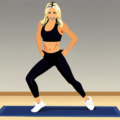 Quick Cardio Fix: Tracy Anderson’s 7-Minute Heart-Pumping Workout Video
 15-Minute No-Equipment HIIT
 PHA Bodyweight Workout: Efficient Fitness Anywhere, Anytime
 Infinity Rope: Weighted Jump Rope Review
 10-Minute Full Body Workout