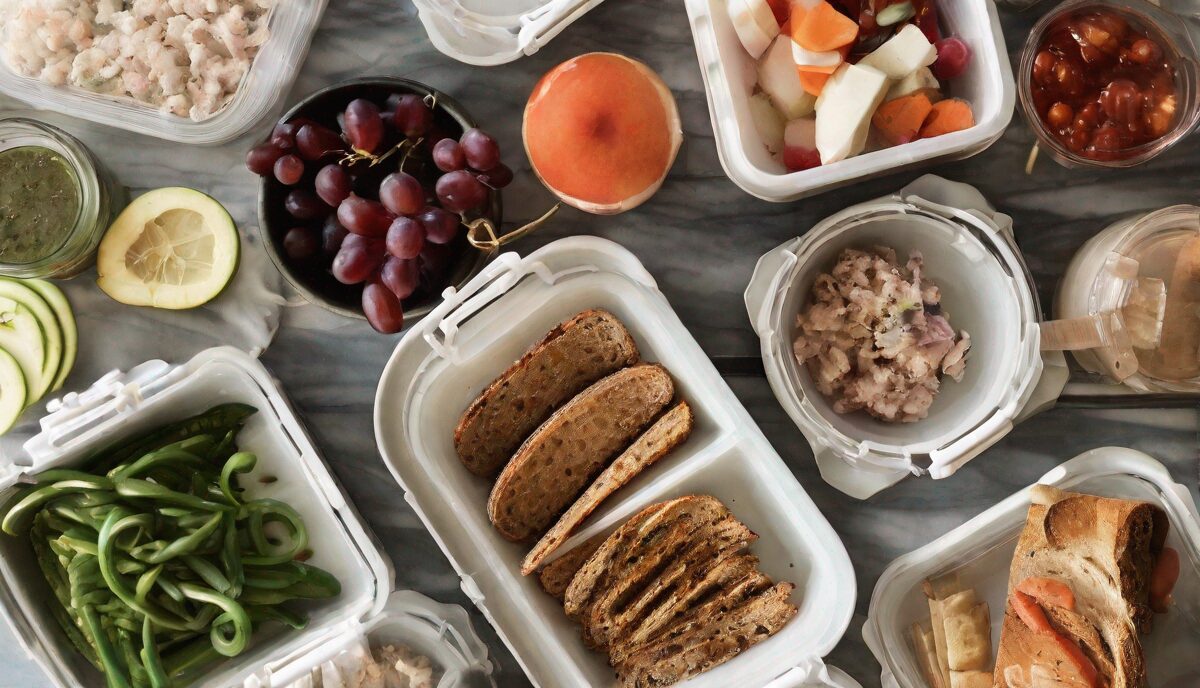
Making lunches for the week can be a daunting task, especially when you’re trying to balance a healthy diet, variety, and your budget. But what if you could turn this chore into a fun, social event that not only saves you time during the week but also introduces you to new recipes and a supportive community? Welcome to the concept of a Sunday Supper Club that focuses on meal prepping lunches for the week ahead!
Key takeaways
- Collaborate on bulk cooking to save time, reduce grocery costs, and increase dietary variety through shared recipes.
- Organize kitchens into specific zones for prep, cooking, and sanitation to maximize efficiency and prevent culinary chaos.
- Use a component-based prep model to store individual ingredients separately, allowing for daily customization and better fridge organization.
- Adopt a base-plus-add-on strategy to easily accommodate diverse dietary needs and allergies within the group.
- Implement professional food safety practices like rapid cooling in ice baths and using vacuum sealers to preserve food quality.
What is a Sunday Supper Club?
A Sunday Supper Club is a gathering of individuals who meet on Sundays to cook large batches of food together. The goal is to prepare multiple meals that can be enjoyed throughout the week. It’s a chance to socialize, share recipes, and learn new cooking techniques while ensuring you have a fridge full of healthy, home-cooked meals ready to go.
Benefits of Joining a Supper Club
- Meal Planning Efficiency: Collaborating on meal prep turns a time-consuming task into an efficient assembly line.
- Cost Savings: Buying ingredients in bulk and sharing the expenses cuts down on costs.
- Variety in Your Diet: Different members bring different recipes to the table, literally.
- Community Building: It’s an opportunity to create lasting friendships over the love of food.
How to Start Your Own Sunday Supper Club
Starting your own Sunday Supper Club is simple. Here’s a step-by-step guide to get you going:
- Reach out to friends, family, and colleagues who might be interested in joining.
- Set a consistent meeting time and location that works for all members.
- Decide on the meals you’d like to prepare in advance.
- Divide the shopping list evenly among members.
- Get cooking! Assign tasks based on members’ skills and preferences.
Recipes Perfect for Batch Cooking
Some dishes are particularly well-suited for batch cooking and can easily be stored and reheated throughout the week. Here are a few favorites:
- Hearty soups and stews
- One-pot pasta dishes
- Grain bowls with roasted vegetables
- Baked casseroles
- Marinated and grilled proteins
Storing and Reheating Meals
Proper storage and reheating are crucial to maintaining the quality of your meals. Invest in good-quality, airtight containers, and label your meals with the date they were made. Most dishes will keep in the fridge for up to four days, and anything you won’t eat within that time can be frozen for later.
Optimizing Your Kitchen Workflow for Multi-Chef Environments
When four or more people descend upon a single kitchen, the risk of culinary chaos is high. To prevent bottlenecks, designate specific “stations” based on the meal components. Create a prep zone for chopping vegetables, a heat zone for searing proteins or boiling grains, and a sanitation zone for constant cleaning. Utilizing portable induction burners can expand your cooking surface area beyond the stovetop, allowing multiple members to sauté or simmer simultaneously. Always establish a “clean as you go” mandate; have a dedicated wash-station member or a rotation schedule to ensure that mixing bowls and cutting boards are recycled back into the workflow immediately. This logistical approach keeps the assembly line moving and prevents the kitchen from becoming a cluttered obstacle course.
Strategic Ingredient Sourcing and Bulk Logistics
The financial advantage of a Supper Club relies heavily on strategic sourcing. Instead of standard grocery stores, look toward restaurant supply warehouses or local farmers’ cooperatives. When buying in bulk—such as a 25-pound bag of jasmine rice or a case of organic kale—the price per serving drops significantly. Create a shared digital spreadsheet that calculates the exact cost per unit, allowing you to split the bill with mathematical precision. Consider “split-buying” high-cost items like saffron, pine nuts, or high-quality olive oil, which might be cost-prohibitive for a single household but highly affordable when amortized across six participants. This economic synergy allows the group to elevate the quality of ingredients, such as choosing pasture-raised meats or artisanal cheeses, without exceeding your individual weekly food budget.
Advanced Preservation and Food Safety Protocols
Moving beyond basic refrigeration, Supper Clubs should prioritize professional-grade food safety. Invest in a vacuum sealer to extend the shelf life of proteins and pre-prepped ingredients by removing oxygen, which prevents freezer burn and flavor degradation. For items like leafy greens, use “spin and store” methods with paper towels in airtight containers to maintain crispness for the full work week. Furthermore, understand the “danger zone” of temperature control: if you are cooling large batches of soups or stews, utilize an ice bath in the sink to bring the internal temperature down rapidly before moving items to the refrigerator. This not only keeps the food safer but also prevents your fridge from working overtime to compensate for a large, hot container, which could potentially raise the temperature of other stored items.
Curating a Rotating Menu for Nutritional Balance
Prevent “meal fatigue” by implementing a rotating menu theme that changes monthly. Dedicate one Sunday to Mediterranean flavors, the next to Southeast Asian curries, and another to Latin-inspired whole foods. By rotating themes, you ensure a broad spectrum of macronutrients and micronutrients throughout the month. Use a collaborative platform like Trello or a shared Google Doc to propose recipes a week in advance, allowing members to upvote or flag potential allergens. This democratic process ensures that everyone is invested in the menu and that the nutritional profile—balancing fiber, healthy fats, and lean proteins—remains robust. It also prevents the common trap of relying too heavily on carb-heavy comfort foods, keeping the energy levels of all members consistent for the work week ahead.
The Art of the “Component-Based” Prep
Not every dish needs to be fully assembled in the kitchen. Transitioning to a component-based prep model allows for more individual customization during the week. Instead of making five pre-mixed bowls, roast a giant tray of seasonal vegetables, grill a variety of proteins, and prepare two different dressings and a batch of complex grains. Pack these components separately into individual containers. This modular approach allows members to mix and match their lunches each morning, preventing the repetition that often leads to eating out. It also simplifies the storage process, as modular containers stack more efficiently than bulky, pre-assembled casseroles or large bowls, maximizing limited refrigerator shelf space.
Managing Dynamic Dietary Needs and Allergies
A successful Supper Club must be an inclusive space. When dealing with diverse dietary needs—such as gluten intolerance, veganism, or keto preferences—the best approach is a “base-plus-add-on” strategy. Prepare the core of the meal to be plant-based and gluten-free, then offer proteins or grain-free alternatives as side additions. For instance, a hearty vegetable tagine can be served over quinoa for most members, while a cauliflower rice alternative can be provided for those on low-carb diets. Use color-coded labels (e.g., green dots for vegan, red for meat-inclusive) to avoid confusion during the packaging process. This proactive communication removes the stress of dietary restrictions and ensures that every member leaves with a week’s worth of food they can safely and happily consume.
FAQs About Sunday Supper Clubs
How many people should be in a Sunday Supper Club?
While there’s no set number, a group of 4-6 people is manageable and allows for a variety of meals without being overwhelming.
What if members have dietary restrictions?
Discuss any dietary needs upfront and choose recipes that can be easily modified to accommodate everyone.
Can kids participate in the Supper Club?
Absolutely! Cooking with kids can be educational and fun. Assign them age-appropriate tasks to get them involved.
How should costs be split among members?
Costs can be divided equally, or members can take turns paying for groceries. Keep track of receipts and settle up at the end of each session.
Do all meals have to be cooked at the same location?
Not necessarily. If space is an issue, members can prep some components at home and assemble dishes together.
Related posts:
 The Meal Prep Mistakes Sabotaging Your Healthy Eating
 The Best Snapchat Accounts for Healthy Recipe Inspiration
 Meal Prepping Strategies for Busy Professionals
 The Meatpacking District’s Newest “Club” Is for Runners, Not Dancers
 The Chef Revolution Transforming School Lunch One Healthy Meal at a Time
 Inside a Healthy Supper Club, Brooklyn’s Best Kept Vegan Secret
 The Meal Prep Master Class That Will Save You Hundreds Every Month
 NYC’s Healthiest Meal Delivery Services That Actually Taste Amazing