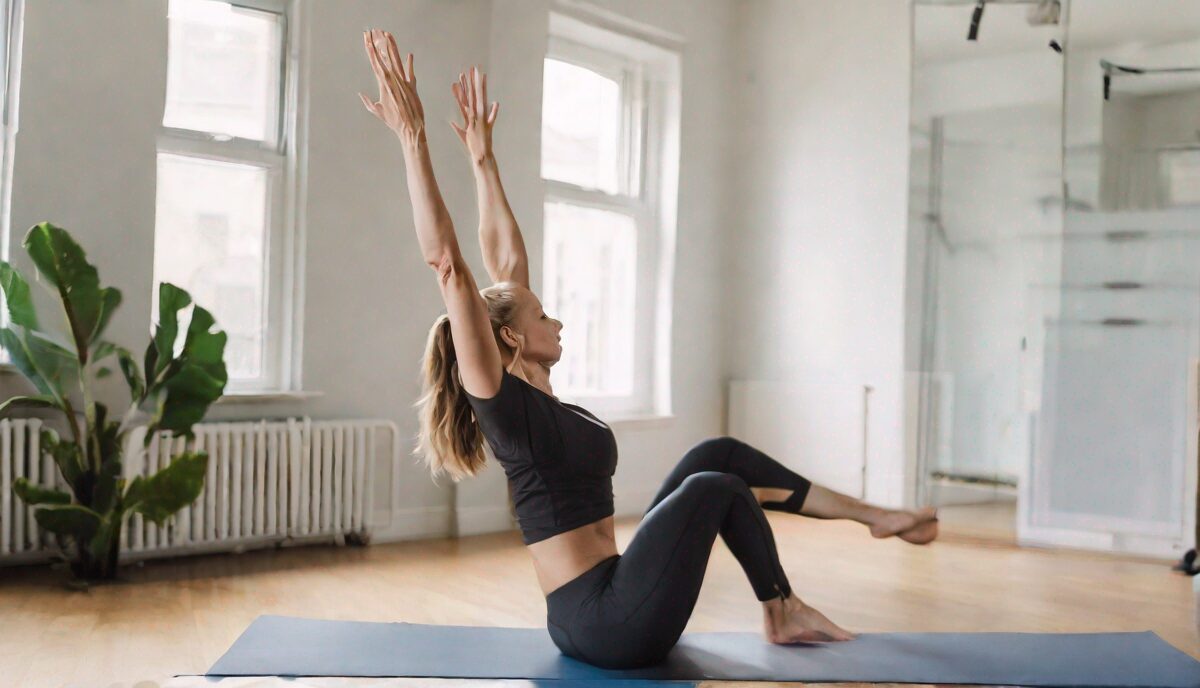
Embarking on a fitness journey can be both exciting and daunting. Pilates, known for its ability to improve flexibility, strength, and body awareness, is a perfect exercise to incorporate into your routine. If you’re looking to tone your body and enhance your physical fitness, this week-long Pilates plan is designed to help you achieve just that. Let’s dive into a daily schedule that will have you feeling stronger and more sculpted in just seven days.
Day 1: Introduction to Pilates Fundamentals
Start your week with the basics. Focus on your breath, posture, and alignment. Practice the Pilates breath, which involves deep, controlled inhales and exhales to activate your core. Begin with exercises like the Pelvic Curl, Chest Lift, and Spine Twist to build a solid foundation.
Day 2: Core Strengthening
On the second day, challenge your core with a series of exercises that target your abdominal muscles. Incorporate the Hundred, Single Leg Stretch, and Double Leg Stretch to engage and strengthen your powerhouse—the center of your body.
Day 3: Lower Body Focus
Day three is all about the legs and glutes. Exercises like Side Kicks, Leg Circles, and the Bridge will help you sculpt and tone your lower body while maintaining core engagement throughout the session.
Day 4: Upper Body and Arm Toning
Pilates isn’t just for the core and lower body. Utilize exercises such as the Pilates Push-up, Tricep Dips, and the Arm Circle to define your arms and shoulders, creating a balanced full-body workout.
Day 5: Flexibility and Balance
Midway through the week, focus on exercises that promote flexibility and balance. The Saw, Mermaid, and Standing Roll-down will stretch your muscles and improve your overall body control and stability.
Day 6: Integration and Flow
Combine what you’ve learned throughout the week into a flowing sequence. This integration will help you understand how the exercises connect and how your body moves as a cohesive unit. Try a Pilates flow that transitions smoothly from one exercise to the next.
Day 7: Rest and Reflect
On the final day, allow your body to rest. Reflect on your progress, and consider how you can integrate Pilates into your long-term fitness routine. Gentle stretching or a mindful walk could be beneficial on this recovery day.
Optimizing Breathwork for Metabolic Activation
While basic Pilates breathing acts as the anchor for your practice, understanding the physiological mechanics of lateral thoracic breathing is essential for unlocking deeper core engagement. Unlike diaphragmatic breathing, which pushes the belly out, lateral breathing involves expanding the ribcage laterally while maintaining a constant, subtle engagement of the transverse abdominis. To master this, wrap a towel around your ribcage, holding the ends in front of you. As you inhale through your nose, aim to feel the ribs expand into the towel. As you exhale forcefully through pursed lips, draw the ribs together and down. This technique ensures that your core remains braced throughout the entire range of motion, providing a stable “corset” effect that protects your lumbar spine during intense movements like the Double Leg Stretch.
Advanced Prop Integration: Elevating the Mat Routine
Once you have mastered the bodyweight fundamentals, introducing small props can drastically alter the lever length and resistance of your movements. A Pilates ring (or magic circle) placed between the ankles during the Hundred adds an adductor-activating component that intensifies the burn in the inner thighs. Alternatively, using a soft Pilates ball behind the lower back during the Chest Lift provides tactile feedback for spinal articulation, allowing you to focus on peeling the vertebrae off the mat one by one rather than crunching from the neck. These props are not merely accessories; they serve as biofeedback tools that force the smaller, stabilizing muscles to fire, preventing the larger, dominant muscle groups from taking over the movement pattern.
The Science of Spinal Articulation and Postural Correction
Many participants struggle with stiff thoracic spines, which can lead to neck strain during supine exercises. To correct this, dedicate time to the “Cat-Cow” variation modified for Pilates: the Spine Stretch Forward. Focus on the articulation of each segment of the spine. Imagine your back as a string of pearls; you must lift one pearl at a time off an imaginary wall. When performing the Rolling Like a Ball exercise, do not use momentum to rock back and forth. Instead, focus on the rhythmic compression of your abdominal wall to initiate the movement. By prioritizing segment-by-segment movement, you eliminate the “thud” against the mat, ensuring that your core is doing the heavy lifting rather than relying on hip flexors or gravity.
Correcting Common Biomechanical Pitfalls
Even seasoned practitioners often fall into the trap of “doming,” where the abdominal wall pushes outward during exertion. If you notice your stomach rising during a leg lowering exercise, your core is not successfully managing the load. To rectify this, perform your leg exercises with a smaller range of motion. It is better to lower your legs only 30 degrees while keeping your spine imprinted and your abdominals flat than to lower them 90 degrees while arching your back and popping your belly. Additionally, ensure your shoulders remain “packed”—a term meaning the shoulder blades are sliding down away from the ears toward the back pockets. This reduces tension in the trapezius and prevents the common “neck-heavy” feeling that plagues many beginners.
Micro-Loading for Progressive Overload
To ensure your body continues to change after your first week, apply the principle of progressive overload by manipulating time under tension. Instead of focusing on higher repetition counts, slow down the eccentric phase (the lowering portion) of every movement. For example, during the Pilates Push-up, take a full four seconds to lower your chest toward the mat and one second to push back up. This increased time under tension recruits a higher percentage of motor units, leading to greater muscular endurance and improved definition. By slowing the tempo, you also eliminate the ability to “cheat” with momentum, forcing your stabilizer muscles to remain active throughout the entire duration of the set.
Adapting Pilates for Chronic Tension Patterns
Modern lifestyles often result in “desk-bound” posture, characterized by tight hip flexors and rounded shoulders. To counteract this, modify your Side Kick series to include a “clam” variation, which targets the gluteus medius—a muscle often inhibited by prolonged sitting. When performing the Mermaid stretch, focus on the lateral flexion of the spine while keeping the opposite sit-bone firmly anchored to the floor. If you find your hips lifting, place a yoga block or a folded blanket under your pelvis. This stability allows you to achieve a deeper stretch in the intercostal muscles and the obliques, effectively decompressing the ribcage and improving overall respiratory capacity.
Recovery Protocols: Beyond Passive Rest
Active recovery is the secret to sustaining a long-term Pilates practice. On your rest days, avoid complete inactivity. Instead, engage in “myofascial release” using a foam roller or a tennis ball. Target the IT bands and the thoracic spine to release the connective tissue adhesions that often follow intense weeks of core work. Furthermore, prioritize hydration and electrolyte replenishment, as the precision required in Pilates demands high levels of neuromuscular coordination. When the nervous system is fatigued, your form will suffer; by keeping the body hydrated and the fascia supple, you ensure that your next week of training starts from a baseline of optimal performance rather than a state of cumulative fatigue.
FAQ
- Is this Pilates plan suitable for beginners?
Yes, this plan is designed to be beginner-friendly, introducing fundamental exercises and progressively building intensity throughout the week. - How long should each Pilates session last?
Each session should last between 20 to 30 minutes, ensuring you have enough time to perform each exercise with proper form and control. - Do I need any special equipment?
No special equipment is necessary for this plan. However, a Pilates mat can provide cushioning and support. - Can Pilates help with weight loss?
While Pilates is not primarily a weight-loss exercise, it can complement a weight-loss program by improving muscle tone and increasing metabolic rate. - How often should I do Pilates after this week-long plan?
For best results, aim to incorporate Pilates into your routine 3-4 times per week.
Related posts:
 5-Minute Core Blast Workout
 Advanced Pilates Exercises on the Mat
 Mastering the Pilates Roll-Up: Technique and Benefits
 Kate Hudson’s Safe Pilates Moves for Pregnancy
 Pilates for Older Runners: Improving Strength and Flexibility
 Pilates: The Secret to Core Strength and Stability
 PHA Bodyweight Workout: Efficient Fitness Anywhere, Anytime
 The Celebrity Pilates Pro’s Mat Workout Tips That Actually Work