Focus on Wellness
When starting an ab workout routine, it’s important to focus on overall wellness rather than just core strength or aesthetics. Set intentions to move your body in enjoyable ways and nourish yourself with wholesome foods.
Key takeaways
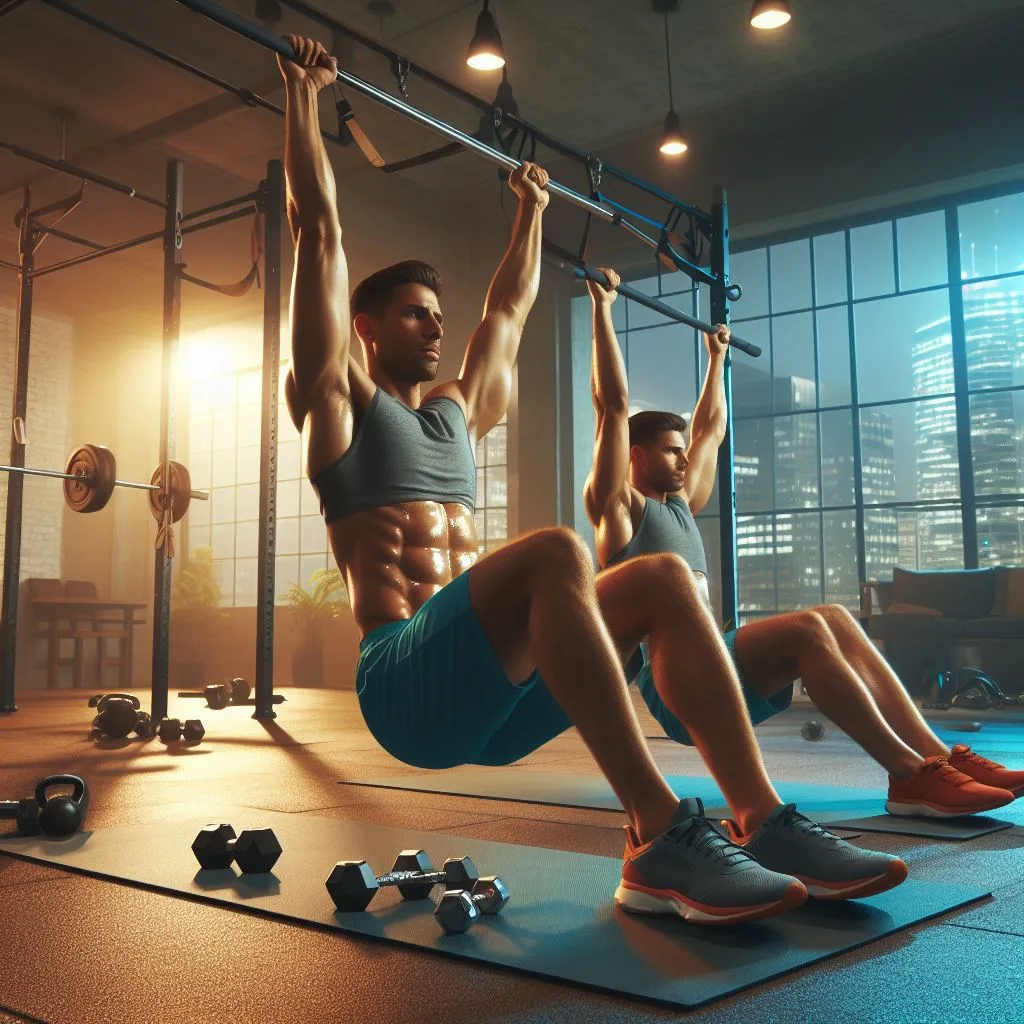
- Follow a structured progression from beginner exercises like planks to advanced moves such as hanging leg raises.
- Aim for two to three dedicated core sessions per week while allowing sufficient time for muscle recovery.
- Prioritize a diet of whole, nutrient-dense foods and proper hydration to support overall abdominal health.
- Focus on consistent functional movements and good posture rather than relying solely on repetitive crunches.
Beginner Core Exercises
- Plank – Helps build core stability
- Bird dog – Improves balance and coordination
- Dead bug – Strengthens transverse abdominis
Intermediate Core Exercises
- Russian twists – Increases rotational strength
- Flutter kicks – Tones lower abs
- Leg raises – Targets upper abs
Advanced Core Exercises
- Hanging leg raises – Challenges entire core
- Ab roll outs – Works abs and back muscles
- Windshield wipers – Hits obliques from side to side
Lifestyle Tips for Core Health
- Stay hydrated
- Listen to your body
- Focus on good posture
- Incorporate dynamic stretches
The Science of Intra-Abdominal Pressure and Bracing
To move beyond basic movements, you must master the mechanics of intra-abdominal pressure. Most trainees mistakenly hold their breath or suck in their stomach during exercises, both of which destabilize the spine. Instead, practice the Valsalva maneuver or bracing technique: imagine someone is about to punch you in the gut. You should engage your core by pushing your abdominal wall outward against your belt or waistband while maintaining a neutral spine. This creates a pressurized cylinder around your midsection, protecting the lumbar discs and allowing for greater force production during heavy hanging leg raises or weighted ab rollouts. Practice this while performing your planks; you will find that a properly braced plank is exponentially more difficult than a relaxed one.
Integrating Anti-Rotation and Anti-Lateral Flexion
The primary function of the core is not to curl the spine, but to resist movement. If you only train with crunches, you are neglecting the oblique and quadratus lumborum muscles responsible for stability. Incorporate “anti-rotation” exercises like the Pallof Press. Attach a resistance band to a vertical anchor at chest height. Stand perpendicular to the anchor, hold the band with both hands at your sternum, and press it straight out. Your goal is to keep your torso perfectly still while the band tries to pull you toward the anchor. Similarly, perform “suitcase carries”—holding a heavy kettlebell in one hand while walking for distance—to train anti-lateral flexion. This forces your obliques to fire unilaterally, preventing the spine from collapsing under load.
The Role of Posterior Chain Connectivity
Your core does not function in isolation; it acts as the bridge between your upper and lower body. If your glutes are weak, your core will struggle to maintain pelvic alignment, often leading to lower back pain during advanced ab work. Exercises like the “Hollow Body Hold” require you to press your lower back into the floor while simultaneously squeezing your glutes and pointing your toes. This full-body tension recruits the posterior chain to support the anterior core. If you find your back arching during leg raises, it is a sign that your glutes and hip flexors are not properly integrated. Focus on “tucking” the pelvis by engaging the glutes before the move begins, which effectively shortens the distance the abs need to travel to maintain tension.
Advanced Progressive Overload Strategies
Once bodyweight movements become easy, you must apply progressive overload to ensure continued hypertrophy. For the ab wheel rollout, do not simply add more repetitions; instead, increase the range of motion by starting from a kneeling position and gradually moving toward a standing rollout. For hanging leg raises, shift the focus from volume to leverage by adding a light dumbbell between your ankles or wearing a weight vest. Another effective method is tempo manipulation: perform a 3-second eccentric (lowering) phase on every repetition. This increases the time under tension for the rectus abdominis, forcing more muscle fiber recruitment without requiring heavy equipment that could strain the hip flexors.
Managing Hip Flexor Dominance
A common pitfall in advanced ab training is “hip flexor takeover,” where the psoas muscles do the bulk of the work during leg-based exercises, leading to tight hips and a lack of abdominal engagement. To mitigate this, prioritize movements that emphasize spinal flexion over hip flexion. When performing leg raises, focus on curling your pelvis toward your ribcage rather than simply lifting your legs toward the ceiling. If you feel excessive tension in the front of your hips, decrease the range of motion and prioritize the “pelvic tilt” portion of the movement. Stretching the hip flexors daily—specifically through the lunge stretch—is crucial for ensuring the abs are the primary movers during hanging or lying movements.
Breathing Patterns for High-Intensity Core Work
Proper breathing is the silent catalyst for core endurance. During high-intensity sets, many trainees fall into the trap of shallow, chest-based breathing, which increases cortisol and decreases core stability. Utilize diaphragmatic breathing between sets to lower your heart rate and reset your nervous system. During the actual movement, exhale forcefully through pursed lips during the contraction phase—when the abs are at their shortest length—and inhale deeply into the belly during the eccentric phase. This rhythmic breathing pattern helps maintain a consistent level of intra-abdominal pressure and allows you to push through “burnout” sets by preventing premature oxygen debt in the local muscle tissue.
Correcting Postural Deviations for Abdominal Visibility
Even with strong abdominals, postural issues like anterior pelvic tilt (an excessive arching of the lower back) can make your stomach appear distended regardless of your body fat percentage. This deviation is often caused by tight hip flexors and a weak posterior chain. To correct this, focus on “cat-cow” mobility drills and glute-bridge variations that emphasize posterior pelvic tilt. By realigning the pelvis, you create a flatter profile for the abdominal wall to sit against. Combine this with exercises that focus on the transverse abdominis—the body’s natural corset—such as the vacuum pose, performed by exhaling all air and pulling the belly button toward the spine. This tightens the deepest layer of the core, creating a more defined, snatched appearance that superficial crunches simply cannot replicate.
FAQ
What are the best beginner ab exercises?
Some great beginner ab exercises include the plank, bird dog, and dead bug. These help build core stability and balance.
How often should I train abs?
Aim for 2-3 dedicated ab workouts per week, allowing rest days for your muscles to recover. Sprinkle in bodyweight core exercises regularly as well.
What should I eat for strong abs?
Focus on whole, nutrient-dense foods like vegetables, fruits, lean proteins, healthy fats, and whole grains. Stay hydrated and limit processed foods.
How long does it take to see results?
With consistent training and proper nutrition, you can expect to see some improvement within a few weeks. But allow several months of dedication to achieve noticeable abdominal definition.
Can I get a 6-pack after age 40?
Getting visible 6-pack abs after 40 takes discipline, but is certainly possible. Focus on full-body functional movements rather than endless crunches.
Related posts:
 Mastering Hanging Leg Raises
 Fitness Trainers Say This Move Beats Squats Every Time
 PHA Bodyweight Workout: Efficient Fitness Anywhere, Anytime
 The Safe Ab Exercises Every Pregnant Woman Should Know
 Top Pilates Moves for Lower Abs
 Managing Hip Pain from Sitting
 Dancers’ Abs Workout for a Strong, Toned Core
 5-Minute Core Blast Workout