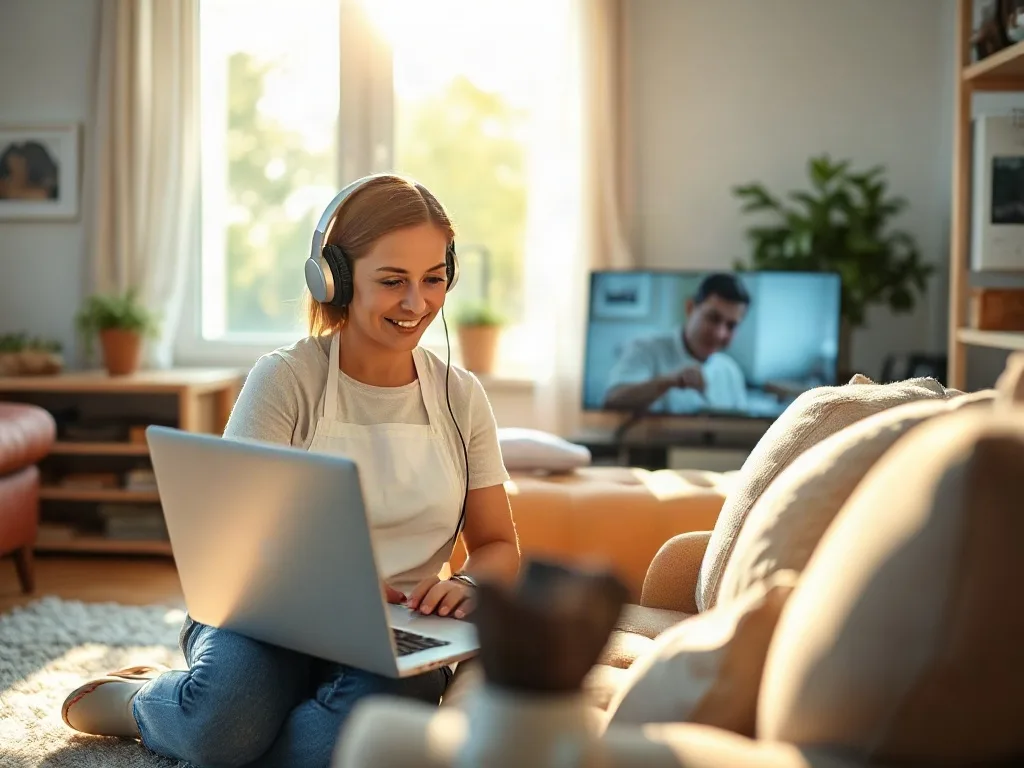
For decades, the act of traveling was defined by movement. It required passports, plane tickets, suitcases, and the physical endurance to navigate unfamiliar territories. However, the landscape of exploration has undergone a fundamental shift. With the introduction of Airbnb Online Experiences, the concept of “travel” has expanded to include the digital realm, allowing us to bridge the gap between our living rooms and the furthest corners of the globe. This evolution isn’t just about convenience; it is about redefining how we access culture, empathy, and education in an increasingly connected yet physically constrained world.
Key takeaways
- Engage in real-time cultural exchange with local experts to foster empathy and reduce feelings of isolation.
- Use virtual experiences as a cost-effective, accessible alternative to physical travel for those with mobility or financial constraints.
- Create a sensory environment at home to enhance immersion during virtual tours, cooking classes, or workshops.
- Utilize digital sessions for scouting future physical trips to gain authentic, real-time insights from local residents.
Online Experiences offer a curated window into the lives of locals, providing synchronous, live interactions that differ significantly from watching a documentary or scrolling through a travel vlog. By leveraging the power of video conferencing and storytelling, these experiences transform the screen from a barrier into a portal. Whether it is a guided walk through the hidden alleys of Tokyo, a traditional cooking class in Tuscany, or a meditation session in the foothills of the Himalayas, the digital shift is democratizing the travel experience and altering our psychological approach to global citizenship.
What Exactly are Airbnb Online Experiences?
At its core, an Airbnb Online Experience is a live, interactive session hosted by an expert or a local resident from a specific part of the world. Unlike pre-recorded content, these are real-time events where guests can ask questions, engage in dialogue, and participate in activities alongside the host. The variety is staggering, ranging from academic lectures on ancient history to hands-on workshops in artisan crafts.
The mechanics are simple: a user browses a global catalog, selects a time slot that fits their time zone, and joins via a link. However, the value lies in the curation. Airbnb vets hosts to ensure they provide high-quality, engaging content that offers more than just a sightseeing tour. These hosts are often “cultural ambassadors”—people who possess a deep, nuanced understanding of their home and a passion for sharing it with others. This structure turns a simple video call into a structured journey, blending the intimacy of a private conversation with the excitement of discovery.
Breaking Down Geographic and Financial Barriers
One of the most compassionate aspects of virtual travel is its inclusivity. For many, the dream of visiting a distant country is hindered by significant barriers. Financial constraints, physical disabilities, chronic illnesses, or family obligations can make traditional travel an impossibility. Online Experiences effectively dismantle these walls, providing a low-cost, high-impact alternative that allows everyone to participate in global exploration.
Consider the cost difference: a trip to Peru might cost thousands of dollars and require weeks of planning. In contrast, a virtual tour of Machu Picchu led by a local historian costs a fraction of that and requires only an internet connection. For individuals with mobility issues, the ability to “walk” through a museum in Paris or a market in Marrakech without the physical strain of navigation is liberating. By removing the friction of logistics, Airbnb has created a space where curiosity is the only prerequisite for travel, ensuring that the enrichment of cultural exposure is no longer a luxury reserved for the affluent or the able-bodied.
The Psychology of “Armchair Travel”
The term “armchair travel” was once used dismissively to describe those who read travel brochures without ever leaving home. Today, however, the psychology of virtual exploration is recognized as a powerful tool for mental well-being and cognitive stimulation. Engaging with a new culture via an Online Experience triggers a sense of novelty and wonder—the same “awe” response we feel when seeing a landmark in person—which can reduce stress and combat feelings of isolation.
This digital escapism provides a necessary mental break from the monotony of daily routines. When we step into a virtual experience, our brains shift from a state of “survival mode” (managing chores, work, and stress) to a state of “discovery mode.” This shift encourages neuroplasticity, as we are forced to process new languages, unfamiliar customs, and different ways of thinking. Furthermore, for those struggling with anxiety or agoraphobia, these experiences serve as a “safe” bridge, allowing them to interact with the wider world in a controlled environment, potentially building the confidence needed for future physical travel.
Cultivating Global Empathy Through Human Connection
Traditional tourism often suffers from the “bubble effect,” where travelers stay in hotels and visit the same five landmarks, rarely interacting with locals on a meaningful level. Online Experiences flip this dynamic by placing the human connection at the center of the journey. Because the interaction is often conducted in a more intimate setting—such as the host’s home or a specific local neighborhood—the conversation tends to be more authentic and personal.
When you spend an hour talking to a host in Seoul about their family traditions or a guide in Mexico City about the city’s political history, you are no longer just a tourist; you are a guest. This direct interaction fosters empathy by humanizing “the other.” It challenges stereotypes and replaces generalized assumptions with specific, personal stories. In an era of increasing global polarization, the ability to look another human being in the eye across an ocean and find common ground is a profound act of diplomacy. These experiences teach us that while our customs may differ, our fundamental human desires—for connection, storytelling, and understanding—are universal.
Integrating Virtual Travel into a Balanced Lifestyle
To get the most out of Online Experiences, it is helpful to view them not as a replacement for travel, but as a complementary lifestyle practice. Just as we schedule gym sessions for physical health or reading time for intellectual growth, we can schedule “cultural windows” to nourish our spirits. Integrating these experiences into a routine can prevent the burnout associated with sedentary lifestyles and remote work.
Practical ways to integrate virtual travel:
- Themed Monthly Explorations: Dedicate one month to a specific region. For example, in “Japan Month,” book a tea ceremony experience in the first week, a language lesson in the second, and a virtual city tour in the third.
- Cultural Friday Nights: Replace a standard movie night with a group Online Experience. Invite friends or family to join a virtual cooking class, turning the activity into a social event that encourages learning.
- Educational Supplementation: If you are reading a book set in Egypt or studying the history of the Renaissance, book an experience with a local expert in Cairo or Florence to bring the text to life with real-time context.
Educational Value: Learning Skills from the Source
Beyond the thrill of sightseeing, Airbnb Online Experiences serve as a global classroom. The ability to learn a skill directly from a master practitioner in their native environment adds a layer of authenticity that a YouTube tutorial cannot provide. The bidirectional nature of these classes—where the student can ask for immediate feedback—accelerates the learning process and ensures a deeper understanding of the craft.
For example, learning the art of pasta making from a chef in Bologna involves more than just following a recipe; it involves understanding the humidity of the air, the texture of the flour, and the cultural philosophy of “slow food.” Similarly, a virtual language exchange with a native speaker provides nuances of slang and inflection that are often omitted from textbooks. This form of “experiential education” encourages a growth mindset, pushing us to step outside our comfort zones and acquire new competencies through a lens of global curiosity.
The Environmental Impact: Sustainable Curiosity
The environmental cost of global travel is staggering, with aviation contributing significantly to carbon emissions. While physical travel will always have a place, the rise of Online Experiences introduces the concept of “sustainable curiosity.” By choosing a virtual experience over a short-haul flight for a weekend getaway, travelers can significantly reduce their carbon footprint while still achieving the goal of cultural enrichment.
Moreover, Online Experiences provide a sustainable income stream for local experts and artisans who may not have the resources to attract physical tourists to their specific neighborhood. This redistributes tourism wealth more equitably, moving money away from large hotel chains and directly into the hands of local creators. It allows a storyteller in a remote village or a craftsperson in a quiet suburb to monetize their knowledge without requiring the infrastructure of mass tourism, which often degrades the very environments travelers come to see.
Tips for Choosing the Right Online Experience
With thousands of options available, selecting the right experience requires a bit of intentionality. To ensure you get the most value and connection, consider the following actionable guidance:
1. Research the Host’s Narrative: Look beyond the title of the experience. Read the host’s bio. Are they a licensed historian, a lifelong resident, or a passionate hobbyist? The “why” behind their hosting often determines the quality of the storytelling.
2. Check the “Live” Factor: Read recent reviews to see if the host is truly interactive. The best experiences are those where the host adapts the session based on guest questions rather than following a rigid script.
3. Mind the Time Zone: While the digital world is borderless, the hosts are not. Use a time zone converter to ensure you aren’t joining a session while exhausted. Being mentally present and energized is key to a meaningful interaction.
4. Consider the Group Size: Some experiences are one-on-one, while others are group-based. If you seek deep personal connection, opt for smaller groups. If you enjoy the energy of a crowd and hearing other travelers’ perspectives, choose a larger session.
Preparing for Your Digital Journey
To transition from a passive viewer to an active traveler, you must prepare your environment. The goal is to minimize the feeling of “being on a Zoom call” and maximize the feeling of “being elsewhere.”
Create a Sensory Environment: If you are joining a cooking class from Italy, put on some Italian opera or jazz in the background. If you are touring a rainforest in Costa Rica, open a window to let in fresh air or light a scented candle with earthy notes. Engaging multiple senses helps anchor the experience in your memory.
Prepare Your Tools: Have a dedicated notebook and pen ready. Jotting down a phrase in a new language or a historical fact helps solidify the learning. If the experience is a workshop, ensure your materials are laid out beforehand so you don’t spend the first ten minutes searching for a paintbrush or a bowl.
Adopt a Traveler’s Mindset: The most rewarding experiences come to those who are curious and vulnerable. Don’t be afraid to ask “silly” questions or share a bit about your own culture. The magic of these sessions lies in the exchange; the more you give of your own curiosity, the more the host will open up about their world.
Strategic Digital Scouting: Mapping Future Physical Journeys
While Online Experiences are rewarding in their own right, they serve an equally powerful purpose as a high-fidelity “scouting report” for future physical travel. Traditional trip planning usually involves a cycle of reading blogs, watching curated YouTube videos, and scrolling through Instagram—all of which are static, edited, and often filtered to present an idealized version of a destination. By integrating Online Experiences into the planning phase, a traveler can move from passive consumption to active intelligence gathering.
The primary advantage of digital scouting is the ability to validate “hidden gems” and identify potential “tourist traps” in real-time. For instance, a traveler planning a trip to Kyoto might book a virtual walk with a local historian to ask specifically about the current crowds at Fushimi Inari-taisha or to discover quieter, less-documented shrines that don’t appear in top-ten lists. This allows the traveler to curate a bespoke itinerary based on authentic, current data rather than outdated guidebooks. It transforms the planning process from a guessing game into a collaborative design session with a local expert.
Furthermore, digital scouting allows for “seasonal calibration.” A traveler can book an experience in a destination during the season they intend to visit, gaining a realistic understanding of the weather, the local attire, and the atmosphere. Imagine booking a virtual tour of the Swiss Alps in mid-January to understand the actual intensity of the snowfall and the necessary gear before committing to a physical trip in February. This reduces the anxiety of the unknown and ensures that the subsequent physical journey is more efficient and immersive.
An edge case for this strategy is the “vibe check” for specific accommodations or neighborhoods. While Airbnb hosts for experiences are not always the same as hosts for stays, their deep local knowledge can provide critical context. A guest can ask an experience host, “I’m looking at staying in the Trastevere district of Rome; is it too noisy for a family with small children?” The host’s honest, real-time perspective is infinitely more valuable than a generic hotel review, as it provides a nuanced understanding of the neighborhood’s daily rhythm.
The Host’s Journey: Economic Empowerment and Digital Entrepreneurship
To fully understand the impact of Online Experiences, one must look beyond the guest and consider the host. For many, these platforms have catalyzed a new form of micro-entrepreneurship, allowing individuals to monetize “invisible assets”—knowledge, heritage, and storytelling—that have no traditional market value. This is particularly transformative for those in rural or economically depressed areas who possess immense cultural wealth but lack the geographic appeal to attract physical tourists.
Consider the case of a traditional artisan in a remote village in Oaxaca. In a traditional tourism model, this artisan would rely on a few visitors who happen to stumble upon their workshop or depend on a middleman to sell their wares in a city gallery. Through an Online Experience, that same artisan can host a workshop for a global audience, teaching the intricate process of natural dyeing or weaving from their own porch. This shifts the economic power dynamic, allowing the creator to retain a higher percentage of the profit and maintain total control over how their culture is presented and shared.
Beyond the financial gain, there is a profound psychological benefit for the hosts: the validation of their heritage. When a person from a marginalized community realizes that someone halfway across the world is willing to pay for the privilege of hearing their family’s oral history or learning their ancestral cooking techniques, it reinforces the value of their identity. This creates a cycle of digital heritage preservation, where hosts are incentivized to keep traditional skills alive because there is now a global demand for them.
However, this digital shift also introduces new challenges for hosts, such as the “digital divide.” Hosts in areas with unstable internet infrastructure may struggle to maintain the high-quality connection required for a seamless experience. This has led to a fascinating trend of “community-supported hosting,” where local youth—who are often more tech-savvy—act as technical producers for their elders, managing the camera angles and connection while the elder provides the cultural expertise. This intergenerational collaboration strengthens community bonds and ensures that the digital economy does not leave the most traditional practitioners behind.
Enhancing the Virtual Interface: From Basic Video to Immersive Setups
To move beyond the feeling of a standard business meeting and enter a state of true immersion, guests can upgrade their technical approach to virtual travel. While a laptop camera is sufficient, the transition to a more intentional hardware setup can significantly heighten the sense of presence, reducing the cognitive load required to “imagine” the destination.
One effective strategy is the “dual-screen immersion” technique. Instead of having a single window open, the traveler uses a primary large screen for the live video feed of the host and a secondary tablet or monitor to display real-time maps, historical archives, or a shared digital whiteboard. For example, during a virtual tour of the Louvre, the guest can have the host’s live feed on the main screen while simultaneously scrolling through high-resolution zooms of the paintings being discussed on the second screen. This creates a multi-layered information stream that mimics the way we process information during a physical museum visit.
For those seeking a more visceral experience, the integration of audio-spatial equipment can be a game-changer. Using high-quality, open-back headphones allows the ambient sounds of the host’s environment—the distant chime of a church bell in Prague or the bustle of a market in Bangkok—to wrap around the listener. When combined with a high-definition webcam that supports a wider field of view, the screen begins to feel less like a window and more like a portal. Some advanced users are even experimenting with casting their Online Experiences onto a large projector screen, effectively “transporting” their entire living room into the host’s world.
An emerging edge case is the use of VR (Virtual Reality) headsets in tandem with live hosts. While Airbnb experiences are primarily 2D video, some hosts are beginning to use 360-degree cameras. When viewed through a VR headset, the guest can look around the environment in real-time as the host guides them. This removes the “frame” of the video call entirely, allowing the guest to feel the scale of a cathedral or the vastness of a landscape, bringing the digital experience one step closer to the physical sensation of being there.
Specialized Domains: Wellness, Mindfulness, and Spiritual Exploration
While sightseeing and cooking are the most visible categories, some of the most profound Online Experiences occur in the realms of wellness and spirituality. These sessions leverage the digital medium to provide access to ancient practices that were previously gated by geography or strict initiation requirements. The beauty of a virtual wellness session is that it allows the guest to remain in their own safe, familiar space while being guided by an expert from a tradition far removed from their own.
For example, a live meditation session led by a monk in Bhutan offers a different energy than a pre-recorded app. The presence of a live guide allows for “energetic mirroring,” where the host can observe the guest’s posture or breathing via the camera and offer real-time corrections. This bidirectional feedback loop is essential for spiritual practices where the nuance of a gesture or the timing of a breath can change the entire outcome of the session. The digital screen, in this context, becomes a tool for mindfulness, focusing the guest’s attention entirely on the voice and guidance of the teacher.
Moreover, virtual spiritual travel allows for the exploration of “sacred spaces” that might be physically inaccessible or restricted to tourists. A host might lead a guided contemplation session from a private garden or a quiet corner of a temple that isn’t open to the general public. This provides a sense of exclusivity and intimacy that is often lost in the crowded corridors of famous spiritual sites. It transforms the experience from a “tour of a temple” into a “lesson in spirituality.”
A unique edge case in this domain is the “shared silence” experience. Some hosts offer sessions that involve long periods of collective silence, punctuated by brief moments of reflection. In a world dominated by digital noise and constant notification, the act of sharing a silent space with a stranger from another continent is a radical act of connection. It proves that the digital medium can be used not just for the transmission of information, but for the transmission of peace and presence.
Virtual Travel for Diverse Life Stages: From Early Childhood to Golden Years
The versatility of Online Experiences makes them an ideal tool for different stages of human development, providing tailored cognitive and emotional benefits depending on the age of the participant. When applied intentionally, virtual travel can serve as an educational catalyst for children and a lifeline for the elderly.
For children, Online Experiences can act as “Global Pen-Pal 2.0.” Instead of reading about a different country in a textbook, a child can engage in a live interaction with a peer or a mentor from that region. This transforms geography from a subject of study into a living relationship. For instance, a child in the US participating in a virtual wildlife tour of the Galápagos Islands isn’t just learning about biodiversity; they are witnessing the passion of a local conservationist. This fosters a “global identity” from a young age, teaching children that the world is a diverse but interconnected place, which is critical for developing empathy and open-mindedness.
For adults in the mid-career “burnout” phase, these experiences provide a low-friction way to maintain a sense of curiosity and adventure without the logistical stress of a full vacation. It allows them to carve out “micro-adventures” during their lunch break or after the children have gone to bed, providing the mental reset necessary to maintain professional productivity and personal well-being.
For seniors, the benefits are perhaps the most poignant. Many elderly individuals face a combination of physical mobility limitations and social isolation. For them, an Online Experience is more than just a tour; it is a vital connection to the outside world. Engaging with a host in a country they visited decades ago can trigger powerful memories and cognitive recall, acting as a form of “reminiscence therapy.” Simultaneously, learning about a culture they have never encountered stimulates neuroplasticity, helping to keep the mind sharp. The ability to “travel” from a comfortable armchair allows seniors to maintain their role as global citizens, ensuring that their world does not shrink as their physical mobility declines.
Navigating the Ethics of Digital Presence: Avoiding the Voyeurism Trap
As we bridge the gap between our homes and the homes of others, a critical ethical question arises: where is the line between cultural exchange and digital voyeurism? Voyeurism occurs when the traveler consumes the “otherness” of a host as a form of entertainment, without recognizing the host’s humanity or the power imbalance inherent in the interaction. To ensure that Online Experiences remain a tool for empathy rather than exploitation, guests must adopt a framework of “digital etiquette.”
The first step in avoiding the voyeurism trap is recognizing the host’s agency. A respectful guest understands that the host is not a performer in a zoo, but a curator of their own story. This means avoiding questions that lean into stereotypes or asking the host to “act out” certain cultural tropes for the camera. Instead, the focus should be on open-ended questions that allow the host to define their own narrative. For example, instead of asking, “Is it true that everyone in your country does X?” a more respectful approach is, “How does X fit into your personal daily life?”
Another ethical consideration is the boundary of the private space. Because many Online Experiences take place in the host’s home or neighborhood, there is a risk of infringing on their privacy. A mindful traveler is aware that while they are paying for a service, they are still a guest in someone’s personal sanctuary. This involves respecting the host’s limits on what they are willing to show on camera and understanding that some areas of their life are not for sale. The goal is a reciprocal exchange of respect, where the guest’s curiosity is balanced by the host’s comfort.
Frequently Asked Questions
A: They are not a replacement, but a complement. Physical travel offers sensory experiences—smells, tastes, and tactile feelings—that digital platforms cannot replicate. However, Online Experiences provide a level of curated, expert-led intellectual and social interaction that is often missing from traditional tourism. They are an excellent way to “scout” destinations or maintain a connection to the world when physical travel is impossible.
A: Most Airbnb hosts for Online Experiences are proficient in English or use translation tools. However, the beauty of these sessions is often in the linguistic exchange. Many hosts are happy to teach you a few basic phrases in their native tongue, and using a translation app in real-time can actually become a fun, bonding activity between the guest and the host.
A: Yes, many hosts offer private sessions for groups. This is an increasingly popular way for remote teams to engage in “virtual team building” that goes beyond a standard happy hour. It encourages diverse thinking and provides a shared, unique memory that can improve team cohesion and global awareness.
A: Like any digital interaction, glitches can happen. Most hosts are experienced with troubleshooting. If a connection is lost, the host typically reaches out via the Airbnb platform to reschedule or provide a partial refund. It is recommended to check your internet connection and update your browser/app before the start time to minimize these risks.
A: Authenticity is usually found in the details. Look for hosts who share personal anecdotes, show you non-tourist areas of their city, or teach techniques that are specific to their family or region. Avoid experiences that feel overly scripted or those that only show the most famous landmarks without providing deeper context or personal storytelling.