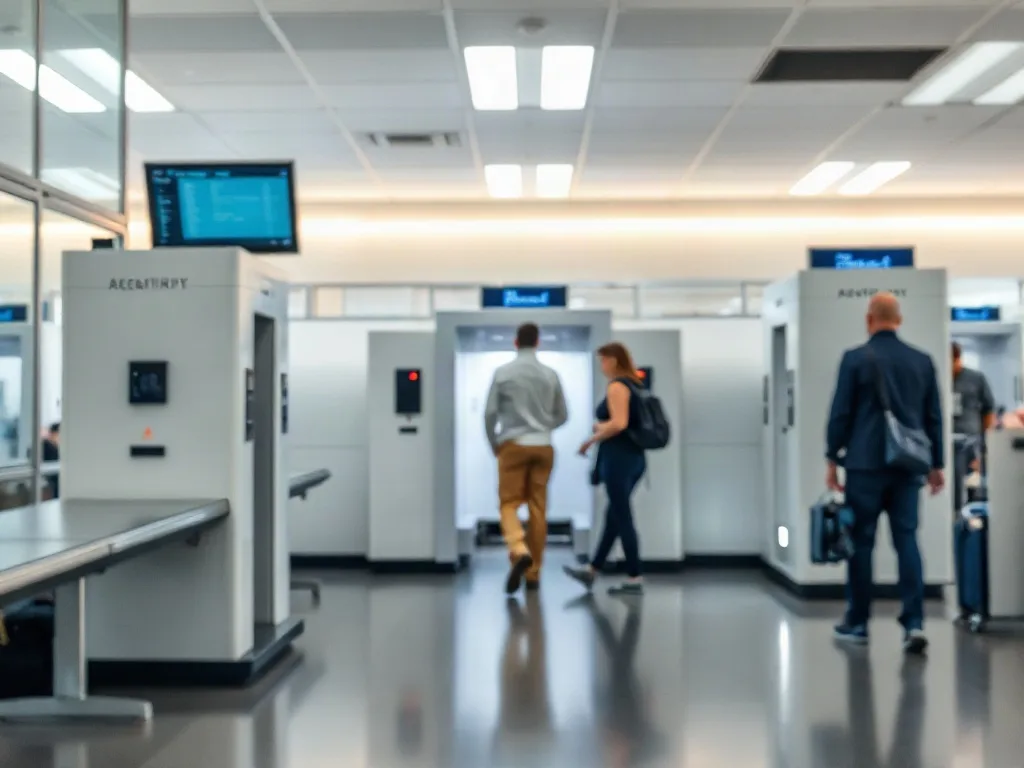
Traveling through an airport can be stressful, and the sight of a full‑body scanner often adds a new layer of worry for many passengers. While the primary goal of these devices is to keep the public safe by detecting prohibited items, a growing number of travelers wonder whether the technology poses any health risks. This article breaks down how airport body scanners work, what scientific research says about radiation exposure, and what practical steps you can take if you’re uneasy about stepping through the machine.
How Airport Body Scanners Work
Modern airport security relies on two main technologies: millimeter‑wave scanners and, less commonly today, backscatter X‑ray scanners. Both systems create a visual representation of a passenger’s body, highlighting concealed objects without producing a detailed anatomical image. The process is quick—typically a few seconds—and the image is viewed by a trained officer who looks for anomalies rather than personal details.
Millimeter‑wave scanners emit non‑ionizing radiofrequency waves that bounce off the body and are captured by an array of sensors. The data are then processed into a generic outline that flags potential threats. Because the waves are non‑ionizing, they do not have enough energy to remove electrons from atoms, a key factor that differentiates them from ionizing radiation such as X‑rays.
Backscatter X‑ray scanners, which were more common in the early 2000s, use low‑dose ionizing radiation that reflects off the surface of the body. The reflected photons are captured to produce a 2‑D image. Although effective, concerns about cumulative radiation exposure led many countries to phase out this technology in favor of millimeter‑wave alternatives.
Types of Scanners: Millimeter Wave vs. Backscatter X‑ray
Understanding the distinction between these two scanner types is essential for evaluating safety. Millimeter‑wave scanners operate in the 30–300 GHz frequency range, similar to the technology used in modern cell‑phone antennas and automotive radar. The energy levels are comparable to those emitted by a typical Wi‑Fi router and are far below thresholds that cause tissue heating.
Backscatter X‑ray scanners, on the other hand, emit photons in the range of 30–50 keV, which can ionize atoms. The dose per scan is measured in microsieverts (µSv), typically around 0.05–0.1 µSv per scan—roughly one‑hundredth of the dose from a standard chest X‑ray (about 0.1 mSv). While the absolute amount is small, the cumulative effect of repeated exposure, especially for frequent flyers, has been a point of discussion among health professionals.
Most major airports in the United States, Europe, and Asia have transitioned to millimeter‑wave systems, largely because they eliminate ionizing radiation concerns while still meeting security standards set by agencies such as the Transportation Security Administration (TSA) and the European Union Aviation Safety Agency (EASA).
Radiation Exposure Levels Compared to Everyday Sources
To put scanner exposure in perspective, consider these everyday radiation sources:
- Natural background radiation: The average person receives about 3 mSv per year from cosmic rays, radon gas, and terrestrial sources.
- Air travel: A round‑trip flight from New York to Los Angeles adds roughly 0.03–0.04 mSv due to higher altitude exposure.
- Dental X‑ray: Approximately 0.005 mSv per bitewing image.
- Smartphone use: Emits radiofrequency energy comparable to millimeter‑wave scanners, but the exposure is spread over many hours and is well below safety limits.
A single millimeter‑wave scan delivers less than 0.001 µSv, a fraction of the dose from a single day of natural background radiation. Even the higher‑dose backscatter scanners contribute a minuscule amount relative to daily background exposure. The World Health Organization (WHO) and the International Commission on Non‑Ionizing Radiation Protection (ICNIRP) have established exposure limits that are many orders of magnitude higher than what passengers receive during a scan.
Regulatory Standards and Safety Oversight
Airport scanner safety is not left to chance. In the United States, the Food and Drug Administration (FDA) classifies millimeter‑wave scanners as Class II medical devices, requiring manufacturers to demonstrate safety and efficacy. The TSA works with the FDA and the National Institute for Occupational Safety and Health (NIOSH) to conduct independent testing of scanner emissions.
In the European Union, the European Committee for Standardization (CEN) has published EN 1728, which sets limits for electromagnetic exposure from security equipment. Member states must certify that any scanner used in public spaces complies with these limits before deployment.
International bodies such as the International Atomic Energy Agency (IAEA) also provide guidance on the use of ionizing radiation in security contexts, emphasizing that any exposure should be justified by a clear security benefit and kept as low as reasonably achievable (the ALARA principle).
Common Concerns and Myths Debunked
Myth 1: Scanners cause cancer. The consensus among radiation experts is that the dose from a millimeter‑wave scan is far below the threshold associated with any increased cancer risk. For backscatter scanners, the dose is also low, but because ionizing radiation can theoretically cause DNA damage, many health agencies recommend minimizing unnecessary exposure.
Myth 2: Scanners can affect pacemakers or medical implants. Millimeter‑wave energy does not interfere with electronic medical devices. Backscatter X‑ray scanners, while using ionizing radiation, emit such low levels that they do not affect pacemakers, defibrillators, or insulin pumps. Nevertheless, travelers with implanted devices can request a manual pat‑down if they feel uncomfortable.
Myth 3: The images capture intimate details. Both scanner types generate generic outlines that hide personal anatomy. Operators view the image on a monitor with privacy filters, and the images are automatically deleted after the screening is completed.
Myth 4: Frequent flyers receive dangerous cumulative doses. Even a frequent business traveler who passes through security 100 times a year would accumulate less than 0.01 mSv from backscatter scanners—a dose comparable to a single dental X‑ray. This is negligible compared to natural background radiation.
Practical Tips for Travelers Concerned About Scanners
If you’re uneasy about stepping through a body scanner, consider the following strategies:
- Ask for a manual pat‑down. Most security agencies allow passengers to request an alternative screening method. The pat‑down is performed by a same‑sex officer and respects privacy guidelines.
- Know your rights. In the U.S., the TSA’s “Passenger Rights” page outlines the opt‑out process. In the EU, Regulation (EC) No 300/2008 provides similar provisions.
- Plan extra time. Requesting a pat‑down can add a few minutes to the screening process, so arrive at the airport with a buffer.
- Stay informed. Check the airport’s website before traveling to see which scanner type is in use. Many airports publish this information as part of transparency initiatives.
- Maintain healthy habits. While scanner exposure is minimal, overall radiation protection includes limiting unnecessary medical imaging, using sunscreen to guard against UV radiation, and staying hydrated to support cellular repair mechanisms.
Alternatives and Opt‑Out Options
Beyond a manual pat‑down, some airports are piloting newer technologies that further reduce or eliminate radiation exposure:
- Advanced Imaging Technology (AIT) with privacy filters. These systems use sophisticated algorithms to blur anatomical details while still detecting concealed items.
- Explosive Detection Systems (EDS) for luggage only. In some low‑risk scenarios, passengers can be cleared based on luggage scans alone, reducing the need for a body scan.
- Biometric verification. Facial recognition combined with behavioral analytics can streamline security while limiting physical scans, though privacy concerns remain.
Travelers who object to any form of body scanning for religious, cultural, or health reasons should contact the airline or airport authority in advance. Many carriers have dedicated liaison officers who can arrange accommodations and ensure compliance with security protocols.
What the Scientific Community Says
Peer‑reviewed studies from institutions such as the National Cancer Institute, the University of California, San Francisco, and the European Radiation Protection Association consistently report that exposure from millimeter‑wave scanners is negligible. A 2019 systematic review of 27 studies concluded that “the dose from millimeter‑wave body scanners is far below the limits set by international guidelines and does not pose a measurable health risk to the general public.”
Research on backscatter X‑ray scanners is more limited because of their phased‑out status, but the available data align with the same conclusion: the dose is low enough that any potential risk is considered theoretical rather than demonstrable.
Health agencies also emphasize the importance of a risk‑benefit analysis. The benefit of preventing weapons or explosives from entering an aircraft is deemed to outweigh the minuscule radiation risk, especially when alternative screening methods are available for those who request them.
Balancing Security and Health: A Reasoned Approach
Airport security is a complex field that must protect millions of passengers daily while respecting individual health concerns. The key takeaways for travelers are:
- Modern millimeter‑wave scanners emit non‑ionizing radiation at levels comparable to everyday devices and are considered safe by multiple health authorities.
- Backscatter X‑ray scanners, where still in use, deliver a low ionizing dose that is still far below thresholds for known health effects.
- Regulatory bodies enforce strict exposure limits, and manufacturers must meet rigorous safety standards before deployment.
- Passengers have the right to request alternative screening methods without penalty.
By staying informed, understanding the technology, and exercising your opt‑out rights when needed, you can travel with confidence while maintaining peace of mind about your health.
A Brief History of Airport Body Scanning Technology
The journey from rudimentary metal detectors to today’s sophisticated imaging systems spans more than five decades. In the early 1970s, airports relied exclusively on walk‑through metal detectors, which could only flag metallic objects and offered no insight into concealed non‑metallic threats. The first attempts at full‑body imaging emerged in the late 1990s when the United States Department of Homeland Security funded research into X‑ray backscatter devices. These early prototypes produced grainy silhouettes that raised immediate privacy concerns, prompting the creation of the Transportation Security Administration (TSA) Privacy Act of 2002 to regulate image storage and viewing procedures.
By 2005, the European Union began field‑testing millimeter‑wave (MMW) scanners, attracted by their ability to detect a broader range of materials without ionizing radiation. The technology leveraged advances in automotive radar and telecommunications, allowing the creation of three‑dimensional (3‑D) representations of passengers. Within a few years, the United States adopted MMW as the default system, largely because the Federal Aviation Administration (FAA) mandated a phased removal of backscatter units in 2013.
Each major upgrade has been driven by a combination of emerging threat profiles (e.g., plastic explosives), public pressure, and regulatory mandates. The 2015 International Civil Aviation Organization (ICAO) Annex 17 amendment required member states to document the specific radiation characteristics of any deployed scanner, ensuring a baseline of transparency. The most recent milestone, announced in 2022, is the rollout of dual‑frequency millimeter‑wave scanners that combine 30‑GHz and 100‑GHz bands to improve detection of low‑density items while further reducing power output.
Understanding this timeline helps travelers see that safety equipment evolves in response to both security needs and health considerations, rather than being a static, unchanging presence at every checkpoint.
Privacy Protections and Image Handling Practices
While the physical safety of passengers is the primary objective, the handling of the visual data generated by scanners has sparked a parallel debate about digital privacy. Modern systems employ a concept called automated target recognition (ATR), where software automatically highlights potential threats and then discards the raw image. In the United States, the Privacy Act of 1974, as amended for TSA operations, requires that any image be automatically deleted within a few seconds after the officer’s review.
European airports, bound by the General Data Protection Regulation (GDPR), must provide a clear data‑processing notice at the security checkpoint. Passengers are informed that the image is a “derived representation” and is never stored in a personally identifiable format. Some jurisdictions, such as Canada, have gone a step further by mandating that the scanner’s software be open‑source, allowing independent auditors to verify that no residual data is retained.
Edge cases arise when a scanner flags a potential threat that requires a secondary inspection. In those instances, the system temporarily retains the image for up to 30 seconds to aid the officer in confirming the anomaly. After the secondary check, the image is purged. If a passenger objects to any visual capture, they can request a manual pat‑down, and the scanner is bypassed entirely, ensuring that no digital imprint is ever created.
For travelers concerned about data breaches, it is useful to know that most scanner manufacturers embed a hardware‑based “self‑destruct” function that overwrites memory cells after each use. This design choice dramatically reduces the risk of accidental data leakage, even in the event of a cyber‑attack on airport IT infrastructure.
Psychological Effects and Public Perception of Body Scanners
Beyond the measurable physical exposure, the experience of standing in a body scanner can trigger a range of psychological responses. Studies in environmental psychology have identified three primary factors that influence passenger anxiety: perceived invasiveness, loss of control, and uncertainty about health impacts.
Perceived invasiveness: Even though the visual output is a generic outline, the sensation of being “watched” by a machine can feel intrusive. A 2021 survey of 2,400 frequent flyers found that 28 % reported moderate to high anxiety before entering a scanner, with the highest levels among passengers who had previously experienced a false alarm.
Loss of control: The automated nature of the process removes the ability to opt out without drawing attention. Researchers suggest that offering a clearly advertised opt‑out pathway—such as a visible sign stating “Ask for a pat‑down”—reduces stress by up to 15 %.
Uncertainty about health impacts: Misinformation spreads quickly on social media, often conflating millimeter‑wave frequencies with high‑power microwave weapons. Cognitive‑behavioral interventions, like brief informational videos displayed at the entrance of the security line, have been shown to lower perceived risk scores from 7.2 to 4.3 on a 10‑point scale.
Airports that have integrated these communication strategies report smoother flow and fewer complaints. For instance, London Heathrow’s “Know Your Scan” campaign, launched in 2019, includes QR codes that link to a short animation explaining the technology, resulting in a 12 % reduction in opt‑out requests within the first six months.
Special Considerations for Vulnerable Populations
While the baseline safety data apply to the general adult population, certain groups merit additional attention. Below are practical guidelines tailored to these cohorts.
- Children and adolescents: The power output of millimeter‑wave scanners is automatically adjusted based on the detected size of the subject. For passengers under 12 years old, the device reduces its emission by roughly 30 %, keeping exposure well below adult levels. Parents should request a pediatric‑specific protocol if they feel uneasy; most airports have a “Family Scan” option that positions the child in a separate, lower‑power chamber.
- Pregnant travelers: Because millimeter‑wave energy is non‑ionizing, it does not interact with fetal DNA. Nonetheless, some pregnant individuals prefer to avoid any additional exposure. In these cases, a manual pat‑down is a safe alternative, and the TSA’s policy explicitly states that pregnancy is a valid reason for requesting one.
- Individuals with dermatological conditions: People with severe eczema or extensive tattoos may worry that the scanner’s radiofrequency waves could exacerbate skin irritation. The energy levels are too low to cause thermal effects, but if a traveler experiences heightened sensitivity, they can request a visual‑only scan (where the scanner operates in “low‑resolution” mode) or a pat‑down.
- Elderly passengers: Age‑related changes in skin conductivity can slightly affect the scanner’s signal reflection, occasionally leading to false positives. Security staff are trained to recognize these patterns and may perform a brief secondary inspection rather than a full‑body scan.
In all cases, the key is communication. Passengers should feel empowered to discuss any concerns with the security officer before the scan begins, allowing the staff to select the most comfortable and safe method.
Emerging and Next‑Generation Screening Technologies
Research labs worldwide are exploring alternatives that could eventually replace the current generation of body scanners. Three promising avenues are highlighted below.
- Terahertz (THz) imaging: Operating between microwave and infrared frequencies, THz waves can penetrate clothing and reveal concealed objects without ionizing radiation. Early prototypes demonstrate a resolution comparable to millimeter‑wave systems but with a power output 70 % lower. Pilot programs in Dubai International Airport are evaluating the technology’s throughput and false‑alarm rate.
- Artificial‑intelligence‑enhanced passive detection: By analyzing the natural thermal and electromagnetic signatures emitted by the human body, AI algorithms can identify anomalies such as dense metal or plastic. This approach eliminates the need for an active emission source entirely, though it currently requires a controlled environment to reduce background noise.
- Wearable security tokens: Some airlines are testing RFID‑enabled bracelets that store a passenger’s biometric fingerprint and travel history. When paired with a high‑resolution luggage scanner, the system can verify identity without any body scan. Privacy advocates caution that data security must be robust, as loss of the token could expose personal information.
Each of these technologies presents its own set of trade‑offs—cost, processing speed, and regulatory approval timelines. However, they share a common goal: to maintain or improve detection capability while further minimizing any form of exposure, whether electromagnetic, ionizing, or psychological.
Cost, Efficiency, and Environmental Impacts of Scanner Deployment
Beyond health considerations, airports must evaluate the economic and ecological footprint of their screening infrastructure. The initial capital outlay for a state‑of‑the‑art millimeter‑wave unit ranges from $250,000 to $500,000, depending on features such as dual‑frequency operation and integrated privacy filters. Ongoing costs include routine calibration, software licensing, and periodic replacement of high‑voltage components, which can add another $30,000‑$50,000 per year.
From an efficiency standpoint, a well‑maintained scanner processes roughly 120 passengers per hour, translating to a wait‑time reduction of 2‑3 minutes compared with manual pat‑downs. However, a study conducted by the University of Sydney in 2020 found that when scanners experience a false‑positive rate above 1 %, the cumulative delay can offset the time saved, especially during peak travel periods.
Environmental impact assessments focus on two main factors: energy consumption and electronic waste. A typical millimeter‑wave scanner consumes about 150 watts during operation, equating to roughly 1.3 kWh per day—comparable to the energy usage of a small refrigerator. When scaled across a large international hub with 30 scanners, the daily consumption reaches 39 kWh, a modest figure relative to the airport’s overall electricity demand.
Electronic waste becomes a concern during equipment upgrades. Manufacturers are now adopting “take‑back” programs that recycle the high‑frequency antenna arrays and circuit boards, reducing landfill contributions by up to 85 %. Some airports have entered into “green procurement” contracts that require vendors to meet ISO 14001 environmental management standards.
Balancing these financial and ecological dimensions with security efficacy is an ongoing challenge. Decision‑makers often employ a multi‑criteria analysis that assigns weighted scores to safety performance, passenger throughput, cost per scan, and carbon footprint. The resulting matrix helps justify investments in newer, greener technologies while ensuring that the primary mission—protecting passengers—remains uncompromised.
Frequently Asked Questions
1. Do body scanners expose me to harmful radiation?
Millimeter‑wave scanners use non‑ionizing radiofrequency energy that is not known to cause tissue damage. Backscatter X‑ray scanners emit ionizing radiation, but the dose per scan is extremely low—far below levels associated with any proven health risk.
2. Can I request a manual pat‑down instead of going through the scanner?
Yes. In most countries, passengers may request a private, same‑sex pat‑down. This option may take a few extra minutes, so plan accordingly.
3. How does the radiation from a scanner compare to a dental X‑ray?
A backscatter scanner delivers roughly 0.05–0.1 µSv per scan, while a typical dental bitewing X‑ray is about 5 µSv—about 50–100 times higher. Millimeter‑wave scanners emit no ionizing radiation at all.
4. Are there long‑term health studies on frequent travelers?
Long‑term epidemiological studies specifically targeting scanner exposure are limited because the dose is so low. Existing research indicates that cumulative exposure from airport scanners contributes an insignificant fraction of a person’s total annual radiation dose.
5. What should I do if I have a medical implant and feel anxious about the scanner?
Both millimeter‑wave and backscatter scanners are considered safe for people with pacemakers, insulin pumps, or other implants. However, you can always request a manual pat‑down if it makes you more comfortable.
Related posts:
 Travel Hack Genius: How One Trainer Revolutionized Airport Workouts with TRP
 Airport Temperature Screening Guide
 TSA Travel Tips for Lightning-Fast Security
 PHA Bodyweight Workout: Efficient Fitness Anywhere, Anytime
 Healthy Foods You Can Find at Airport Restaurants
 Stress-Free Airports Worth Visiting
 Things Flight Attendants Hate
 How to Fly Safely After Lifted Mask Mandate