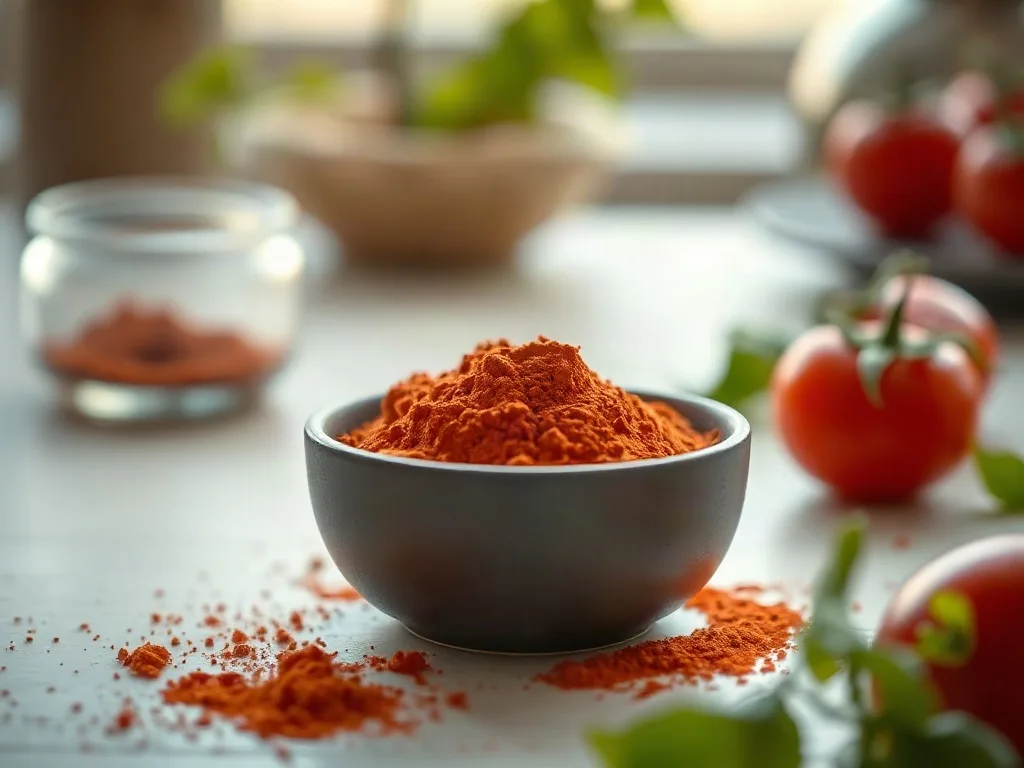
Tomato powder is a concentrated, shelf‑stable ingredient that captures the bright flavor and potent antioxidants of fresh tomatoes in a form you can sprinkle onto almost any dish.
Why Tomato Powder Deserves a Spot in Your Pantry
Fresh tomatoes are celebrated for their lycopene, vitamin C, and beta‑carotene content. When water is removed, those compounds become more concentrated per gram, giving you a powerful antioxidant boost in a tiny spoonful. A tablespoon of homemade powder can deliver the same lycopene found in several medium tomatoes, making it an efficient way to increase daily intake without extra calories.
Because the powder stores for months in a cool, dark jar, you can enjoy tomato nutrition year‑round, even when fresh produce is out of season or expensive. It also reduces food waste by turning surplus or slightly overripe tomatoes into a valuable pantry staple.
Selecting the Best Tomatoes for Maximum Antioxidants
Choose deeply colored, vine‑ripened varieties such as Roma, San Marzano, or heirloom types. These tomatoes typically contain higher lycopene levels than pale greenhouse tomatoes. If possible, source organic fruit to avoid pesticide residues that could survive the drying process.
Inspect each tomato for bruises, mold, or soft spots. Discard any damaged pieces because they can introduce off‑flavors and spoilage microbes into the final powder.
Preparing Tomatoes for Dehydration
Wash the tomatoes thoroughly under running water. Pat them dry with a clean kitchen towel. Remove the stems and, if desired, the cores. For a smoother powder, blanch the tomatoes in boiling water for 30 seconds, then plunge into ice water; the skins will slip off easily. Peeling is optional but yields a finer texture.
Slice the tomatoes into uniform ¼‑inch thick pieces. Uniform thickness ensures even drying and prevents some pieces from burning while others remain moist.
Dehydration Methods: Oven, Dehydrator, and Sun
Oven method: Preheat the oven to its lowest setting, usually around 140°F (60°C). Arrange slices on parchment‑lined baking sheets in a single layer, leaving space between pieces. Prop the oven door open slightly with a wooden spoon to allow moisture to escape. Dry for 8‑12 hours, rotating trays halfway through, until the slices are brittle and snap cleanly.
Dehydrator method: Set a food dehydrator to 135°F (57°C). Load trays with tomato slices, ensuring good airflow. Dehydrate for 6‑10 hours, checking periodically. This method offers the most consistent results and uses less energy than an oven.
Sun method: In hot, dry climates you can sun‑dry tomatoes on screened trays covered with cheesecloth. Turn slices twice daily. Expect 2‑4 days of drying time. Bring trays indoors at night to avoid dew. This traditional approach works well but requires reliable weather.
Grinding and Storing Your Tomato Powder
Once the tomato slices are completely dry and cool, transfer them to a high‑speed blender, spice grinder, or food processor. Pulse in short bursts to avoid overheating, which can degrade delicate antioxidants. Aim for a fine, flour‑like consistency.
Sift the powder through a fine mesh sieve to remove any larger fragments. Store the sifted powder in an airtight glass jar with a tight‑fitting lid. Add a food‑grade silica packet for extra moisture protection. Keep the jar in a dark cupboard at room temperature; the powder stays potent for up to 12 months.
Creative Ways to Use Tomato Powder in Everyday Cooking
Stir a teaspoon into soups, stews, or chili for instant depth. Sprinkle over roasted vegetables before the final 5 minutes of cooking to create a savory crust. Blend into homemade salad dressings, marinades, or spice rubs for grilled meats and tofu.
Mix with breadcrumbs and herbs for a quick coating on baked chicken or fish. Add a pinch to scrambled eggs or omelets for a subtle umami lift. Because the flavor is concentrated, start with small amounts and adjust to taste.
Boosting Antioxidant Absorption with Pairings
Lycopene is fat‑soluble, so pairing tomato powder with a source of healthy fat enhances bioavailability. Drizzle olive oil over a dish finished with the powder, or incorporate the powder into a vinaigrette made with avocado oil.
Combining the powder with vitamin C‑rich ingredients such as lemon juice, bell peppers, or broccoli can further support antioxidant activity. A simple pasta sauce made from tomato powder, garlic, olive oil, and a splash of lemon delivers a synergistic nutrient profile.
Troubleshooting Common Issues
If the powder clumps, it likely absorbed moisture. Spread it on a baking sheet and warm in a low oven for 10 minutes, then re‑sift. For a bitter taste, ensure tomatoes were fully ripe and not over‑dried; excessive heat can caramelize natural sugars, creating bitterness.
Should the color fade to a dull brown, the powder may have been exposed to light or air for too long. Transfer to a darker container and use within six months for best color and potency.
Nutritional Profile Deep Dive
Tomato powder concentrates not only lycopene but also a suite of micronutrients that shift in relative proportion when water is removed. Per 100 grams of powder you typically find 30‑40 milligrams of lycopene, 120‑150 milligrams of vitamin C (though heat‑sensitive, a portion survives low‑temperature drying), 2.5‑3 grams of dietary fiber, and measurable amounts of potassium, folate, and vitamin K. Because the drying temperature stays below 60°C in most home methods, the loss of heat‑labile vitamin C is limited to roughly 15‑20 percent, while fat‑soluble carotenoids become more bioavailable per gram. A practical serving of one tablespoon (about 7 grams) delivers the lycopene equivalent of two to three medium vine‑ripened tomatoes, roughly 2‑3 milligrams of beta‑carotene, and 10‑12 milligrams of vitamin C. For those tracking antioxidant intake, the ORAC value of the powder can exceed 15,000 µmol TE per 100 grams, placing it on par with many berry powders. When formulating a daily supplement blend, combine one tablespoon of tomato powder with a teaspoon of olive oil and a squeeze of lemon juice; the fat solubilizes lycopene while the vitamin C regenerates oxidized carotenoids, creating a synergistic antioxidant matrix.
Advanced Dehydration Techniques
Beyond the three classic methods, several advanced approaches can improve color retention, reduce processing time, and preserve heat‑sensitive compounds. Vacuum‑oven drying lowers the boiling point of water, allowing slices to dehydrate at 45‑50°C while maintaining a bright red hue; a typical cycle runs 4‑6 hours with a vacuum of 200‑300 mbar. Freeze‑drying (lyophilization) offers the highest nutrient preservation, locking in >95 percent of vitamin C and producing a porous crumb that rehydrates instantly, but it requires a dedicated freeze‑dryer and 24‑36 hours per batch. A hybrid method uses a low‑temperature dehydrator (45°C) for the first 4 hours to remove surface moisture, then finishes in a convection oven at 55°C with the door cracked; this cuts total time to 6‑8 hours and reduces the risk of case hardening. Infrared (IR) drying panels can be positioned above trays to deliver radiant heat directly to the tomato surface, shortening the drying curve by 20‑30 percent while limiting Maillard browning. For each technique, monitor the water activity (aw) with a calibrated meter; target aw ≤0.30 for safe long‑term storage. Edge case: if the tomato variety is exceptionally high in sugars (e.g., cherry tomatoes), IR drying may caramelize edges faster; lower the panel intensity or increase slice thickness to 5 mm to mitigate.
Flavor Engineering
Tomato powder is a blank canvas for layered flavor profiles. Smoked tomato powder can be produced by cold‑smoking dried slices for 30‑45 minutes over applewood or cherry chips before grinding; the result adds a subtle campfire note that elevates barbecue rubs and vegan bacon bits. Roasted tomato powder involves tossing fresh slices with a thin coat of high‑oleic sunflower oil and roasting at 180°C for 12‑15 minutes until the edges caramelize, then dehydrating; the Maillard compounds deepen umami and create a natural sweetness that works well in pasta dough or savory scones. Herb‑infused powders are made by blending dried tomato slices with equal parts dried basil, oregano, or thyme before grinding; the herb volatiles embed in the tomato matrix, yielding a ready‑to‑use seasoning for pizza sauce or focaccia topping. For a spice‑blend base, combine tomato powder with smoked paprika, garlic powder, onion powder, and a pinch of cayenne; this mix can replace commercial taco seasoning with zero added sodium. Edge case: when adding oil before drying, excess fat can cause rancidity during storage; limit oil to 1 % of tomato weight and store the final powder with an oxygen absorber.
Culinary Applications Beyond Basics
The powder’s lack of water makes it ideal for dry‑mix formulations. In gluten‑free bread, replace 5 % of the flour weight with tomato powder; the pectin aids crumb structure and imparts a golden crust. For homemade bouillon cubes, press a mixture of tomato powder, nutritional yeast, sea salt, dried mushroom powder, and a touch of miso into silicone molds, then dehydrate at 45°C for 2 hours; each cube dissolves in 250 ml hot water for an instant umami broth. Backpacking meals benefit from a tomato‑powder‑based risotto mix: combine arborio rice, tomato powder, freeze‑dried peas, powdered Parmesan, and a sachet of olive oil; rehydrate with boiling water in 10 minutes. In vegan cheese, blend cashews, tomato powder, lemon juice, agar, and smoked salt; set in a mold for a sliceable, tangy red cheese. Cocktail enthusiasts can rim a Bloody Mary glass with a 1:1 mix of tomato powder and celery salt, adding visual flair and a concentrated tomato hit. Pet‑treat developers incorporate tomato powder (≤2 % of total recipe) into grain‑free biscuits for antioxidant support; ensure the powder is free of solanine by using only fully ripe fruit. Edge case: high‑acid tomato powder can accelerate browning in baked goods; balance with a pinch of baking soda to neutralize excess acidity.
Scale‑Up and Commercial Considerations
Moving from kitchen to pilot scale introduces variables that affect consistency and regulatory compliance. Batch‑to‑batch moisture content should be verified with a Karl Fischer titrator; target 2‑3 % water for a stable powder. Particle size distribution influences rehydration speed; a laser diffraction analyzer can confirm a D90 < 150 µm for instant‑mix products. Packaging in metallized Mylar bags flushed with nitrogen (≤1 % O₂) extends shelf life to 24 months without refrigeration. Labeling must declare the lycopene content per serving if a health claim is made; the FDA requires a minimum of 5 mg lycopene per reference amount for a “good source” claim. Cost modeling: raw tomato cost $0.80 /kg, drying energy $0.12 /kg (dehydrator), labor $0.05 /kg, packaging $0.10 /kg → total ~ $1.07 /kg powder, yielding a retail margin of 60‑70 % at $3‑4 per 100 g jar. Quality‑control checkpoints include visual colorimetry (L*a*b* values), microbial plate counts (≤10 CFU/g), and heavy‑metal screening (lead <0.1 ppm). Edge case: seasonal tomato price spikes can be mitigated by contracting with multiple growers and maintaining a frozen tomato puree reserve for off‑season drying.
Safety, Quality Control, and Special Diets
While tomato powder is generally safe, certain hazards warrant monitoring. Mycotoxins such as alternariol can develop on overripe or damaged fruit; implement a pre‑dry visual sort and a post‑dry ELISA screen for alternariol if sourcing from high‑humidity regions. Allergen cross‑contact is minimal but facilities that also process nuts or soy should follow a validated cleaning protocol and label “may contain” if shared equipment is used. For low‑FODMAP diets, tomato powder is considered low in fructans at typical serving sizes (30 g) may trigger symptoms in sensitive individuals. Ketogenic meal planners appreciate the powder’s negligible net carbs (≈1 g per tablespoon) and high antioxidant density. In infant nutrition, tomato powder can be introduced after 8 months as a flavor enhancer in purees; ensure the powder is sieved to <100 µm to avoid choking risk and verify nitrate levels (<200 ppm) per EU baby‑food standards. Emergency food kits benefit from the powder’s lightweight, nutrient‑dense profile; vacuum‑sealed pouches with oxygen absorbers maintain potency for 5+ years. Composting the spent tomato skins and cores returns potassium and phosphorus to garden beds, closing the loop. Edge case: if the powder develops a faint metallic off‑note, test for iron contamination from stainless‑steel grinding blades; switch to ceramic or food‑grade polymer blades to eliminate the issue.
Tomato Variety Selection for Targeted Antioxidant Profiles
Not all tomatoes are created equal when it comes to antioxidant density, and selecting cultivars with intention can shift your powder’s nutritional profile dramatically. High-lycopene varieties like ‘Health Kick’, ‘Crimson Giant’, and ‘High Carotene’ have been bred specifically for 40-60% more lycopene than standard Roma types. In contrast, orange and yellow heirlooms such as ‘Jaune Flamme’, ‘Golden Jubilee’, and ‘Orange Russian 117’ accumulate beta-carotene and cis-lycopene isomers that are more bioavailable without thermal processing. Purple-black varieties like ‘Indigo Rose’, ‘Black Krim’, and ‘Cherokee Purple’ deliver anthocyanins alongside carotenoids, creating a broader antioxidant spectrum. For maximum vitamin C retention, cherry and grape tomatoes (e.g., ‘Sweet 100’, ‘Sun Gold’) often test 20-30% higher in ascorbic acid per gram of fresh weight than beefsteak types, though their higher sugar content requires careful drying management. Edge case: greenhouse-grown hydroponic tomatoes can match field-grown lycopene levels if supplemental UV-B lighting is used during fruit ripening, but without it they typically fall 15-25% short. Practical tip: blend three varieties in a 2:1:1 ratio (high-lycopene red : high-beta-carotene orange : anthocyanin-rich purple) to create a “full-spectrum” powder that covers multiple antioxidant pathways. Document your blend ratios and source farm for batch repeatability; a simple spreadsheet tracking variety, harvest date, brix reading, and drying parameters pays dividends when troubleshooting color or flavor drift months later.
Harvest timing within a single variety also matters. Tomatoes picked at the “breaker stage” (first pink blush) and ripened off-vine at 20-22°C develop comparable lycopene to vine-ripened fruit but with firmer flesh that slices more cleanly and dries faster. However, vitamin C peaks at full vine ripeness and declines during post-harvest ripening. If your primary goal is lycopene concentration for cardiovascular support, breaker-stage harvest followed by 4-5 days of controlled ripening optimizes both yield and slicing quality. For vitamin C-focused powders (e.g., for immune-season blends), accept the softer texture and longer dry time of fully vine-ripened fruit. Edge case: in humid climates, breaker-stage harvest reduces field exposure to anthracnose and early blight, which can introduce mycotoxin risk even after drying. Always inspect each fruit for concentric ring lesions or sunken dark spots before processing; these indicate fungal colonization that survives standard dehydration temperatures.
Pre-Treatment Strategies for Color Retention and Enzyme Inactivation
Beyond the basic blanch described in the core article, a tiered pre-treatment approach can preserve the vibrant red hue that signals high carotenoid retention. Steam blanching at 95-98°C for 45-60 seconds inactivates peroxidase and polyphenol oxidase more uniformly than water blanching, with less leaching of water-soluble vitamin C and phenolics. For a 5 kg batch, use a steam-jacketed kettle or a large pot with a fitted steamer basket; process in 1 kg layers to avoid temperature drop. Immediately chill in 0-2°C ice water for 90 seconds—this thermal shock sets the color by denaturing enzymes before they can oxidize chlorophyll into pheophytin (the olive-brown pigment that dulls powder color). Edge case: if your water supply is high in iron (>0.3 ppm), add 0.1% citric acid to the chill bath to chelate metal ions that catalyze carotenoid degradation.
For producers avoiding heat entirely, a 0.5% ascorbic acid dip (5 g food-grade ascorbic acid per liter of 4°C water) for 2 minutes achieves comparable enzyme inhibition with zero thermal vitamin C loss. The acid also lowers surface pH below 4.0, suppressing Maillard browning during later drying. Drain well but do not rinse—the residual ascorbate acts as an antioxidant shield during dehydration. A third option, suitable for raw-food adherents, uses high-pressure processing (HPP) at 400-600 MPa for 2-3 minutes if you have access to a toll processor; this inactivates enzymes and microbes while leaving carotenoids and vitamin C virtually untouched. Practical note: whatever pre-treatment you choose, test enzyme inactivation with a peroxidase spot test (guaiacol + hydrogen peroxide on a tomato slice; no color change = full inactivation). Skipping this check risks “case hardening” where the exterior dries into a impermeable skin trapping moisture inside, leading to mold weeks later. If you see white crystalline patches on dried slices, that’s sugar migration from incomplete enzyme kill—re-blanch the next batch.
Particle Size Engineering: Matching Grind to Application
The grind size of your tomato powder dictates rehydration speed, mouthfeel, dispersion in fats, and even perceived flavor intensity. A single “flour-like” consistency is rarely optimal across all uses. For instant beverage mixes (tomato tea, Bloody Mary rim, emergency broth), target a D90 < 75 µm (200 mesh) so particles hydrate in 15-20 seconds with gentle stirring. Achieve this by running dried slices through a micronizer or a high-speed impact mill with a 0.5 mm screen, then sifting through a 200-mesh stainless sieve. For dry rubs and spice blends where you want visible flecks and slower flavor release, a coarse grind of 250-500 µm (35-60 mesh) prevents the powder from disappearing into meat surfaces during cooking. For baked goods and pasta doughs where tomato powder replaces 5-10% of flour weight, a medium grind of 150-250 µm (60-100 mesh) balances hydration (pectin needs 3-4 minutes to fully swell) with gluten network interference—too fine and the powder acts like extra starch, toughening crumb; too coarse and you get gritty texture.
Edge case: ultrafine powders (<50 µm) generate significant static charge during grinding, causing clumping in the jar and uneven dosing. Add 0.2% food-grade silicon dioxide (colloidal silica) as an anti-caking agent, or ground the powder through a grounded metal sieve to dissipate charge. Another edge case: if you're formulating a encapsulated supplement, particle size must match the capsule fill weight tolerance; for size 00 capsules (≈730 mg fill), a D50 of 100-120 µm with narrow distribution (span <1.5) ensures weight variation <±3%. Test rehydration kinetics by dispersing 1 g powder in 20 mL 25°C water, measuring viscosity at 30-second intervals with a viscometer; plot the curve to dial in grind for your target application. Document everything: grinder model, screen size, feed rate, ambient humidity, and resulting particle distribution. This data becomes your specification sheet when scaling or troubleshooting.
Fermented Tomato Powder: Probiotic-Enhanced Antioxidant Delivery
Lactic acid fermentation of tomato slices before dehydration creates a powder with dual functionality: concentrated antioxidants plus viable probiotics and postbiotic metabolites. The process leverages native lactic acid bacteria (LAB) on tomato skins or a starter culture (Lactobacillus plantarum 299v or L. brevis KB290 at 10^6 CFU/g) to convert sugars into lactic acid, lowering pH to 3.8-4.2. This acidification naturally preserves color by inhibiting enzymatic browning and enhances lycopene stability—studies show 12-18% higher lycopene retention after 6 months storage compared to unfermented controls. Fermentation also hydrolyzes tomato cell walls via microbial pectinases, increasing carotenoid bioaccessibility by 25-35% in simulated digestion models. Protocol: wash and slice tomatoes 5 mm thick (thicker than standard to withstand fermentation softening). Submerge in 2% brine (20 g non-iodized salt per liter water) with 0.5% starter culture in a food-grade fermentation vessel. Weight slices to keep submerged. Ferment at 22-24°C for 48-72 hours until pH stabilizes at 4.0 ± 0.2. Drain, rinse briefly in cold water to remove excess salt (target final NaCl <0.5% in powder), pat dry, then dehydrate at 45°C max to preserve LAB viability.
Critical edge cases: salt concentration above 3% selects for halophilic yeasts that produce off-flavors (phenolic, solvent notes) and can survive drying. Monitor pH daily with a calibrated meter; if it hasn’t dropped below 4.5 by 48 hours, discard batch—insufficient acidification risks Clostridium botulinum spore survival. After drying, verify probiotic count via plate count on MRS agar; target ≥10^7 CFU/g for label claim “contains live cultures.” Store fermented powder in oxygen-barrier pouches with nitrogen flush; LAB viability drops 1 log per month at 25°C but stabilizes at -20°C. For immune-compromised consumers, pasteurize the fermented slices at 70°C for 2 minutes before final drying—this kills live cells but retains postbiotics (bacteriocins, exopolysaccharides, short-chain fatty acids) that still modulate gut immunity. Culinary note: fermented tomato powder adds a pleasant sour umami (think sundried tomato meets miso) that shines in vinaigrettes, ramen tare, and vegan cheese cultures. Start with 5% substitution in recipes calling for regular tomato powder and adjust for salt reduction.
Seasonal Production Planning and Batch Management
Turning a seasonal glut into year-round supply requires a production calendar that aligns tomato physiology, equipment capacity, and storage logistics. In temperate zones, peak field tomato quality occurs in a 4-6 week window (typically August-September). During this period, aim to process 60-70% of your annual powder volume. The remaining 30-40% can come from shoulder-season greenhouse tomatoes (June-July, October) or from frozen puree reserve. Build a frozen puree bank: blanch, peel, and crush peak-season tomatoes, portion into 1 kg vacuum-sealed bags, freeze at -25°C. This puree thaws and dehydrates identically to fresh slices but with 30% less prep labor. Schedule dehydrator runs in 24-hour cycles: load at 6 AM, unload at 6 AM next day, grind and package by noon. A 10-tray dehydrator (1.2 m² total area) processes ~8 kg fresh tomatoes per cycle yielding ~800 g powder. At 5 cycles/week for 6 weeks, that’s 24 kg powder—enough for a household plus gifts.
Batch traceability is non-negotiable for quality consistency. Assign each batch a code: YYMMDD-VAR-LOC-METH (e.g., 240815-ROM-FARM1-OVEN). Log: variety, farm/source, harvest date, brix, pH, pre-treatment, drying method/temp/time, final moisture (target 2.5-3.0%), yield (g powder/kg fresh), colorimeter L*a*b* values, and sensory notes. Store 50 g retention samples from each batch in amber vials at -20°C for future comparison. Edge case: mid-season heat waves (>35°C) spike tomato brix to 7-8% (vs. normal 4.5-5.5%), accelerating drying but increasing Maillard risk. Counter by lowering dehydrator temp 5°C and extending time 1 hour. Conversely, cool rainy spells produce watery fruit (brix 60%, add 30 min per cycle; if <30%, reduce temp 3°C to prevent case hardening. Annual review of batch logs reveals patterns—e.g., "Farm 1 Romas consistently hit 3.2% moisture at 10 hrs, Farm 2 needs 12 hrs"—letting you standardize without guesswork.
Advanced Quality Assurance: Sensory, Microbial, and Stability Testing for Home and Small-Scale Production
Moving beyond visual inspection to quantitative quality checks ensures your tomato powder remains safe and potent through its shelf life. Start with water activity (aw) measurement—a $150-200 portable aw meter (e.g., Rotronic HygroPalm) pays for itself in prevented spoilage. Target aw ≤0.30 for room-temperature stability; at 0.35, xerophilic molds (Aspergillus penicillioides, Wallemia sebi) can slowly grow, producing mycotoxins invisible to the eye. Test three spots per batch (top, middle, bottom of jar) immediately after packaging and at 1, 3, 6, 12 months. Color stability tracking uses a handheld colorimeter (e.g., Konica Minolta CR-10) measuring L* (lightness), a* (red-green), b* (yellow-blue). Fresh tomato powder should read a* ≥25, b* ≤15. A drop in a* of >3 units or rise in b* of >4 units signals carotenoid oxidation—accelerate usage or repackage with fresh oxygen absorbers. Sensory panel: recruit 3-5 regular users for quarterly triangle tests (two samples same batch, one different batch or age). Score on tomato intensity, sweetness, acidity, off-notes (cardboard, metallic, musty). Statistical significance at p<0.05 requires 14 correct identifications out of 20 trials—adjust for small panels by using replicated tests.
Microbial screening: send 10 g composite sample to a food lab quarterly for aerobic plate count (APC), yeast/mold, coliforms, Salmonella, and Staphylococcus aureus. Home target: APC <10^3 CFU/g, yeast/mold 10^2 CFU/g), review your pre-treatment—insufficient blanching allows soil-borne spores to survive. For heavy metals, test annually if sourcing from urban gardens or near roadways; lead <0.1 ppm, cadmium 5 meq/kg indicates lipid oxidation from residual tomato seed oil—add 0.02% mixed tocopherols (vitamin E) at grinding next batch. Document all results in a QA binder; this data becomes your HACCP validation if you ever scale to cottage-food sales.
Tomato Powder in Specialized Dietary Protocols and Therapeutic Nutrition
Tomato powder’s nutrient density and format flexibility make it uniquely valuable for clinical and therapeutic diets where fresh tomato volume is impractical. In autoimmune protocol (AIP) elimination phase, nightshades are excluded—but the reintroduction phase often begins with tomato powder because its concentrated lycopene allows micro-dosing (1/8 tsp = ~0.3 mg lycopene) to test tolerance without overwhelming the immune system. For renal diets (CKD stages 3-4), potassium restriction (<2000 mg/day) limits fresh tomato intake; however, 1 tbsp tomato powder delivers ~150 mg potassium vs. 290 mg in a medium fresh tomato, letting patients flavor soups and sauces while staying within limits. Phosphorus is similarly reduced (12 mg vs 24 mg). In cardiovascular nutrition, the DASH and Mediterranean protocols emphasize lycopene; a daily 1 tbsp dose (7 g) provides 2-3 mg lycopene—clinical trials show this dose reduces oxidized LDL by 14-18% over 8 weeks when paired with 10 g olive oil. For oncology nutrition (cachexia prevention), tomato powder's high nutrient-to-volume ratio (ORAC 15,000+ µmol TE/100g in 7 g serving) lets patients boost antioxidant intake without early satiety; blend into calorie-dense smoothies with MCT oil, whey, and banana.
Edge cases require nuance: low-FODMAP diets tolerate tomato powder at ≤10 g/serving (Monash certified), but fructan content varies by variety—Roma tests lower than heirloom. For histamine intolerance, fermented tomato powder is contraindicated (histamine >50 mg/kg), but fresh-dried powder at <5 mg/kg is usually tolerated; test individual threshold. In pediatric ketogenic diets (4:1 ratio), tomato powder adds flavor to fat bombs and keto crackers with only 1.2 g net carbs/tbsp—calculate precisely using USDA SR Legacy data for your specific variety. For tube-feeding patients, a 5% tomato powder suspension in modular formula (1 g powder/20 mL water, warmed to 37°C, blended 30 sec) delivers lycopene without clogging 12Fr tubes; verify particle size <100 µm via laser diffraction. Always coordinate with the managing dietitian or physician; provide them your batch nutrient analysis (lycopene, potassium, sodium, vitamin C, fiber) so they can integrate it into the patient's prescribed regimen. This transforms your pantry staple into a clinical tool with measurable outcomes.
Waste Stream Valorization: Skins, Seeds, and Pomace Upcycling
The tomato powder process generates 15-25% byweight of skins, seeds, and core material—streams richer in certain antioxidants than the flesh itself. Tomato skins contain 5-10x the lycopene concentration of pulp (dry weight basis) and 50x the flavonols (quercetin-3-rutinoside, naringenin chalcone). Seeds yield 20-25% oil rich in linoleic acid, phytosterols (β-sitosterol 1.2-1.8%), and tocopherols. Instead of composting everything, separate streams at the prep stage: peel skins before slicing (blanch 30 sec, shock, peel manually or with a tomato peeler machine for >10 kg batches). Dry skins separately at 50°C for 4-5 hours—they dry faster than flesh due to lower water content. Grind to a “skin powder” (distinct deep red, intense flavor) for use as a natural food colorant (E160d equivalent) in pasta, pastries, or cosmetics. Seeds: collect during coring, rinse to remove gel, dry at 40°C for 8 hours, then cold-press in a small screw press (yields 15-18% oil). The press cake (defatted seed meal) contains 35% protein, 20% fiber—mill into flour for gluten-free baking boost.
Pomace (mixed skins+seeds+cores from juicing or canning side-streams) can be ensiled for 14 days with 2% Lactobacillus buchneri inoculant to produce a stable, probiotic-rich animal feed supplement (poultry trials show 8% increase in egg yolk carotenoids). For human food, extract pomace phenolics via 50% ethanol at 50°C for 2 hours, filter, evaporate ethanol under vacuum, spray-dry the concentrate onto maltodextrin carrier—this “tomato polyphenol extract” standardizes to 10% flavonols for supplement capsules. Edge case: if your tomato source uses systemic pesticides (neonicotinoids, fungicides), these concentrate in skins and seeds—request grower spray records or test via LC-MS/MS. Organic certification doesn’t guarantee zero residue; drift happens. For home scale, a pragmatic compromise: use skins from your own organic/known-source tomatoes for skin powder; send seeds to a community oil press; compost cores and any questionable material. Track waste diversion: a 20 kg fresh tomato batch yields ~1.8 kg powder, ~0.6 kg skin powder, ~0.3 kg seed oil, ~0.4 kg seed meal, ~16.9 kg water evaporated. That’s 91.5% mass utilization versus 85% if composting all byproducts. The economic and environmental math favors separation once you exceed ~50 kg/year throughput.
Frequently Asked Questions
Can I make tomato powder without a dehydrator?
Yes. An oven set to its lowest temperature with the door slightly ajar works well, as does sun‑drying in suitable climates.
How much tomato powder equals one fresh tomato?
Roughly one tablespoon of powder provides the lycopene content of two to three medium tomatoes, depending on variety and ripeness.
Is tomato powder suitable for a low‑sodium diet?
Absolutely. The powder contains only the natural sodium present in tomatoes, which is minimal. You control any added salt in recipes.
Can I freeze tomato powder for longer storage?
Freezing is unnecessary if the powder is kept dry and airtight, but it can extend shelf life beyond a year without quality loss.
What dishes benefit most from tomato powder?
Soups, sauces, rubs, dressings, and baked goods all gain a rich tomato essence without extra liquid, making the powder versatile across cuisines.
Related posts:
 9 Foods for Better Skin
 Safe and Natural Ways to Boost Your Vitamin D Levels
 Zoe Kravitz’s Coconut Oil Hair Care Secret
 Make Dry Shampoo at Home With Just Three Ingredients
 The Science-Backed Food Combinations That Supercharge Your Health
 Blow Drying Hair Without Damage: Expert Tips
 The Slow Beauty Movement’s Secret Hydration Recipes
 Tomatoes as Sun Protection