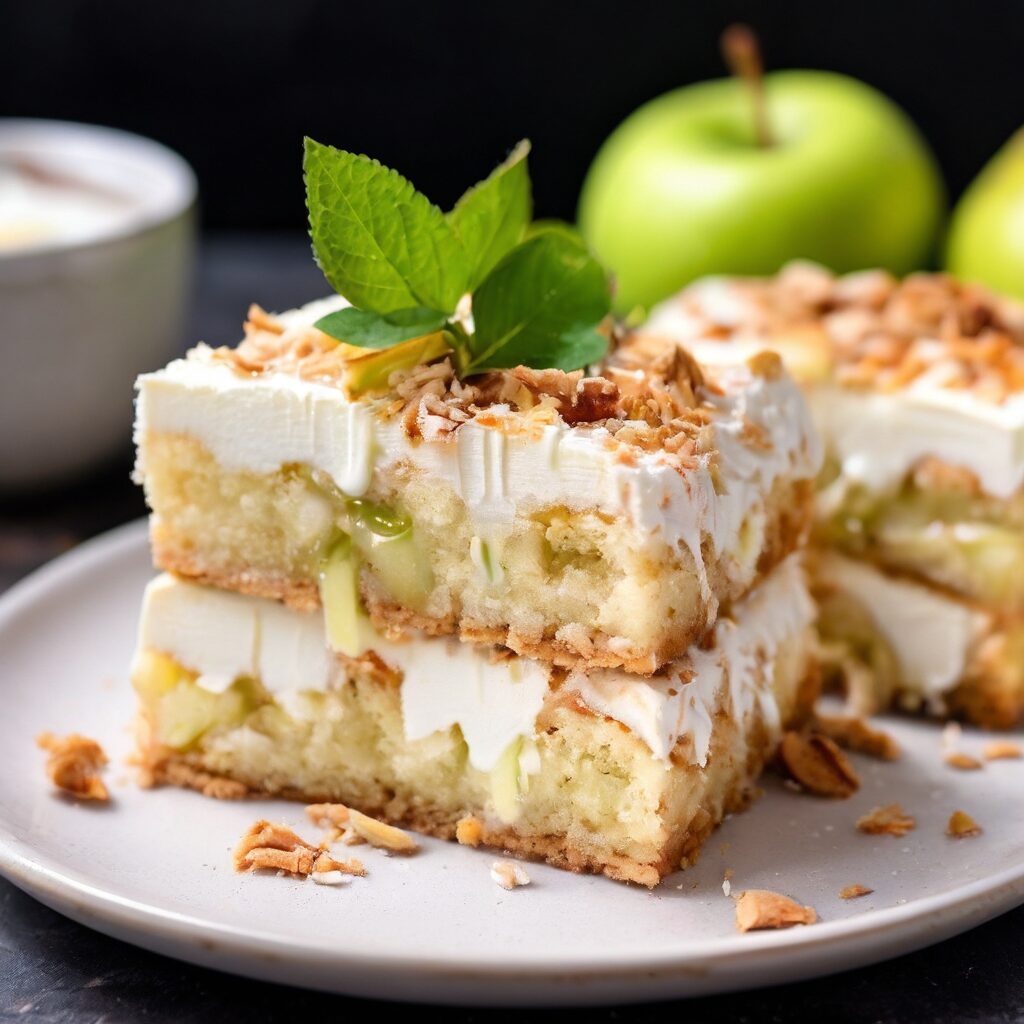
If you are looking for a delicious and healthy snack, apple coconut cake bars are the perfect choice. These bars combine the natural sweetness of apples with the exotic flavor of coconut, creating a treat that is both satisfying and nutritious. In this article, we will explore how to make these delightful cake bars, their health benefits, and some tips for customization. Let’s get started!
Key takeaways
- Use Granny Smith apples for structural integrity or Gala/Fuji for a moist, jam-like texture.
- Let the batter rest for ten minutes to allow the flour and coconut to absorb moisture properly.
- Toast shredded coconut in a skillet to enhance flavor and depth before mixing into the batter.
- Incorporate fresh ginger or citrus zest to brighten the flavor and aid in healthy digestion.
Ingredients for Apple Coconut Cake Bars
Before you begin, gather the following ingredients:
- 2 cups of grated apples
- 1 cup of shredded coconut
- 1 cup of whole wheat flour
- 1/2 cup of honey or maple syrup
- 1/2 cup of coconut oil
- 1 teaspoon of baking powder
- 1/2 teaspoon of cinnamon
- 1/4 teaspoon of nutmeg
- 1/4 teaspoon of salt
- 1 teaspoon of vanilla extract
Step-by-Step Instructions
Follow these simple steps to make your apple coconut cake bars:
- Preheat your oven to 350°F (175°C). Grease an 8×8 inch baking dish or line it with parchment paper.
- In a large bowl, mix the grated apples, shredded coconut, and whole wheat flour.
- In a separate bowl, combine the honey or maple syrup, melted coconut oil, baking powder, cinnamon, nutmeg, salt, and vanilla extract.
- Pour the wet ingredients into the dry ingredients and mix until well combined.
- Spread the mixture evenly in the prepared baking dish.
- Bake for 25-30 minutes, or until a toothpick inserted into the center comes out clean.
- Allow the bars to cool completely before cutting them into squares.
Health Benefits of Apple Coconut Cake Bars
These cake bars are not only delicious but also packed with health benefits:
- High in Fiber: Apples and whole wheat flour provide a good amount of dietary fiber, promoting healthy digestion.
- Nutrient-Rich: Coconut is rich in healthy fats, vitamins, and minerals, making these bars a nourishing snack.
- Low in Added Sugar: Using honey or maple syrup as a sweetener keeps the sugar content low, making these bars a healthier option.
Customization Tips
Feel free to customize your apple coconut cake bars with these variations:
- Add nuts like walnuts or almonds for extra crunch.
- Incorporate dried fruits such as raisins or cranberries for added sweetness.
- Use gluten-free flour if you have dietary restrictions.
- Experiment with spices like cardamom or ginger for a unique flavor twist.
Selecting the Ideal Apple Variety for Texture and Flavor
The success of your apple coconut cake bars depends heavily on the apple cultivar you choose, as different varieties behave uniquely when subjected to the heat of the oven. While the basic recipe calls for grated apples, the specific moisture content and sugar-to-acid ratio of the fruit can alter the bars’ structural integrity. For a bar that maintains a bit of a bite and offers a sharp contrast to the creamy coconut, Granny Smith apples are the gold standard. Their high acidity provides a bright counterpoint to the rich coconut oil, and their firm cellular structure prevents them from dissolving into a puree during the 30-minute bake time.
Conversely, if you prefer a more cohesive, jam-like consistency within the bars, consider using Gala or Fuji apples. These varieties are naturally sweeter and have a higher water content, which helps the bars stay incredibly moist. However, a common edge case involves using “mealy” apples like Red Delicious; these should generally be avoided as they lack the necessary acidity and can result in a grainy texture that clashes with the shredded coconut. For those who want the best of both worlds, a 50/50 split between a tart apple (like Braeburn) and a sweet apple (like Honeycrisp) creates a complex flavor profile that evolves as you eat.
Preparation technique also matters. When grating your apples, the size of the shred will dictate the “crumb” of the bar. A coarse grate using the large holes of a box grater yields visible flecks of fruit and a rustic appearance. A fine grate, on the other hand, allows the apple to almost disappear into the batter, providing moisture and sweetness without the distinct texture of the fruit pieces. If you find your apples are particularly juicy after grating, it is a professional trick to lightly pat them with a paper towel. You don’t want to squeeze the juice out entirely—as that liquid is full of flavor—but removing the excess surface moisture ensures the bars set properly and don’t end up with a soggy bottom.
Mastering Moisture Balance and Binding Agents
Baking with whole wheat flour and shredded coconut presents a unique challenge: both ingredients are highly hygroscopic, meaning they love to soak up moisture. If the balance isn’t perfect, your cake bars might end up either too dry and crumbly or too dense and heavy. The whole wheat flour contains the bran and germ of the grain, which act like tiny sponges. To ensure a tender crumb, it is essential to allow the batter to rest for about five to ten minutes before putting it into the oven. This brief hydration period allows the flour and coconut to fully absorb the liquid from the honey and coconut oil, leading to a more uniform rise and a softer mouthfeel.
The binding in this recipe is primarily achieved through the interaction of the flour’s gluten and the natural pectins found in the apples. Because this recipe is egg-free, the grated apple acts as a functional replacement for moisture and structure. If you find your bars are falling apart when you try to slice them, it may be due to an imbalance in the wet-to-dry ratio. For a sturdier bar that can be packed in a lunchbox without disintegrating, you can increase the whole wheat flour by two tablespoons or add a tablespoon of ground flaxseeds to the dry mix. The flaxseeds create a mucilaginous gel when they contact the wet ingredients, providing an extra layer of structural support.
Temperature also plays a role in binding. Coconut oil is unique because it is solid at room temperature (below 76°F) and liquid when warm. If you mix your batter with very cold apples straight from the refrigerator, the coconut oil may begin to solidify prematurely, creating small clumps of fat rather than a smooth emulsion. To avoid this, ensure your grated apples are at room temperature. This allows the oil to coat the flour particles evenly, which inhibits excessive gluten formation and results in a cake-like bar that is soft rather than chewy.
Advanced Coconut Techniques: From Toasting to Infusing
While shredded coconut is a staple ingredient, its flavor can be amplified significantly through a few simple culinary techniques. Most grocery store shredded coconut is either “sweetened” or “unsweetened.” For this wholesome recipe, unsweetened is preferred to maintain control over the glycemic index. However, unsweetened coconut can sometimes taste a bit flat. To elevate the flavor, try toasting half of the coconut in a dry skillet over medium heat for 3-5 minutes until it turns a pale golden brown. This triggers the Maillard reaction, bringing out nutty, toasted notes that pair beautifully with the warm cinnamon and nutmeg.
The texture of the coconut also impacts the final product. Desiccated coconut—which is finely ground—will provide a more uniform, cake-like texture, whereas thick coconut flakes or shreds provide a more substantial, chewy experience. If you are looking for a more “exotic” profile, you can swap the coconut oil for virgin coconut oil, which retains a much stronger coconut aroma than the refined version. Refined coconut oil is neutral in scent and flavor, which is better if you want the apple and spices to be the stars of the show.
For a truly gourmet touch, you can infuse the melted coconut oil with the spices before mixing. Gently heat the oil with the cinnamon, nutmeg, and even a split vanilla bean for a few minutes. This process allows the fat-soluble flavor compounds in the spices to distribute more evenly throughout the cake bars. This ensures that every single bite has a deep, resonant spice flavor, rather than having the spices concentrated in small pockets of the batter. This technique is particularly effective if you are adding more robust spices like star anise or cardamom, which can be overwhelming if not properly dispersed.
Expanding the Flavor Profile with Aromatics and Zests
Beyond the traditional warmth of cinnamon and nutmeg, these apple coconut cake bars provide an excellent canvas for a variety of aromatic additions. Citrus is perhaps the most underrated partner for apple and coconut. The addition of one teaspoon of freshly grated lemon or orange zest can transform the bars from a simple snack into a sophisticated dessert. The citric acid and volatile oils in the zest cut through the richness of the coconut oil and the density of the whole wheat flour, providing a “lift” to the overall flavor profile.
If you enjoy a bit of heat, fresh ginger is a marvelous addition. While the original recipe suggests ginger as an optional spice, using freshly grated ginger root (about one teaspoon) provides a spicy, floral kick that dried powder cannot replicate. Ginger has a natural affinity for apples and helps to stimulate digestion, adding to the health-conscious nature of the treat. When using fresh ginger, mix it into the wet ingredients first to ensure it doesn’t clump together in the batter.
Another layer of flavor can be achieved through the use of extracts beyond vanilla. A drop of almond extract can enhance the fruitiness of the apples, while a splash of dark rum or bourbon (if the bars are for adults) can add a rich, molasses-like depth that complements the maple syrup. For those who prefer a more savory-sweet balance, a pinch of sea salt on top of the bars just before they go into the oven can make the coconut flavor pop. The contrast between the salt crystals and the natural sugars in the apples creates a more complex sensory experience that keeps the palate engaged.
Troubleshooting Common Baking Challenges
Even simple recipes can sometimes yield unexpected results due to variables like oven calibration or humidity. One common issue is the bars browning too quickly on the edges while remaining underbaked in the center. This often happens in ovens with strong top-heating elements or if the baking dish is placed on a rack that is too high. If you notice the coconut on top is darkening rapidly, loosely tent the dish with a piece of aluminum foil for the final 10 minutes of baking. This allows the center to reach the necessary internal temperature without scorching the delicate coconut shreds.
Another challenge is the “soggy middle.” This is usually caused by using apples with extremely high water content or not baking the bars long enough. To test for doneness, don’t just rely on the toothpick test; also look at the edges of the bars. They should be pulling away slightly from the sides of the pan and feel firm to the touch. If you are using a glass baking dish, remember that glass retains heat longer than metal, so you might need to reduce the oven temperature by 25°F or pull the bars out a few minutes early to prevent the bottom from overcooking.
Altitude can also affect the outcome of these bars. At higher elevations, air pressure is lower, which means leavening agents like baking powder work more quickly and moisture evaporates faster. If you are baking above 3,500 feet, you may need to slightly increase the amount of liquid (an extra tablespoon of maple syrup or water) and decrease the baking powder by about an eighth of a teaspoon. This prevents the bars from rising too fast and then collapsing, which results in a gummy, dense texture.
Strategic Substitutions for Specific Dietary Profiles
While the original recipe is wholesome, there are ways to tailor it further for specific health goals. For those monitoring their glycemic index more strictly, you can replace the honey or maple syrup with a liquid monk fruit sweetener or allulose. Keep in mind that these sweeteners don’t always provide the same “sticky” binding properties as honey, so you might need to add an extra tablespoon of applesauce or a flax egg to ensure the bars don’t become too crumbly.
If you are looking to increase the protein content of these bars—perhaps for a post-workout snack—you can replace 1/4 cup of the whole wheat flour with a high-quality vanilla or unflavored protein powder. Be cautious, however, as protein powders (especially whey) can make baked goods quite dry. Using a plant-based protein powder like pea or soy often works better in this specific recipe because they absorb moisture in a way that is similar to whole wheat flour. If the batter seems too thick after adding protein powder, simply add a splash of coconut milk until the desired consistency is reached.
For a nut-free but high-protein alternative to the suggested walnut customization, consider adding sunflower seeds or pumpkin seeds (pepitas). These provide the desired crunch and a dose of healthy magnesium without the risk for those with nut allergies. Additionally, if you find that whole wheat flour is too heavy for your liking, spelt flour is an excellent substitute. Spelt is an ancient grain that is related to wheat but has a lighter texture and a slightly nutty flavor that complements coconut exceptionally well. It is often easier to digest for people with mild wheat sensitivities, though it is not gluten-free.
Professional Finishing Touches and Serving Aesthetics
The visual appeal of your apple coconut cake bars can be elevated from a simple home snack to a bakery-style treat with a few finishing touches. Once the bars have cooled completely, a light dusting of powdered coconut sugar can give them a professional, matte finish. Alternatively, you can create a simple glaze by mixing two tablespoons of melted coconut butter with a teaspoon of maple syrup and drizzling it in thin lines across the surface. This adds a boost of healthy fats and a decorative element that makes the bars look as good as they taste.
Serving temperature significantly impacts the flavor perception of these bars. When served warm, the coconut oil is in its liquid state, making the bars feel richer and more decadent. This is the best way to serve them if you are pairing them with a scoop of coconut milk ice cream for a wholesome dessert. However, when served cold from the refrigerator, the bars become much firmer and the apple flavor becomes more pronounced. This chilled version is often preferred for a quick breakfast on the go or as a refreshing snack on a warm afternoon.
Finally, consider the way you cut the bars. For a standard 8×8 pan, cutting them into 16 small squares is traditional, but cutting them into long, thin rectangles (biscotti-style) can make them feel more like a premium energy bar. If you are serving them at a brunch or gathering, you can even use a small circular biscuit cutter to create elegant round cakes, using the leftover scraps as a topping for yogurt or oatmeal. Regardless of how you serve them, the combination of the fibrous apple, the healthy fats from the coconut, and the complex carbohydrates from the whole wheat makes these bars a versatile addition to any healthy meal plan.
FAQ
Can I use another type of flour?
Yes, you can substitute whole wheat flour with all-purpose flour, almond flour, or gluten-free flour, depending on your preference and dietary needs.
How should I store the apple coconut cake bars?
Store the bars in an airtight container at room temperature for up to three days, or in the refrigerator for up to a week. You can also freeze them for longer storage.
Can I replace coconut oil with another oil?
Yes, you can use other oils like olive oil or vegetable oil. However, coconut oil adds a unique flavor that complements the coconut in the bars.
Are these cake bars suitable for vegans?
Yes, if you use maple syrup instead of honey, these bars are completely vegan.
Can I add chocolate chips to the recipe?
Absolutely! Adding chocolate chips can make the bars even more delightful, especially for those with a sweet tooth.
Related posts:
 Choosing the Healthiest Granola Bar
 Apple-Based Breakfast Ideas
 Maple: The New Pumpkin Spice
 Guilt-Free Cinnamon Roll Recipe
 Zoe Kravitz’s Coconut Oil Hair Care Secret
 The Vegan Maple Syrup Question That’s Dividing the Internet
 Red Velvet Cake So Good You’ll Never Miss the Original
 Instant Pot Apple Butter Recipe