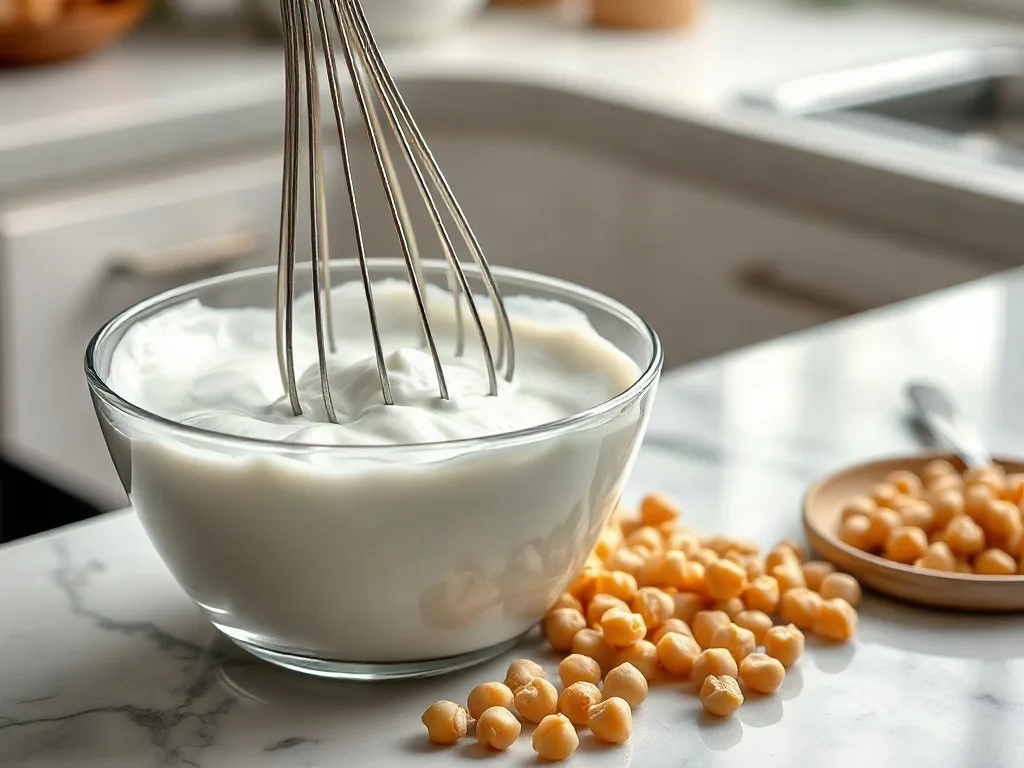
In the world of plant-based cooking, few discoveries have been as revolutionary as aquafaba. For years, vegans struggled to replicate the airy texture of meringues, the stability of macarons, or the fluffiness of a classic sponge cake without the use of egg whites. Then, in 2014, a French software engineer named Joël Roessel discovered that the viscous liquid found in a can of chickpeas possessed functional properties nearly identical to albumen. Today, this humble byproduct—the name is a portmanteau of the Latin words for water (aqua) and bean (faba)—is a staple ingredient in kitchens worldwide, proving that the secret to culinary magic often lies in what we previously considered waste.
Key takeaways
- Use room temperature aquafaba and grease-free metal or glass bowls to ensure the liquid whips into a stable foam.
- Add a pinch of cream of tartar to help stabilize the protein network and prevent the foam from collapsing.
- If the liquid is too thin, simmer it on the stove to reduce its volume by 25 to 30 percent.
- Store extra liquid in ice cube trays; one cube is roughly equivalent to half an egg white.
- Avoid canned chickpeas with additives like calcium chloride, as they can interfere with the liquid's ability to foam properly.
The Science Behind the Bean Liquid
To understand why aquafaba works, one must look at its chemical composition. Unlike plain water, aquafaba is a complex emulsion containing proteins, carbohydrates, and saponins. These components work in tandem to act as a surfactant. When you whip aquafaba, the proteins denature and unfold, trapping air bubbles within the liquid. Simultaneously, the starches and gums provide structural stability, preventing the bubbles from collapsing. This process mimics the way egg white proteins (ovalbumin) stabilize foam. Because the concentration of these proteins is lower than in eggs, aquafaba requires a slightly longer whipping time, but the resulting foam is remarkably resilient and can be folded into batters or baked into rigid structures.
Selecting the Right Aquafaba
While you can make aquafaba from scratch by boiling dried chickpeas, the canned variety is generally more reliable for beginners. The goal is to achieve a consistency similar to egg whites. If your liquid is too thin, it will not whip into a stable foam; if it is too thick or gelatinous, it may be difficult to incorporate into delicate mixtures. When purchasing canned chickpeas, prioritize brands that contain only chickpeas, water, and salt. Avoid those with added preservatives like calcium chloride or EDTA, as these can interfere with the protein structure and prevent the liquid from foaming properly. If you do use salt-added chickpeas, simply reduce the additional salt in your recipe to maintain the flavor balance.
Mastering the Perfect Vegan Meringue
The most popular application for aquafaba is the vegan meringue. To achieve success, start with a pristine, grease-free glass or metal bowl. Even a trace of oil can inhibit the foaming process. Pour your aquafaba into the bowl and begin whipping on a low speed to break the surface tension, then gradually increase to high. Once soft peaks begin to form, slowly add your sugar—ideally superfine or caster sugar to ensure it dissolves completely. Continue whipping until you reach stiff, glossy peaks. You will know you have succeeded when you can turn the bowl upside down without the mixture sliding out. These meringues can be baked at a low temperature to create crisp cookies or dolloped onto lemon tarts for a classic finish.
Whipping Up Light and Airy Cakes
Beyond meringues, aquafaba is a game-changer for vegan baking. In recipes for sponge cakes, chiffon cakes, or pancakes, aquafaba acts as both a leavening agent and a binder. Because it is flavor-neutral, it does not impart a bean-like taste to your baked goods, provided you whip it sufficiently. When folding aquafaba into a batter, use a gentle hand; excessive mixing will deflate the air bubbles you worked so hard to create. For a light sponge cake, whip your aquafaba to soft peaks before folding it into your flour and milk mixture. This technique provides the structural lift necessary to create a light, springy crumb that rivals any traditional egg-based confection.
Creating Rich Mousses and Emulsions
Aquafaba’s utility extends into the realm of cold desserts and condiments. Because it can be whipped into a stable foam, it serves as the perfect base for chocolate mousse. By melting high-quality vegan chocolate and gently folding it into whipped aquafaba, you create a decadent, airy dessert that sets firmly in the refrigerator. Furthermore, aquafaba can be used to make vegan mayonnaise or aioli. By slowly drizzling a neutral oil into a mixture of aquafaba, vinegar, and mustard using an immersion blender, you create a thick, creamy emulsion. This method is not only faster than traditional emulsification but also safer for those who are concerned about raw egg consumption.
Reducing Food Waste in Your Kitchen
One of the most compelling reasons to embrace aquafaba is its role in sustainable living. The average household throws away a significant amount of liquid from canned legumes annually. By saving this liquid, you are participating in a closed-loop kitchen philosophy. If you find yourself with extra aquafaba, you do not have to use it immediately. Aquafaba freezes beautifully in ice cube trays. Simply store the frozen cubes in a freezer-safe bag and pull them out as needed. One standard ice cube typically equals about one tablespoon of liquid, which is roughly equivalent to half of an egg white. This makes it incredibly easy to portion out exactly what you need for a specific recipe.
Troubleshooting Common Aquafaba Issues
Even experienced bakers encounter challenges with aquafaba. If your mixture refuses to foam, check your equipment for hidden oils or residues. If the liquid is too watery, you can reduce it on the stovetop by simmering it gently until it reaches the consistency of egg whites, though be careful not to cook it until it becomes a paste. If you find your foams are collapsing too quickly, a small pinch of cream of tartar or a quarter-teaspoon of lemon juice can help stabilize the protein network. Finally, always ensure your aquafaba is at room temperature before you begin whipping; cold liquid is more viscous and takes significantly longer to aerate.
The Chemistry of Concentration: Achieving the Ideal Viscosity
While canned aquafaba is the standard, its consistency can vary wildly between brands and even batches. To achieve professional-grade results, you must learn to adjust the viscosity of your liquid. If your aquafaba is too thin, it will fail to hold air; if it is too thick, it may become gummy or refuse to aerate at all. The secret is the reduction method. If you open a can and find the liquid watery, pour it into a small saucepan and simmer it over medium-low heat. You are looking for a reduction by about 25 to 30 percent. Once the liquid coats the back of a spoon with a slightly syrupy, viscous texture—similar to raw egg whites—remove it from the heat and let it cool completely. This concentrated liquid is far more robust and will produce a much more stable foam, which is critical for complex structures like macarons or pavlovas that need to hold their shape in the oven for extended periods.
Advanced Emulsification: Beyond Mayonnaise
The surfactant properties of aquafaba allow it to stabilize emulsions that are notoriously difficult to master in vegan cooking. Beyond basic mayonnaise, you can create stable vegan hollandaise, creamy salad dressings, and even aerated butter substitutes. To make a stable hollandaise, blend your reduced aquafaba with lemon juice, mustard powder, and a pinch of turmeric for color, then slowly drizzle in melted vegan butter while the blender is running on high. Unlike traditional hollandaise, which breaks easily if overheated, an aquafaba-based emulsion is remarkably forgiving. Because the proteins are already denatured and the starches act as a stabilizer, you can gently reheat this sauce without the emulsion separating. This opens up a world of classic French-style sauces that were previously inaccessible to those avoiding dairy and eggs.
The Role of Cream of Tartar and Stabilizers
Even with the best aquafaba, environmental factors like humidity and temperature can affect your foam’s stability. This is where chemical stabilizers become essential. Cream of tartar (potassium bitartrate) is the most effective tool in your arsenal. By lowering the pH of the aquafaba, it helps the proteins denature and bond more effectively, creating a tighter, more uniform matrix of air bubbles. For every half-cup of aquafaba, adding one-eighth to one-quarter teaspoon of cream of tartar can significantly improve the success rate of your meringues. If you find yourself without cream of tartar, a high-quality vinegar, such as white wine vinegar or apple cider vinegar, can serve as a substitute, though the latter may introduce a faint fruity note. Avoid using lemon juice in recipes where the citrus acidity might clash with the flavor profile, such as a delicate vanilla sponge cake.
Aquafaba in Savory Applications: Creating Textural Contrast
We often think of aquafaba in the context of sugar, but its neutral profile makes it a powerhouse for savory cooking. Use it as a binder in vegan meatballs, veggie burgers, or nut-based loaves. Because aquafaba lacks the fat of an egg, it binds ingredients without adding heavy, greasy undertones, allowing the natural flavor of your vegetables and herbs to shine. Furthermore, it acts as an excellent ‘glue’ for breading. If you are making crispy tofu or cauliflower wings, dip them in a mixture of aquafaba and spices before coating them in breadcrumbs or panko. The aquafaba adheres much better than water or plant milk, ensuring that your breading stays crisp and doesn’t slide off during the frying or baking process. This technique creates a beautiful, golden-brown crust that mimics the crunch of traditional egg-washed coatings.
The Art of the Vegan Macaron
The vegan macaron is widely considered the “final boss” of plant-based baking, but aquafaba makes it achievable. The main challenge is the lack of protein structure compared to chicken eggs. To succeed, you must whip your aquafaba to very stiff peaks, ensuring it is thick enough to support the weight of almond flour and powdered sugar. A common mistake is over-folding the batter; because aquafaba is more delicate than egg whites, you must be extremely precise. Once you reach the ‘lava’ consistency—where the batter flows off your spatula in a continuous ribbon—stop immediately. Additionally, because aquafaba-based meringues are sensitive to oven moisture, baking them in a convection oven with the door slightly ajar for the first few minutes can help release trapped steam, allowing the classic ‘feet’ of the macaron to form without the shells cracking.
Temperature Control and Storage Best Practices
Precision in temperature is often overlooked, yet it is a primary cause of failed foams. If your aquafaba is taken directly from the refrigerator, the proteins are less flexible, leading to a foam that is grainy or slow to develop. Always allow your aquafaba to reach room temperature before whipping. Conversely, if you are making a delicate mousse, the temperature of your melted chocolate is vital. If the chocolate is too hot, it will instantly deflate the aerated aquafaba; if it is too cold, it will seize into clumps. The ideal temperature for folding is when the chocolate is just warm to the touch. Regarding storage, while the refrigerator is fine for short-term use, be wary of ‘off’ smells. Aquafaba can absorb odors from other items in your fridge, so ensure it is stored in a glass jar with a tight-fitting lid. For long-term preservation, consider dehydrating your aquafaba into a powder by spreading it on a silicone mat in a low-temperature dehydrator; this powder can be rehydrated with water later, offering a convenient, shelf-stable alternative to liquid.
FAQ: Everything You Need to Know About Aquafaba
Q: Does aquafaba taste like chickpeas? A: Generally, no. Once whipped and combined with other ingredients like sugar, vanilla, or cocoa, the mild bean flavor disappears entirely. If you are sensitive to the taste, ensure you are using high-quality canned chickpeas and consider adding a splash of vanilla extract to mask any residual aroma.
Q: Can I use the liquid from other beans? A: Yes, you can use the liquid from white beans, black beans, or even lentils, but be aware that the color of the liquid will transfer to your final product. Chickpea aquafaba is the gold standard because it is the most neutral in both color and flavor, making it the most versatile choice for baking.
Q: How long can I store aquafaba in the refrigerator? A: Fresh aquafaba can be stored in an airtight container in the refrigerator for up to five days. If you do not plan to use it within that timeframe, it is best to freeze it immediately to maintain its structural integrity for future use.
Q: Can I substitute aquafaba 1:1 for eggs in every recipe? A: While it works beautifully in cakes, mousses, and meringues, it is not a perfect substitute for eggs in every application. It lacks the fats found in egg yolks, so it may not be suitable for recipes that require heavy binding or high fat content, such as certain types of rich custards or dense, heavy brownies.
Q: Is aquafaba safe for people with legume allergies? A: No. If you have a known allergy to chickpeas or legumes, you should avoid consuming aquafaba. Because it contains the proteins from the legumes themselves, it can trigger an allergic reaction in sensitive individuals. Always prioritize safety and consult with a medical professional if you have food sensitivities.
Related posts:
 Healthy Canned Foods Worth Stocking Up On
 Chickpea Rice Is Here to Replace Your Grain Game
 Essential Vegan Pantry Staples Every Plant-Based Kitchen Needs
 The Best Liquid Eyeshadows That Stay Put All Day Long
 Canned Veggie Comeback: The Preserved Produce That’s Actually Good for You
 Simple Vegan Ice Cream Recipe
 Step Into Compassion: The Best Vegan Shoe Brands Making Waves
 Perfect Hard-Boiled Eggs: A Simple Guide