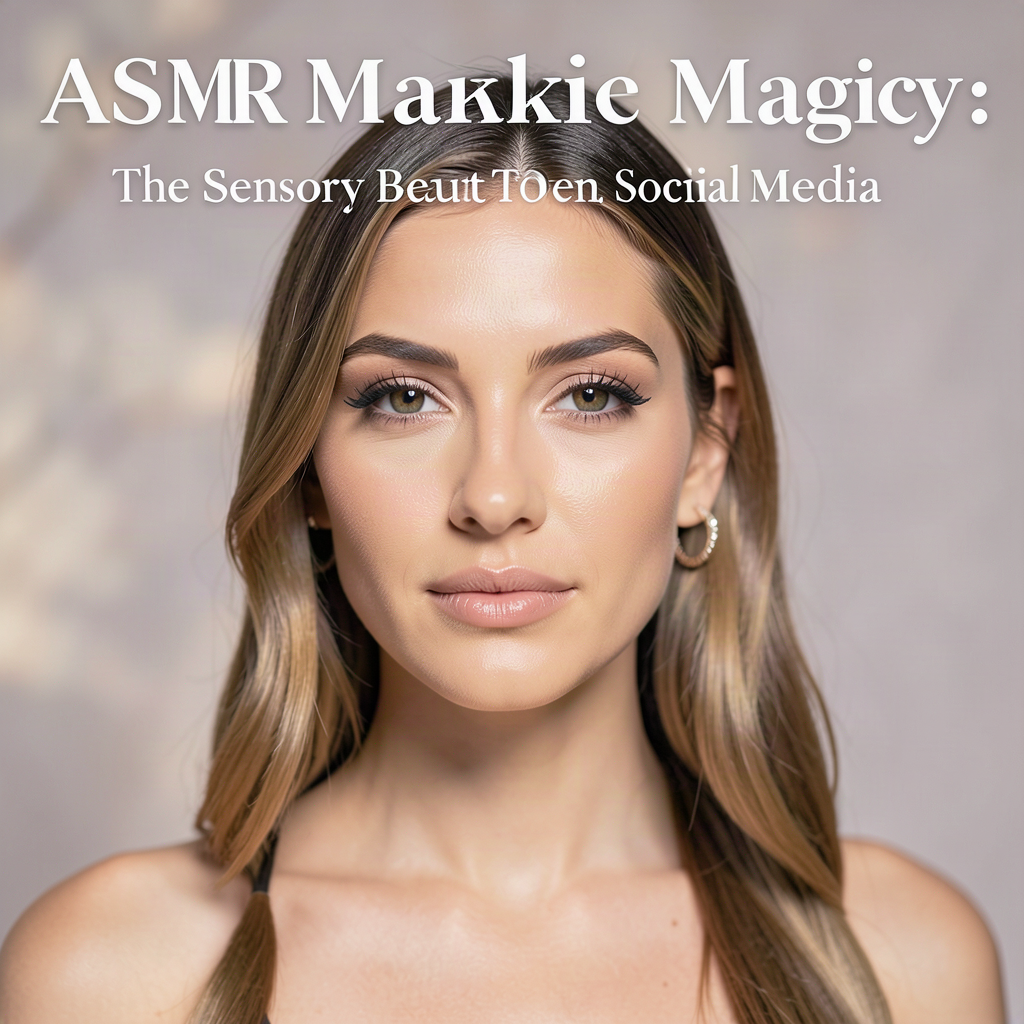
In the bustling, high-decibel world of social media, a quiet revolution has taken hold. It is a world where the soft click of a lipstick cap, the rhythmic tapping on a glass foundation bottle, and the gentle whisper of a makeup artist are more powerful than any loud soundtrack or flashy transition. This is the realm of ASMR makeup, a sensory beauty trend that has transformed from a niche internet subculture into a mainstream phenomenon. ASMR, which stands for Autonomous Sensory Meridian Response, describes the tingling sensation that typically begins on the scalp and moves down the back of the neck and upper spine, often triggered by specific auditory or visual stimuli. When combined with the inherent artistry and intimacy of beauty routines, it creates a unique form of digital relaxation that millions of viewers use to decompress, focus, and find a moment of peace in a chaotic world.
The appeal of ASMR makeup magic lies in its ability to turn a routine task into a meditative experience. For many, watching a creator meticulously blend eyeshadow or organize a vanity isn’t just about the final look; it is about the journey of sound and sight that leads there. This trend has not only changed how we consume beauty content but has also influenced how brands market their products and how individuals perceive self-care. In this comprehensive exploration, we will delve into the science behind the tingles, the technical elements that make a video successful, and the therapeutic benefits of this sensory-rich medium.
The Science of Tingles: Why ASMR Makeup Videos Work
To understand why ASMR makeup videos are so captivating, we must first look at the psychological and physiological responses they elicit. Researchers have found that ASMR is associated with a reduction in heart rate and an increase in positive emotions, such as relaxation and feelings of social connection. When you watch a beauty creator whisper into a high-quality microphone while delicately applying blush, your brain may interpret these signals as a form of non-threatening, personal attention. This triggers the release of neurochemicals like dopamine, oxytocin, and endorphins, which are often called the body’s “feel-good” hormones.
The makeup niche is particularly well-suited for ASMR because it naturally involves a variety of textures and sounds. The crinkle of a plastic wrapper, the liquid “glug” of a toner, and the soft friction of a brush against skin are all classic ASMR triggers. Furthermore, the visual aspect of makeup application—the precision of a winged eyeliner or the smooth spread of a cream contour—provides a sense of order and satisfaction. This “satisfying” quality taps into our innate love for symmetry and completion, making the viewing experience deeply rewarding on a subconscious level. For those who experience the “tingles,” these videos provide a physical sensation of comfort that can be as effective as a light massage or a warm bath.
Key Elements of an ASMR Makeup Experience
What separates a standard makeup tutorial from a true ASMR experience? It all comes down to the sensory details. In the world of ASMR, sound is king. Creators use specialized binaural microphones that mimic the way human ears hear sound in a 3D space. This allows the viewer to feel as though the creator is moving around them, whispering directly into their ear or tapping on a product just inches away. Common auditory triggers in these videos include:
- Tapping and Scratching: Using fingernails to create rhythmic sounds on product packaging, such as acrylic palettes or glass bottles.
- Lid Clicking: The satisfying “pop” or “click” of a magnetic lipstick tube or a pressed powder compact.
- Brush Swishing: The soft, airy sound of a fluffy brush being swirled in a pan or brushed across the microphone cover (often called “brushing the viewer”).
- Liquid Sounds: The gentle shaking of a bottle or the sound of a dropper dispensing oil into a palm.
Visual triggers are equally important. High-definition cameras capture the fine textures of powders and creams, while soft, diffused lighting creates a soothing atmosphere. Slow, deliberate movements are a hallmark of the genre; there are no rushed steps or aggressive blending. Instead, every motion is intentional, inviting the viewer to slow down their own breathing and focus entirely on the present moment.
Popular Sub-genres within the ASMR Beauty Community
The ASMR makeup world is diverse, catering to different preferences and needs. One of the most popular sub-genres is the Personal Attention Roleplay. In these videos, the creator acts as a professional makeup artist, a spa technician, or even a friend getting the viewer ready for an event. They speak directly to the camera, often using “you”-focused language like, “Let me just blend this out for you,” which fosters a sense of intimacy and care. This can be incredibly comforting for individuals who feel lonely or stressed, providing a digital surrogate for human touch.
Another major category is the “Get Ready With Me” (GRWM) ASMR. Unlike traditional GRWM videos that are filled with fast-paced talking and music, these versions focus on the sounds of the morning routine. You might hear the kettle boiling in the background, the soft rustle of clothes, and the methodical application of skincare and makeup. There is also the Product Unboxing and Review, where the focus is on the tactile experience of new items—the tearing of paper, the removal of protective films, and the first “swatch” of a pigment. These videos provide a vicarious thrill of consumption without the financial cost, satisfying the viewer’s curiosity through a purely sensory lens.
The Therapeutic Benefits of Sensory Beauty Content
Beyond entertainment, many viewers turn to ASMR makeup magic for its therapeutic potential. In an era of high anxiety and digital burnout, these videos offer a form of “low-stakes” content. There is no complex plot to follow, no stressful news to process, and no demand for the viewer to take action. This makes them an excellent tool for stress management. By focusing on the repetitive sounds and movements, the mind can enter a flow state, effectively quieting the “inner critic” or the ruminating thoughts that often accompany anxiety.
For those struggling with insomnia, ASMR makeup videos are a popular sleep aid. The consistent, rhythmic nature of the sounds can help lower the heart rate and prepare the body for rest. Many users report that they fall asleep mid-video, lulled by the gentle whispers and soft tapping. Additionally, these videos can be a form of mindfulness practice. They encourage the viewer to pay close attention to small, often overlooked details, which is a core component of staying grounded in the present. In this way, ASMR beauty content serves as a bridge between the digital world and personal well-being, proving that social media can be a source of healing rather than just distraction.
How to Create Your Own ASMR Makeup Content
If you are inspired by the ASMR makeup trend and want to start your own channel or social media account, the barrier to entry is lower than you might think, though quality is key. The most important investment is a high-quality microphone. While you can start with your phone’s mic, a dedicated condenser microphone (like the Blue Yeti or a 3Dio for binaural sound) will make a world of difference in capturing the subtle textures of sound that ASMR fans crave.
When setting up your space, consider the acoustics. A small, quiet room with soft furnishings (like rugs and curtains) will help reduce echo. For lighting, a ring light or softbox provides that classic, clean beauty look, but don’t be afraid to experiment with warmer, dimmer lights to create a cozy “nighttime” vibe. When filming, remember that consistency and pacing are vital. Practice moving your hands slowly and avoiding sudden, loud noises that might startle a relaxed viewer. Editing is also a crucial step; you will want to use software that allows you to boost the audio levels of the quietest sounds while ensuring there is no background hiss. Finally, find your niche. Are you the “luxury unboxer” or the “minimalist skincare” creator? Authenticity resonates most in the ASMR community.
Finding Your Niche: From Minimalist to Avant-Garde ASMR
As the ASMR makeup trend has grown, it has branched into various aesthetic styles. Some creators focus on Minimalist ASMR, which features clean backgrounds, neutral tones, and a focus on essential skincare. These videos often feel clinical and organized, appealing to viewers who find peace in simplicity and cleanliness. On the other end of the spectrum is Avant-Garde or Artistic ASMR. Here, the makeup application is a form of high art. You might see creators using palette knives to mix thick acrylic-like foundations or applying intricate face jewels with tweezers. The sounds of these materials—the squelch of paint, the tinkle of crystals—offer a different sensory profile that is more stimulating and visually vibrant.
There is also a rising trend in Vintage ASMR, where creators use antique makeup compacts and historical techniques. The sound of a 1950s metal lipstick case clicking shut or the use of a traditional powder puff provides a nostalgic sensory experience. By choosing a specific niche, creators can build a dedicated community of like-minded individuals who share their specific aesthetic and sensory preferences. This diversity ensures that there is an ASMR makeup experience for everyone, whether you want to feel like you’re in a high-end Parisian salon or a cozy, candlelit bedroom.
The Impact of ASMR on the Beauty Industry and Marketing
The beauty industry has been quick to notice the power of ASMR. Major brands are no longer just making traditional commercials; they are creating “tingle-inducing” advertisements designed specifically for social media. By focusing on the sound of their packaging and the texture of their formulas, brands can create a more immersive and emotional connection with their customers. For example, a skincare brand might release a video that is nothing but the sound of a face oil being massaged into the skin, or a mascara brand might highlight the specific “click” their tube makes when closed.
This shift reflects a broader change in consumer behavior. Modern shoppers, particularly Gen Z and Millennials, value authenticity and experience over polished perfection. ASMR content feels more “real” because it highlights the physical reality of the product. It also taps into the “slow beauty” movement, which encourages consumers to savor their routines rather than rushing through them. As a result, we are seeing a surge in “sensory-first” product design, where the tactile and auditory feedback of the packaging is considered just as important as the ingredients inside. The ASMR makeup trend has essentially turned product usage into a form of performance art that doubles as a marketing tool.
Mindful Consumption: Balancing ASMR with Real-Life Beauty
While ASMR makeup videos offer many benefits, it is important to approach them with a sense of mindful consumption. The beauty of these videos is their ability to provide relaxation, but they can also trigger a desire for constant purchasing. The “haul” culture inherent in some ASMR content can lead to overconsumption and financial stress if not balanced with a realistic perspective. It is helpful to remember that the primary goal of these videos is the sensory experience, not necessarily the acquisition of every product shown.
Furthermore, while digital relaxation is valuable, it should not replace real-life self-care and human connection. Use ASMR as a tool to help you unwind so that you can show up more fully in your physical life. Try incorporating the principles of ASMR into your own beauty routine: slow down, focus on the feel of the brush on your skin, and enjoy the quiet sounds of your morning. By bringing the “magic” of ASMR into your own bathroom, you can turn a daily necessity into a powerful ritual of self-love. Ultimately, the sensory beauty trend is a reminder that in a world that often demands our attention, there is profound value in the quiet, the soft, and the slow.
The Art of Layered Soundscapes: Engineering Multi-Dimensional Triggers
While basic tapping and whispering form the foundation of the genre, advanced ASMR makeup creators are increasingly focusing on the complexity of layered soundscapes. This involves more than just a single microphone; it is about the interplay between foreground triggers and background textures. For instance, a creator might use a low-frequency hum of a distant fan or a soft rain recording to provide a “bed” of white noise, which makes the sharp, high-frequency sounds of a mascara wand clicking or a powder compact snapping feel more pronounced. This contrast prevents the audio from feeling “flat” and helps the listener’s brain distinguish between different spatial layers.
Technical enthusiasts often experiment with “wet” versus “dry” sounds. A “wet” sound in ASMR makeup refers to the tacky, squelching noise of a lip gloss wand being pulled from its tube or the rhythmic patting of a damp beauty sponge against the skin. These sounds are often processed with a slight boost in the mid-range frequencies to emphasize the moisture. Conversely, “dry” sounds—like the scratch of a brow pencil on paper or the sweeping of a fan brush—benefit from high-end clarity. Understanding these acoustic properties allows creators to tailor their videos to specific “tingle profiles.” Some viewers are exclusively “dry trigger” fans, finding the sound of liquids unsettling, while others seek out the “mouth sounds” often associated with creamy product applications. This level of detail transforms a simple video into a sophisticated auditory journey that rivals professional foley work in cinema.
“No Talking” vs. “Soft Spoken”: Navigating Auditory Preferences
A significant divide exists within the ASMR beauty community between those who prefer “Soft Spoken” or whispered narration and those who demand “No Talking” content. For the “No Talking” purists, the presence of a human voice—no matter how gentle—is a distraction that breaks the immersion. These videos focus entirely on the objects: the rhythmic drumming of fingers on a glass bottle, the sound of a brush being cleaned on a textured mat, and the crinkle of tissue paper. This sub-genre highlights the “object-oriented” nature of ASMR, where the beauty products themselves are the stars of the show. It requires the creator to be exceptionally skilled in movement, as every gesture must communicate intent without the aid of words.
On the other hand, “Soft Spoken” ASMR makeup videos lean heavily into the psychological aspect of personal attention. These creators often use a technique called “inattentional blindness,” where the viewer becomes so focused on the soothing cadence of the voice that they drift into a trance-like state. The narrative often involves the creator describing the ingredients of a product—mentioning hyaluronic acid or rosehip oil in a rhythmic, repetitive way—which adds a layer of educational comfort. For many, the voice acts as a tether, preventing the mind from wandering toward stressful thoughts. The choice between these two styles often depends on the viewer’s current mental state; “No Talking” is frequently preferred for deep focus or intense work, while “Soft Spoken” content is the go-to for those seeking emotional companionship and a sense of being cared for.
Product Destruction and Restoration: The Polarizing Visual ASMR
One of the most fascinating and controversial corners of the sensory beauty world is the rise of makeup destruction and restoration videos. In destruction ASMR, creators use palette knives to meticulously scrape pristine eyeshadows out of their pans, or they might crush a brand-new lipstick into a smooth paste. While this can be painful for makeup lovers to watch, the auditory and visual feedback—the “crunch” of the pigment and the sight of a solid turning into a textured powder—is a powerful trigger for many. It taps into a psychological phenomenon known as “destructive satisfaction,” where the breaking of an orderly object provides a sense of release and catharsis.
Conversely, makeup restoration ASMR offers the opposite psychological reward: the satisfaction of order being restored. These videos often feature a creator taking a shattered highlighter or a filthy, used makeup kit and returning it to a state of perfection. The process involves cleaning the packaging with isopropyl alcohol, re-pressing powders with a specialized tool, and polishing the surfaces until they shine. The sound of a metal spatula smoothing out a cream or the “hiss” of a spray bottle sanitizing a palette provides a sense of renewal. This niche appeals to viewers who find peace in organization and cleanliness, offering a digital version of the “power washing” or “deep cleaning” trends that have dominated other areas of social media. It reinforces the idea that even in a state of chaos, beauty and function can be reclaimed.
Cultural Aesthetics: From K-Beauty Precision to Western Maximalism
The ASMR makeup trend is not a monolith; it is deeply influenced by regional beauty standards and cultural aesthetics. K-Beauty (Korean Beauty) ASMR, for example, often emphasizes the “glass skin” aesthetic. The sounds in these videos are focused on hydration: the watery “splash” of a toner, the gentle patting of an essence into the skin, and the use of sheet masks. The movements are incredibly delicate, reflecting the multi-step, gentle approach of Korean skincare. The lighting is usually bright and ethereal, and the creators often use high-tech skincare gadgets that emit soft whirring or beeping sounds, adding a futuristic, clinical layer to the sensory experience.
In contrast, Western ASMR makeup often leans toward maximalism and “glam” culture. Here, the triggers are more percussive and bold. You’ll hear the loud “clack” of long acrylic nails against a plastic foundation bottle, the heavy thud of a luxury eyeshadow palette being set on a marble table, and the intense “swish” of a large bronzer brush. These videos often focus on the transformation—the “before and after”—and the sounds of the tools are used to emphasize the drama of the look. By observing these cultural differences, viewers can explore different “vibes” of relaxation, ranging from the meditative, skincare-focused rituals of the East to the high-energy, transformative artistry of the West. This global exchange of sensory styles has enriched the community, allowing for a broader range of triggers and visual storytelling.
ASMR as an Accessibility Tool for the Visually Impaired
An often-overlooked aspect of ASMR makeup magic is its role as an accessibility tool, particularly for the visually impaired. While makeup is a primarily visual medium, the highly descriptive and auditory nature of ASMR allows those with low vision to participate in the beauty world in a way that traditional tutorials do not. When a creator whispers, “I’m now taking a heavy, cold glass bottle of foundation and shaking it—listen to the liquid inside,” they are providing a rich mental map of the product. The sound of the brush moving from the left ear to the right ear in a binaural recording helps the listener understand the placement and technique of the application.
This “audio description” quality turns a beauty video into a tactile experience. Some creators have even begun to lean into this intentionally, using more descriptive language and focusing on the weight, texture, and temperature of the products. For a viewer who cannot see the precision of a winged eyeliner, the sound of the felt-tip pen dragging across the skin—a sharp, consistent “zip”—conveys the skill and the result perfectly. This inclusivity fosters a more diverse community where beauty is defined not just by how it looks, but by how it feels and sounds, breaking down barriers in a traditionally visual-centric industry.
The “Uncanny Valley” and Misophonia: When Sensory Input Overloads
Despite its popularity, ASMR is not a universal panacea. For a significant portion of the population, these videos can trigger the opposite of relaxation: a condition known as misophonia. Misophonia is a strong dislike or hatred of specific sounds, such as chewing, whispering, or finger tapping. For these individuals, the very triggers that send tingles down one person’s spine can cause intense irritation, anxiety, or even a “fight or flight” response in another. This is an important edge case for creators to consider. To mitigate this, many ASMRtists provide “trigger warnings” in their video descriptions or use timestamps so viewers can skip sounds they find distressing, such as “mouth sounds” or “sticky gloss sounds.”
Another challenge is the “Uncanny Valley” effect, where the extreme intimacy of a personal attention roleplay can feel “creepy” or overly intrusive rather than comforting. When a creator gets too close to the lens or whispers too intensely, it can trigger a sense of social unease. This is particularly true in videos where the creator “touches” the camera to simulate touching the viewer’s face. Successful creators navigate this by maintaining a balance between intimacy and professional distance, ensuring the “personal attention” feels like a luxury service rather than a violation of personal space. Understanding these psychological boundaries is crucial for maintaining a loyal audience and ensuring the content remains a safe space for relaxation.
Advanced Editing Techniques: Polishing the Auditory Gem
For those looking to elevate their ASMR makeup content, the editing phase is where the “magic” is truly refined. Beyond simply cutting clips together, advanced editing involves a deep dive into audio engineering. One essential technique is the use of a “High-Pass Filter” to remove low-end rumble—such as the sound of distant traffic or an air conditioner—which can muddy the delicate sounds of a makeup brush. Conversely, “Normalization” ensures that the audio levels are consistent, so a viewer doesn’t have to constantly adjust their volume when the creator switches from a soft whisper to a slightly louder tapping sound.
Creators also use “Compression” to bring out the hidden details in quiet sounds. This makes the sound of a powder puff hitting the face feel more “present” and textured. Another pro tip is the use of “Black Screen” segments. Many viewers use ASMR makeup videos to fall asleep, but the bright light of the screen can interfere with their circadian rhythm. Some creators now include a 20-minute “black screen” at the end of their videos, where the audio continues—perhaps just the sound of a slow, rhythmic brush cleaning—but the visual goes dark. This thoughtful touch demonstrates an understanding of the viewer’s journey from relaxation to deep sleep, turning a social media post into a functional wellness tool. Mastering these technical nuances is what separates the hobbyist from the professional ASMRtist in an increasingly competitive digital landscape.
Frequently Asked Questions
What exactly does ASMR stand for, and does everyone feel it?
ASMR stands for Autonomous Sensory Meridian Response. It is a physical sensation characterized by a tingling feeling that usually starts on the scalp and moves down the neck and spine. Not everyone experiences these “tingles”; some people may find the sounds relaxing without the physical sensation, while others may not find the videos appealing at all. Research suggests that those who do experience ASMR may have different brain connectivity in areas related to emotional arousal and sensory integration.
Do I need expensive equipment to enjoy or make ASMR makeup videos?
To enjoy them, all you need is a pair of decent headphones to experience the binaural (3D) sound effects. To make them, while high-end microphones like the 3Dio or Blue Yeti are popular for their sensitivity, many successful creators started with just a smartphone and a quiet room. The most important factor is the quality of the sound and the absence of distracting background noise, which can often be achieved with careful planning and basic editing software.
Why are makeup sounds specifically so popular in the ASMR community?
Makeup routines are naturally rich in diverse “triggers.” They involve a mix of hard sounds (clicking plastic, tapping glass), soft sounds (brushes on skin, powder puffs), and liquid sounds (creams, oils). Additionally, the visual aspect of makeup application is often very satisfying and methodical, which complements the auditory triggers perfectly. The intimacy of a makeup routine also lends itself well to the “personal attention” aspect of ASMR.
Is watching ASMR makeup videos a form of therapy?
While many people find ASMR videos to be therapeutic and helpful for managing stress, anxiety, and insomnia, they are not a substitute for professional mental health treatment. They are best viewed as a self-care tool or a relaxation technique, similar to meditation or listening to ambient music. If you are struggling with severe anxiety or sleep disorders, it is always best to consult with a healthcare professional.
Are there any negative side effects to watching too much ASMR?
For most people, there are no negative side effects. However, some heavy viewers report a phenomenon called “ASMR immunity,” where they stop feeling the tingles after watching too many videos. Taking a break for a few days or weeks usually restores the sensation. Additionally, as with any digital content, it’s important to be mindful of screen time and ensure that watching videos doesn’t interfere with your sleep hygiene or real-world responsibilities.
Related posts:
 The Best Snapchat Accounts for Healthy Recipe Inspiration
 The Sleep Stories That Are Putting Millions to Bed Every Night
 The Best Headphones for Every Lifestyle and Budget
 ASMR Food Videos and Misophonia
 Popping Culture: Why Cartoon Pimple Videos Are Oddly Satisfying
 Watch This Emotional Video For a Serious Workout Motivation Boost
 TooD Beauty’s Nonbinary Approach
 Sound Bath Benefits