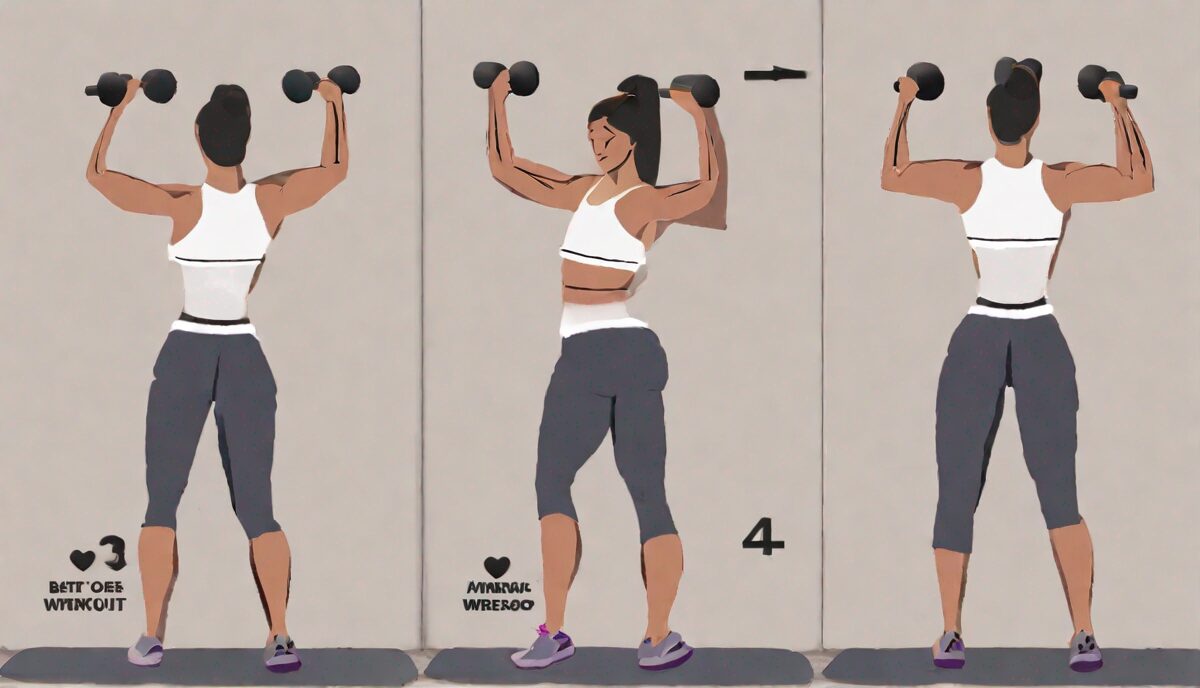
Building a strong and toned upper body is a common goal for many fitness enthusiasts. Focusing on the back and shoulders not only enhances your physique but also improves posture, reduces the risk of injury, and increases functional strength. In this article, we’ll explore a comprehensive workout routine designed to fortify these critical muscle groups.
The Importance of Back and Shoulder Exercises
Before we dive into the exercises, it’s important to understand why focusing on the back and shoulders is beneficial. These muscles play a pivotal role in various daily activities and sports performance. Moreover, a well-defined back and shoulders can contribute to a more balanced and aesthetically pleasing body shape.
Warm-Up Routine
Starting with a proper warm-up is crucial to prepare your muscles and joints for the workout ahead. Begin with 5-10 minutes of light cardio, such as jogging or jumping jacks, followed by dynamic stretches targeting the upper body to increase blood flow and reduce the risk of injury.
Back and Shoulder Strength Exercises
Now, let’s get into the core of the workout. Perform the following exercises in sequence, taking care to maintain proper form throughout:
- Pull-Ups: Aim for 3 sets of 6-8 reps. If you’re a beginner, you can start with assisted pull-ups.
- Bent-Over Rows: Perform 3 sets of 10-12 reps with a weight that is challenging but allows you to keep your form.
- Standing Shoulder Press: Complete 3 sets of 8-10 reps, using dumbbells or a barbell.
- Lat Pulldowns: Do 3 sets of 10-12 reps, focusing on a slow and controlled movement.
- Face Pulls: These are great for shoulder health; aim for 3 sets of 12-15 reps.
Toning and Sculpting
In addition to strength-building exercises, incorporating toning movements can enhance muscle definition. Include the following in your routine:
- Dumbbell Lateral Raises: 3 sets of 15 reps to target the side delts.
- Rear Delt Flyes: 3 sets of 15 reps to work the back of the shoulders.
- Seated Cable Rows: 3 sets of 12 reps, focusing on squeezing the shoulder blades together at the end of the movement.
Cool Down and Stretch
After your workout, it’s essential to cool down with a stretch session to promote recovery and flexibility. Spend 5-10 minutes stretching the muscles you’ve worked, paying particular attention to the back, shoulders, and arms.
Optimizing Scapular Kinematics for Maximum Muscle Recruitment
To truly master back and shoulder development, one must look beyond the weight on the bar and focus on the movement of the scapulae (shoulder blades). Many lifters fail to see progress because they initiate pulling movements with their biceps or pushing movements with their triceps, leaving the larger target muscles under-stimulated. The secret to a thicker back and broader shoulders lies in mastering scapular retraction, depression, and protraction.
When performing any rowing variation, the movement should begin with a “scapular pull.” This involves pulling the shoulder blades back and down before the elbows even begin to bend. This ensures that the latissimus dorsi and rhomboids are the primary movers. If you find your forearms or biceps fatiguing before your back, you are likely failing to achieve full retraction. For shoulder health, particularly during overhead presses, scapular upward rotation is vital. As you press upward, your shoulder blades should rotate and move slightly away from the spine to create a stable platform for the humerus. A common mistake is “pinning” the shoulders down during a press, which can lead to subacromial impingement over time.
To practice this, try the “Scapular Pull-Up.” Hang from a bar with straight arms and simply pull your shoulder blades down toward your back pockets without bending your elbows. This small, 2-inch movement is the foundation of every effective back exercise. Similarly, for the shoulders, practicing “Scapular Push-Ups” on the floor can help develop the serratus anterior, a muscle that stabilizes the shoulder blade and creates that “serrated” look on the side of the ribcage, bridging the gap between the lats and the chest.
Advanced Grip Variations and Their Impact on Lat Width vs. Thickness
While the existing routine covers standard pull-ups and rows, the specific grip you choose can drastically alter which muscle fibers are recruited. Understanding the biomechanics of grip can help you customize your workout to address specific weaknesses, such as a lack of “width” (the V-taper) or a lack of “thickness” (the 3D look of the mid-back).
A wide, pronated (overhand) grip on lat pulldowns or pull-ups emphasizes the outer fibers of the latissimus dorsi and the teres major. This is the primary driver for increasing the width of the upper back. However, a narrow, neutral (palms facing each other) grip allows for a greater range of motion at the bottom of the movement, enabling the elbows to travel further behind the torso. This deeper stretch and harder contraction are superior for building the thickness of the mid-back and lower lats. If you struggle with lower lat development, switching to a close-grip, supinated (underhand) row can be a game-changer, as it keeps the elbows tucked close to the ribcage, favoring the lower fibers.
Edge cases often involve lifters with wrist or elbow issues. If straight-bar rows cause wrist pain, switching to a multi-grip “Swiss bar” or using dumbbells with a neutral grip can alleviate the torque on the joints while still providing a massive stimulus to the back. Furthermore, don’t overlook the “Thumbless Grip” (suicide grip). By placing the thumb on the same side as the fingers during pulling movements, many athletes find it easier to “hook” the weight and pull from the elbows, effectively reducing bicep involvement and enhancing the mind-muscle connection with the back.
The Science of the “3D” Shoulder: Targeting the Three Deltoid Heads
The shoulder is a ball-and-socket joint with a massive range of motion, requiring a multi-angled approach to achieve that coveted “capped” look. While the standing press targets the anterior (front) delt, the medial (side) and posterior (rear) heads often require more isolated attention to truly pop. The medial deltoid, in particular, is what creates the illusion of a narrower waist by widening the frame.
To maximize medial delt growth, the lateral raise must be performed with precision. A common error is swinging the weights or leading with the thumbs. Instead, imagine pouring water out of two pitchers at the top of the movement, keeping the pinkies slightly higher than the thumbs. This internal rotation ensures the medial head is doing the work rather than the anterior head. For the posterior deltoid, which is frequently neglected, the “Face Pull” is excellent, but adding “Rear Delt Swings” can provide a unique stimulus. Using heavy dumbbells and a limited range of motion (the bottom third of a flye), you can overload the rear delts with high volume, which they respond to remarkably well.
For those with stubborn shoulder growth, consider the “Leaning Lateral Raise.” By holding onto a stable upright (like a power rack) and leaning your body away at a 30-degree angle, you change the resistance curve. In a standard standing lateral raise, there is zero tension at the bottom. By leaning, you create tension from the very start of the rep, forcing the medial delt to work through its entire contractile range. This is an advanced technique that should be used sparingly to avoid overtaxing the supraspinatus tendon.
Unilateral Training for Symmetry and Core Integration
Bilateral movements like the barbell row are staples, but they can allow a dominant side to take over, leading to muscle imbalances and potential injury. Incorporating unilateral (one-sided) exercises ensures that each side of the back and each shoulder is forced to carry its own weight. This is also a secret weapon for core stability, as the trunk must work overtime to prevent the torso from rotating under the lopsided load.
The Single-Arm Dumbbell Row is a classic, but its execution is often flawed. Instead of pulling the weight straight up to the chest, pull it in an arc toward the hip. This “sawing” motion follows the natural orientation of the lat fibers. For the shoulders, the Single-Arm Landmine Press is an exceptional alternative to traditional overhead pressing. Because the weight moves in an arc, it is much easier on the AC joint and allows for a more natural scapular movement. It’s particularly useful for athletes with limited overhead mobility who experience pain during traditional barbell presses.
Another unilateral powerhouse is the Single-Arm Cable Row with a twist. Start with your palm facing down and your arm fully extended, allowing the shoulder blade to protract (stretch forward). As you pull back, rotate your wrist so the palm faces up at the finish. This added rotation increases the recruitment of the latissimus dorsi and the obliques, creating a more functional, athletic upper body. When programming these, always start with your weaker side and only match the number of reps with your stronger side to gradually close the gap in strength and size.
High-Intensity Intensifiers: Tempo, Isometrics, and Eccentrics
Once you have reached a plateau with standard sets and reps, you must manipulate the variables of time and tension. Most lifters move the weight as fast as possible from point A to point B, but the back and shoulders respond exceptionally well to controlled tempos and isometric holds. The back, in particular, is a complex of many muscles that benefit from “feeling” the contraction at the peak of the movement.
Try implementing a 4-1-1-2 tempo: take 4 seconds to lower the weight (eccentric), 1 second at the bottom stretch, 1 second to pull (concentric), and a 2-second hard squeeze at the top (isometric). On a seated cable row, that 2-second squeeze will force blood into the rhomboids and mid-traps in a way that rapid-fire reps cannot. For shoulders, “Iso-Lateral Holds” are brutal but effective. During a set of lateral raises, hold one dumbbell at shoulder height (isometrically) while the other arm performs 5 reps, then swap. This keeps the medial delt under constant tension, triggering metabolic stress and hypertrophy.
Eccentric-accentuated training is another tool for strength. Since you are roughly 25-40% stronger on the lowering phase of a lift, you can use a partner or your own momentum to get a weight up, then lower it slowly over 5-8 seconds. For pull-ups, this is known as a “Negative.” Even if you can’t perform a single pull-up, doing 5 sets of 10-second negatives will build the requisite strength faster than almost any other method. This approach creates significant micro-trauma in the muscle fibers, so it should be followed by ample recovery time.
The Role of Thoracic Mobility and Rotator Cuff Stability
A powerful back and shoulder workout is only as good as the joints supporting it. If your thoracic spine (mid-back) is stiff—a common result of modern desk work—your shoulders will compensate, leading to poor form and injury. Thoracic extension is required for a proper overhead press, while thoracic rotation is necessary for effective rowing. Without this mobility, the lower back often arches excessively to compensate, leading to lumbar strain.
Before jumping into heavy rows, incorporate “Thread the Needle” stretches or “Bench Thoracic Extensions.” These drills open up the ribcage and allow the scapulae to move freely. Furthermore, the rotator cuff—a group of four small muscles (supraspinatus, infraspinatus, teres minor, and subscapularis)—acts as the stabilizer for the entire shoulder complex. If these are weak, the larger deltoids cannot fire at 100% because the brain senses instability and “throttles” the power output to protect the joint.
Add “Face Pulls with External Rotation” to your routine, where you not only pull the rope toward your forehead but also rotate your knuckles back at the end of the movement. “Band Pull-Aparts” are another essential; performing 50-100 reps of these daily can fix rounded shoulders and improve posture. Think of these movements not as “extra” work, but as insurance for your heavy lifting. A stable, mobile base allows you to move heavier loads with better form, leading to faster gains in both strength and tone.
Periodization Strategies for Long-Term Upper Body Growth
To avoid the dreaded plateau, your back and shoulder training should follow a periodized structure, alternating between phases of high-intensity strength and high-volume hypertrophy. The back is a massive muscle group that can handle significant volume, but the shoulders are smaller and can easily be overtrained if you aren’t careful. A “Linear Periodization” model might involve four weeks of heavy lifting (6-8 reps) followed by four weeks of moderate weight and higher volume (12-15 reps).
During a strength phase, focus on compound movements: the Barbell Row, the Weighted Pull-Up, and the Overhead Press. The goal here is progressive overload—adding 2.5 to 5 pounds to the bar each week. During a hypertrophy or “toning” phase, shift the focus to cable work, dumbbells, and shorter rest periods. This is the time to use the intensifiers mentioned earlier, like dropsets. For example, on your last set of lateral raises, perform 10 reps with a heavy weight, immediately drop to a weight 50% lighter and go to failure, then drop again to light weights for a final “burnout” set.
Another effective strategy is “Daily Undulating Periodization” (DUP). Instead of changing your focus every month, you change it every workout. If you train back and shoulders twice a week, Day 1 could be your “Power Day,” focusing on heavy triples and fives with long rest periods. Day 2 would be your “Hypertrophy Day,” focusing on 10-12 reps with slower tempos and supersets. This keeps the nervous system and the muscle fibers constantly adapting to different stimuli, ensuring that you never stop seeing improvements in both the mirror and on the weight rack.
FAQ
How often should I train my back and shoulders?
For optimal results, aim to train your back and shoulders 1-2 times per week, allowing for proper recovery between sessions.
What weights should I use for this workout?
Choose weights that challenge your muscles while still allowing you to complete each set with good form. As you progress, gradually increase the weight to continue building strength and tone.
Can beginners perform these exercises?
Yes, beginners can modify the exercises to match their fitness level. For example, using resistance bands or lighter weights, and gradually increasing the intensity as their strength improves.
Is it necessary to do both strength and toning exercises?
While it’s not necessary, combining strength and toning exercises can provide a balanced routine that promotes muscle growth and definition.
How important is the warm-up and cool-down?
Both are essential components of any workout routine. A proper warm-up prepares your body for exercise, while cooling down helps with recovery and reduces the risk of soreness and injury.
Related posts:
 Full-Body Workout Routines for Your Home
 The Matching Workout Sets That Will Make You Actually Want to Exercise
 Why Pull-Ups Are the Ultimate Strength Builder
 Get Stronger with Charlee Atkins
 PHA Bodyweight Workout: Efficient Fitness Anywhere, Anytime
 Understanding Gym Equipment
 This Full-Body Resistance Band Workout Will Transform Your Home Gym
 Savannah Guthrie’s Olympic Tennis Workout