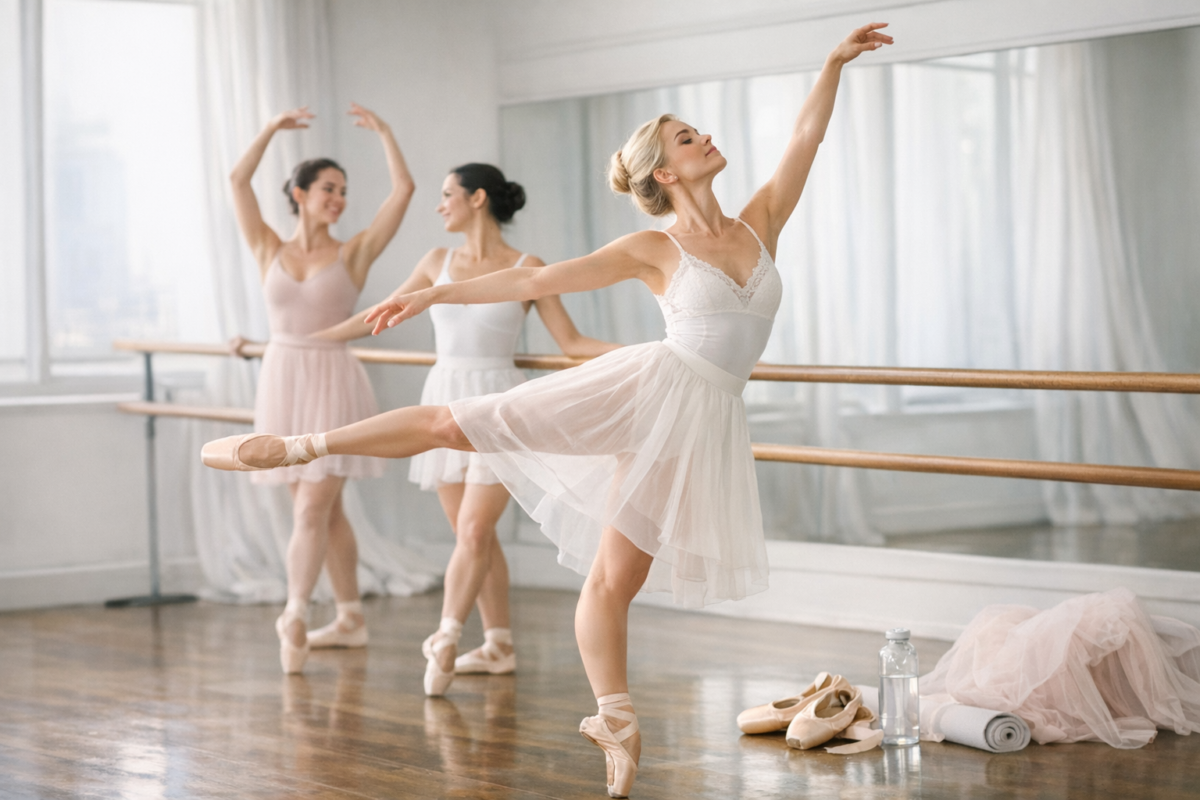
For years, the Ballet Beautiful method has been synonymous with long, lean limbs and the grace of a professional dancer. Founded by Mary Helen Bowers—the trainer behind the iconic transformations seen in films like Black Swan—the program has long been a favorite of supermodels and fitness enthusiasts alike. Until recently, the experience was primarily reserved for private sessions or the brand’s extensive on-demand library. However, the recent launch of live group classes has shifted the landscape of boutique fitness, bringing the intimacy of a studio environment directly to your living room.
The Evolution of the Ballet Beautiful Experience
Ballet Beautiful has always stood out in the crowded fitness market because it bridges the gap between high-intensity athleticism and the aesthetic discipline of classical ballet. The method focuses on targeted toning, isometric holds, and low-impact movements that challenge the deepest layers of muscle. By introducing live group classes, the brand is capitalizing on the community-driven aspect of fitness that many home-based practitioners have been missing. These classes provide a structured environment where participants can feel the collective energy of a live session, even if they are thousands of miles apart.
Why the Live Group Format Matters
The primary benefit of moving from on-demand videos to live group classes is the element of real-time accountability. When you join a live session, you are making a commitment that goes beyond just pressing play on a screen. You are showing up for yourself and for a community. The instructors often provide real-time feedback, cues, and encouragement that can drastically improve your form. For those who struggle with consistency, the scheduled nature of these classes provides the necessary structure to turn a sporadic workout into a non-negotiable lifestyle habit.
Understanding the Core Method
At the heart of every Ballet Beautiful class is the “bridge” series and the signature leg lifts. These movements are designed to target the glutes, hips, and thighs without adding bulk. The method relies heavily on high-repetition, low-weight movements that fatigue the muscle in a way that promotes length and endurance. Whether you are a beginner or someone who has been practicing for years, the focus remains on maintaining perfect posture, engaging the core, and finding the “burn” that signals muscle engagement. The live format allows instructors to emphasize these nuances, ensuring that you are maximizing every repetition.
Creating Your Studio Space at Home
To get the most out of these new group classes, it is essential to treat your home workout area with the same respect you would a professional studio. You do not need a vast amount of space, but you do need enough room to extend your arms and legs fully. A high-quality yoga mat with sufficient cushioning is crucial for floor work, and having a sturdy chair or a ballet barre is highly recommended for the standing portions of the class. Ensure your laptop or tablet is positioned so that you can see your own reflection or form in a mirror; this is a pro-tip for ensuring your alignment matches the instructor’s demonstration.
The Mental Health Benefits of Dance-Inspired Fitness
Beyond the physical results, there is a profound mental health component to ballet-inspired training. The focus required to execute precise movements forces you to remain present, effectively turning the workout into a form of moving meditation. When you are concentrating on the placement of your foot or the rotation of your hip, you are not thinking about your inbox or your to-do list. This mental reset is a significant part of why so many people feel a sense of lightness and clarity after a Ballet Beautiful session. The group element further enhances this by fostering a sense of belonging and shared achievement.
Balancing Intensity with Recovery
One common mistake practitioners make is overdoing it in their enthusiasm for a new program. Because Ballet Beautiful is low-impact, it is tempting to jump into daily classes. However, muscle growth and toning happen during periods of recovery. Listen to your body and alternate your intensive toning sessions with lighter stretching days or rest. The live schedule offers a variety of class lengths and intensities, allowing you to curate a weekly routine that balances challenge with necessary downtime, ensuring that you remain injury-free and energized.
Expert Tips for Long-Term Success
Consistency is the secret sauce to the Ballet Beautiful method. Rather than aiming for hour-long sessions every day, try to integrate shorter, targeted classes throughout the week. If you are new to the method, start by focusing on your form rather than the speed of the repetitions. It is far more effective to perform ten slow, controlled leg lifts with perfect alignment than fifty sloppy ones. Engage with the community in the live chat during classes; asking questions and sharing your progress with others in the session can provide a significant motivational boost, especially on days when you feel less inclined to exercise.
Final Thoughts on the New Class Model
The transition of Ballet Beautiful into the live group space is a natural progression that meets the modern demand for personalized, community-centric fitness. By combining the expertise of elite trainers with the convenience of home access, the brand has created a compelling model for anyone looking to refine their physique and improve their posture. Whether you are drawn to the aesthetic results or the discipline of the ballet technique, these live classes offer a sophisticated, effective way to integrate movement into your daily routine. It is an investment in your physical wellbeing that feels less like a chore and more like a practice of self-care.
Decoding the Biomechanics of the “Burn”
The signature “burn” associated with Ballet Beautiful isn’t just a sensation; it is a specific physiological response to sustained isometric tension and high-repetition eccentric loading. Unlike traditional weightlifting, which often recruits large, prime mover muscles, this method forces the body to stabilize through the smaller, intrinsic muscles surrounding the joints. During live group sessions, instructors often emphasize “micro-movements”—tiny, pulsating adjustments that prevent the body from using momentum. When you hold a leg lift at a 45-degree angle, you are forcing the deep hip stabilizers to fire continuously. The live format is particularly helpful here because instructors can spot common errors, such as “gripping” the quadriceps or locking the knee, which actually shunt the load away from the targeted gluteal muscles. Learning to isolate these muscles requires a recalibration of the mind-body connection, where you move away from counting repetitions toward focusing on the specific degree of muscle fatigue.
Customizing Your Intensity: Scaling for Every Level
One of the most common misconceptions about ballet-inspired fitness is that it is exclusively for the already-fit. However, the modular nature of the live group classes allows for sophisticated scaling. If you are a beginner, the focus should remain on “range of motion” rather than “depth of movement.” For instance, in a classic arabesque series, a beginner might focus on maintaining a level pelvis while the leg is only a few inches off the floor, whereas a more advanced practitioner might aim for a higher extension. Instructors during live sessions often offer “modifications for the day,” acknowledging that even advanced students experience fluctuations in energy or mobility. By utilizing the chat function or observing the instructor’s modified demonstrations, you can adjust the intensity of a class in real-time, ensuring that you are challenged without crossing the threshold into overtraining or poor form.
The Role of Proprioception and Mirror Work
Proprioception—your body’s ability to sense its position in space—is a skill that diminishes with sedentary office work but is rapidly restored through ballet-based training. In a live class, your environment becomes an extension of the studio. While you may not have a floor-to-ceiling mirror, setting up your camera at a side-angle is a transformative habit. When you can see your profile on your screen, you can self-correct “rib flaring,” a common habit where the lower ribs pop out during arm movements, which disconnects the core. By maintaining a neutral spine and keeping your gaze soft, you enhance your spatial awareness. Over time, this translates into everyday life; you will find yourself naturally pulling your shoulders down and back, engaging your core while standing in line, or maintaining an elongated neck while sitting at your desk.
Navigating Technical Setbacks in a Digital Studio
Transitioning to a live digital environment requires a modicum of technical preparation to ensure the flow of the class isn’t interrupted. A stable, high-speed internet connection is the foundation, but audio quality is equally vital. Because the instructor’s cues are timed precisely to the music and the tempo of the movement, using a pair of wireless headphones can keep you locked into the rhythm, especially if you are working out in a shared household. If you experience a drop in the stream, don’t stop moving; continue the last repetition you were performing with slow, deliberate control. These moments of technical friction are actually opportunities to practice the discipline of the method independently. Treat the screen as a guide rather than a crutch; the goal is to cultivate a level of body literacy where you could eventually complete the sequence even if the connection failed entirely.
Integrating Ballet Beautiful with Cross-Training Modalities
While the Ballet Beautiful method is comprehensive, it functions optimally when integrated into a broader movement ecosystem. For those who enjoy higher-impact activities like running or tennis, the low-impact, high-endurance nature of these classes provides the perfect “active recovery.” The eccentric stretching and deep muscle toning act as a counterbalance to the repetitive impact of cardio, helping to realign the skeletal structure and improve joint fluidity. Conversely, if you are primarily a strength trainer, using these classes on your “off days” can help target the neglected stabilizer muscles that heavy lifting often bypasses. The key is to avoid layering high-intensity cardio immediately before a delicate toning session; instead, treat the ballet classes as a foundational practice that improves your performance in all other physical arenas.
The Psychology of the “Digital Front Row”
There is a unique social psychology at play in the live group format. When you sign up for a specific time slot, you are participating in a “digital front row” experience. Even if your camera is off, the knowledge that others are sweating through the exact same challenging sequence at the exact same moment creates a psychological tether. This collective effort is known as “social facilitation,” where the presence of others—even virtual ones—tends to improve performance on endurance tasks. To maximize this, try to frame your workout time as a non-negotiable appointment. Dress the part, clear your space of clutter, and minimize notifications. By creating a ritual around the start time, you signal to your brain that this is a period of high-focus, high-reward activity, which significantly increases the likelihood of long-term adherence compared to the “I’ll get to it later” mentality of on-demand content.
Frequently Asked Questions
Q: Do I need prior ballet experience to join a Ballet Beautiful group class?
A: Absolutely not. The classes are designed to be accessible to all fitness levels. While the movements are inspired by ballet, you do not need to know how to dance. Instructors provide clear, step-by-step instructions that focus on toning and strengthening, not complex choreography.
Q: What equipment do I need for these classes?
A: The beauty of this method is its minimalism. You generally only need a yoga mat and a sturdy piece of furniture, like a chair or a countertop, to use as a barre. Occasionally, instructors may use light hand weights or resistance bands, but they are optional and you can start without them.
Q: How do live group classes differ from the on-demand library?
A: The main difference is the live component. You are working out at the same time as other people, which creates a sense of community. Furthermore, the live sessions are unedited, offering a more raw and authentic experience where instructors can interact with the group and provide real-time motivation.
Q: How often should I take classes to see results?
A: Consistency is key. Many practitioners find that taking 3 to 4 classes per week provides noticeable results in muscle tone and posture within a month. However, it is important to listen to your body and adjust your frequency based on your own recovery needs and fitness goals.
Q: Can these classes help with back pain or posture issues?
A: Because the Ballet Beautiful method places a heavy emphasis on core engagement and spinal alignment, many participants report significant improvements in their posture. By strengthening the muscles that support the spine, you may find relief from discomfort caused by slouching or weak core muscles. Always consult with a physician if you have a history of chronic pain before starting any new exercise program.
Related posts:
 Ballerina Beauty Secrets from Mary Helen Bowers
 The Unspoken Rules of Group Chat Etiquette Everyone Should Know
 Start Your Day Like Misty Copeland With This Simple Morning Move
 My Studio Style: Flik Swan and Victoria Marr on Building an Empire Together
 Top Boutique Fitness Studios of 2016
 Meet Peloton Tread Plus Instructors
 Nina Dobrev Teams Up With Reebok for the Ultimate Les Mills Experience
 Best Boxing Classes in NYC