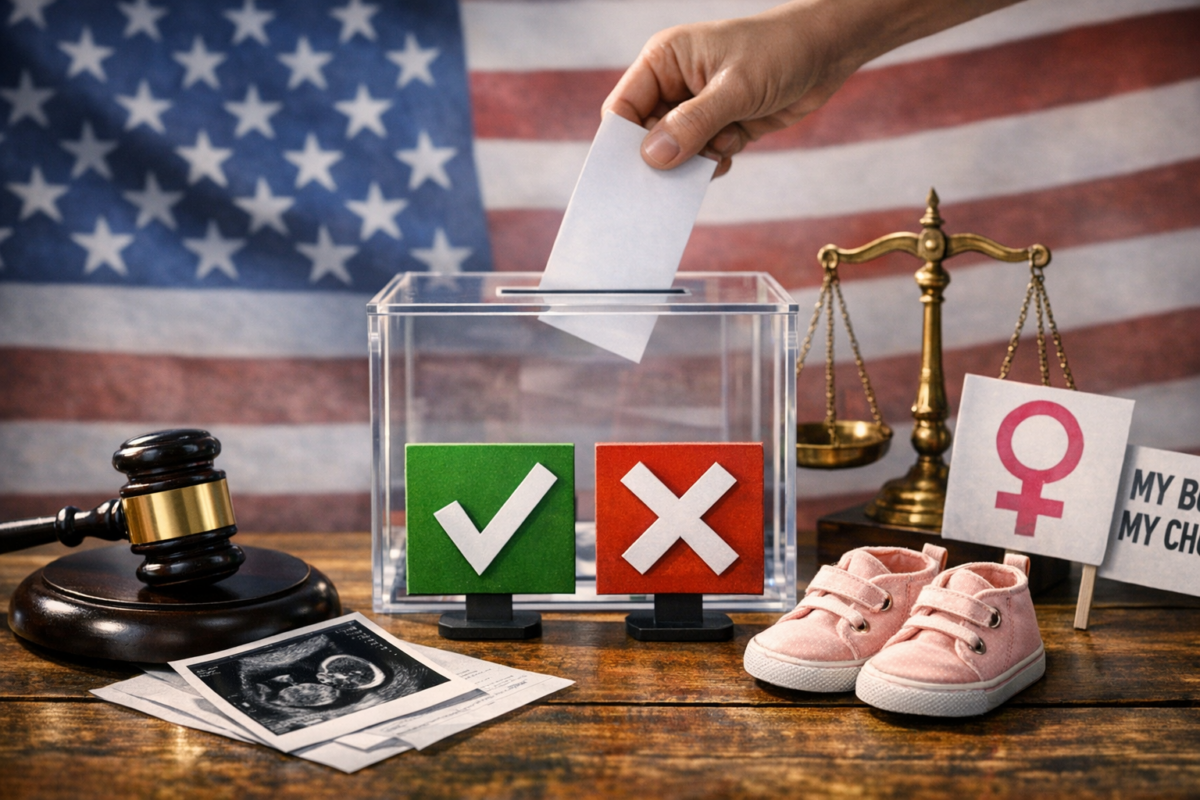
In the wake of the 2022 Supreme Court decision in Dobbs v. Jackson Women’s Health Organization, the landscape of reproductive rights in the United States has undergone a seismic shift. No longer a matter of federal constitutional protection, the legality and accessibility of abortion have been returned to the states. This transition has led to a patchwork of laws, ranging from total bans to robust protections. However, 2024 marks a pivotal turning point as voters in several states take the matter into their own hands through direct democracy. Ballot measures have emerged as the primary vehicle for citizens to bypass legislative gridlock and directly influence the future of healthcare in their communities.
The significance of these measures cannot be overstated. They represent a direct pulse-check on the American public’s stance on reproductive autonomy. From the Sun Belt to the Midwest, the outcomes of these votes will determine whether millions of people regain access to services or if current restrictions will be solidified for a generation. Understanding these measures requires more than just a glance at a headline; it necessitates a deep dive into the specific language of the amendments, the legal thresholds required for passage, and the practical implications for healthcare providers and patients alike.
The Evolution of Direct Democracy and Reproductive Health
Ballot measures, including initiatives and referendums, have a long history in American politics, often used to address controversial issues that state legislatures are hesitant to touch. Since the overturning of Roe v. Wade, the use of these tools for abortion rights has seen a 100% success rate for advocates of reproductive freedom. In states like Kansas, Michigan, and Ohio, voters have consistently chosen to protect or expand access when the question is put directly to them. This trend has set the stage for the 2024 election cycle, where the stakes are higher and the geographic diversity of the measures is broader.
Direct democracy allows for a unique form of civic engagement. Unlike a candidate-driven election, which can be influenced by party loyalty or personality, a ballot measure focuses on a specific policy. For many voters, this provides a sense of agency over their personal lives and the lives of their families. The process of getting these measures on the ballot is rigorous, often requiring hundreds of thousands of signatures and surviving complex legal challenges from state officials. The fact that so many have reached the finish line for November is a testament to the organizational energy currently surrounding reproductive rights.
Arizona: A Pivotal Moment for the Southwest
Arizona’s Proposition 139 is perhaps one of the most watched measures in the country. The state has seen a tumultuous legal battle over its abortion laws, including a brief period where a near-total ban from 1864 was considered the law of the land. Currently, Arizona enforces a 15-week ban, but Proposition 139 seeks to change that by establishing a fundamental right to abortion in the state constitution. If passed, it would prohibit the state from enacting laws that interfere with an individual’s right to an abortion before fetal viability, which is typically around 24 weeks.
The measure also includes provisions to protect the health and life of the pregnant person after viability. For Arizonans, this measure represents a choice between a restrictive 15-week limit and a constitutional protection that aligns more closely with the standards previously set by Roe. The practical impact would be significant: it would not only secure access for residents but also continue Arizona’s role as a critical access point for people traveling from neighboring states with total bans, such as Texas and Oklahoma. The campaign for Prop 139 has focused heavily on the concept of medical privacy and the importance of keeping healthcare decisions between patients and their doctors.
Florida’s High Stakes: The 60 Percent Threshold
Florida presents a unique and challenging landscape for reproductive rights advocates. Amendment 4, titled the “Amendment to Limit Government Interference with Abortion,” aims to protect access to abortion until viability. This measure is a direct response to the state’s current six-week ban, which went into effect in May 2024. A six-week ban is particularly restrictive because many people do not even know they are pregnant at that stage, effectively acting as a total ban for a large portion of the population.
The hurdle for Amendment 4 is higher than in most other states. Florida law requires a 60% supermajority for any constitutional amendment to pass. This means that even if a clear majority of Floridians support the measure, it could still fail if it does not reach that specific threshold. The outcome in Florida will have massive regional implications. Before the six-week ban, Florida was a primary destination for abortion care in the Southeast. If Amendment 4 passes, it could restore that access, providing a lifeline for millions of people across the southern United States. If it fails, the current restrictions will likely remain, further entrenching the regional divide in healthcare access.
Nevada and Maryland: Codifying Protections in the Constitution
In states like Nevada and Maryland, the goal of ballot measures is not necessarily to overturn a ban, but to solidify existing rights against future legislative changes. In Nevada, Question 6 seeks to amend the state constitution to establish a fundamental right to abortion. While Nevada law already protects abortion up to 24 weeks, a constitutional amendment is much harder to overturn than a standard state law. This proactive approach is designed to provide long-term stability for both patients and providers.
Similarly, Maryland voters will decide on the “Right to Reproductive Freedom Amendment.” Maryland already has some of the most protective abortion laws in the country, but advocates argue that enshrining these rights in the constitution is a necessary safeguard. These measures reflect a strategy of “future-proofing” reproductive rights in blue and purple states. For residents, it means that their access to care won’t fluctuate with every election cycle or change in the governor’s office. It provides a sense of legal permanence in an era of national uncertainty.
Missouri and South Dakota: Testing Public Sentiment in Restrictive States
Missouri and South Dakota represent the most restrictive end of the spectrum, with both states currently enforcing near-total bans on abortion. In Missouri, Amendment 3 would establish a right to make decisions about reproductive health care, including abortion and birth control. Missouri was the first state to trigger its ban after the Dobbs decision, and the push for Amendment 3 has been a grassroots effort to reclaim access in a state where the legislature has been overwhelmingly opposed to reproductive rights.
In South Dakota, Constitutional Amendment G would establish a framework for abortion access based on trimesters, similar to the original Roe v. Wade framework. During the first trimester, the state could not regulate abortion; during the second, it could regulate in ways related to the health of the pregnant person; and in the third, it could prohibit abortion except to save a life. These measures in Missouri and South Dakota are significant because they test whether the trend of voters supporting abortion rights will hold even in deeply conservative states. They represent a direct challenge to the most stringent laws in the country.
The Role of Language: Understanding Ballot Summaries
One of the most critical aspects of any ballot measure is the language used to describe it. In many states, the wording of the summary that appears on the ballot is the subject of intense legal and political fighting. Opponents of a measure may attempt to use language that sounds confusing or alarming, while proponents strive for clarity and simplicity. For example, some states have seen debates over whether to use the term “unborn child” versus “fetus,” or whether to include a “fiscal note” that speculates on the economic impact of the measure.
Voters must be diligent in reading the full text of the amendment rather than just the summary. Sometimes, the way a question is phrased can be misleading—a “yes” vote might actually support a restriction, or vice versa. In Nebraska, for instance, there are competing measures: one that would protect abortion access and another that would solidify the current 12-week ban. This can lead to significant voter confusion. Understanding the nuances of the language is essential for ensuring that your vote accurately reflects your intent. Look for non-partisan guides and the original text of the amendment to get the clearest picture.
The Long-Term Impact on Healthcare and Family Planning
The implications of these ballot measures extend far beyond a single medical procedure. They affect the entire ecosystem of reproductive healthcare, including prenatal care, miscarriage management, and IVF (in vitro fertilization). In states with restrictive laws, doctors have reported hesitation in providing care for miscarriages or ectopic pregnancies for fear of legal repercussions. Passing constitutional protections can provide the legal clarity necessary for physicians to practice medicine without fear of prosecution.
Furthermore, these measures impact the training and retention of medical professionals. Many OB-GYNs and medical students are choosing to practice in states where they can provide a full range of reproductive services. This “brain drain” can lead to maternal health deserts, where even basic prenatal care becomes difficult to find. By stabilizing abortion rights, states can ensure a more robust and reliable healthcare infrastructure for all families. The ballot measures are, in many ways, a vote on the overall health and safety of the state’s population.
Practical Steps for the Informed Voter
Participating in a ballot measure election requires a different kind of preparation than voting for a candidate. Here are actionable steps to ensure you are ready to make an informed decision:
- Verify Your Registration: Ensure your voter registration is current, especially if you have moved or changed your name recently. Check your state’s official election website for deadlines.
- Read the Full Text: Don’t rely solely on the short summary provided on the ballot. Seek out the full text of the proposed amendment to understand the specific legal changes it would enact.
- Consult Non-Partisan Resources: Websites like Ballotpedia or the League of Women Voters provide objective breakdowns of what a “yes” or “no” vote means for each measure.
- Understand the Thresholds: Know what is required for the measure to pass in your state. Is it a simple majority (50% + 1) or a supermajority like Florida’s 60%?
- Check for Competing Measures: In states like Nebraska, make sure you know which measure does what, as there may be multiple questions regarding reproductive rights on the same ballot.
- Make a Plan: Whether you are voting by mail or in person, have a plan for when and where you will cast your ballot. If voting in person, check for any identification requirements in your state.
Beyond the Ballot: What Happens After the Vote?
Passing a ballot measure is a monumental achievement, but it is often just the beginning. Once an amendment is approved by voters, it must be implemented. This can lead to further legal challenges as state officials may attempt to limit the scope of the new amendment or delay its enactment. In some cases, existing laws that conflict with the new amendment must be formally repealed or struck down by courts. The transition period can be complex, and it is important for citizens to remain engaged even after the election is over.
Moreover, the success of these measures often sparks a renewed conversation about federal legislation. While ballot measures are a state-level solution, they send a powerful message to national lawmakers about the priorities of the electorate. They also provide a roadmap for other states considering similar actions. The long-term goal for many advocates is a consistent national standard, but until that is achieved, the state-by-state battle remains the most direct path to protecting and restoring reproductive freedom in America.
Colorado’s Amendment 79: Dismantling the Public Funding Barrier
While many states are focusing on the basic legality of abortion, Colorado is moving toward a more advanced stage of reproductive rights advocacy with Amendment 79. Colorado has long been a haven for abortion access in the Mountain West, but a 1984 constitutional amendment has historically prohibited the use of public funds for abortion services. This has created a two-tiered system of healthcare where those with private insurance or independent wealth can exercise their rights, while those relying on state-subsidized insurance, such as Medicaid recipients or state employees, face significant financial barriers. Amendment 79 seeks to repeal this 40-year-old ban, potentially transforming access for thousands of low-income Coloradans.
The measure is not merely about keeping clinics open; it is about the practical affordability of care. For a Medicaid recipient, the cost of an abortion—which can range from $500 to several thousand dollars depending on the stage of pregnancy—is often an insurmountable obstacle. By removing the prohibition on public funding, Colorado would align its constitutional framework with its stated legislative goals of equity in healthcare. Furthermore, the amendment would formally recognize the right to abortion in the state constitution, providing a dual layer of protection. This is particularly significant given Colorado’s role as a regional hub; as neighboring states like Utah and Wyoming grapple with bans and legal uncertainty, Colorado’s ability to provide funded, stable care becomes a cornerstone of the Western United States’ reproductive healthcare infrastructure.
Opponents of Amendment 79 often cite the moral objection to using taxpayer dollars for procedures they find objectionable. This creates a high-stakes debate over the definition of public health and the state’s responsibility to its most vulnerable citizens. For voters, the decision involves weighing the principle of religious or moral objection against the principle of equal access to medical procedures. If passed, Colorado would join a small group of states that not only permit abortion but actively facilitate access through their public health systems, marking a shift from theoretical rights to material accessibility.
New York’s Proposal 1: The Broad Spectrum of the Equal Rights Amendment
In New York, the approach to protecting reproductive rights is embedded within a much broader constitutional update known as Proposal 1, or the Equal Rights Amendment (ERA). Unlike measures in other states that use specific medical terminology regarding viability or trimesters, New York’s proposal seeks to prohibit discrimination based on “pregnancy, pregnancy outcomes, and reproductive healthcare and autonomy.” By framing reproductive rights as a matter of anti-discrimination and civil rights, New York is attempting to create a comprehensive legal shield that covers not just abortion, but the entire spectrum of reproductive life, including contraception and IVF.
This broad phrasing is a strategic choice designed to withstand future legal challenges that might target specific medical procedures. If reproductive autonomy is a protected civil right, then any state law that singles out abortion for restriction could be viewed as a violation of the state’s equal protection clause. This intersectional approach also addresses the history of reproductive coercion, ensuring that the state cannot compel or prohibit healthcare decisions. For New Yorkers, Proposal 1 is a proactive measure intended to prevent the kind of incremental erosion of rights seen in other jurisdictions. It recognizes that reproductive freedom is inextricably linked to other protected identities, including gender, age, and disability.
However, the breadth of Proposal 1 has also been a point of contention. Critics argue that the language is overly vague and could have unintended consequences in other areas of law, such as parental rights or trans-inclusive healthcare. Proponents counter that this is precisely the point: to create a robust, all-encompassing framework of equality that reflects modern societal values. For the voter, New York’s measure requires an understanding of how constitutional law functions as a foundational document. It is not just a policy change; it is a declaration of the state’s core values regarding individual bodily sovereignty.
Montana’s CI-128: Codifying Judicial Precedent into Constitutional Law
Montana presents a fascinating case study in the tension between judicial rulings and legislative intent. Since 1999, the Montana Supreme Court’s decision in Armstrong v. State has protected the right to abortion under the state constitution’s right to privacy. Despite this, the state legislature has consistently passed restrictive laws, many of which have been tied up in the courts for years. Constitutional Initiative 128 (CI-128) seeks to end this perpetual legal tug-of-war by explicitly enshrining the right to abortion in the state constitution, effectively codifying the Armstrong precedent so it cannot be overturned by a future, more conservative court.
The stakes in Montana are particularly high for rural residents. Montana is a vast state with few providers; the loss of legal protections could lead to the immediate closure of clinics that serve hundreds of square miles. CI-128 would prohibit the government from burdening the right to abortion before viability and would protect the ability of healthcare providers to offer care according to their best clinical judgment. This “clinical judgment” clause is a critical edge case; it ensures that the definition of “health” or “viability” remains a medical determination rather than a political one. For Montana’s medical community, this provides a level of professional security that is currently lacking, as doctors often fear that vague legislative language could lead to criminal charges.
The campaign for CI-128 has had to navigate a complex administrative landscape. The process of getting the measure on the ballot involved legal disputes over the “legal sufficiency” of the petition language and the methods used to collect signatures. This highlights a growing trend in several states where the administrative process itself becomes a battleground. For voters in Montana, the measure is a chance to affirm that the right to privacy, a value deeply held across the political spectrum in the state, extends to reproductive decisions. It is a test of whether the “Big Sky Country” will remain an island of access in a region increasingly defined by restrictions.
Administrative Hurdles and the “War of Attrition” in Signature Verification
The path to the ballot is rarely a straight line, and in 2024, several states have seen what can be described as a “war of attrition” regarding signature verification and administrative hurdles. In Arkansas, for example, a proposed abortion rights measure failed to make the ballot not because of a lack of public support, but because of a dispute over the documentation of paid signature circulators. This case serves as a stark reminder that the technicalities of election law can be just as decisive as the vote itself. For advocates, this means that the organizational energy must be matched by meticulous legal and administrative precision.
In other states, we have seen attempts to change the rules of the game mid-stream. This includes efforts to increase the number of counties where signatures must be collected or to implement stricter requirements for how those signatures are witnessed. These administrative challenges often target the most vulnerable parts of a grassroots campaign: its budget and its timeline. For every day a measure is tied up in court over a technicality, proponents lose valuable time for voter education and outreach. This creates a situation where only the most well-funded and organized campaigns can survive the gauntlet to reach the ballot.
For the informed citizen, understanding these hurdles is essential to recognizing the significance of the measures that *did* make it. When a question reaches the ballot in a state like Missouri or Florida, it has already survived a series of legal and bureaucratic “stress tests.” These challenges also highlight the importance of the office of the Secretary of State, which often acts as the gatekeeper for direct democracy. The political leanings of these offices can influence how strictly rules are applied, leading to accusations of partisan interference. This adds another layer of complexity to the 2024 cycle, as the fight for reproductive rights is frequently intertwined with the fight for the integrity of the initiative process itself.
The Intersection of IVF and Fetal Personhood in Ballot Language
A burgeoning issue in the 2024 ballot measures is the intersection of abortion rights and fertility treatments like In Vitro Fertilization (IVF). Following the Alabama Supreme Court’s ruling that embryos could be considered “children” under the state’s Wrongful Death of a Minor Act, the legal status of embryos has become a flashpoint. Some anti-abortion organizations have sought to include “personhood” language in state laws or to oppose ballot measures that do not explicitly exclude embryos from their protections. This has forced proponents of reproductive rights to be extremely precise in their drafting to ensure that IVF remains protected.
In states like Florida and Missouri, the proposed amendments focus on “reproductive freedom,” a term intentionally chosen to encompass more than just abortion. By protecting the right to make decisions about “all matters relating to pregnancy,” these measures aim to safeguard the entire process of family building. This is a critical distinction for the millions of Americans who rely on assisted reproductive technology. If a state passes a “personhood” law, it could inadvertently or intentionally make IVF legally impossible, as the standard practice of freezing or discarding non-viable embryos could be classified as a criminal act.
This creates a unique political dynamic. Many voters who may be ambivalent or moderately opposed to abortion are staunch supporters of IVF and other fertility treatments. Consequently, ballot measure campaigns are increasingly highlighting the threat that restrictive abortion laws pose to those trying to start families. This broader focus helps to build a larger coalition of voters but also complicates the legal landscape. The challenge for legal scholars and voters alike is to parse how a constitutional amendment regarding abortion will interact with existing state statutes on fetal personhood. The outcome of these votes will likely dictate whether fertility clinics can continue to operate without the looming threat of litigation, making these measures a referendum on the future of family planning in its entirety.
The Economic and Workforce Consequences of Healthcare Deserts
Beyond the immediate impact on patients, the ballot measures of 2024 carry profound economic and workforce implications for the states involved. There is growing evidence of a “medical brain drain” in states with restrictive abortion laws. Medical students, residents, and experienced OB-GYNs are increasingly factoring a state’s legal environment into their career decisions. In states with total or near-total bans, residency programs are seeing fewer applicants, and existing physicians are relocating to states where they can practice the full scope of reproductive medicine without fear of imprisonment. This trend threatens to create or exacerbate “maternal health deserts,” where even basic prenatal and delivery services are unavailable.
The passage of ballot measures protecting abortion could serve as a vital recruitment and retention tool for state healthcare systems. For example, if Missouri’s Amendment 3 passes, it could signal to the medical community that the state is a safe place to practice, potentially reversing the exodus of specialists. Conversely, if these measures fail, the long-term impact on maternal mortality rates could be devastating. Rural areas are particularly at risk, as they already struggle with a shortage of healthcare providers. When a local hospital loses its ability to provide comprehensive reproductive care, the entire community suffers, as the viability of the labor and delivery ward often depends on the presence of qualified OB-GYNs.
Furthermore, the economic cost of restrictive laws extends to the broader business community. Major employers are increasingly concerned about their ability to recruit talent to states where their employees may not have access to essential healthcare. Some corporations have already begun offering travel benefits for reproductive services, but this is a costly and imperfect workaround. By stabilizing the legal environment through constitutional amendments, states can offer a more predictable and attractive climate for both businesses and workers. Thus, the 2024 ballot measures are not just social or moral questions; they are economic ones that will influence state GDP, workforce demographics, and the overall quality of life for decades to come.
The Logistics of “Medical Migration” and Regional Access Hubs
The 2024 ballot measures will fundamentally redraw the map of “medical migration” in the United States. Currently, tens of thousands of people travel across state lines every month to access abortion care, creating a massive logistical and financial burden for patients and a surge in demand for providers in “shield” states. The outcome of votes in states like Florida and Arizona will determine whether these regional hubs can continue to function or if the distance to the nearest provider will double or triple for millions of people.
Consider the impact of Florida’s Amendment 4. Before its six-week ban, Florida served as the primary access point for the entire Southeast, including patients from Alabama, Georgia, and Mississippi. If the amendment passes and restores access, it will alleviate the immense pressure currently felt by clinics in North Carolina and Virginia, which have seen wait times skyrocket as they absorb the overflow from the South. If it fails, the Southeast will remain a vast “healthcare desert,” forcing patients to travel as far as Illinois or New York. This geographic reality creates a profound inequality: those with the means to travel can still access care, while those without—disproportionately young people, people of color, and those living in poverty—are forced to carry pregnancies to term against their will.
Frequently Asked Questions
What is the difference between a ballot initiative and a referendum?
A ballot initiative is a process that allows citizens to bypass their state legislature by placing proposed laws or constitutional amendments on the ballot if they gather enough signatures. A referendum, on the other hand, is a process where voters can approve or repeal an act of the legislature. In the context of abortion rights, most current measures are initiatives started by citizen petitions to create new constitutional protections.
Why are constitutional amendments preferred over regular laws?
Constitutional amendments are much more difficult to change or overturn than regular state laws. A law passed by a legislature can be repealed by a future legislature with a simple majority. A constitutional amendment usually requires another vote of the people to be changed. This provides a higher level of legal stability and protects the right from the shifting political winds of state government.
Can a state legislature ignore the results of a ballot measure?
Generally, no. If a constitutional amendment is passed by voters, it becomes part of the state’s highest law, and the legislature must abide by it. However, legislatures can sometimes influence the implementation or try to pass secondary regulations that test the limits of the new amendment. This often leads to further litigation in state courts to determine the exact boundaries of the new constitutional right.
How do these measures affect people in states without a ballot initiative process?
Not all states allow for citizen-led ballot initiatives. In states without this process, changes to abortion laws must come through the state legislature or the court system. However, successful ballot measures in other states can serve as a powerful signal and provide momentum for legislative change. They also contribute to a growing body of state constitutional law that can be cited in legal challenges across the country.
What happens if two competing measures both pass?
In states like Nebraska, where there may be competing measures on the same topic, the rules vary. Generally, if both measures pass, the one with the highest number of “yes” votes becomes the law, or the conflicting parts of the measures are reconciled by the courts. It is a rare but complex legal situation that underscores the importance of clear voter communication and understanding before heading to the polls.
Related posts:
 Getting Vaccinated Without Parents’ Permission
 2020 Democratic Candidates’ Stance on Reproductive Rights
 Post-Roe State Laws
 The Supreme Court Just Made Medication Abortion More Accessible—Here’s What That Means
 How to Protect Roe v. Wade
 Understanding Abortion Pill Options
 The Impact of Texas’ Abortion Ban on Women’s Health
 52. Understanding the Leaked Supreme Court Abortion Document