Air travel is notoriously harsh on the body. Between the recycled, low-humidity cabin air, the disruption of circadian rhythms, and the inevitable stress of navigating terminals, your skin and hair often bear the brunt of the journey. Whether you are a frequent flyer or an occasional traveler, implementing a strategic beauty routine can help you arrive at your destination looking refreshed rather than depleted.
Key takeaways
- Hydrate from within by drinking water and electrolytes while avoiding alcohol and caffeine to combat low-humidity cabin air.
- Use pH-balanced micellar water and cream-based products to refresh skin without stripping your natural moisture barrier.
- Protect hair with loose, tension-free styles and leave-in conditioners to prevent breakage and static during long-haul flights.
- Incorporate lymphatic massage or cooling eye gels to reduce facial puffiness caused by cabin pressure and fluid retention.
The Science of Cabin Air and Skin Dehydration
The primary challenge during air travel is the humidity level. Cabin air is pressurized and filtered, often resulting in humidity levels as low as 10 to 20 percent—drier than most deserts. This lack of moisture causes the skin to lose water rapidly, leading to tightness, flakiness, and an overproduction of oil as the skin attempts to compensate for dryness. To combat this, focus on hydration from the inside out and the outside in. Drink at least eight ounces of water for every hour spent in the air, and avoid excessive caffeine or alcohol, which act as diuretics and further dehydrate your system.
Pre-Flight Preparation: Setting the Foundation
Your skincare routine begins before you reach the airport. The day before your flight, perform a gentle exfoliation to remove dead skin cells, which allows your serums and moisturizers to penetrate more effectively. Avoid heavy makeup on the morning of your departure. Instead, opt for a rich, barrier-repairing moisturizer or a hydrating facial oil. If you have a long-haul flight, consider applying a hydrating sleep mask as your final step before heading to the terminal. This provides a protective seal against the dry cabin environment.
The TSA-Friendly Skincare Kit
Navigating security requires efficiency. Invest in high-quality, leak-proof travel bottles that meet the 3.4-ounce (100ml) limit. Your in-flight kit should include a gentle face mist, a hydrating serum, a thicker moisturizer, and a nourishing lip balm. A facial mist is particularly useful; look for formulas containing hyaluronic acid, glycerin, or rose water to provide an instant moisture boost mid-flight. Keep these items in a clear, accessible pouch so you can access them without rummaging through your carry-on luggage.
In-Flight Skincare Rituals
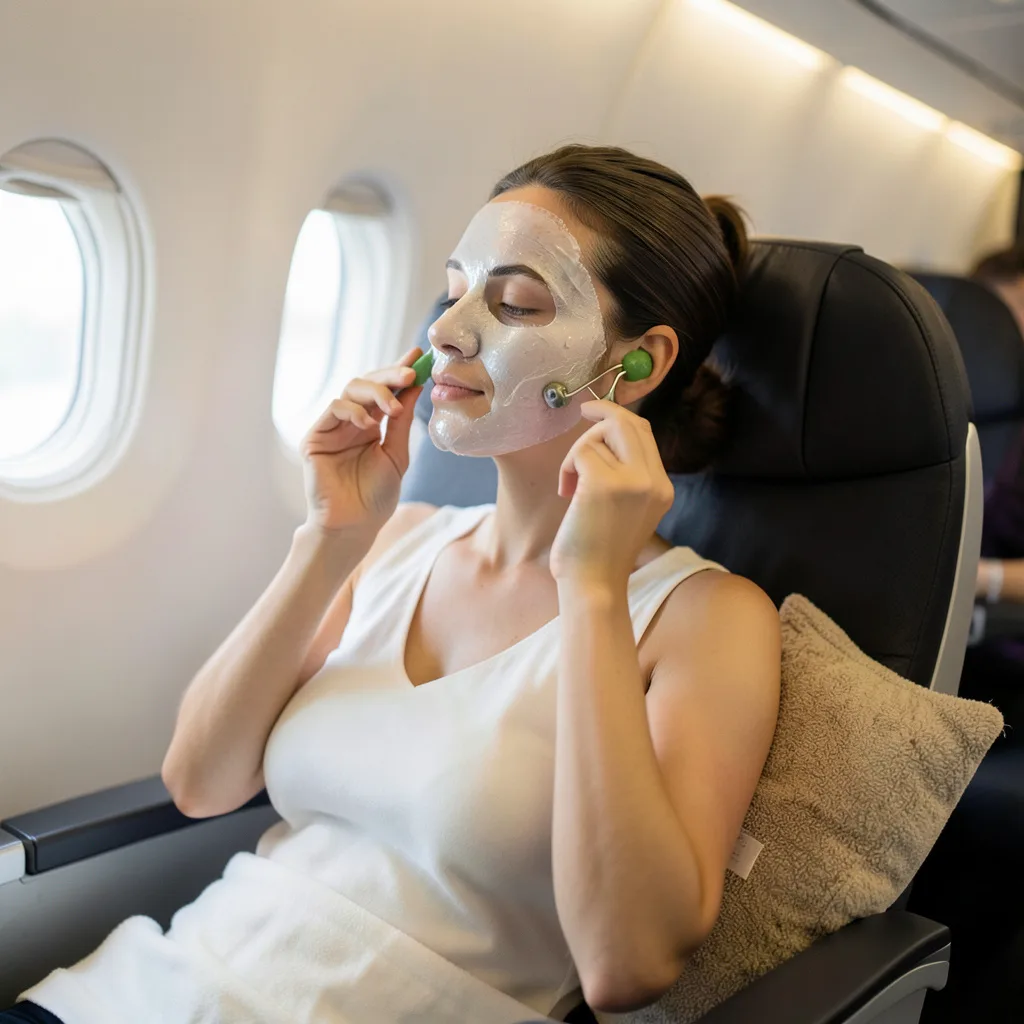
Once you reach your cruising altitude, take a moment to cleanse your face. Use a gentle, non-rinse micellar water on a cotton pad to remove any surface pollutants or residual skincare from the morning. Follow this with a hydrating serum and your moisturizer. If you feel comfortable, applying a sheet mask can be a game-changer for long-haul flights. While it may garner a few curious looks, your skin will thank you upon landing. If a full sheet mask feels too conspicuous, opt for under-eye patches, which are discreet and specifically target the puffiness often caused by cabin pressure.
Managing Hair Health at 30,000 Feet
Hair is equally susceptible to the dry cabin environment, often becoming static-prone and brittle. Avoid tight hairstyles like high buns or ponytails, which can cause tension and breakage during long periods of sitting. Instead, opt for a loose braid or a soft silk scrunchie. Before your flight, apply a leave-in conditioner or a small amount of hair oil to the mid-lengths and ends to lock in moisture. If you are worried about volume, pack a travel-sized dry shampoo to refresh your roots before landing, ensuring you look polished regardless of how long you have been in transit.
The “No-Makeup” Makeup Look for Arrival
You do not need to arrive at your destination with a full face of glam, but a few strategic touches can help you look awake. Focus on color correction and brightness. A creamy concealer under the eyes can hide signs of fatigue, while a tinted lip balm or a cream blush adds a healthy flush to your complexion. Avoid powder products, as they can settle into fine lines caused by dehydration. Stick to cream-based formulations that blend seamlessly into the skin and provide a natural, dewy finish that mimics a well-rested appearance.
Post-Flight Recovery Routine
Once you reach your hotel or home, your skin needs a reset. Start with a thorough double-cleanse to remove any pollutants picked up during transit. Follow this with a soothing, calming mask to reduce any redness or inflammation caused by the travel stress. If you have time, a warm shower can help increase circulation, but keep the water temperature moderate to avoid further drying out your skin. Finish with a hydrating night cream or a heavy-duty moisturizer to replenish your skin barrier while you sleep.
Travel-Friendly Beauty Tools and Accessories
Beyond skincare, certain tools can elevate your travel comfort. A silk pillowcase or a silk eye mask is excellent for protecting both your hair and the delicate skin around your eyes. If you experience significant facial puffiness, a small, portable jade roller or gua sha tool can be used to stimulate lymphatic drainage. These tools are lightweight and can be used while watching in-flight entertainment, providing a moment of self-care that helps alleviate the physical tension of travel.
Strategic Supplementation for Internal Resilience
While topical hydration is essential, the internal biological stress of crossing time zones and altitude changes requires a proactive approach to supplementation. Before and during travel, consider incorporating electrolytes into your water intake; standard water alone may not be enough to combat the fluid shift caused by cabin pressure. Look for electrolyte packets that are low in sugar but high in magnesium and potassium, which help regulate cellular water balance and reduce the physical fatigue often mirrored in the skin. Additionally, consider a high-potency antioxidant supplement, such as Vitamin C or Pycnogenol, a few days before departure. These can help bolster your immune system and protect your skin cells from oxidative stress triggered by the increased radiation exposure and recycled air environment associated with high-altitude flying.
The Role of Aromatherapy in Managing Travel Anxiety and Skin Health
The olfactory system is deeply linked to the limbic system, which controls stress responses. When you are stressed, your body releases cortisol, which can accelerate collagen breakdown and exacerbate skin inflammation. Carrying a small rollerball of calming essential oils—such as lavender, bergamot, or sandalwood—can serve a dual purpose. Applying these to your pulse points not only provides a moment of grounding mindfulness that lowers your heart rate but also acts as a barrier against the sometimes overwhelming odors of a crowded cabin. Certain essential oils, like tea tree or eucalyptus, have mild antimicrobial properties, which can be useful to dab on your hands or the area around your neck to provide a subtle, protective scent bubble that keeps you feeling clean and calm throughout the journey.
Optimizing Your In-Flight Environment for Micro-Habits
Your environment is just as important as your products. Many travelers make the mistake of sitting in the window seat and leaning against the cold, uncleaned plastic wall, which is a prime vector for bacteria. Carry a lightweight, washable silk or cotton scarf to create a barrier between your skin and the cabin surfaces. Furthermore, the blue light emitted by seatback screens and personal devices can contribute to skin dullness and eye fatigue. If you are on a long-haul flight, consider a pair of blue-light-blocking glasses to wear during the latter half of the journey. This helps signal to your brain that it is time to wind down, protecting your circadian rhythm and ensuring that when you arrive, your eyes appear clear and bright rather than strained and bloodshot.
Managing the “Swelling Cycle” of Long-Haul Travel
Fluid retention is a common side effect of long-haul flights, often caused by prolonged inactivity and sodium-heavy in-flight snacks. This swelling isn’t just limited to your ankles; it often manifests as facial puffiness and “heavy” eyelids. To combat this, prioritize movement throughout the flight. Even if you cannot walk the aisles, perform seated calf raises and ankle circles to encourage venous return. If you find your face remains puffy, avoid applying heavy, occlusive creams immediately upon waking up before landing. Instead, use a cooling eye gel kept in your kit—ideally one with caffeine or peptides—and apply it with a gentle tapping motion. This increases local circulation and helps the lymphatic system drain excess fluid before you disembark, giving you a more sculpted appearance upon arrival.
The Importance of PH-Balanced Cleansing Mid-Transit
Many travelers rely on harsh makeup wipes or standard hand soap to clean their face mid-flight, which can severely disrupt the skin’s acid mantle. Your skin’s pH is slightly acidic, and using high-pH soaps or alcohol-laden wipes strips away the natural protective lipids, leaving your skin vulnerable to the dry cabin air. Switch to a pH-balanced, non-rinse micellar water or a gentle toner spray designed for sensitive skin. Apply this using a reusable, soft bamboo cotton round. This process removes the layer of recycled cabin dust and particulate matter that settles on your skin during the flight without requiring a visit to the cramped, unhygienic airplane lavatory. By maintaining your skin’s pH balance, you ensure that your subsequent moisturizing steps are actually absorbed rather than sitting on a compromised skin barrier.
Protecting Your Manicure and Pedicure from Dryness
Beauty hacks often overlook the nails, yet the low humidity of the cabin can cause cuticles to crack and nail polish to become brittle and chip prematurely. Before your flight, apply a high-quality, oil-based cuticle balm or a heavy-duty hand cream containing urea or shea butter. Urea is particularly effective as it is a humectant that draws moisture into the hard keratin of the nail plate. If you have a gel manicure, the dry air is less of a concern, but the lack of moisture can still affect the skin surrounding the nail. Keep a small tube of cuticle oil in your seat pocket and apply it once every four hours. This simple ritual prevents the “hangnail” effect caused by dehydrated, tight skin around the nail bed, keeping your hands looking professional and well-manicured even after a sixteen-hour journey.
Customizing Your Arrival Routine by Climate
Your post-flight routine should be dictated by the climate you are arriving in, not just the fact that you have landed. If you are landing in a humid tropical environment, your skin will likely experience a rebound effect from the dry plane air, leading to excessive oil production. In this case, skip the heavy night cream in favor of a hydrating serum followed by a lightweight, gel-based moisturizer. Conversely, if you are arriving in a colder, drier climate, your skin will need immediate, intensive lipid replenishment. Layer a facial oil over your moisturizer to create an occlusive seal that protects your skin from the shock of the new weather. By adjusting your post-flight products to the destination’s environment, you prevent the common “arrival breakout” that occurs when the skin is confused by sudden, drastic changes in humidity and temperature.
Frequently Asked Questions
Q: Is it safe to use a sheet mask on a plane? A: Yes, it is perfectly safe. Many travelers use sheet masks during long-haul flights to combat dehydration. If you are self-conscious, look for transparent hydrogel masks that are less noticeable than traditional cotton versions.
Q: Why does my skin break out after flying? A: Breakouts after flying are often caused by a combination of factors: the dry air triggers excess oil production, the stress of travel increases cortisol, and the lack of proper hygiene in public spaces can expose your skin to more bacteria than usual. Ensure you wipe down your tray table and avoid touching your face during the flight.
Q: How can I keep my lips from cracking during a flight? A: The lips have no oil glands and are the first to show signs of dehydration. Use a thick, occlusive lip balm containing lanolin, beeswax, or petrolatum. Avoid licking your lips, as saliva contains enzymes that can further dry out the skin.
Q: Are there any specific foods I should avoid before flying to help my skin? A: Try to limit high-sodium foods, which cause water retention and puffiness, and minimize alcohol intake. Opt for hydrating fruits and vegetables like cucumbers, watermelon, and berries, which provide both water content and skin-loving antioxidants.
Q: What is the best way to handle jet lag-induced puffiness? A: Lymphatic drainage is key. Gently massage your face using your fingers or a facial tool in upward and outward motions. Additionally, staying upright and moving around the cabin periodically helps circulation, which reduces fluid retention in the face and extremities.
Related posts:
 Best Hydrating Masks for Air Travel
 The Slow Beauty Movement’s Secret Hydration Recipes
 Airplane Vent Germ Prevention
 Spring Awakening: The Hydrating Serums Your Winter Skin Is Craving
 Best Hydrating Masks for Air Travel
 How Teeth Grinding Changes Your Face
 How to Fly Safely After Lifted Mask Mandate
 Foundation’s Impact on Skin