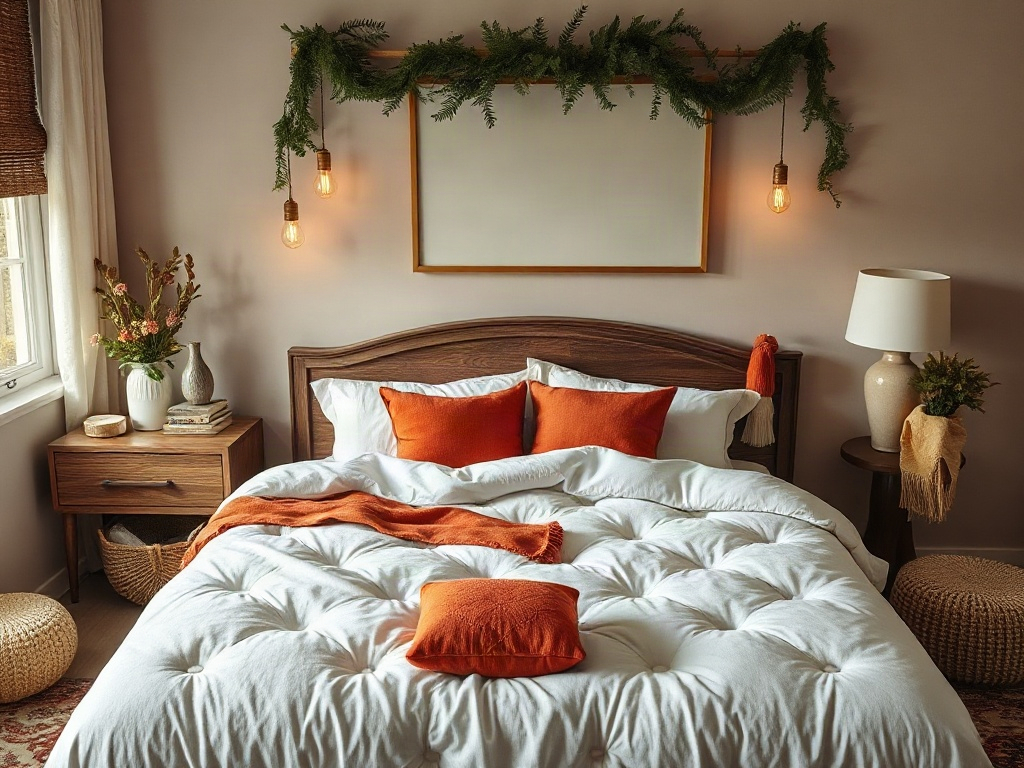
There’s a particular magic to the day after a holiday feast—that blissful moment when you retreat to your bedroom, satisfied and drowsy, ready to surrender to what might be the deepest sleep of the season. The post-Thanksgiving food coma is real, and while your body is naturally primed for rest after processing a massive meal, your bedroom environment plays a crucial role in whether you’ll actually sleep well or toss and turn in discomfort.
Key takeaways
- Keep the bedroom cool, ideally between 65-68°F, to counteract increased body heat produced during the digestion process.
- Use cotton or linen sheets and layered bedding to manage moisture and temperature fluctuations effectively throughout the night.
- Sleep on your left side with a pillow between your knees to promote better spinal alignment and aid digestion.
- Remove light sources like LED indicators and use blackout curtains to support natural melatonin production for deeper rest.
- Incorporate a pre-sleep routine of gentle stretching or reading to signal your body that it is time to recover.
Creating a bedroom specifically designed to support quality rest during these indulgent eating periods isn’t about luxury—it’s about working with your body’s natural rhythms. When you’ve consumed a large meal rich in carbohydrates and tryptophan-containing foods, your bedroom becomes either a sanctuary or a source of frustration. This guide walks you through practical, actionable strategies to transform your sleep space into the ultimate haven for post-feast recovery.
Understanding the Post-Meal Sleep Response
After eating a large meal, your body enters a state called postprandial somnolence—the scientific term for food-induced sleepiness. Your digestive system diverts blood flow to your stomach and intestines, your body temperature rises slightly, and hormones like serotonin increase, all signaling to your brain that it’s time to rest. This is particularly pronounced after holiday meals heavy in carbohydrates and proteins.
However, this natural drowsiness doesn’t automatically translate to good sleep quality. Many people find themselves uncomfortable during this period—too warm, bloated, or restless. Your bedroom setup directly influences whether you’ll sink into restorative sleep or experience fragmented, uncomfortable rest. The goal is to support your body’s natural inclination toward sleep while minimizing physical discomfort.
The key is creating conditions that allow your body to digest while simultaneously promoting deep, undisturbed sleep. This means addressing temperature, comfort, positioning, and environmental factors that can either enhance or interfere with your rest.
Temperature Control for Optimal Comfort
Temperature is perhaps the most overlooked factor in post-meal sleep quality. When your body is actively digesting a large meal, your metabolic rate increases, generating additional heat. Many people make the mistake of bundling up in heavy blankets right after eating, then waking overheated and uncomfortable.
The ideal bedroom temperature for sleep generally ranges from 60-67°F (15-19°C), but after a heavy meal, you may want to keep your room slightly cooler—around 65-68°F. This counteracts the extra heat your body produces during digestion. If you have a programmable thermostat, set it to cool down gradually as evening progresses.
Bedding materials matter significantly. Cotton and linen sheets are superior to synthetic blends because they allow moisture to evaporate, preventing that clammy, overheated feeling. Consider layering: use a lightweight cotton sheet as your base, add a wool blanket for insulation that won’t trap excess heat, and keep a duvet nearby that you can remove if you become too warm.
Don’t underestimate the value of a ceiling fan or portable room fan. The gentle air circulation keeps you comfortable without requiring you to adjust blankets repeatedly, which disrupts sleep. Position the fan so it provides air circulation without blowing directly on you throughout the night.
Choosing the Right Pillow and Support System
After a large meal, your sleeping position becomes more critical. Many people find sleeping on their left side aids digestion by positioning the stomach in a way that naturally facilitates movement through the digestive tract. Your pillow setup should actively support this position rather than forcing you into uncomfortable angles.
If you’re a side sleeper, invest in a pillow that maintains proper spinal alignment—your head, neck, and spine should form a straight line. A pillow that’s too flat won’t provide adequate support, while one that’s too thick will kink your neck and reduce comfort. Memory foam pillows with adjustable fill can be ideal because you can customize the height to match your shoulder width.
Consider adding a body pillow or knee pillow between your legs if you sleep on your side. This prevents your top leg from rotating your spine and creating tension in your lower back—a common source of discomfort that interrupts sleep after large meals. The added support also reduces pressure on your hips and lower back.
For those who prefer back sleeping, use a pillow specifically designed to support the cervical curve of your neck, and place a pillow under your knees to reduce strain on your lower back. Some people find that a slight incline helps with digestion and comfort; if this is you, use a wedge pillow or elevate the head of your bed 4-6 inches.
Lighting Design for Sleep Onset
Your bedroom’s lighting environment directly influences melatonin production—the hormone that signals your body it’s time to sleep. After a holiday meal, you want to create darkness that supports natural sleep onset, not harsh brightness that keeps you alert.
During the hours leading up to sleep, keep overhead lights off and instead use warm, dim lighting (below 500 lux). If you need light for moving around your room, use warm white bulbs rated around 2700K color temperature. Cool, blue-tinted light suppresses melatonin and promotes wakefulness—exactly what you don’t want when you’re trying to settle into that post-meal drowsiness.
Install blackout curtains that block at least 95% of external light. Street lights, neighboring houses, and early dawn can disrupt sleep, and you don’t want any light stimuli competing with your body’s natural sleep signals. If full blackout curtains don’t fit your aesthetic, blackout-lined curtains offer a middle ground.
Remove all sources of light pollution from your room: LED alarm clocks, phone chargers, and electronic indicators create micro-distractions that your brain registers even in sleep. Use a device-free charging station outside your bedroom, or cover all lights with electrical tape.
Consider adding a small nightlight with a warm, dim red or amber hue near your bathroom if you need to navigate during the night. Red light doesn’t suppress melatonin the way white or blue light does, so it won’t disrupt your sleep cycle if you need to get up.
Sound Management and White Noise Solutions
After consuming a large meal, your body is primed for sleep but potentially sensitive to disruptions. Any unexpected noise—a partner shifting, a dog bark, traffic outside—can pull you from sleep just as you’re drifting off. Sound management creates a sonic environment that either masks disruptions or eliminates them entirely.
White noise machines are valuable, but the right type matters. Brown noise (lower frequency) is often more soothing than true white noise and doesn’t fatigue the ear the way higher frequencies can. Apps and machines offering options like rainfall, forest ambience, or fan sounds give your brain something consistent to focus on while filtering out irregular, attention-grabbing sounds.
If you’re sensitive to artificial sound, high-quality earplugs designed for sleeping offer a non-electronic solution. Foam earplugs block noise while remaining comfortable enough to sleep in for 8+ hours. Some people find silicone-putty earplugs work better, as they don’t have the insertion pressure of foam.
If you share your bedroom with a partner, consider that their sleep patterns might differ from yours. A white noise machine creates a neutral sonic buffer that allows both of you to sleep without disturbing each other. For those with snoring partners, this becomes essential—white noise masks the disruption while addressing the underlying issue separately.
Humidity and Air Quality Considerations
After a large meal, your body’s hydration status and breathing patterns may shift. Maintaining optimal humidity in your bedroom supports respiratory comfort and prevents the dry mouth or sinus congestion that can interrupt sleep.
Ideal bedroom humidity ranges from 30-50%. In winter, heating systems often dry indoor air to uncomfortable levels; a humidifier adds moisture that reduces sinus irritation and prevents dry throat. In summer, air conditioning can create similar dryness. Cool-mist humidifiers are generally preferred because they don’t add heat to a space where you want cool temperatures.
Air quality extends beyond humidity. If your bedroom has odors—cooking smells lingering from holiday preparation, pet odors, or mustiness—these create subtle olfactory stimuli that your brain registers even in sleep. Open windows before bed to allow fresh air circulation, or use an air purifier with HEPA and carbon filters to eliminate both particles and odors.
Certain scents actually promote sleep and relaxation. Lavender, chamomile, and lavender-cedarwood combinations have documented effects on sleep quality. A small diffuser using essential oils or a sachet with dried herbs can create a soothing aromatic environment without the intensity of scented candles or sprays.
Furniture Arrangement for Comfort and Digestion
How your furniture is arranged affects both physical comfort and psychological relaxation. Your bed should be positioned so you have a clear view of the bedroom entrance—a primal comfort feature that helps your nervous system relax. This positioning also allows natural light to enter without glaring directly on your sleeping face.
Ensure your nightstands are at a comfortable height relative to your bed—roughly level with your mattress or slightly lower. This prevents reaching strain if you need water during the night (staying hydrated during digestion is important) and keeps essential items like your phone and water glass within easy reach without requiring full movement.
The space under and around your bed should be clear and uncluttered. Accumulated items create visual chaos that your brain registers as unfinished business. Clean space promotes relaxation and makes the room feel larger and more serene—important factors for psychological comfort that supports sleep onset.
Your bed frame itself matters for support. Memory foam mattresses are often excellent for post-meal comfort because they contour to your body, distributing weight evenly and reducing pressure points. Hybrid mattresses combining foam and coils offer similar benefits while providing slightly more responsive support. Test mattresses in-store or use trial periods to ensure they match your comfort preferences.
Creating a Pre-Sleep Wind-Down Routine
Your bedroom environment is only one component of quality post-meal sleep. The routine you follow as you approach bedtime significantly influences how effectively you’ll sleep. Creating a consistent pre-sleep ritual signals to your body and mind that rest is coming.
About 30-60 minutes before you want to sleep, begin reducing activity and screen time. Blue light from phones, tablets, and laptops suppresses melatonin production. If you must use devices, enable night mode or blue-light filters that shift the display toward warmer colors.
Light stretching or gentle yoga can aid digestion while relaxing your muscles. Poses like child’s pose or gentle spinal twists are beneficial after eating. Avoid vigorous exercise, which diverts blood flow from digestion and can cause discomfort.
A warm (not hot) bath or shower 1-2 hours before bed induces the slight drop in core body temperature that signals sleep onset. This is particularly effective after a heavy meal because it supports both relaxation and gentle digestive support.
Reading physical books—not backlit screens—provides mental engagement that’s stimulating enough to occupy your mind but calming enough to support sleep onset. The combination of your bedroom environment and this pre-sleep ritual creates powerful conditioning; over time, following this routine signals your body that sleep follows.
Addressing Common Post-Meal Sleep Disruptions
Even with an optimized bedroom environment, you might experience sleep disruptions during heavy-digestion periods. Heartburn or acid reflux is common after large meals; if this affects you, sleeping with your upper body elevated 30-40 degrees helps gravity keep stomach contents in place. A wedge pillow works better than stacking regular pillows, which can collapse during the night.
If bloating causes discomfort, wear loose-fitting pajamas that don’t compress your abdomen. Synthetic tight-fitting sleep clothes can exacerbate the uncomfortable fullness that follows large meals. Cotton loose-fitting options allow your body to expand naturally as your stomach processes food.
Some people experience temperature fluctuations during digestion—feeling cold initially, then overheating as their metabolism ramps up. Layered bedding allows you to adjust without getting out of bed. Use a duvet with a removable cover you can easily adjust, rather than fixed heavy blankets.
If racing thoughts or mild anxiety keep you awake after indulgent eating (sometimes related to food choices or overeating), keep a journal on your nightstand. Writing down concerns for 5-10 minutes externalizes the thoughts, freeing your mind for sleep. This practice separates the mental component from the physical comfort adjustments your bedroom environment provides.
Seasonal and Lighting Adjustments
Thanksgiving timing varies, but the approach of late autumn and early winter creates natural darkness that supports sleep. However, early winter also means less daylight exposure, which can affect circadian rhythms. Ensure your bedroom allows natural light in the morning to help reset your sleep-wake cycle, even if you’re keeping it dark for nighttime sleep.
If holiday season extends into winter and you’re experiencing afternoon drowsiness beyond normal post-meal sleepiness, consider morning light exposure. Spending 15-30 minutes in bright light within an hour of waking strengthens your circadian rhythm and can improve nighttime sleep quality.
During shorter daylight hours, your bedroom might receive less natural light overall, which is fine for sleep but could affect your daytime alertness. Balance this by keeping your bedroom dark at night while ensuring you get bright light exposure during daytime hours.
Mattress Selection and Bed Frame Considerations for Digestive Comfort
While the existing article mentions mattress types briefly, the specific relationship between mattress construction and post-meal comfort deserves deeper exploration. Your choice of mattress directly affects how your body handles the physical demands of digestion during sleep. Memory foam mattresses excel at distributing weight evenly, which reduces pressure points that become particularly noticeable when your body is processing a large meal. The conforming nature of memory foam means your spine maintains better alignment throughout the night, even as you shift positions during digestion.
Latex mattresses offer an alternative that combines responsiveness with pressure relief. Unlike memory foam, latex doesn’t retain body heat, making it superior if you tend toward overheating during the post-meal digestion period. Latex also resists motion transfer, which is valuable if you share your bed with a partner whose movements might disturb your sleep during this sensitive digestive phase. Hybrid mattresses—combining foam comfort layers with a coil support base—provide a middle ground, offering both pressure relief and the breathability that prevents heat accumulation.
Mattress firmness significantly impacts comfort during digestion. A mattress that’s too soft allows your body to sink excessively, which can compromise spinal alignment and increase internal pressure on your digestive organs. Conversely, a mattress that’s too firm creates pressure points on your hips, shoulders, and lower back, causing the kind of localized discomfort that disrupts sleep. For post-meal comfort, a medium to medium-firm mattress typically provides the best balance—supportive enough to maintain proper alignment, yet conforming enough to distribute pressure evenly across your body as your stomach expands during digestion.
Bed frame construction also matters. A platform bed or slatted frame with closely-spaced slats (no more than 3 inches apart) provides consistent support across the entire mattress surface. Widely-spaced slats create areas of less support that can sag over time, leading to uncomfortable dips and valleys that compromise your sleeping position. If you use a traditional box spring, ensure it’s designed for your mattress type—memory foam mattresses require a solid or closely-slatted foundation, while spring mattresses can work with traditional box springs. An improperly supported mattress not only reduces comfort but also shortens its lifespan, making the long-term investment less valuable.
Strategic Use of Elevation and Incline for Optimal Digestion
While the article mentions wedge pillows for those preferring elevation, the physiological benefits of strategic positioning during post-meal sleep warrant detailed examination. When you lie completely flat, gravity doesn’t assist your digestive system, and stomach contents can more easily travel backward into your esophagus—a particular concern after large meals. Elevating your upper body 15-30 degrees creates a gentle slope that supports the natural movement of food through your digestive tract while reducing reflux risk.
The ideal elevation angle depends on your specific digestive response. A 15-degree incline (achievable by raising the head of your bed 6-8 inches) helps most people without creating the awkward angle of extreme elevation. You can achieve this through adjustable bed frames, bed wedges, or even placing bed risers under the head-end posts of your bed frame. If you’re using a wedge pillow, ensure it extends from your head down through at least your upper back and shoulders—a wedge that only supports your head without extending to your upper torso creates a kink in your spine rather than a smooth incline.
Left-side sleeping combines naturally with elevation for maximum digestive support. This position aligns your stomach in a way that gravity and anatomy both assist with moving food through your digestive system. Combined with a 15-20 degree elevation, left-side sleeping with proper pillow support creates an ideal geometry for both comfort and digestion. If you’re a back sleeper by habit, practicing left-side sleeping specifically for the post-meal sleep period can reduce discomfort without requiring a permanent sleep position change.
For those with chronic acid reflux or severe symptoms after holiday meals, an adjustable bed frame offers customizable support that you can fine-tune to your comfort level. While these represent a larger investment, they allow precise angle adjustments and can be beneficial beyond the holiday season. Some people find that sleeping in a reclining chair set to 45-60 degrees provides relief that flat or mildly inclined positions don’t achieve—an option worth exploring if elevation alone proves insufficient.
Bedding Layers and Thermal Regulation Through Textile Selection
The existing article addresses layering strategy, but the specific properties of different textile materials and their interaction with your body during digestion adds practical depth. During active digestion, your body’s metabolic rate increases, raising core temperature and causing perspiration that varies throughout the sleep period. Your bedding must accommodate this thermal flux without requiring constant adjustment.
Percale cotton sheets, with their tight weave, offer a crisp feel and excellent moisture-wicking properties. They’re particularly effective if you tend toward night sweats during digestion because the tight weave moves moisture away from your skin quickly, reducing clammy sensation. Sateen cotton, by contrast, has a looser weave and silkier feel—luxurious but less effective at moisture management. For post-meal sleep specifically, percale’s functional properties outweigh sateen’s aesthetic appeal.
Bamboo-derived fabrics like bamboo viscose present another option. Bamboo sheets are naturally breathable and moisture-wicking, often exceeding cotton’s performance in these areas. They’re also temperature-regulating, automatically adjusting to your body’s needs—cooling you when you’re warm and insulating when you cool down. This automatic regulation is particularly valuable during post-meal sleep when your thermal needs fluctuate as digestion progresses.
Your blanket or duvet should provide insulation without trapping excessive heat. Wool blankets, despite their reputation for warmth, actually allow good air circulation because wool fibers are hollow and create space for air movement. Unlike down comforters that trap all body heat, wool releases excess heat while maintaining insulation—ideal for the thermal instability of post-meal sleep. If you prefer down, consider a summer-weight down duvet or combination: a lightweight cotton duvet during the day layered with wool throw blankets you can remove as needed.
Thread count doesn’t directly correlate with post-meal comfort the way textile type does. Sheets with thread counts above 800 often become dense and trapping rather than breathable. For digestive-friendly sleep, prioritize natural fiber content and weave type over thread count—a 400-600 thread count percale sheet outperforms a 1200 thread count sateen when thermal regulation matters most.
Furniture Arrangement and Spatial Psychology for Sleep Quality
Beyond the physical positioning mentioned in the existing article, the psychological aspects of bedroom layout significantly influence sleep quality during post-meal rest. Your brain’s perception of safety and control in your sleep environment activates parasympathetic nervous system responses that support sleep onset, even though this happens largely outside conscious awareness.
Positioning your bed so you have a direct sight line to the bedroom door creates what designers call a “command position.” This positioning taps into primal psychology—your nervous system recognizes that you can see potential threats approaching. This isn’t about conscious worry but rather deep neurological programming that allows your sympathetic nervous system to downregulate, enabling sleep. If your room layout prevents traditional command positioning, a mirror angled to show the door entrance provides similar psychological benefit.
The wall behind your bed should be solid, not a window or open space. This creates a sense of enclosure and protection. If your bedroom has windows behind your bed, heavy curtains or a large headboard creates the psychological effect of a solid surface, reducing the subconscious vigilance that prevents deep sleep. This becomes particularly important during post-meal sleep when your body is already in a vulnerable digesting state.
Nightstands should be symmetrically arranged if your bedroom layout allows—one on each side of the bed creates visual balance that the brain interprets as calm and ordered. An unbalanced room with a nightstand only on one side creates subtle visual tension that persists even in sleep. This might seem trivial, but environmental asymmetry activates unconscious attention that fragments sleep quality, particularly problematic when your digestive system is already creating internal disturbances.
The color palette of your bedroom walls, furniture, and décor influences sleep onset through both psychological and physiological pathways. Cool colors—blues, greens, and cool grays—activate parasympathetic responses and encourage relaxation. Warm colors—oranges, reds, and warm yellows—stimulate alertness and energy. For a bedroom optimized around post-meal sleep, cool color schemes provide a consistent environmental signal supporting the drowsiness your body naturally experiences after eating. If you prefer warmer aesthetics, use warm colors only in accent pieces while maintaining a cool-toned base for walls and major furniture.
Environmental Scent and Olfactory Support for Sleep and Digestion
While the article mentions lavender and chamomile briefly, olfactory design deserves exploration as a distinct element supporting post-meal rest. Scent influences both sleep quality and digestive comfort through direct neurological pathways—certain aromas actually affect digestive hormone production and gastric motility, not merely through placebo effect.
Lavender’s effects on sleep are well-documented in sleep research. The compound linalool in lavender acts as a mild sedative, and even passive exposure during sleep reduces sleep latency and improves subjective sleep quality. For post-meal sleep, combining lavender with ginger scent creates a synergistic effect—lavender promotes relaxation while ginger stimulates digestive function, supporting your body’s natural processes rather than conflicting with them.
Peppermint aromas reduce bloating sensations and gastric discomfort through effects on intestinal smooth muscle. However, peppermint’s stimulating properties can reduce drowsiness, making it better used in early evening before sleep rather than immediately before bed. A diffuser running peppermint scent 1-2 hours before your intended sleep time provides digestive benefit without interfering with sleep onset.
Chamomile and cedarwood create a combination that supports both sleep onset and gentle digestive support. Cedarwood’s grounding properties complement chamomile’s calming effects, and together they create a warm, enveloping scent environment that encourages rest. Unlike floral scents that can become cloying with extended exposure, herbal-woody combinations maintain their appeal throughout the night.
Application method significantly affects efficacy and safety. Ultrasonic diffusers disperse scent evenly throughout your room, but some people find the mist itself disruptive. Passive diffusers like sachets or scent drawers release fragrance more subtly and work well for sensitive sleepers. Essential oil diffusers should run for limited periods—30 minutes to an hour before sleep—rather than continuously, preventing scent fatigue where your olfactory system stops registering the aroma and instead registers the absence, creating subtle environmental discord.
Avoid synthetic fragrances and heavily scented products in your bedroom. Artificial scents contain volatile organic compounds that can trigger respiratory irritation or allergic responses, particularly when you’re lying down and your breathing is slower and deeper. Volatile compounds accumulate in a closed bedroom environment, potentially causing sleep disruption you wouldn’t consciously attribute to scent. Pure essential oils or dried herb sachets provide scent benefits without these concerning compounds.
Technology Integration and Sleep Tracking for Post-Meal Rest Optimization
Modern sleep technology offers tools for understanding and optimizing your individual post-meal sleep patterns. While the existing article emphasizes device-free charging, strategic technology use before sleep and environmental monitoring can enhance comfort without disrupting rest.
Sleep tracking devices and apps identify patterns in your post-meal sleep quality that aren’t apparent from subjective experience alone. If you use a smartwatch or phone-based sleep tracker, review the data from Thanksgiving night and following nights to identify whether sleep disruptions cluster in specific time windows or correlate with environmental changes. This objective data reveals whether your temperature adjustments actually improve sleep architecture or whether the issue stems from digestion itself versus environmental factors.
Room monitoring devices measuring temperature, humidity, and air quality provide real-time feedback on whether your environmental adjustments are achieving intended targets. A smart thermostat shows whether your bedroom actually maintains your target temperature throughout the night or whether heating and cooling cycles create temperature fluctuations that disrupt sleep. Humidity monitors reveal whether your humidifier is maintaining the 30-50% range or overshooting, creating the clammy sensation that disrupts sleep in different ways than dry air.
Smart lighting systems capable of color temperature adjustment allow you to automate the warm-light progression in evening hours leading to sleep. Programming lights to gradually shift from neutral white (around 4000K) to warm amber (2700K) over a 2-3 hour period creates a lighting environment that naturally supports melatonin production. This automated approach requires no conscious action and proves more effective than manual adjustments because it’s consistent every night, building strong sleep conditioning.
Air purifiers with smart sensors adjust filtration intensity based on real-time air quality measurements, ensuring optimal air during sleep without unnecessary energy use. Some purifiers include sleep modes that operate at lower noise levels—important because fan noise from purifiers can become disruptive rather than supporting sleep, particularly if your ears are sensitive to machinery sounds.
Conversely, maintain actual technology away from your sleep space during the critical pre-sleep and sleep hours themselves. The principle remains that blue light from screens and electromagnetic radiation from active devices interferes with sleep. Use technology during the afternoon and early evening to optimize your environment, then disconnect and allow your bedroom to function as a true refuge from digital stimulation.
Accommodating Different Sleep Chronotypes and Family Sleep Schedules
Holidays often involve household dynamics where different family members have different sleep needs and chronotypes—biological predispositions toward sleeping and waking at particular times. A bedroom optimized for post-meal sleep must accommodate these variations while supporting individual sleep quality.
If you share your bedroom with someone who digests differently or has different post-meal sleep needs, white noise and individual lighting control become essential rather than optional. While the existing article mentions white noise for masking disturbances, its role in managing differing sleep schedules deserves emphasis. A quality white noise machine or app allows one person to sleep while the other quietly moves about, uses the bathroom, or reads without creating disruptions. The consistent ambient sound masks these normal movements that would otherwise register as sleep-disrupting noises.
Separate lighting controls for each side of the bed allow one person to use a reading light while their partner sleeps in darkness. Individually controlled bed lighting—reading lights mounted on headboards or nightstands that don’t illuminate the entire room—prevent the situation where one person’s need for light disrupts their partner’s sleep. Alternatively, a book light clipped to your book provides task lighting without room illumination.
Some people naturally digest and sleep immediately after eating (strong post-prandial somnolence), while others require 2-3 hours to digest comfortably before sleep feels feasible. This chronobiological difference means one household member might head to bed while another remains in the living room digesting. If you need to use a shared bedroom while your partner hasn’t yet retired, wear red-tinted blue-light glasses or use red-light sources that won’t disrupt their sleep through light exposure. Maintain quiet movement and minimal illumination to preserve the darkness your sleeping partner needs.
Temperature preferences vary significantly between individuals, sometimes dramatically. One person might feel chilled while their partner overheats, both after the same meal. Dual-temperature mattress pads or separate blankets for each person solve this—your partner uses their preferred level of insulation while you maintain yours, preventing compromise that leaves both people uncomfortable. Some premium adjustable beds offer split temperature control, where each side of the bed maintains different temperatures independently.
Children or teenagers digesting holiday meals present different challenges. Younger people often recover quickly from large meals but can experience more dramatic digestive disturbances than adults. If sharing a bedroom with children during holiday visits, ensure they have adequate blankets and pillows to adjust their comfort independently, as they may experience more thermal fluctuation than adults. Their digestion also produces more audible gastric sounds, making white noise particularly valuable for preventing these normal digestive sounds from disrupting others’ sleep.
Seasonal Adjustments Beyond Thanksgiving and Holiday Specific Considerations
While the article focuses on Thanksgiving specifically, large celebratory meals occur throughout the year—holiday gatherings, special dinners, travel-related eating. Your bedroom optimization strategy should account for seasonal variations that affect sleep beyond the meal itself.
During winter holiday celebrations, the combination of heavy meals and reduced daylight affects your body in compounding ways. Your circadian rhythm naturally shifts toward sleep in response to darkness, while your body simultaneously experiences post-meal somnolence. This overlap can cause sleep so deep that it feels disorienting upon waking. Ensure your alarm system is reliable and your bedroom allows enough morning light to properly wake you—complete darkness for sleep is valuable, but using blackout curtains you can open in morning maintains your circadian rhythm and prevents grogginess.
Summer entertaining—barbecues, picnics, outdoor celebrations—often involves large meals followed by sleep in rooms with residual daytime heat. Your cooling strategy needs adjustment compared to cooler seasons. Ensure your air conditioning handles the thermostat adjustment you’ve planned, and position fans to take advantage of cooler evening air if available. Summer meals often include alcohol and spicy foods that increase thermal effects, making temperature control even more critical.
Travel-related meals during holidays—airplane food followed by hotel sleep, restaurant dinners in unfamiliar rooms—require adapting your environmental optimization to non-permanent spaces. Portable blackout curtains, small white noise machines, a travel humidifier, and compression travel pillows allow you to recreate your optimized sleep environment even when you’re away from home. Many premium hotels offer customizable room settings; don’t hesitate to request temperature adjustments, additional pillows or blankets, and light control modifications immediately upon arrival.
Early spring holidays like Easter or Passover involve special meals in seasons when outdoor pollen counts are rising. If post-meal sleep coincides with high pollen exposure, your air purifier becomes essential for maintaining air quality in your bedroom. Shower and change into clean clothes before bed to remove pollen from your hair and skin, preventing pollen accumulation on your pillow and bedding that could trigger allergies during sleep.
The specific timing of holiday meals within your day affects how your sleep environment needs adjustment. An early dinner followed by evening sleep presents different challenges than a late-night celebration. For early post-meal sleep, your bedroom needs support for the transition from alert daytime function to evening rest. For late meals, your bedroom environment must compensate for the disruption to your normal sleep schedule, often requiring slightly cooler temperatures and more aggressive darkness to support sleep at non-optimal biological times.
Frequently Asked Questions
Q: Is it actually better to sleep after eating a large meal, or should I wait a while?
A: There’s no universal rule, but most people find that waiting 2-3 hours allows initial digestion to begin comfortably before lying down. However, the postprandial sleepiness that naturally occurs is your body’s signal that rest is appropriate. If you feel the need to sleep shortly after eating, a 30-45 minute nap can be beneficial; just ensure your bedroom environment supports quality rest during this brief period. For longer nighttime sleep, waiting a few hours reduces the likelihood of discomfort.
Q: Can I do anything to prevent the food coma feeling entirely?
A: The postprandial somnolence response is natural and largely unavoidable after large meals, particularly those high in carbohydrates. Rather than fighting it, working with your body’s natural rhythm produces better sleep quality. If you’re concerned about sleepiness, moderate portion sizes, eat more slowly, and include protein and fiber to reduce the blood sugar spike that triggers drowsiness. But attempting to prevent the food coma entirely often leads to fitful, unsatisfying rest.
Q: How long does it typically take to digest a large holiday meal?
A: A large meal with multiple courses can take 4-6 hours for initial digestion, with some components requiring longer. This is why sleep disruptions often occur in the first 3-4 hours after eating. Your bedroom environment becomes particularly important during this timeframe. After 4-6 hours, digestion progresses to later stages that produce fewer immediate sleep disruptions, which is why people often sleep better in the early morning after a late holiday meal.
Q: Should I avoid my bedroom if I’m not ready to sleep, even if it’s optimized for rest?
A: Modern sleep medicine generally recommends using your bed only for sleep and intimate relations, not for work or extended relaxation. This condition trains your brain to associate the bedroom with sleep onset. So yes, if you’re not ready to sleep, use a different room for digestion-friendly activities like gentle walking, reading, or relaxation. This preserves your bedroom’s role as a sleep sanctuary and strengthens the associations that support quick sleep onset when you do retire there.
Q: What’s the most important single factor in my bedroom setup for post-meal sleep?
A: If you can address only one factor, temperature control has the broadest impact. An overheated bedroom undermines every other comfort measure and directly opposes your body’s natural cooling requirements during sleep. Proper temperature sets the foundation for effective use of all other strategies—appropriate bedding, darkness, and sound management work best when your core bedroom temperature supports restful sleep.
Related posts:
 Three Scientific Reasons to Become a Morning Person
 PHA Bodyweight Workout: Efficient Fitness Anywhere, Anytime
 Nap Revolution: NYC’s Sleep Café Is Making Rest Trendy Again
 Beat the Thanksgiving Bloat Before It Even Starts
 Weekend Sleep Recovery
 Optimal Bedtime Guide
 NYC’s Healthiest Meal Delivery Services That Actually Taste Amazing
 The Ayurvedic Guide to Optimal Eating Frequency