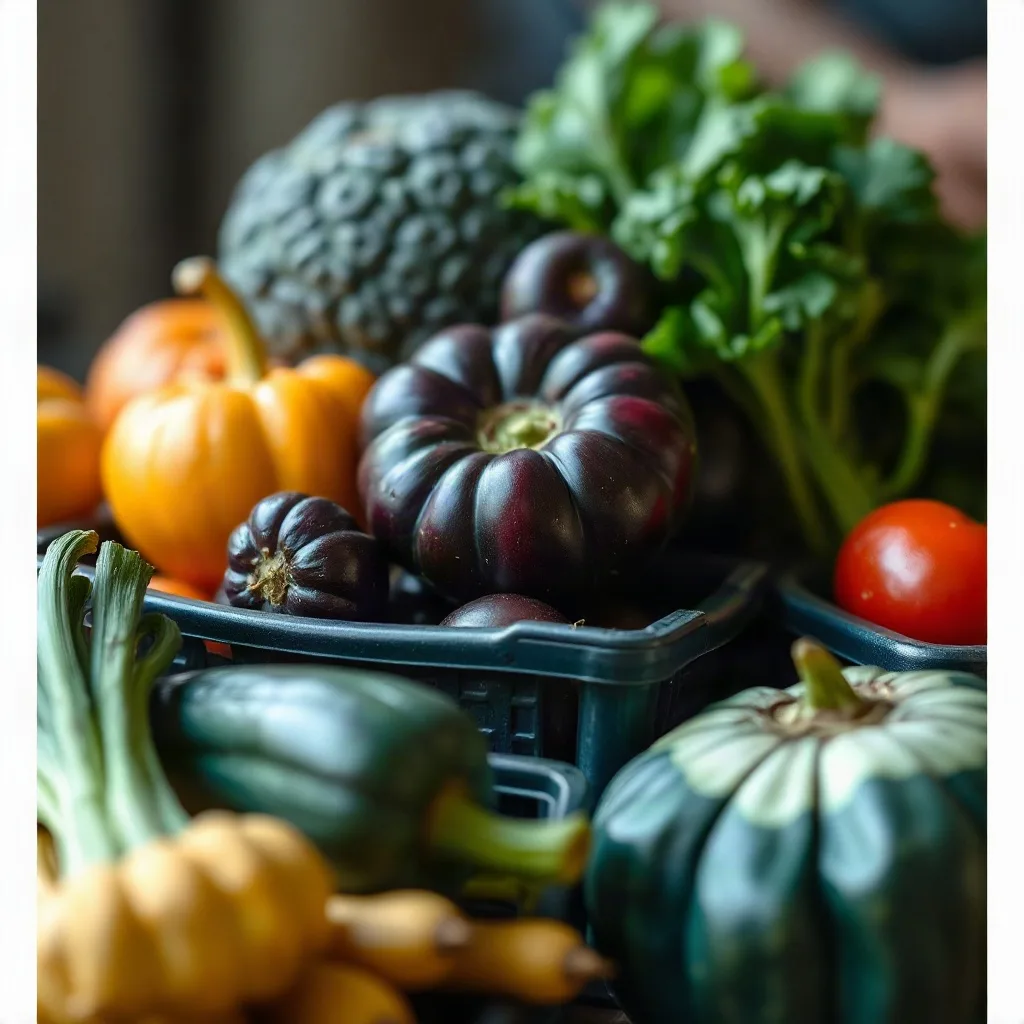
Choosing fruits and vegetables that are harvested at the peak of their natural cycle and grown close to home can transform the way you eat, feel, and interact with your community. When you prioritize seasonal, local produce, you tap into a network of benefits that extend far beyond the plate—enhancing nutrition, flavor, the environment, and the local economy. This article explores those advantages in depth and offers practical steps to make seasonal, local foods a regular part of your diet.
Nutritional Advantages of Seasonal Produce
Plants synthesize their nutrients in response to the specific conditions of their growing season. When a fruit or vegetable is allowed to mature fully under the right temperature, sunlight, and rainfall, it typically contains higher levels of vitamins, minerals, antioxidants, and phytonutrients than produce harvested early for long‑distance shipping. For example, tomatoes ripened on the vine in summer retain more lycopene, a powerful antioxidant, compared to those picked green and ripened artificially. By aligning your meals with the natural harvest calendar, you naturally increase the density of beneficial compounds without needing supplements.
Higher Flavor and Culinary Quality
Flavor develops as sugars, acids, and aromatic compounds accumulate during the fruit’s or vegetable’s final growth stages. Seasonal produce that reaches your kitchen within days of harvest often tastes sweeter, more aromatic, and has a superior texture. This heightened sensory experience encourages more frequent consumption of vegetables and fruits, which can indirectly improve overall diet quality. Chefs and home cooks alike report that dishes made with fresh, in‑season ingredients require less added salt, sugar, or fat to achieve balance, leading to healthier meals.
Environmental Impact and Carbon Footprint Reduction
Transporting food across continents consumes significant fuel, contributing to greenhouse‑gas emissions. Seasonal, locally sourced items usually travel shorter distances, often by truck or rail rather than air freight, dramatically lowering the carbon footprint associated with each kilogram of produce. Additionally, local farms tend to employ practices such as crop rotation, reduced tillage, and integrated pest management that preserve soil health and biodiversity. By buying locally, you support agricultural methods that are generally more sustainable than large‑scale monocultures designed for year‑round export.
Supporting Local Economies and Farmers
Money spent at farmers’ markets, community‑supported agriculture (CSA) programs, or local grocery co‑ops circulates within the region, helping small‑scale producers stay viable. These farms often reinvest earnings into land stewardship, farm infrastructure, and community initiatives. When consumers choose local produce, they help maintain a diverse agricultural landscape that protects against the vulnerabilities of a centralized food system, such as supply chain disruptions or disease outbreaks affecting a single crop variety.
Cost Savings and Budget‑Friendly Shopping
During peak season, supply outpaces demand, which naturally drives prices down. Seasonal vegetables like zucchini, corn, and berries become noticeably cheaper in summer, while root vegetables such as carrots, beets, and potatoes are more affordable in winter. By planning meals around what’s abundant, you can stretch your grocery budget without sacrificing nutrition or variety. Moreover, buying directly from growers often eliminates the markup added by large distributors, further reducing costs.
Food Safety and Freshness
Shorter transit times mean fewer handling steps, reducing the risk of contamination and spoilage. Produce that arrives quickly after harvest retains its natural protective skins and waxes, which act as barriers against pathogens. While all fresh foods should be washed before consumption, seasonal, local items typically require less intensive cleaning and have a longer shelf life when stored properly, decreasing food waste at the household level.
Seasonal Variety and Creative Cooking
Each season brings a distinct palette of colors, textures, and flavors. Embracing this rhythm encourages culinary experimentation—think crisp spring asparagus salads, hearty summer grilled peaches, autumn squash soups, and winter braised kale. Rotating produce throughout the year prevents menu fatigue and expands your cooking repertoire. Seasonal challenges also inspire preservation techniques like canning, fermenting, and freezing, allowing you to enjoy the taste of summer berries during the colder months.
Practical Tips for Finding and Using Seasonal Local Produce
- Consult regional harvest calendars. Many extension services and food‑policy councils publish month‑by‑month guides showing what’s in season in your area.
- Visit farmers’ markets early. Arriving at opening time gives you first pick of the freshest items and the opportunity to speak directly with growers about storage and preparation.
- Join a CSA. Subscribing to a share provides a weekly assortment of in‑season produce, often at a lower per‑unit cost than retail.
- Shop the perimeter of grocery stores. Fresh produce is typically located along the outer aisles; look for signage indicating local sourcing.
- Plan meals around a “featured” vegetable. Choose one seasonal item as the star of several dishes throughout the week to reduce waste and simplify grocery lists.
- Learn basic preservation. Freezing leafy greens, blanching carrots, or making a simple fruit jam can extend the benefits of a bountiful harvest.
- Store correctly. Keep ethylene‑producing fruits (e.g., apples) separate from ethylene‑sensitive vegetables (e.g., broccoli) to prolong freshness.
Seasonal Produce as a Tool for Culinary Skill Development
When a home cook or professional chef builds a repertoire around what is currently ripe, the kitchen becomes a laboratory for experimentation. Each season introduces a new set of textures, moisture levels, and flavor profiles that demand different cooking techniques. For instance, spring asparagus thrives when quickly blanched then shocked in ice water, preserving its bright green color and crisp bite; winter kale, by contrast, benefits from slow braising with aromatics that break down its fibrous stems. By forcing yourself to adapt recipes to the properties of the freshest ingredients, you develop a deeper intuition for heat, timing, and seasoning.
Practical ways to turn seasonality into skill‑building include:
- Technique‑focused weekly challenges. Choose one seasonal vegetable and devise three dishes that use three distinct methods – sauté, roast, and raw preparation. Document the results and note how texture changes with each method.
- Flavor‑pairing notebooks. Record which herbs, spices, and acids complement each seasonal fruit or veg. Over time you’ll notice patterns, such as rosemary pairing well with roasted root vegetables in autumn, or mint brightening summer cucumber salads.
* Ingredient‑first plating. Let the shape and colour of the produce dictate the visual composition. A plate built around the natural geometry of heirloom tomatoes, for example, teaches balance without relying on heavy sauces.
Edge cases illustrate the educational payoff. A farmer may offer “baby” carrots that are actually thinly sliced mature carrots. Cooking them at a high temperature for too long will turn them mushy; learning to recognise the subtle snap of a true baby carrot prevents that mistake. Similarly, early‑season strawberries often contain more acidity than sweetness. Pairing them with a touch of honey or a dash of balsamic vinegar teaches the cook how to adjust the flavor balance without adding excess sugar.
By the end of a year of seasonal practice, cooks typically master a toolbox that includes:
- Rapid blanching and shocking for preserving colour.
- Low‑and‑slow braising for fibrous greens.
- High‑heat caramelisation for sweet root crops.
- Cold‑plate constructions that highlight crispness.
These techniques translate across cuisines, meaning the skill set remains valuable even when you travel or when a particular crop is unavailable.
Advanced Meal‑Planning Strategies That Leverage Seasonal Abundance
Most readers already know to shop for produce when it is cheap, but few apply systematic planning that maximises both nutrition and budget over a full month. The key is to treat the seasonal calendar as a constraint‑solver rather than a shopping list.
Start by mapping the next six weeks onto a two‑column grid: one column for “core proteins” (beans, lentils, eggs, poultry) and another for “seasonal produce”. Fill each week with a protein that stores well (dry beans, frozen chicken) and then select three to four produce items that peak during that week. Next, draft a “batch‑cook” recipe that incorporates all of them – for example, a winter stew that uses carrots, parsnips, and kale together with lentils.
Two practical tools make this approach realistic:
- A modular recipe template. Create a base formula such as ‘protein + 2‑3 vegetables + grain + sauce’. Swap the vegetables each week while keeping the rest constant. This reduces decision fatigue and keeps pantry staples from going unused.
- A “leftover‑first” rule. When planning a new week, check what vegetables remain from the previous week’s meals. Build the next menu around those leftovers before buying fresh items.
Edge cases often involve “bridge” produce – items that span two seasons, like early‑season kale in late summer or late‑season peas in early fall. These act as culinary handshakes, smoothing the transition between menus and preventing a sudden drop in variety.
Another nuance is the use of “dual‑purpose” produce. Sweet potatoes, for example, work equally well roasted, mashed, or pureed into soups. By selecting items that have multiple culinary identities, you reduce the need for a larger shopping list while still delivering diverse meals.
Finally, incorporate a “budget buffer” week every six weeks. During this week, rely almost entirely on pantry staples and any remaining seasonal produce, allowing you to evaluate whether you over‑stocked or under‑stocked earlier in the cycle. This feedback loop refines future planning cycles.
Seasonal Produce and Food‑Waste Reduction: Closed‑Loop Practices
Food waste is often discussed in terms of “too much food left on the plate”, yet the majority of waste actually occurs before the plate – during storage, processing, and market overflow. Seasonal local produce offers unique opportunities to keep food moving through a closed loop.
One effective method is “first‑in, first‑out” (FIFO) rotation at home. When you bring a crate of heirloom tomatoes home, label each with the day of arrival. Use the oldest items in sauces or soups, while the freshest go into raw salads. This simple visual cue reduces the chance that ripe fruit will rot unnoticed.
Another strategy is to turn “ugly” or misshapen vegetables into value‑added products. A farmer may sell a batch of misshapen carrots at a discount; these are perfect for shredding into carrot cake, pickling, or adding to vegetable broth. By embracing imperfect produce, you also send a market signal that reduces pressure on growers to meet cosmetic standards.
Community‑level initiatives amplify these ideas:
- Produce‑swap circles. Neighbours trade excess harvests – a garden owner with surplus zucchini can exchange for a neighbor’s excess kale. Swaps keep variety high while preventing waste.
- Local compost hubs.
- Restaurant‑to‑home kits. Some eateries collect unsold but safe‑to‑eat produce at closing time and package it for customers to take home, often with recipe cards that show quick ways to use the items.
Edge cases involve produce with short shelf lives, such as berries. A practical solution is “flash‑freeze” – spread berries on a tray, freeze for a few hours, then transfer to a bag. The berries retain most of their antioxidant content and can be used later in smoothies or baked goods.
Finally, consider “up‑cycling” scraps. Onion skins, carrot tops, and apple cores make excellent stock bases. By simmering them with herbs, you extract flavor and nutrients that would otherwise be discarded, creating a zero‑waste broth that can serve as the foundation for soups, risottos, or sauces.
Educational Programs and Community Health Initiatives That Spotlight Seasonal Eating
Beyond individual choices, whole communities can harness seasonal local produce to improve public health metrics. Schools, senior centers, and workplace cafeterias are ideal venues for structured programs that teach both the why and the how of seasonal consumption.
One model is the “Farm‑to‑Classroom” partnership. Schools collaborate with nearby farms to receive weekly boxes of produce. Teachers integrate the vegetables into science lessons – for example, measuring the sugar content of a peach across its ripening stages – while cafeteria staff design menus that feature the same items. This cross‑curricular approach reinforces the concept that food is both a science and a culture.
Senior living facilities benefit from “Harvest Clubs”. Residents gather weekly to sort, wash, and portion fresh produce, then share recipes. The tactile activity improves fine‑motor skills, while the social element combats loneliness. Studies have shown that participants in such clubs increase their fruit and veg intake by up to 30 percent.
Workplace wellness programs can incorporate “Seasonal Snack Stations”. Instead of vending‑machine chips, a kitchen area offers sliced cucumbers, radishes, and seasonal fruit, accompanied by dip recipes that rotate monthly. Employees report higher energy levels and lower mid‑afternoon slumps.
Key considerations for program designers include:
- Alignment with local harvest calendars. Planning must start at least a month in advance to secure reliable supply.
- Training for food‑service staff. Chefs need quick‑prep techniques for unfamiliar produce, such as how to peel new potatoes or blanch tenderstem broccoli.
- Feedback loops. Surveys after each season help organisers adjust produce selection, portion sizes, and recipe complexity.
Edge cases arise when a region experiences an unexpected weather event that reduces crop yield. In those instances, programs can pivot to preserved items – for example, a batch of locally made pickles or a jar of summer‑season jam – preserving the local identity while still meeting nutritional goals.
When these initiatives are evaluated against baseline health data (BMI, blood pressure, or micronutrient deficiencies), the data often reveal measurable improvements, especially when the program runs for multiple seasons, allowing participants to experience the full cycle of flavors and textures.
Digital Tools, Data Transparency, and Traceability for Seasonal Local Foods
Technology has turned the once‑arcane task of tracking a fruit’s origin into a transparent, real‑time experience. Mobile apps, QR codes, and blockchain ledgers now let shoppers verify that a cucumber was harvested two days ago on a farm less than 30 miles away.
Key categories of tools include:
- Seasonal‑calendar apps. Applications like “Seasonal Food Finder” let users input their zip code and receive a weekly list of in‑season produce, along with suggested recipes.
- Marketplace platforms. Websites such as FarmDrop aggregate local growers, showing real‑time inventory, farm practices (organic, regenerative), and delivery windows.
- Traceability ledgers. Some cooperatives embed a QR code on each crate. Scanning the code pulls up a blockchain record that records planting date, pesticide usage, and harvest date, giving consumers confidence about safety and sustainability.
Practical workflow for a consumer:
- Open a seasonal‑calendar app and note the top three vegetables for the week.
- Search a local marketplace for farms offering those items.
- At pickup, scan the QR code; the app displays the exact harvest date and any certifications.
- Log the produce in a personal “food journal” to track how freshness correlates with taste and cooking success.
* Choose a farm with a traceability QR code, place an order, and schedule a pickup.
Edge cases include areas where internet connectivity is limited. In those environments, low‑tech solutions such as printed “farm cards” with QR codes that link to an offline‑cached database can still provide traceability without constant connectivity.
Data privacy is another nuance. While blockchain offers transparency, it also records transaction data that could be linked to individual farmers. Platforms must balance openness with the right to commercial confidentiality, often by using permissioned ledgers where only verified participants can view full records.
When used thoughtfully, digital tools not only empower shoppers but also give growers market data about demand spikes, enabling them to plan planting cycles that better match consumer appetite, reducing waste on both ends of the supply chain.
Urban Agriculture, Home Gardens, and Expanding the Seasonal Palette
Even in dense cities, the ability to grow food locally expands the seasonal window beyond what commercial farms can provide. Rooftop farms, balcony containers, and vertical hydroponic systems bring fresh produce within a few blocks of the consumer.
Key considerations for urban growers include:
- Micro‑climate mapping. Use a simple thermometer and sun‑exposure chart to identify the sunniest spots on a balcony. South‑facing windows often mimic the light levels of a traditional garden, allowing crops like cherry tomatoes or basil to thrive.
- Soil‑in‑a‑box. Pre‑filled, sterile grow bags reduce the risk of soil‑borne diseases and make it easy to rotate crops. A 5‑liter bag of loam mixed with compost can support a full season of lettuce, radish, and kale.
- Companion planting in containers. Pairing nitrogen‑fixing peas with leafy greens maximises limited space and improves soil health.
Examples of seasonal extensions:
- During winter, a balcony grower can keep kale, Swiss chard, and mustard greens in a cold frame, extending the leafy‑green season by three months.
- Summer heat can be mitigated with shade cloths, allowing crops like cucumbers and peppers to avoid bolting.
- Fall harvests of carrots and beets can be stored in a root cellar for up to six months, providing a winter supply of raw vegetables.
Edge cases arise when city regulations limit rooftop structures or when landlords prohibit external planters. In those situations, indoor hydroponic kits become valuable: a small countertop system can grow herbs year‑round, and the water‑soluble nutrient mix ensures consistent growth without soil.
Beyond personal consumption, urban farms often operate as community hubs. A rooftop garden may host cooking workshops that teach participants how to use rooftop‑grown herbs in seasonal sauces, reinforcing the connection between cultivation and cooking. Some projects even sell surplus produce at nearby farmer’s markets, completing the loop from seed to market within the city limits.
Finally, integrating home‑grown produce with the broader seasonal calendar creates a hybrid model: a gardener may grow early‑season strawberries while still purchasing later‑season berries from a nearby farm, ensuring a continuous supply of fresh fruit throughout the summer months.
Frequently Asked Questions
1. Does eating seasonal produce guarantee better nutrition?
Seasonal produce generally contains higher levels of certain nutrients because it matures naturally, but the exact nutritional profile can vary based on soil quality, variety, and post‑harvest handling. Choosing a wide range of seasonal foods maximizes overall nutrient intake.
2. How can I identify truly local produce?
Look for labeling that specifies the farm or region, ask vendors about the source, or use apps that map local farms. Products labeled “grown within 100 miles” or sold directly by the farmer are reliable indicators.
3. What if I live in an area with limited seasonal options?
Even in regions with shorter growing seasons, many farms participate in CSA programs that include greenhouse or hoop‑house produce. Additionally, regional cooperatives often aggregate products from neighboring counties, expanding the seasonal selection.
4. Is seasonal eating more expensive year‑round?
During off‑season periods, prices may rise for certain items, but focusing on the produce that is in season at any given time keeps costs lower. Complement seasonal choices with pantry staples like beans, grains, and frozen vegetables to maintain a balanced budget.
5. Can I rely on frozen or canned seasonal produce?
Freezing or canning at peak freshness preserves much of the nutritional value and flavor, making these options a practical way to enjoy seasonal benefits year‑round. Choose products with minimal added sugars, salts, or preservatives for the healthiest results.
Related posts:
 The Game-Changing 50 Percent Rule That Makes Eating Vegetables Effortless
 Science Saves Produce: The Invisible Coating Keeping Your Food Fresh Longer
 Market Fresh Mastery: How to Shop Farmers Markets Like a Seasonal Pro
 The Chef Revolution Transforming School Lunch One Healthy Meal at a Time
 A Visit to the Enchanting Plumcot Farm
 The 2018 Dirty Dozen List That Will Change How You Shop for Produce
 Farm to Face: Why Eating Seasonally is the Ultimate Beauty Hack
 The Upstate Farm that New York City Women Built