
Writing creatively every day is a simple practice that can reshape the way you think, feel, and communicate. It does not require a publishing contract or a polished manuscript; a few minutes with a notebook or a blank screen are enough to start. The following sections explore why a daily habit matters, how to build one that lasts, and the concrete ways it can enrich your personal and professional life.
Why Daily Creative Writing Matters
Consistent creative writing acts like a mental gym. Each session strengthens neural pathways associated with imagination, language processing, and emotional regulation. Research in cognitive psychology suggests that regular expressive writing improves working memory and reduces intrusive thoughts. When you show up for the page each morning or evening, you signal to your brain that creative thinking is a priority, not an afterthought.
Beyond cognition, the habit creates a private space for self‑reflection. In a world of constant notifications, a dedicated writing window becomes a rare moment of uninterrupted focus. Over weeks, this sanctuary can lower baseline stress levels and increase a sense of agency over your inner narrative.
Building a Sustainable Writing Habit
Start with a realistic goal: five minutes a day, three sentences, or a single prompt. Consistency beats intensity. Choose a cue — such as brewing coffee or closing your laptop — that triggers the writing session. Pair the cue with a tiny reward, like a favorite tea, to reinforce the loop.
- Set a specific time and place, even if it is a kitchen table.
- Use a timer to remove pressure about length.
- Keep a visible streak tracker; a simple calendar mark works.
- Allow imperfect drafts; the aim is presence, not perfection.
If a day is missed, resume without guilt. The habit’s resilience comes from returning, not from flawless attendance.
Enhancing Clarity of Thought
Writing forces vague ideas into concrete language. When you articulate a fleeting insight, you test its logic and discover gaps. This process mirrors the Feynman technique: explaining a concept in simple terms reveals what you truly understand. Daily practice turns this clarification into a reflex, making complex decisions at work or in relationships easier to navigate.
Try a “brain dump” prompt each morning: write everything on your mind for three minutes. Then highlight one thread worth exploring later. Over time, patterns emerge — recurring worries, hidden aspirations — that guide purposeful action.
Strengthening Emotional Resilience
Expressive writing has been linked to lower cortisol responses during stressful events. By naming emotions on the page, you create distance between the feeling and the self. This distance reduces rumination and fosters a more balanced perspective.
Use prompts such as “Describe a recent challenge as if it were a scene in a story” or “Write a letter you will never send.” These exercises externalize conflict, allowing you to observe it objectively. The habit does not replace professional therapy, but it can complement other coping strategies.
Expanding Vocabulary and Language Skills
Every writing session is an opportunity to experiment with new words, sentence structures, and rhetorical devices. Reading widely feeds this expansion, but active production cements learning. Keep a personal lexicon notebook: jot down unfamiliar words encountered in books, then deliberately weave them into your next piece.
Set a weekly “word‑play” challenge: write a paragraph using at least three new terms. This playful constraint turns vocabulary building into a game rather than a chore.
Unlocking Problem‑Solving Creativity
Creative writing trains divergent thinking — the ability to generate multiple solutions for a single problem. When you craft alternative endings for a story, you practice the same mental flexibility needed for brainstorming at work or troubleshooting personal projects.
Apply the “what‑if” method: take a real‑world obstacle and write three fictional scenarios where it is resolved in wildly different ways. The exercise loosens assumptions and often surfaces practical ideas hidden behind conventional thinking.
Connecting with a Community of Writers
Sharing snippets in a trusted group — online forum, local meetup, or a private chat — adds accountability and fresh feedback. Peer critique sharpens your editorial eye, while encouragement sustains motivation on low‑energy days.
Start small: post a single paragraph weekly and ask for one specific observation. Reciprocate by offering the same focused feedback. Over months, this exchange builds a supportive network that celebrates progress rather than perfection.
Measuring Progress and Adjusting Your Routine
Track qualitative and quantitative markers. Quantitative: word count, streak length, number of prompts completed. Qualitative: perceived clarity, emotional relief, new ideas generated. Review monthly; if a metric stalls, tweak one variable — change the prompt style, shift the time, or add a reading component.
Remember that growth is non‑linear. Some weeks feel prolific; others feel stagnant. Both are data points guiding a more personalized practice.
Integrating Creative Writing into Professional Workflows
Many professionals treat writing as a separate hobby, yet the same mental muscles that craft a short story can sharpen emails, proposals, and strategic plans. Start by allocating a ten‑minute buffer before the first meeting of the day. Use that window to draft a quick narrative version of the agenda: describe the problem as a scene, outline the stakeholders as characters, and sketch the desired outcome as a resolution. This narrative framing forces you to identify hidden assumptions and clarify the stakes before you speak. Over weeks the habit rewires the default mode from reactive reporting to proactive storytelling.
Edge case: a high‑volume support role may not allow a fixed morning slot. In that scenario, pair writing with an existing micro‑break — such as the two minutes between ticket queues. Keep a small notebook or a notes app open, and jot a single paragraph that reframes the most recent customer issue as a plot twist. The constraint of brevity prevents the exercise from becoming a time sink while still delivering the cognitive benefit.
Practical tip: create a template in your note‑taking tool with three prompts — Situation, Complication, Resolution. Fill it in for each major task. The template reduces decision fatigue and makes the practice repeatable across projects.
Leveraging Writing for Accelerated Learning and Knowledge Retention
Research on the generation effect shows that producing an explanation in your own words outperforms passive rereading. After completing a technical article or a training video, spend five minutes writing a micro‑essay that teaches the concept to an imagined novice. Force yourself to avoid jargon; if a term feels unavoidable, define it in plain language. This process surfaces gaps instantly — if you cannot explain a step without borrowing the source’s phrasing, you have located a weak spot.
Example: a software engineer learning a new framework writes a short story where the framework’s core components are characters collaborating to solve a quest. The metaphor forces the engineer to map each component’s responsibility, revealing misunderstandings about lifecycle hooks. When the story is later revisited, the narrative acts as a mnemonic scaffold that is far stickier than a bullet list.
Edge case: dense mathematical material may resist narrative treatment. In those cases, switch to a proof‑by‑story format: write a dialogue between two mathematicians debating each lemma. The conversational structure preserves logical rigor while engaging the verbal‑generation pathway.
Designing Physical and Digital Environments for Sustained Practice
Environment shapes behavior more than willpower. Begin with a dedicated analog station: a specific notebook, a favorite pen, and a lamp with a warm hue. The tactile ritual of opening that notebook signals the brain to shift into creative mode. Keep the station visible but separate from work clutter — a shelf corner or a drawer that only opens for writing.
On the digital side, configure a distraction‑free profile. Use a minimal text editor that hides menus, set the background to a neutral color, and disable notifications for the writing window. Create a keyboard shortcut that launches this profile instantly. The reduced friction makes the transition from any task to writing almost automatic.
Edge case: frequent travel or hot‑desk arrangements. Carry a slim, refillable notebook and a single pen in a pocket. For digital work, store a portable version of your editor on a USB drive or in a cloud‑synced folder that opens with the same shortcut. The consistency of the toolset, not the location, anchors the habit.
Practical tip: schedule a weekly environment audit. Ask yourself whether the lighting, noise level, and tool accessibility still support flow. Small adjustments — adding a noise‑cancelling headset or swapping a worn pen — prevent gradual erosion of the writing cue.
Overcoming Common Obstacles: Perfectionism, Block, and Time Scarcity
Perfectionism often masquerades as high standards. Counter it by adopting a “shitty first draft” rule: the first pass must be deliberately messy. Set a timer for seven minutes and forbid any editing until the timer ends. The constraint removes the pressure to produce polished prose and frees the associative network.
Writer’s block frequently stems from an ill‑defined prompt. Keep a rotating bank of micro‑prompts categorized by mood — curiosity, frustration, gratitude, speculation. When the mind stalls, pull a prompt from the matching category. The specificity of the cue narrows the search space and jump‑starts the flow.
Time scarcity is rarely about total hours; it is about perceived opportunity cost. Reframe the writing window as a high‑return investment: a ten‑minute session can generate a reusable metaphor for a presentation, a clearer email, or a personal insight that prevents a later mistake. Track one concrete outcome per week that originated in the writing slot. The evidence builds a feedback loop that protects the time allocation.
Edge case: chronic illness or caregiving duties that fragment the day. In those contexts, adopt a “micro‑burst” approach: three sessions of two minutes each, spaced throughout the day. Use a voice memo app if typing is impossible. The cumulative effect mirrors a longer session while respecting the reality of limited contiguous time.
Expanding Creative Horizons: Genre Exploration, Constraints, and Collaborative Projects
Sticking to a single mode — journaling, flash fiction, poetry — can plateau growth. Rotate genres on a monthly cycle. One month focus on flash fiction with a strict 300‑word limit; the next month explore lyric poetry using a fixed form such as a villanelle; the following month write a speculative essay that blends research with narrative. Each genre imposes distinct structural constraints that train different cognitive muscles.
Constraints are creative catalysts. Try the “alphabet constraint”: each sentence must start with the next letter of the alphabet. Or the “single‑sentence story” where an entire narrative unfolds in one grammatically correct sentence. These artificial limits force lateral thinking and often produce surprising imagery that can be harvested for larger projects.
Collaborative writing adds accountability and fresh perspectives. Pair with a peer for a “story relay”: each writer contributes a paragraph, then passes the document. Set a rule that the recipient cannot edit previous paragraphs, only continue. The exercise sharpens the ability to read tone, maintain continuity, and adapt voice — skills directly transferable to co‑authored reports or cross‑functional documentation.
Edge case: collaborators in different time zones. Use a shared document with comment threads for asynchronous hand‑offs. Agree on a 24‑hour turnaround window. The delay can actually deepen reflection, as each writer has time to consider the preceding segment before responding.
Measuring Deeper Impact: Cognitive, Emotional, and Career Metrics Beyond Word Count
Word count and streak length are surface indicators. To gauge true integration, design a quarterly review that captures three dimensions. Cognitive: select a complex work problem from the past quarter and rate, on a scale of one to ten, how quickly you could structure a solution before and after the writing habit. Emotional: use a brief validated scale such as the Positive and Negative Affect Schedule (PANAS) administered before the first writing session of the quarter and after the last. Career: log any tangible artifacts — proposals, presentations, code comments — that originated from a writing prompt, and note any feedback received.
Example: a product manager notices that the “scenario storytelling” prompt used each Monday produced three user‑journey maps that were later adopted by the design team. The quarterly review records this as a career metric, reinforcing the habit’s strategic value.
Edge case: metrics may plateau or dip during high‑stress periods. Treat a dip as data, not failure. Correlate the dip with external load — product launch, personal crisis — and adjust the writing dosage (shorter sessions, more prompts) rather than abandoning the practice.
Practical tip: store the review in a living document that evolves each quarter. Over years the document becomes a personal evidence base demonstrating how a modest daily habit compounds into measurable professional and personal growth.
Frequently Asked Questions
How much time do I really need each day?
Even five focused minutes can produce benefits. The key is regularity; longer sessions are optional and can be added when your schedule allows.
Do I need to write fiction, or can it be journaling?
Any form of creative expression counts — poetry, memoir fragments, speculative scenes, or reflective journaling. Choose the mode that feels most engaging.
What if I run out of ideas?
Keep a running list of prompts from books, podcasts, or daily observations. Revisiting old prompts with a fresh perspective often yields new material.
Can daily writing replace therapy?
Writing is a valuable self‑care tool but not a substitute for professional mental‑health treatment. Use it alongside, not instead of, qualified support when needed.
How do I know the habit is working?
Look for subtle shifts: clearer thinking during meetings, quicker emotional recovery after setbacks, or a growing collection of written pieces you feel proud of. These indicators signal that the practice is integrating into your life.
Related posts:
 Healing Through Grief Journaling
 Mastering Habit Stacking
 Writing to Heal Sexual Trauma
 The Mental Health Benefits of Journaling That Science Confirms
 15 Reflective Journal Prompts to Unlock Your Potential
 Simple Steps to Start a Successful Habit Stacking Routine
 The Sleep Stories That Are Putting Millions to Bed Every Night
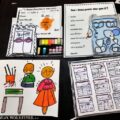 The Self Expressive Writing Worksheets Collection