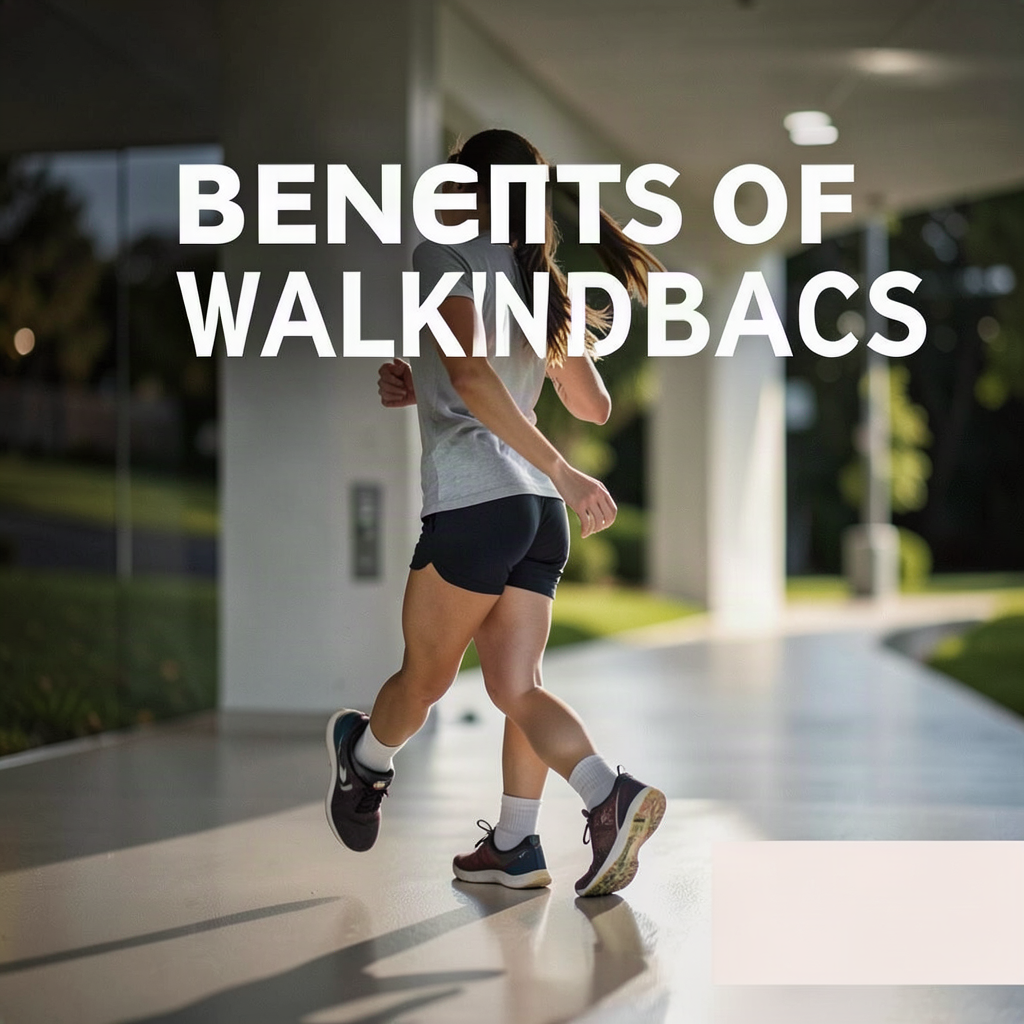
In the world of fitness, we are often told that moving forward is the only way to progress. We track our forward steps, we run forward miles, and we focus on the horizon ahead. However, a growing body of research and a centuries-old tradition suggest that turning around and walking in reverse—often called “retro walking”—might be one of the most effective ways to challenge our bodies and minds. While it may look unusual to an onlooker, walking backwards offers a unique set of physiological and neurological advantages that traditional forward walking simply cannot replicate.
Retro walking has its roots in ancient practices, particularly in traditional Chinese medicine, where it was believed to promote longevity and spinal health. Today, it is a staple in many physical therapy clinics for rehabilitating knee injuries and improving balance in the elderly. By reversing our gait, we force our muscles to work in opposition to their usual patterns, engage our brains in a heightened state of awareness, and reduce the repetitive strain often associated with forward movement. This article explores the comprehensive benefits of walking backwards, providing you with the scientific rationale and practical steps to integrate this powerful exercise into your lifestyle.
1. The Unique Biomechanics of Retro Walking
To understand why walking backwards is so beneficial, we must first look at the mechanics of the human gait. When we walk forward, we typically follow a heel-to-toe pattern. This movement relies heavily on the hamstrings and the eccentric loading of the calf muscles. In contrast, walking backwards follows a toe-to-heel pattern. This shift fundamentally changes how the lower body handles force and generates movement.
When you step backward, your toes make contact with the ground first, followed by the heel. This reversal significantly increases the activation of the quadriceps, specifically the vastus medialis—the teardrop-shaped muscle just above the knee that is crucial for joint stability. Because the foot rolls from the front to the back, the shock absorption occurs differently, placing less stress on the heel and shifting the load to the balls of the feet and the calves. This mechanical shift is why many people find that walking backwards feels more “cushioned” or less jarring on the skeletal system than forward walking.
Furthermore, retro walking requires a more deliberate lift of the knee and hip. In forward walking, momentum often carries us through the swing phase of our stride. Backwards, however, we must actively engage the hip flexors and core to move the leg through space without the benefit of forward inertia. This results in a more thorough muscular engagement across the entire lower kinetic chain, from the deep stabilizers of the pelvis down to the small muscles of the feet.
2. Enhancing Knee Health and Reducing Joint Pain
One of the most well-documented benefits of walking backwards is its impact on knee health. For individuals suffering from patellofemoral pain syndrome (runner’s knee) or osteoarthritis, forward walking can sometimes exacerbate discomfort due to the shear forces placed on the kneecap. Retro walking minimizes these forces. Because the quadriceps are working in a more concentrated manner to stabilize the knee during the toe-to-heel transition, the joint remains more protected.
Research published in various sports medicine journals indicates that retro walking can significantly reduce the compressive force on the patellofemoral joint. By strengthening the muscles surrounding the knee without the high-impact stress of forward lunges or running, individuals can build a “muscular corset” that supports the joint. This is particularly beneficial for those recovering from ACL (anterior cruciate ligament) surgeries or meniscus repairs, as it allows for range-of-motion work with a lower risk of inflammation.
Additionally, walking backwards helps in stretching the hamstrings in a functional way. While forward walking tends to tighten the hamstrings over time, the reverse motion encourages a longer, more fluid stride that can alleviate the tightness often associated with lower back pain. By balancing the strength between the front (quadriceps) and back (hamstrings) of the legs, you create a more stable environment for the knee joints to function.
3. Boosting Cardiovascular Intensity and Caloric Burn
If you are looking to maximize your time during a workout, walking backwards is a highly efficient choice. It is estimated that walking backwards requires nearly 30% to 40% more energy than walking forward at the same pace. This is due to the increased metabolic demand of using muscles in an unfamiliar way and the lack of momentum to assist the movement.
A study conducted on college-aged women found that those who replaced their regular exercise with a program of backwards walking and running significantly decreased their body fat and improved their cardiovascular fitness over a six-week period. The heart rate rises faster when walking backwards because the body is working harder to maintain balance and coordinate the unusual movement. This makes it an excellent option for “Active Recovery” days or for those who want a high-intensity workout without the high-impact stress of running.
For those using a treadmill, even a slight incline while walking backwards can dramatically increase the caloric burn. The effort required to push the body upward and backward simultaneously engages the glutes and calves to a degree that forward walking rarely achieves. This increased metabolic rate doesn’t just burn more calories during the exercise; it also contributes to a higher post-exercise oxygen consumption (EPOC), keeping the metabolism elevated longer after the workout is finished.
4. Improving Balance, Proprioception, and Coordination
Proprioception is our body’s ability to sense its position in space. When we walk forward, we rely heavily on our vision to navigate. When we walk backwards, we lose that primary visual feedback loop, forcing our brain to rely more on the vestibular system (inner ear) and proprioceptive sensors in our joints and muscles. This “sensory deprivation” makes the brain work overtime to coordinate movement.
Improving balance is critical as we age, as it is the primary defense against falls. Walking backwards challenges the neuromuscular system to create new pathways. It forces the brain to communicate more effectively with the lower extremities, enhancing overall coordination. For athletes, this translates to better agility and a quicker reaction time on the field. For the general population, it means better stability on uneven surfaces and a more robust sense of bodily control.
Practicing retro walking also improves what is known as “spatial awareness.” Because you must turn your head or rely on peripheral cues to see where you are going, you become more attuned to your environment. This heightened state of mindfulness during exercise can also have psychological benefits, as it prevents the “autopilot” mode that many of us fall into during a standard walk or run.
5. Cognitive Benefits and Mental Sharpness
The benefits of walking backwards extend beyond the physical realm and into the cognitive. Because it is a non-habitual task, walking backwards requires intense focus. You cannot easily daydream or scroll through your phone while walking in reverse; you must be present. This focused attention acts as a form of “brain training.”
Some studies have suggested that walking backwards can actually improve short-term memory. In a series of experiments, researchers found that participants who walked backwards (or even just imagined walking backwards) performed better on memory tests shortly afterward compared to those who walked forward. This phenomenon is thought to be linked to the way our brains associate physical movement with temporal processing—essentially, “stepping back” in space may help the brain “step back” in time to retrieve information.
Furthermore, the novelty of the movement stimulates neuroplasticity. By challenging the motor cortex to execute a complex, unfamiliar task, you are encouraging the growth of new neural connections. This makes retro walking an excellent cognitive exercise for older adults looking to maintain mental sharpness and for anyone looking to break out of a mental fog or creative block.
6. Posture Correction and Spinal Alignment
Modern life often involves hours of slouching over computers and smartphones, leading to a “forward head posture” and rounded shoulders. Walking backwards naturally counters this. To maintain balance while moving in reverse, the body instinctively stands taller. The chest opens up, the shoulders pull back, and the spine aligns more neutrally.
Walking backwards also engages the deep core muscles, including the multifidus and the transverse abdominis, which are essential for spinal stability. Because you lack the visual cues of the ground immediately in front of you, your core must remain braced to handle any slight variations in the surface. This constant, low-level engagement helps to strengthen the “natural weight belt” of the body, which can significantly reduce chronic lower back pain.
For those who suffer from lower back issues, retro walking offers a way to exercise without the spinal compression that often occurs during forward movement. The toe-to-heel strike reduces the impact traveling up the spine, while the increased hip flexor activity helps to tilt the pelvis into a more favorable position. Over time, this can lead to a more upright, confident posture in daily life.
7. Practical Guidance: How to Start Safely
While the benefits are numerous, walking backwards does come with a risk of tripping if not approached correctly. Safety is paramount. If you are new to retro walking, it is best to start in a controlled environment. Here is a step-by-step guide to beginning your practice:
- Start on a Treadmill: This is often the safest place to begin. Keep the treadmill turned off at first and use your feet to manually move the belt backwards while holding onto the side rails. This helps you get a feel for the motion. Once comfortable, turn the treadmill on at a very slow speed (0.5 to 1.0 mph).
- Use a Flat, Open Space: If you prefer being outdoors, choose a flat track or a quiet, empty parking lot. Avoid sidewalks with cracks or areas with heavy traffic.
- The “Toe-Heel” Technique: Focus on landing on the ball of your foot and rolling back to the heel. Keep your steps small and controlled. Do not reach too far back with your leg, as this can overextend the hip.
- Maintain an Upright Torso: Resist the urge to lean forward or look down at your feet. Keep your head up and your core engaged. You can look over your shoulder periodically to check your path.
- Start Short: Begin with just 2 to 5 minutes of backwards walking at the end of your regular walk. As your coordination improves and your muscles adapt, you can gradually increase the duration.
As you become more advanced, you can incorporate “retro intervals” into your routine—walking forward for five minutes, then backwards for two. This keeps the heart rate elevated and ensures a balanced workout for all muscle groups.
8. Advanced Variations and Training Progressions
Once you have mastered the basic backwards walk, there are several ways to increase the challenge and continue reaping the rewards. For those with specific athletic goals, these progressions can provide a significant competitive edge.
Retro Incline Walking: Increasing the incline on a treadmill while walking backwards is one of the best ways to build explosive power in the quadriceps. It mimics the demands of uphill climbing but with the unique joint-sparing benefits of reverse movement. This is particularly useful for hikers and mountain runners.
Resistance Training: Some athletes use a weighted vest or a sled to add resistance to their backwards walking. Dragging a sled while walking backwards is a legendary exercise in the world of strength and conditioning (often popularized by the “Knees Over Toes” training philosophy). It builds incredible strength in the knees and lower body while being remarkably safe for the joints.
Retro Running: Only for the highly coordinated and those in a safe environment (like a track), backwards running significantly increases the cardiovascular demand. It requires high levels of calf strength and balance. This should only be attempted after several weeks of consistent backwards walking without any balance issues.
Lateral to Retro Transitions: For improved agility, practice transitioning from a side-shuffle to a backwards walk. This improves the brain’s ability to switch between different motor patterns quickly, which is vital for sports like tennis, basketball, and soccer.
1. Neuromuscular Synergy and the Cross-Education Effect
While the physical benefits of retro walking are often categorized by muscle growth or caloric burn, the underlying neurological shifts are perhaps the most profound. When we walk forward, our movement is governed by a well-established “central pattern generator” in the spinal cord—a neural circuit that allows us to walk without conscious thought. Reversing this motion effectively breaks that circuit, forcing the primary motor cortex to take over. This shift from subconscious to conscious movement triggers a phenomenon known as cross-education, where the nervous system improves its efficiency in recruiting motor units.
For individuals recovering from unilateral injuries—such as a strain in only the left leg—retro walking can actually help maintain neural pathways for the injured limb even when its range of motion is limited. The brain’s effort to coordinate the complex reverse stride creates a “spillover” effect of neural drive. This means that by training the healthy leg in reverse, you are indirectly helping the injured leg retain its neuromuscular connection. This is a critical edge case for athletes in mid-rehabilitation who are cleared for light movement but cannot yet handle the impact of forward running.
Furthermore, the demand on the cerebellum—the part of the brain responsible for fine motor control and timing—is significantly higher during retro walking. In forward movement, we rely on a predictive model of balance. In reverse, we are forced into a reactive model. This constant state of micro-adjustment strengthens the neural feedback loops between the mechanoreceptors in the soles of the feet and the brain. Over time, this leads to a more “intelligent” foot, capable of sensing subtle changes in terrain before the eye even perceives them, which is a vital skill for trail runners and hikers.
2. Retro Walking for Ankle Mobility and Achilles Resilience
The existing literature often highlights the knees, but the impact of walking backwards on the ankle complex is equally transformative. Most modern footwear, combined with sedentary lifestyles, leads to restricted dorsiflexion—the ability to pull the toes toward the shin. Limited dorsiflexion is a leading cause of plantar fasciitis, shin splints, and even hip misalignment. Retro walking addresses this by forcing the ankle through a greater functional range of motion during the toe-to-heel transition.
As the foot reaches back to find the ground, the ankle must undergo a controlled, eccentric stretch. This specifically targets the soleus and gastrocnemius (the calf muscles) while simultaneously loading the Achilles tendon in a way that promotes collagen synthesis. For those suffering from chronic Achilles tendinopathy, the slow, controlled loading of retro walking serves as a form of “mechanotransduction,” where the physical stress actually signals the tendon cells to repair and strengthen. Unlike the sudden, explosive load of a forward jump, the reverse step is a gradual application of force that is far safer for compromised tendons.
Consider the example of a person with chronic ankle instability following multiple sprains. Traditional forward walking often allows them to “cheat” by over-relying on their lateral ligaments. In reverse, the peroneals—the muscles on the outside of the lower leg—must fire more aggressively to prevent the ankle from rolling. This builds a dynamic stability that static balance exercises (like standing on one leg) cannot match, as it integrates stability directly into the gait cycle.
3. Overcoming “Visual Dominance” and the Vestibular Shift
Humans are incredibly visual creatures, often to the detriment of our other senses. We use our eyes to “anchor” our balance, which is why many people feel dizzy if they close their eyes while standing. Retro walking systematically deconstructs this visual dominance. Because you cannot see exactly where your foot will land, the brain is forced to amplify signals from the vestibular system (the inner ear) and the proprioceptive system (the joints).
This shift has practical applications for preventing vertigo and improving spatial orientation. To practice this safely, one can transition from the “looking over the shoulder” method to a “forward-facing sensory” method. By keeping the head neutral and focusing on a point in front of them while moving backward, the walker must rely entirely on the tactile feedback from their feet. This is an excellent exercise for older adults who may experience a decline in vestibular function, as it retrains the brain to use non-visual cues to maintain equilibrium.
An interesting edge case is the use of retro walking in dark or low-light environments. Because the walker has already trained their body to move without direct visual confirmation of the ground, they become much more adept at navigating their home or outdoor spaces at night. This “proprioceptive mapping” creates a mental blueprint of the body’s dimensions in relation to its surroundings, reducing the likelihood of bumping into furniture or tripping over unseen obstacles.
4. Strategic Incorporation into Strength and Conditioning
Retro walking should not be viewed merely as a warm-up or a rehabilitation tool; it is a potent “primer” for heavy strength training. For lifters, performing 5 minutes of backwards walking on a treadmill (with the motor off, pushing the belt manually) before a leg day can significantly improve the quality of their squats and deadlifts. This manual pushing action—known as “dead-milling”—is an intense concentric exercise for the quadriceps that pumps blood into the knee joint without the eccentric breakdown that causes fatigue.
By pre-exhausting the vastus medialis through retro walking, a lifter ensures that this crucial stabilizer is “awake” and firing during their heavy sets. This can prevent the common issue of “knee cave” (valgus collapse) during heavy squats. Additionally, the hip flexor engagement required to lift the leg back and up helps to open the anterior hip capsule, which is often tight from sitting. This allows for a deeper, more upright squat position.
For powerlifters or bodybuilders, retro walking with a weighted sled (backward sled drags) is a legendary tool for building “bulletproof” knees. Unlike a leg extension machine, which applies shear force to the ACL, dragging a sled backwards provides a functional, closed-kinetic-chain movement that builds immense strength in the connective tissues. This is a perfect example of how retro movement can be scaled from a gentle therapeutic walk to a high-level athletic strength builder.
5. Navigating Variable Terrains: Sand, Grass, and Incline Challenges
While a flat treadmill is the ideal starting point, the benefits of retro walking are multiplied when the surface becomes unpredictable. Walking backwards on sand, for instance, is an extraordinary workout for the intrinsic muscles of the feet. Because sand is an unstable surface, the foot must constantly contour and grip to find purchase. This strengthens the arches and can be a transformative practice for individuals with “flat feet” or overpronation issues.
Grass offers a middle ground, providing more cushioning than pavement but more stability than sand. Retro walking on a gentle grass slope introduces a vertical element that further challenges the calves and glutes. When walking backwards uphill, the demand on the gluteus maximus is significantly higher than in forward walking, as the leg must “push” the body’s weight up and away. This is particularly useful for correcting “gluteal amnesia,” a common condition where the glutes fail to fire properly due to prolonged sitting.
Conversely, walking backwards downhill—while requiring extreme caution—is one of the most effective ways to train the eccentric strength of the quadriceps. In this scenario, the quads must act as brakes to prevent the body from gaining too much momentum. This eccentric braking is exactly what is needed to protect the knees during high-impact activities like hiking down a mountain or running downstairs. By practicing this in a controlled, slow manner, you build a “braking system” in your legs that prevents joint wear and tear.
6. Retro Walking for Chronic Lower Back and Psoas Management
The relationship between our gait and our lower back is deeply intertwined with the psoas muscle—the only muscle that connects the upper body to the lower body. In forward walking, a tight psoas can pull the lumbar spine into an excessive arch (anterior pelvic tilt), leading to chronic lower back pain. Retro walking naturally encourages a posterior pelvic tilt, which lengthens the psoas and decompress the lumbar discs.
As you step backward, the reaching motion of the leg stretches the hip flexors in a dynamic, functional way. This is far more effective than static stretching because it integrates the muscle’s length into a movement pattern. For office workers who spend eight hours a day in hip flexion (sitting), the psoas becomes shortened and weak. Walking backwards for just ten minutes after work can act as a “reset” for the pelvis, pulling the spine back into a neutral alignment and relieving the pressure on the lower vertebrae.
Furthermore, the increased activation of the multifidus—the small, stabilizing muscles that run along the spine—provides a internal support system. These muscles are often dormant in people with back pain. Because retro walking requires constant micro-adjustments to maintain balance, the multifidus is forced to fire continuously. This builds a level of spinal endurance that protects against the sharp, sudden pains often associated with lifting objects or twisting awkwardly in daily life.
7. Long-Term Programming and Progression Tracking
To see lasting changes, retro walking must be treated with the same programming logic as any other exercise. It is not enough to simply do it occasionally; one must track progress and increase the stimulus over time. However, “progress” in retro walking isn’t just about speed. It can be measured through several metrics: duration, incline, resistance, and “sensory difficulty.”
A beginner might start with a “Level 1” protocol: 5 minutes of slow retro walking on a flat, paved surface, focusing entirely on the toe-to-heel strike. After two weeks, they might progress to “Level 2”: introducing a 1-2% incline or increasing the duration to 10 minutes. A “Level 3” progression would involve adding a light weighted vest (5-10% of body weight) or moving to a more challenging surface like grass or sand.
For those using retro walking for cognitive or balance benefits, progress can be tracked by the “look-back frequency.” Initially, you may need to look over your shoulder every three steps. As your spatial awareness improves, you may find you only need to check every ten steps, or eventually, not at all if you are in a familiar, enclosed environment like a hallway. Tracking the reduction in visual cues is a powerful way to quantify the improvements in your vestibular and proprioceptive systems. By consistently challenging the body to do more with less—less visual input, less stability, or more weight—you ensure that the physiological adaptations continue to accumulate over months and years.
Frequently Asked Questions
Q1: Is walking backwards safe for people with balance issues or the elderly?
A: Yes, but it must be done with extreme caution. For those with balance concerns, walking backwards while holding onto a sturdy rail or using a treadmill with safety features is recommended. It is often used in geriatric physical therapy specifically to *improve* balance, but it should always be supervised or performed in a very controlled environment to prevent falls.
Q2: How often should I walk backwards to see results?
A: Like any exercise, consistency is key. You can start seeing improvements in knee comfort and coordination by adding 5-10 minutes of backwards walking to your routine 3 to 4 times a week. For cardiovascular or weight loss goals, longer sessions or higher intensity (like incline retro walking) may be necessary.
Q3: Does walking backwards help with plantar fasciitis?
A: It can. Because retro walking changes the strike pattern of the foot to toe-heel, it reduces the immediate impact on the heel bone (calcaneus) where the plantar fascia attaches. Additionally, it strengthens the small muscles of the foot and stretches the calves in a way that can alleviate some of the tension associated with plantar fasciitis. However, you should consult with a podiatrist before starting if you have acute pain.
Q4: Can I walk backwards on a treadmill safely?
A: Yes, the treadmill is actually one of the best places to practice because the surface is predictable and there are handrails. Always start at the slowest possible speed. Use the emergency stop clip attached to your clothing. Do not attempt to turn around while the belt is moving; stop the machine, turn around, and then restart it at a slow pace.
Q5: Why do my calves feel so sore after walking backwards?
A: This is completely normal. Walking backwards requires the calves to work much harder to control the descent of the heel and to push off from the toes. Since these muscles are likely not used to this specific type of loading, you may experience delayed onset muscle soreness (DOMS). Ensure you stretch your calves after your session and stay hydrated.
In conclusion, walking backwards is far more than a fitness fad; it is a scientifically sound method for improving joint health, metabolic efficiency, and cognitive function. By stepping out of your comfort zone and reversing your direction, you can unlock a new level of physical resilience and mental clarity. Whether you are an athlete looking for an edge, someone managing chronic knee pain, or simply looking to spice up your daily walk, going in reverse might be the best way to move your health forward.
Related posts:
 Reverse Plank Power: The Backwards Move That’s Forward-Thinking Fitness
 The Ultimate Guide to Lunge Variations That Actually Work
 Mastering the Reverse Burpee
 Walking Backwards for Knee Pain
 Smart Shoe Shopping Tips Everyone Should Know
 Mastering the Reverse Bear Crawl
 Why Your Knees Hurt on Inclines and How to Fix It
 ACL Injury Surgery: What You Need to Know