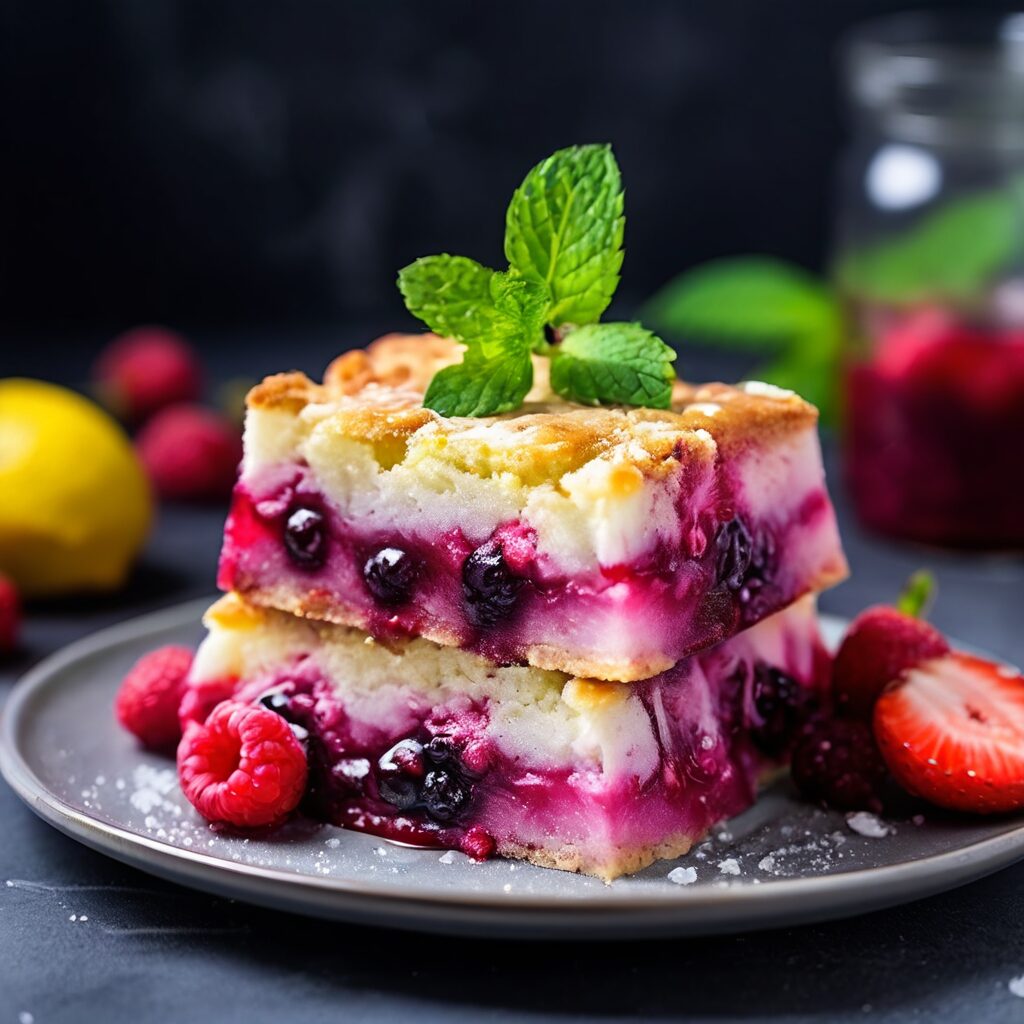
Introduction to Berry Lemonade Cobbler Bars
Summer is the perfect time to indulge in light, refreshing desserts that capture the essence of the season. One such delightful treat is Berry Lemonade Cobbler Bars. Combining the tartness of lemonade with the sweetness of fresh berries, these bars are sure to be a hit at any summer gathering.
Ingredients You’ll Need
- 1 cup fresh blueberries
- 1 cup fresh strawberries, sliced
- 1 cup fresh blackberries
- 1 cup fresh raspberries
- 1 cup granulated sugar
- 1/2 cup lemon juice (freshly squeezed)
- 2 tablespoons lemon zest
- 1 cup all-purpose flour
- 1/2 teaspoon baking powder
- 1/4 teaspoon salt
- 1/2 cup unsalted butter, melted
- 1 teaspoon vanilla extract
Step-by-Step Instructions
1. Preheat Your Oven
Preheat your oven to 350°F (175°C). Grease a 9×13 inch baking dish to ensure that your cobbler bars don’t stick.
2. Prepare the Berry Mixture
In a large bowl, combine all the fresh berries. Add 1/2 cup of granulated sugar, lemon juice, and lemon zest. Gently mix until the berries are well coated.
3. Make the Cobbler Topping
In another bowl, whisk together the flour, remaining 1/2 cup of granulated sugar, baking powder, and salt. Stir in the melted butter and vanilla extract until the mixture is crumbly.
4. Assemble the Cobbler Bars
Spread the berry mixture evenly in the prepared baking dish. Sprinkle the cobbler topping over the berries, covering them completely.
5. Bake to Perfection
Bake in the preheated oven for 40-45 minutes, or until the topping is golden brown and the berry mixture is bubbling.
6. Cool and Serve
Allow the cobbler bars to cool in the baking dish for at least 30 minutes before cutting into squares. Serve the bars warm or at room temperature.
Tips for the Perfect Cobbler Bars
- Use Fresh Berries: Fresh berries provide the best flavor and texture. If you must use frozen berries, be sure to thaw and drain them well.
- Adjust the Sweetness: Depending on the sweetness of your berries, you may need to adjust the amount of sugar in the recipe.
- Experiment with Flavors: Feel free to experiment with different types of berries or even add a bit of mint for a unique twist.
Mastering the Balance of Acidity and Sweetness
The hallmark of a truly exceptional Berry Lemonade Cobbler Bar lies in the delicate equilibrium between the sharp, bright notes of citrus and the deep, honeyed sweetness of summer berries. Achieving this balance is not merely about following a ratio but understanding how citric acid interacts with the natural sugars in the fruit. When you add lemon juice to berries, the acid acts as a flavor enhancer, much like salt in a savory dish. It cuts through the syrupy density of cooked fruit, preventing the bars from becoming cloyingly sweet. However, the acidity level in lemons can vary significantly depending on their ripeness and variety. For instance, Meyer lemons are much sweeter and less acidic than standard Eureka or Lisbon lemons. If you are using Meyer lemons, you might consider reducing the granulated sugar in the berry mixture by a tablespoon to maintain that signature ‘lemonade’ tang.
Furthermore, the lemon zest plays a role that juice cannot. While the juice provides the sour punch, the zest contains essential oils that provide the floral, aromatic essence of the lemon. When these oils are heated, they infuse the entire berry medley with a fragrance that mimics a glass of fresh-squeezed lemonade. To maximize this effect, try rubbing the lemon zest into the granulated sugar with your fingertips before mixing it with the berries. This process, known as ‘massaging’ the sugar, breaks down the zest’s cellular structure and releases the oils more effectively, ensuring every bite has a consistent citrus perfume. Edge case: if your berries are particularly tart—such as early-season raspberries or slightly underripe blackberries—you may want to increase the sugar in the filling by 1/4 cup or add a tablespoon of honey to provide a more complex sweetness that rounds out the sharp edges of the fruit.
The Science of the Perfect Cobbler Topping Texture
While the existing recipe utilizes melted butter for a dense, chewy, and slightly crumbly topping, understanding the science of fat and flour can help you manipulate the texture to your personal preference. When you use melted butter, you are coating the flour particles in fat, which inhibits the development of gluten. This results in a ‘short’ texture—tender and cookie-like rather than flaky. This is ideal for bars because it provides the structural integrity needed to hold the fruit filling without falling apart when picked up. However, if you prefer a topping that is more reminiscent of a traditional biscuit-style cobbler, you might experiment with ‘cutting in’ cold, cubed butter. This creates small pockets of fat that steam during baking, yielding a lighter, more aerated crumb.
The ratio of sugar to flour in the topping also dictates the final mouthfeel. A higher sugar content leads to a ‘shatter’ effect—a thin, crispy crust that forms on the surface as the sugar caramelizes. If you find your topping is too soft, you can sprinkle an additional tablespoon of coarse turbinado sugar over the bars five minutes before they finish baking. This adds a delightful crunch and a professional-looking sheen. Additionally, the type of flour used can alter the result. While all-purpose flour is the standard, substituting 20% of it with almond flour can introduce a subtle nuttiness and a more delicate, melt-in-your-mouth quality that complements the berries beautifully. Be mindful of the baking powder’s age; it is the primary leavening agent here. If it is past its prime, your topping will be heavy and leaden rather than light and crumbly.
Advanced Filling Techniques for Consistency
One of the most common challenges with fruit-based bars is the ‘soggy bottom’ or a filling that is too runny to slice cleanly. This usually occurs because different berries have different water contents. Raspberries and strawberries, for example, release significantly more moisture than blueberries or blackberries. If you are using a high proportion of strawberries, you may find that the 30-minute cooling period isn’t enough to set the juices. To combat this, you can incorporate a small amount of a thickening agent directly into the berry mixture. Cornstarch is the most common choice, but for a clearer, more glistening filling, arrowroot powder or instant clear-jel are excellent alternatives. Adding just one tablespoon of cornstarch to the berry-sugar mixture will help bind the juices into a jam-like consistency that stays put when the bars are cut.
Another professional technique is maceration. Before you even begin the topping, toss your berries with the sugar and lemon juice and let them sit for 15 to 20 minutes. This draws out the excess moisture early. If you see a significant amount of liquid pooling at the bottom of the bowl, you can drain off a portion of it before adding the berries to the baking dish, or you can simmer that liquid in a small saucepan until it reduces to a thick syrup and then pour it back over the fruit. This ensures you keep all the flavor without the excess water that could compromise the bottom of your cobbler bars. For those who enjoy a more structured bar, consider ‘pre-roasting’ the blueberries for 5 minutes before mixing them with the softer berries; this helps them hold their shape and prevents them from bleeding too much purple juice into the lighter-colored strawberries.
Seasonal Fruit Pairings and Flavor Infusions
While the four-berry blend is a classic, the ‘Lemonade’ base of this recipe is incredibly versatile and can be adapted to various seasonal fruits and herbal infusions. As summer transitions into late August, consider replacing the raspberries and blackberries with diced peaches or nectarines. The combination of stone fruit and lemon is a staple of Southern desserts, offering a mellow, buttery sweetness that contrasts the citrus. If you choose to go this route, ensure the peaches are peeled and sliced to a thickness similar to the strawberries to ensure even cooking. Another sophisticated variation involves ‘herbal lemonade’ profiles. Infusing the berry mixture with two teaspoons of finely chopped fresh basil or a teaspoon of minced lemon thyme can elevate the bars from a simple backyard treat to a gourmet dessert. The earthiness of the herbs grounds the bright fruit flavors and adds a layer of complexity that surprises the palate.
For those who enjoy a bit of warmth, a hint of spice can transform the profile. A half-teaspoon of ground cardamom or freshly grated ginger added to the flour mixture provides a ‘zing’ that mimics a ginger-lemonade. If you want to lean into a more tropical ‘Pink Lemonade’ vibe, you can use only strawberries and raspberries and replace the vanilla extract with a drop of almond extract. The almond extract enhances the ‘cherry-like’ notes in the berries and creates a nostalgic flavor profile. Edge case: if you are using very large strawberries, quarter them rather than slicing them. Larger chunks of fruit provide a more interesting texture and prevent the filling from becoming a uniform mush, allowing the individual flavors of each berry to stand out in every bite.
FAQ
1. Can I use frozen berries instead of fresh?
Yes, you can use frozen berries if fresh ones are not available. Make sure to thaw and drain them thoroughly to avoid excess moisture in the cobbler bars.
2. How should I store leftover cobbler bars?
Store any leftover cobbler bars in an airtight container in the refrigerator for up to 3 days. You can also freeze them for up to a month.
3. Can I make this recipe gluten-free?
Yes, you can substitute the all-purpose flour with a gluten-free flour blend. Ensure the blend includes a binding agent like xanthan gum for the best results.
4. What other fruits can I use in this recipe?
You can experiment with other fruits such as peaches, cherries, or even a mix of your favorite fruits. The key is to maintain the balance between the fruit and the cobbler topping.
5. Can I prepare this dessert in advance?
Yes, you can prepare the berry mixture and the cobbler topping in advance. Store them separately in the refrigerator and assemble them just before baking.
Conclusion
Berry Lemonade Cobbler Bars are a delightful summer dessert that combines the tangy flavors of lemonade with the sweetness of fresh berries. They are easy to make and perfect for any occasion. Whether you’re hosting a summer barbecue or looking for a refreshing treat, these cobbler bars are sure to impress. Enjoy them with a scoop of vanilla ice cream or a dollop of whipped cream for the ultimate indulgence.
Related posts:
 Choosing the Healthiest Granola Bar
 Perfect Matcha Lemonade Recipe
 Guilt-Free Cinnamon Roll Recipe
 Golden Summer: Creative Turmeric Recipes to Spice Up Your Season
 Beginner’s Sugar-Free Guide
 Apple Coconut Cake Bars: A Delightful and Wholesome Treat
 Strawberries Top This Year’s Dirty Dozen List and We’re Officially Shook
 Sweet Tooth Salvation: Sugar-Free Keto Dessert Bites That Actually Taste Amazing