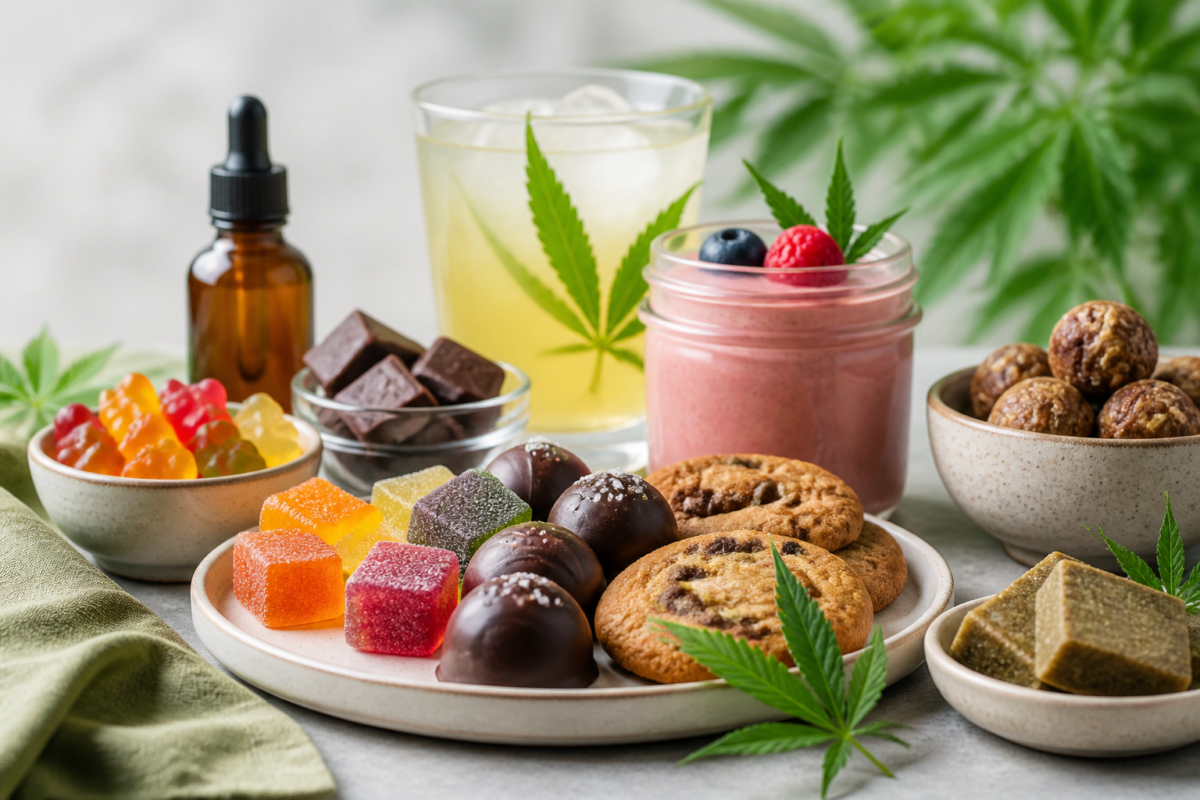
In recent years, the wellness landscape has been transformed by the integration of cannabidiol (CBD) into our daily culinary routines. From sophisticated coffee shops in metropolitan hubs to home kitchens, CBD edibles have moved from niche products to mainstream staples. Unlike THC, CBD is non-intoxicating, making it an appealing option for those looking to incorporate botanical support into their lifestyle without altering their mental state. Understanding how to integrate these products requires a balanced approach, focusing on quality, dosage, and culinary compatibility.
Understanding the Rise of CBD in Modern Cuisine
The popularity of CBD-infused edibles stems from a shift toward holistic wellness and the desire for convenient, palatable ways to ingest botanical extracts. Unlike tinctures, which can have an earthy or bitter taste, edibles mask the natural flavor of hemp through ingredients like dark chocolate, fruit purees, or botanical infusions. This culinary evolution allows consumers to treat their CBD intake as a moment of indulgence rather than a medical necessity. The bioavailability of edibles is also a key factor; while ingestion takes longer to kick in than inhalation, the effects are typically more sustained, providing a steady baseline throughout the day.
Top Categories of CBD Edibles Currently Trending
The market has diversified significantly to cater to various dietary preferences and consumption habits. Gummies remain the most popular choice due to their precise dosing and portability. However, there has been a significant surge in CBD-infused beverages—ranging from sparkling waters to adaptogenic tea blends—which offer a refreshing alternative for social settings. Baked goods, including artisanal cookies and brownies, are also gaining traction, often featuring organic, high-quality ingredients that align with the “clean label” movement. Furthermore, savory options like CBD-infused honey, olive oils, and salad dressings are allowing home chefs to experiment with wellness-focused cooking.
How to Source High-Quality CBD Products
Not all CBD products are created equal, and the lack of stringent regulation in some regions means the burden of vetting falls on the consumer. To ensure you are purchasing a safe and effective product, always look for a Certificate of Analysis (COA) from a third-party laboratory. This document verifies that the product contains the advertised amount of CBD and confirms the absence of heavy metals, pesticides, and residual solvents. Prioritize brands that utilize organic, non-GMO hemp grown in reputable regions, and favor full-spectrum or broad-spectrum extracts over isolates to benefit from the “entourage effect,” where various cannabinoids and terpenes work synergistically.
The Science of Dosage and Bioavailability
One of the most common mistakes newcomers make is consuming too much CBD too quickly. Because edibles are processed through the digestive system, it can take anywhere from 30 minutes to two hours to feel the effects. The golden rule of CBD is to “start low and go slow.” Begin with a dosage of 5 to 10 milligrams and wait to see how your body responds before increasing the amount. Factors such as your body weight, metabolism, and whether you consume the edible on an empty or full stomach will influence how quickly the CBD enters your bloodstream. Consuming CBD with a small amount of healthy fat, such as avocado or yogurt, can actually improve its absorption.
Pairing CBD Edibles with Your Daily Routine
Integrating CBD into your lifestyle is most effective when it serves a specific purpose. Many people prefer a low-dose CBD beverage in the morning to encourage a sense of calm during a busy workday. Others find that a CBD-infused gummy in the late afternoon helps bridge the gap between work and relaxation. For those who struggle with sleep, a higher-dose edible taken an hour before bed can provide a grounding ritual. By tracking your timing and intake in a simple journal, you can identify which routines provide the most benefit for your unique physiological needs.
Culinary Tips for Cooking with CBD at Home
If you enjoy experimenting in the kitchen, incorporating CBD into your own recipes is a rewarding endeavor. The most important rule is to avoid high heat. CBD is heat-sensitive and can degrade or lose its potency when exposed to extreme temperatures, such as those found in a frying pan or a hot oven. Instead, incorporate your CBD oil or isolate into finished products. For example, drizzle CBD-infused honey over warm oatmeal, stir it into a chilled smoothie, or fold it into a buttercream frosting after the cake has cooled. This preserves the integrity of the compound while allowing you to enjoy the benefits in your favorite meals.
Safety, Legality, and Best Practices
While CBD is generally well-tolerated, it is essential to be aware of potential interactions. CBD can interact with certain medications by inhibiting the liver enzymes responsible for metabolizing drugs, similar to the way grapefruit interacts with medication. If you are currently taking prescription drugs, consult with your healthcare provider before adding CBD to your regimen. Additionally, always check your local and state regulations regarding CBD, as laws concerning hemp-derived products can vary significantly. Keep all edibles clearly labeled and stored away from children and pets, treating them with the same care as any other supplement or health product.
The Future of CBD-Infused Wellness
As the industry matures, we can expect to see more innovation in the world of CBD edibles. We are moving toward a future of “functional edibles,” where CBD is blended with other supportive ingredients like L-theanine for focus, melatonin for sleep, or turmeric for inflammation. The focus is shifting from simply adding CBD to a product to creating complex, balanced formulas that address specific wellness goals. As transparency and quality control continue to improve, consumers can feel more confident in exploring these products as a genuine addition to a health-conscious lifestyle.
Navigating the World of Nano-Emulsified CBD Products
As the market evolves, traditional oil-based edibles are being challenged by the rise of nano-emulsification technology. In standard CBD oil, cannabinoids are fat-soluble and must be broken down by the digestive system, which can lead to slow and inconsistent absorption. Nano-emulsification breaks these oil droplets into microscopic particles, allowing them to mix easily with water-based drinks. The primary advantage here is speed; while traditional gummies might take over an hour to manifest effects, nano-infused sparkling waters or drink additives can often be felt in as little as 15 to 20 minutes. For those who need immediate relief from a stressful morning meeting, these beverages offer a distinct advantage over solid food forms. When shopping, look for labels that explicitly mention “water-soluble” or “nano-emulsified” if you prioritize a faster onset time.
The Critical Role of Terpene Profiles in Edibles
Beyond the CBD content itself, the inclusion of terpenes—the aromatic compounds found in hemp—can significantly alter your experience. A CBD gummy containing only isolated CBD will offer a different effect than one infused with a full-spectrum extract rich in myrcene, limonene, or linalool. For instance, products labeled as “sleep-focused” often pair CBD with higher concentrations of linalool, which is commonly associated with relaxation. Conversely, products intended for daytime use might feature limonene for a more uplifting sensory experience. When selecting edibles, don’t just scan for the milligram count; look for the terpene profile on the lab report. Understanding these botanical synergies allows you to select products that are tailored not just to wellness, but to your specific mood and energy requirements throughout the day.
Mastering the Art of Home-Infused Savory Dishes
While sweet treats like chocolates and gummies dominate the commercial space, the most versatile applications of CBD often occur in savory cooking. To successfully infuse savory dishes, the trick lies in the medium: fat. Because CBD is lipophilic, it binds perfectly to fats like butter, ghee, coconut oil, or high-quality extra virgin olive oil. When making a savory CBD-infused dressing, whisk your CBD oil into an emulsion of Dijon mustard, vinegar, and honey to prevent the oil from pooling at the top. For home-infused butter, clarify the butter first to remove milk solids, which can burn, then gently whisk in your CBD extract at the very end of the melting process. This method allows you to drizzle a precise dose over roasted vegetables or finish a bowl of pasta without risking the degradation of the cannabinoids through high-heat sautéing.
Storage Best Practices to Prevent Degradation
The efficacy of your CBD stash is highly dependent on how you store it. CBD is sensitive to environmental stressors, primarily light, heat, and oxygen. Exposure to UV rays can trigger the oxidation of cannabinoids, effectively turning your potent supplement into an inert substance. While it might be convenient to keep your CBD-infused honey or gummies on a sunny kitchen windowsill or near the stove, these are the two worst places for them. Instead, treat your CBD edibles like high-end olive oil: store them in an opaque, airtight container tucked away in a cool, dark cupboard. If you reside in a particularly humid climate, consider adding a food-grade silica gel packet to the storage container to prevent the degradation of gummies, which can become sticky and lose structural integrity due to moisture absorption.
Identifying Hidden Additives in Commercial Edibles
As you branch out into artisanal or mass-market edibles, it is crucial to look past the CBD content and evaluate the base ingredients. A high-quality CBD dose is often negated by a product loaded with high-fructose corn syrup, artificial dyes, and excessive preservatives. The wellness-focused consumer should look for edibles that utilize natural sweeteners like agave, monk fruit, or maple syrup. Furthermore, be wary of the “health halo” effect; just because a cookie is infused with CBD does not automatically make it a healthy snack if it contains processed flour and trans fats. Prioritize brands that list whole-food ingredients as the primary components. By treating your CBD edible as a snack you would be happy to eat even without the CBD, you ensure that you are nourishing your body holistically rather than just supplementing it with cannabinoids.
Managing Tolerance and Strategic Cycling
One aspect of CBD usage often overlooked is the potential for developing a plateau effect. Much like caffeine, your body can build a tolerance to CBD if you take the exact same dosage at the exact same time every single day for months on end. Many experienced users find success in “cycling” their intake. This might involve taking a lower dose on weekends or skipping one day of the week entirely to allow your endocannabinoid system to reset. If you notice that your usual 20mg gummy is no longer providing the same sense of equilibrium it once did, avoid the urge to double your dose. Instead, try a three-day break or switch to a different product category—such as moving from a gummy to a sublingual tincture—to re-sensitize your system. This proactive approach helps maintain the efficacy of your supplements without requiring ever-increasing dosages.
Interpreting COAs for Complex Edible Formulations
When reviewing a Certificate of Analysis (COA) for a complex edible, the document can be overwhelming. Beyond checking for the presence of heavy metals and pesticides, look specifically at the “potency” section for the edible’s matrix. Many manufacturers struggle to achieve a perfectly uniform distribution of CBD in a batch of baked goods or gummy mixtures, which can lead to one piece having 5mg and another having 15mg. Look for brands that provide a COA for the final finished product rather than just the raw hemp extract. If a company only shows you the testing for their bulk oil, you have no confirmation that their kitchen processes successfully distributed that oil evenly throughout the final product. Seeking out brands that test the finished, packaged edible is the gold standard for accuracy and consumer safety.
Frequently Asked Questions
Q: Will CBD edibles make me feel ‘high’? A: No, CBD is non-intoxicating. Unlike THC, the primary psychoactive compound in cannabis, CBD does not produce a euphoric or altered mental state. You should not feel ‘high’ regardless of the dosage, though you may feel a sense of relaxation or reduced tension.
Q: How long do the effects of a CBD edible last? A: The duration of effects can vary based on the individual and the dosage, but most people report that the benefits of a CBD edible last between four to six hours. This is generally longer than the effects of inhalation, as the liver processes the CBD over a more extended period.
Q: Can I take CBD with my daily vitamins? A: In most cases, yes, but it is always best to consult with a healthcare provider. Because CBD can affect how your liver processes certain substances, it is important to ensure it does not interfere with the absorption or metabolism of your specific supplements or medications.
Q: Is it better to take CBD on an empty or full stomach? A: Research suggests that CBD is fat-soluble, meaning it is absorbed more efficiently when consumed with a meal that contains healthy fats. Taking it on an empty stomach might lead to a faster onset but potentially lower overall absorption compared to taking it with food.
Q: How should I store my CBD edibles to keep them fresh? A: CBD edibles, especially those containing natural ingredients or oils, should be stored in a cool, dark, and dry place. Exposure to direct sunlight, heat, and moisture can degrade the CBD and cause the food products to spoil. Keep them in their original packaging to ensure they remain shelf-stable for the duration of their recommended use-by date.
Related posts:
 Mandy Moore’s CBD Oil Secret for High Heels
 Top CBD Gummies Guide
 Feals CBD Launch Promises to Change the Wellness Game
 Hemp Derived CBD Made Simple
 Testing Aceso Cannabis Drink Powders
 The CBD Product Guide That Cuts Through the Overwhelming Hype
 Prima’s Hemp Education Guide
 Understanding CBD Gummies Effects