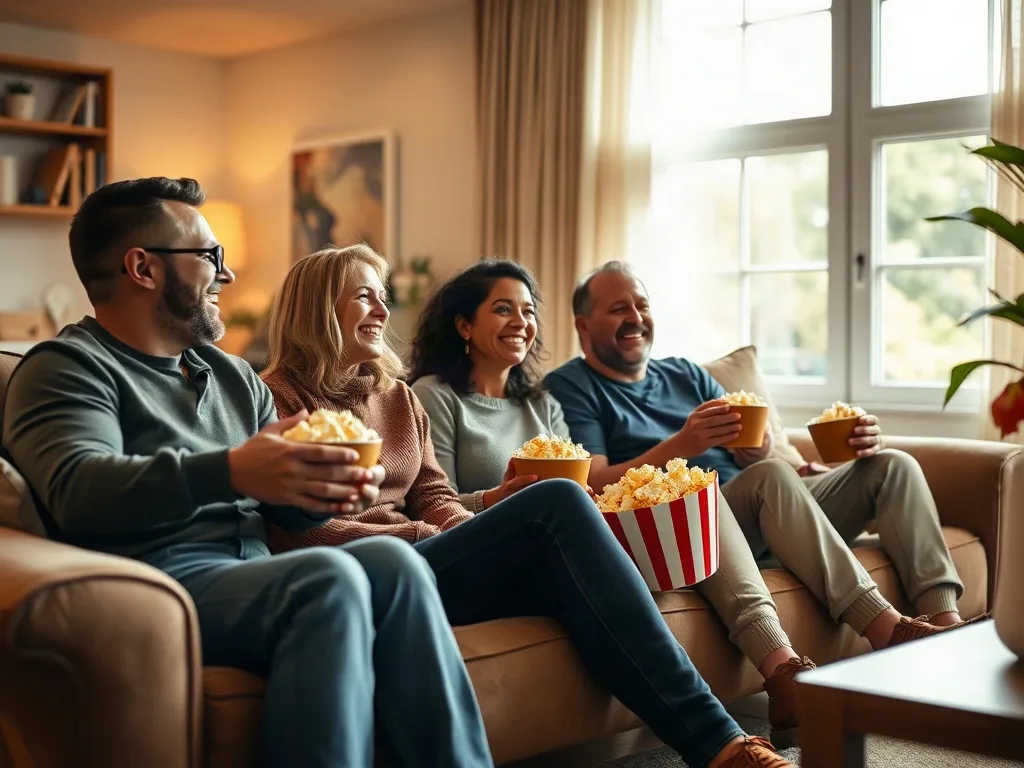
There’s something uniquely comforting about curling up on the couch with a good meal, or perhaps just the dream of one, while watching culinary masters, passionate home cooks, and globe-trotting eaters do their thing. Netflix has become a veritable buffet of food programming, offering everything from high-stakes competition and soothing restoration to deep-dive documentaries and travelogues. But with so many options, what’s truly worth your viewing time? This guide cuts through the noise to serve up the very best food shows available for your next binge session, complete with what makes each special and who it will satisfy.
Key takeaways
- Choose competition shows like The Great British Baking Show for heartwarming vibes or School of Chocolate for stunning edible artistry.
- Find relaxation through restoration series like The Chef Show, which celebrates camaraderie and demystifies professional cooking techniques.
- Travel the world from home with Street Food or Somebody Feed Phil to discover diverse cultures through their unique culinary traditions.
- Watch documentaries like Cooked or Rotten to learn about the science, history, and complex global supply chains behind your meals.
- Use Nadiya’s Time to Eat for practical, time-saving family recipes that make weeknight cooking feel achievable and joyful.
The Ultimate Culinary Competition: Stress & Sweets
For those who love the thrill of the clock and the drama of a kitchen showdown, Netflix’s competition shows are top-tier. Leading the pack is “The Great British Baking Show” (often listed as The Great British Bake Off). Its charm lies in its stark contrast to American cooking competitions. Set on a sunny lawn in a tent, it’s a festival of “soggy bottoms” and “good bakes” judged with polite but piercing precision by Paul Hollywood and Prue Leith. The contestants support each other, the hosts (past and present) provide warm comic relief, and the overall vibe is one of earnest effort rather than cutthroat rivalry. It’s the perfect balm for a stressful day, proving high stakes can coexist with kindness.
If you prefer your competition with more edge and artistic flair, “School of Chocolate” is a must-watch. World-renowned pastry chef Amaury Guichon transforms talented professionals into chocolate sculpting virtuosos. The focus here is less on elimination and more on education and mind-blowing, edible artistry. You’ll watch chefs craft everything from hyper-realistic animals to functional chocolate musical instruments. It’s a visual feast that will permanently elevate your appreciation for pastry.
Restoration & Redemption: The Soothing Watch
Sometimes you don’t want drama; you want catharsis and a makeover. Enter the restoration genre. “The Chef Show” is the ultimate comfort watch. Born from the friendship between actor/director Jon Favreau and chef Roy Choi (who collaborated on the film Chef), the series is a joyous, unstructured celebration of cooking and camaraderie. They cook with celebrities, visit famous chefs, and tackle complex dishes with a relatable, learning-as-they-go energy. It demystifies professional cuisine and radiates pure enthusiasm for food.
For a more specific, narrative-driven restoration, “Restaurants on the Edge” takes struggling eateries in breathtaking global locations and transforms them. A team of experts—a chef, a designer, and a mixologist—diagnose the problems (often a disconnect from the local culture or landscape) and execute a stunning, culturally resonant redesign in just days. The show is as much about travel and local community as it is about food, offering a satisfying before-and-after arc in every episode.
Global Bites: Travel from Your Couch
Netflix excels at food travelogues that are as much about people and place as they are about plates. “Street Food” is arguably the standout. Focusing initially on Asia and later Latin America, it spotlights the vibrant, affordable culinary traditions of the street. Each episode profiles a specific city and its iconic vendors, delving into their personal stories of struggle, tradition, and triumph. The cinematography is lush, the food looks explosively flavorful, and the series offers a powerful, human-centered view of cuisine you won’t find in fine-dining guides.
A more personal journey is “Somebody Feed Phil”. Created by and starring Everybody Loves Raymond creator Phil Rosenthal, the show is an explosion of unabashed joy. Phil’s childlike wonder at every meal, his genuine connections with locals, and his heartfelt appreciation for life’s simple pleasures are infectious. He visits both famed food capitals and under-the-radar gems, always with a focus on fun. It’s the happiest show on television, guaranteed to improve your mood and expand your culinary bucket list.
Deep Dives & Documentaries: Food for Thought
For viewers who want to understand the systems, science, and scandals behind what we eat, Netflix offers compelling documentaries. “Cooked”, based on Michael Pollan’s book, is a foundational series. It breaks down cooking into the four classical elements—Fire, Water, Air, and Earth—exploring how transformations like baking bread, braising meat, fermenting cheese, and brewing beer shaped human civilization. It’s a beautifully shot, philosophical argument for returning to real, hands-on cooking.
On the investigative side, “Rotten” pulls back the curtain on the global food supply chain. Each season tackles different commodities—honey, avocados, garlic, chocolate, bottled water—exposing fraud, ethical quandaries, environmental damage, and economic exploitation. It’s not a light watch, but it’s a crucial one for understanding the complex, often troubling realities of getting food to our tables. It will make you a more conscious consumer.
Celebrity-Driven & Conversation Starters
Some shows work because of the unique personality at their center. “Salt Fat Acid Heat” is a masterclass in a mini-series format. Chef and writer Samin Nosrat travels to embody the four essential elements she argues are the keys to good cooking. Her intelligence, warmth, and sheer delight are captivating. The show is incredibly educational, breaking down complex culinary theory into accessible, memorable lessons you can immediately apply in your own kitchen.
For pure, uncensored fun, “Is It Cake?” became a viral sensation for a reason. Skilled cake artists create hyper-realistic decoy items (from handbags to hardware) to fool judges in a silly, high-stakes game. It’s a celebration of a very specific, Instagram-friendly form of culinary artistry that’s purely about spectacle and surprise. It requires zero commitment and delivers consistent, jaw-dropping moments.
Hidden Gems & Under-the-Radar Picks
Beyond the algorithm’s top suggestions lie some fantastic specialized shows. “Nadiya’s Time to Eat” features Great British Baking Show winner Nadiya Hussain sharing clever, time-saving recipes for busy families. Her empathetic, no-fuss approach and brilliant shortcuts (like her famous “lazy pasta”) make weeknight cooking feel achievable and joyful.
For a fascinating historical and technical perspective, seek out “The Final Table”. This global competition pits world-class chefs against each other, each episode celebrating the national cuisine of a different country. The sheer skill on display is breathtaking, and the deep respect paid to diverse culinary traditions by the international chef-judges is enlightening. It’s a serious, polished show for true food enthusiasts.
Crafting Your Perfect Binge Plan
With this menu of options, how do you choose? Match your mood to the genre. Need to unwind? Queue up The Great British Baking Show or The Chef Show. Craving adventure? Dive into Street Food or Somebody Feed Phil. Want to learn something profound? Start with Cooked or Salt Fat Acid Heat. Looking for effortless, visual entertainment? Is It Cake? or School of Chocolate will deliver. The beauty of Netflix’s library is that there’s a perfect flavor for every craving, ready to transport, teach, or simply tantalize.
The Architecture of Culinary Competition: Beyond the Tent and Timers
While “The Great British Baking Show” and “School of Chocolate” represent poles of competition style, a deeper examination reveals sophisticated structural choices that shape viewer engagement. Many Netflix food competitions employ a “progressive elimination” format, but subtle variations create distinct psychological effects. Consider “The Final Table,” which uses a national cuisine theme per episode not merely as backdrop but as a judging framework—chefs are evaluated against cultural authenticity as much as technical mastery. This introduces a fascinating layer of cross-cultural interpretation, where a Mexican judge might assess a Japanese chef’s take on pozole. The tension derives not from personal conflicts but from respectful, high-stakes cultural translation.
The “judge’s save” or “immunity pin” mechanic, popularized in shows like “Bake Off” (the famous Hollywood handshake) and adapted elsewhere, serves a crucial narrative function beyond competition fairness. It creates “protected characters”—contestants who gain audience investment through demonstrated excellence that’s formally recognized. This contrasts with American-style competitions where any frontrunner can be eliminated on a single bad day, which generates different anxiety patterns. Netflix’s “Crazy Delicious” introduces another innovation: literal “food gods” (Heston Blumenthal, Carla Hall, Niklas Ekstedt) presiding in a magical garden setting. The whimsical environment lowers defensive barriers, allowing home cooks to present wildly creative dishes they might hesitate to offer in a sterile studio kitchen. The setting itself becomes a character, suggesting food should be playful, connected to nature, and unbound by convention.
Behind these formats lie unspoken production philosophies. The British model, exemplified by “Bake Off,” assumes skill reveals itself over time through varied challenges (signature, technical, showstopper). The American-influenced model, seen in “Nailed It!”, embraces and celebrates failure as entertainment, using time pressure and complex templates guaranteed to produce hilarious disasters. “School of Chocolate” presents a hybrid: it’s fundamentally instructional (each episode focuses on a technique like tempering or sculpting), with elimination secondary to growth. Watching chefs struggle with chocolate’s temperamental nature—how it seizes with a drop of water, blooms with temperature fluctuations—provides genuine education alongside competition. These structural choices aren’t arbitrary; they filter for different virtues: consistency versus creativity, knowledge versus adaptability, perfection versus personality.
The Unseen Labor: Documenting Food Systems from Farm to Fraud
Beyond “Rotten’s” investigative headlines lies a richer tapestry of documentaries examining food systems with granular specificity. Netflix’s collection includes films like “Sustainable,” which traces the economic and ecological webs connecting Midwestern grain farmers, chefs, and soil microbiologists. Unlike exposés that simply vilify industrial agriculture, it presents regenerative farming as a complex puzzle where crop rotation schedules, grazing patterns, and local market access must align. The documentary follows a farmer through a full growing season, showing how drought affects his cover-cropping decisions, which then alter the nutritional profile of cattle feed, ultimately changing the flavor of restaurant steaks months later. This cause-and-effect chain, normally invisible to consumers, demonstrates how culinary quality is rooted in ecological decisions made far from the kitchen.
Another layer examines food fraud networks with forensic detail. “Rotten’s” episode on honey delves into “honey laundering”—how Chinese honey is transshipped through Thailand or India to avoid tariffs and adulterated with rice syrup to maintain viscosity. The investigation employs isotope testing to trace geographic origin, revealing how pollen analysis can detect syrups from plants not visited by bees in the claimed region. Similarly, the garlic episode uncovers how counterfeit “organic” certification proliferates through shadow networks of brokers who mix conventionally grown garlic with organic batches while maintaining paperwork trails. These aren’t simple morality tales; they reveal systemic vulnerabilities in global supply chains where economic pressures (like U.S. tariffs on Chinese garlic) create incentives for elaborate deception.
The human cost within these systems receives nuanced treatment in lesser-known titles like “The Fruit Hunters” or episodes of “Taco Chronicles” that trace ingredient lineages. One segment might follow a Oaxacan mezcal producer navigating the eight-year maturation of agave plants while facing land speculation from large distilleries. Another profiles a Vancouver island forager supplying rare cloudberries to high-end restaurants, detailing her knowledge of microclimates on mountain slopes and the sustainable harvesting limits that maintain patches for future years. This granular focus on single ingredients serves as a microcosm of larger issues: intellectual property (should a foraging location be shared?), generational knowledge transfer, and the paradox of scarcity driving both conservation and exploitation. These documentaries provide viewers not just with facts but with analytical frameworks—tools to ask better questions about their own food sources.
Culinary Anthropology: How Food Shows Decode Culture
The best travel food shows function as informal anthropological studies, using dishes as entry points to social structures, historical trauma, and identity negotiation. “Street Food: Latin America’s” episode on Lima doesn’t just showcase ceviche; it examines how Afro-Peruvian, Chinese (chifa), and Indigenous culinary traditions merged through migration patterns shaped by the guano trade, railroad construction, and political violence. The vendor profiles reveal how recipes preserve memory: one cook’s causa layered potato dish incorporates a Japanese touch from her grandfather who arrived as a contract laborer in the 1890s. Another’s anticuchos (grilled beef heart) recipe passes through matrilineal lines, maintaining pre-Columbian offal cooking techniques despite Spanish attempts to impose European meat hierarchies. The food becomes a palatable archive of resistance and adaptation.
“Somebody Feed Phil” employs a different anthropological method: participant observation through relentless enthusiasm. Phil Rosenthal’s genuine curiosity disarms cultural gatekeepers, granting access to spaces rarely shown to tourists. In the Seoul episode, his childlike wonder at a live octopus meal leads the chef to explain not just preparation but the philosophical concept of “san” (freshness) in Korean seafood culture—how vitality in ingredients connects to vitality in life. His visit to a Lisbon canned fish shop becomes a lesson in Portuguese maritime history, trade routes, and preservation technology evolution. While less academically rigorous than “Street Food,” Phil’s approach demonstrates how food rituals facilitate cross-cultural connection when approached with humility and joy.
These shows also document culinary globalization’s paradoxes. An episode might show a Bangkok street vendor using locally foraged ingredients (like wild betel leaves) while accepting mobile payments and managing Instagram orders from tourists who saw her on Netflix. Another follows a Mexico City taco stand whose owner studied molecular gastronomy techniques abroad but chooses to apply them only to improve texture in traditional masa. This tension between preservation and innovation, authenticity and adaptation, plays out in kitchens worldwide. Food shows capture these moments of negotiation: a third-generation noodle maker in Taipei deciding whether to automate stretching versus maintaining hand-pulled methods that limit production but define quality; a Senegalese chef in Paris incorporating French techniques into thieboudienne while ensuring the dish remains recognizable to her grandmother. Through these individual decisions, we witness culture not as static tradition but as continuous, conscious recreation.
The Science of Sensory Television: Why Food Media Satiates
Netflix’s culinary programming employs sophisticated sensory design principles that explain its powerful appeal beyond mere subject interest. Cinematographers utilize “macro videography” to transform cooking into landscape photography—bubbling cheese becomes a lava flow, rising dough turns into geological uplift, and sugar crystallization mimics frost patterns. This visual magnification triggers a psychological phenomenon called “kinetic depth effect,” where viewers perceive heightened texture and dimensionality. Slow-motion shots of cracking crème brûlée or pouring syrup exploit “anticipatory pleasure” neural pathways; our brains simulate the taste and texture before they’re described. Sound design is equally calculated: the sizzle of meat on a plancha is isolated and amplified, frequencies tuned to emphasize fat rendering (lower tones) and crust formation (higher crispness). These audio cues trigger primal hunger responses even in satiated viewers.
Editing rhythms follow predictable patterns that induce trance-like states ideal for relaxation. Competition shows often use a “tripartite beat”: challenge introduction (exposition), cooking process (rising tension with time reminders), judging (climax and resolution). This structure provides cognitive comfort through predictability. Restoration shows like “The Chef Show” employ longer takes and minimal cuts during cooking sequences, creating a meditative flow that mirrors the mindfulness of actual cooking. Travel shows intersperse food footage with sweeping landscape shots and street scenes, allowing visual “digestion” breaks between rich culinary sequences. These pacing choices manage sensory load, preventing viewer fatigue despite intense visual stimulation.
The psychology of vicarious consumption offers another layer of appeal. Watching others enjoy food activates mirror neurons associated with taste and satisfaction, providing hedonic reward without caloric intake—a phenomenon researchers term “digital satiation.” This explains the popularity of “mukbang”-adjacent shows where hosts enthusiastically consume large quantities. Netflix’s presentation often emphasizes communal eating, close-ups of smiling faces during first bites, and shared reactions. This social validation component taps into our evolutionary wiring where observing group approval of a food source signals safety and pleasure. Furthermore, the educational component—learning why aged steak develops umami or how sourdough fermentation works—engages cognitive curiosity, providing intellectual satisfaction alongside sensory stimulation. This multi-layered engagement makes food programming uniquely resistant to distraction, perfect for immersive viewing.
The Business Behind the Bites: How Shows Shape Food Economies
Netflix food programming generates tangible economic ripple effects that extend far beyond viewer entertainment. The “Netflix effect” on tourism and local businesses is well-documented: after “Street Food” featured Jay Fai’s Bangkok crab omelet stall, waiting times stretched to five hours, prompting the septuagenarian chef to implement a numbered ticket system and raise prices to manage demand. Similarly, episodes of “Somebody Feed Phil” on Lisbon’s pastry shops or Oaxaca’s market vendors have redirected tourist traffic, creating both opportunities and tensions in communities. Some vendors leverage this visibility to expand, while others struggle with maintaining quality under increased pressure. A few have collaborated with delivery platforms to ship nationally, transforming street food into mail-order commodities—a fascinating case of digital media enabling spatial dislocation of traditionally place-bound experiences.
Within the restaurant industry, competition shows function as alternative career accelerators. Unlike traditional Michelin stars or critic reviews, which reward established institutions, shows like “The Final Table” or “School of Chocolate” can propel relatively unknown chefs to international fame. Contestants report investor inquiries, cookbook deals, and pop-up invitations within days of airing. This democratization of visibility comes with trade-offs: chefs must develop “TV-friendly” skills beyond kitchen excellence, including concise explanation abilities, composed reaction shots during setbacks, and distinctive visual styles that read well on camera. Some cuisine types translate better than others—plated fine dining showcases beautifully, while stews or braises might require supplemental visual drama via preparation techniques.
The production ecosystem itself creates specialized food media jobs. “Food stylists” for competition shows maintain consistency across multiple takes: they prepare identical “hero” dishes for beauty shots, “stand-in” dishes for cooking process footage, and often edible but non-optimal versions for “failure” reactions. Ice cream challenges require non-melting substitutes (mashed potatoes with food coloring), while sizzling sounds might be foley-added later. Behind scenes, “culinary producers” test all challenges for feasibility, timing, and visual appeal, sometimes revising recipes dozens of times before filming. This hidden labor ensures the seemingly spontaneous drama unfolds within controlled parameters that guarantee televisual satisfaction. The business extends to merchandise lines (“Nadiya’s Time to Eat” cookware), licensing deals, and live tour adaptations—transforming viewing experiences into multi-platform commercial ecosystems.
Ethical Plating: Representation and Responsibility in Food Media
As food programming proliferates, its representational choices carry increasing cultural weight. Netflix’s catalog reveals evolving approaches to who gets to cook, what counts as “authentic,” and how stories are framed. Early travel shows often employed a “colonial gaze”—hosts as discoverers of exotic cuisines presented for Western palates. Contemporary series like “Street Food” consciously invert this: local vendors narrate their own stories, with translators providing subtitles rather than dubbing. The camera adopts their perspective, showing tourists as peripheral rather than central. Episodes highlight culinary expertise within marginalized communities—the Indigenous Mapuche bread masters in Chile or the Dalit street vendors in Mumbai—validating knowledge systems historically excluded from gourmet recognition.
Gender representation shows particular progress. Where cooking shows once relegated women to home kitchens and men to professional realms, Netflix offers nuanced portraits: Dominique Crenn’s artistic plating in “The Chef’s Table,” Nadiya Hussain’s practical family meals, and Asma Khan’s all-female kitchen in “The Family Meal.” These shows explore how gender shapes culinary experience—Khan’s episode examines the tradition of “dastarkhwan” (communal spread) as female-led domestic diplomacy, while Crenn’s connects her seafood-focused cuisine to childhood memories of fishing with her father in Brittany. The network also features LGBTQ+ chefs like Kwame Onwuachi discussing how West African and Southern American traditions intersect with his identity as a Black gay man, expanding notions of who “belongs” in food media.
Ethical responsibility extends to environmental messaging. While few shows explicitly preach sustainability, many model conscious practices through narrative emphasis. “Restaurants on the Edge” regularly features redesigns that incorporate local reclaimed materials and menus hyper-focused on regional ingredients to reduce food miles. “Cooked’s” “Earth” episode celebrates fermentation’s preservation benefits and microbial diversity. Even competition shows now often include challenges around “nose-to-tail” cooking or upcycling food waste. This normalized integration of ethical considerations may be more effective than dedicated advocacy programming, as it presents sustainability as inherent to good cuisine rather than a separate political stance. However, tensions remain—globe-trotting travel shows inevitably carry carbon footprints, while lavish food waste in competition setups contradicts waste-reduction messages. The most thoughtful programming acknowledges these contradictions rather than ignoring them.
From Screen to Kitchen: The Pedagogy of Entertainment
Beyond passive viewing, Netflix’s food programming employs deliberate pedagogical strategies that translate entertainment into practical kitchen literacy. “Salt Fat Acid Heat” exemplifies conceptual teaching: Samin Nosrat doesn’t provide recipes so much as cognitive frameworks. Her “fat” episode demonstrates how different lipids (olive oil, butter, lard) conduct heat and carry flavors uniquely, empowering viewers to adjust cooking methods based on available fats. This principles-first approach builds adaptable skills versus recipe dependency. Similarly, “The Chef Show” models professional techniques in accessible contexts—breaking down a whole chicken, building layered flavors through fond development, balancing acidity in sauces. The casual presentation lowers the intimidation barrier for home cooks.
Specialized shows target specific skill acquisition. “Nadiya’s Time to Eat” focuses on efficiency hacks: pre-chopped frozen onions, sheet-pan simultaneous cooking, repurposing leftovers into new meals. Her “lazy pasta” method—cooking pasta directly in just enough sauce with added water—teaches emulsion principles while saving pans. “School of Chocolate” offers masterclass-level pastry knowledge: tempering curves, ganache viscosity control, structural engineering for showpieces. While few viewers will sculpt chocolate tigers, the underlying lessons about temperature sensitivity, moisture control, and material properties transfer to simpler desserts. Even ostensibly silly shows like “Is It Cake?” teach color theory, texture replication, and sculptural techniques using unconventional edible materials.
The most effective educational moments occur when shows reveal professional problem-solving in real time. Watching a “Bake Off” contestant salvage split custard by rapid cooling and re-whisking teaches more about emulsion rescue than any textbook description. Seeing a “Street Food” vendor adjust seasoning throughout the day based on humidity changes demonstrates dynamic tasting. These unscripted moments of adaptation provide tacit knowledge—the kind gained through experience rather than instruction. Furthermore, the global variety of techniques expands viewers’ culinary vocabulary: a Korean kimchi fermentation jar (onggi) lesson in “Cooked” might inspire experimentations with clay-pot cooking; a Peruvian leche de tigre demonstration in “Somebody Feed Phil” could lead to exploring citrus-based marinades. This cross-pollination of techniques, enabled by global streaming, creates a new form of cosmopolitan home cooking where traditions blend organically based on principles rather than geographic loyalty.
Frequently Asked Questions (FAQ)
Q: I loved “The Great British Baking Show.” What should I watch next that has a similar warm, low-drama vibe?
A: You have great options. The Chef Show has a similar focus on camaraderie and learning. Nadiya’s Time to Eat carries the warmth of a beloved GBBO alum. Somebody Feed Phil is equally kind-hearted, though it’s a travel show. For competition with a constructive rather than destructive tone, School of Chocolate is fantastic.
Q: Are there any good Netflix food shows that focus on healthy eating or nutrition?
A: Directly instructional “diet” shows are less common, but several shows emphasize whole foods and cooking from scratch, which is a foundational healthy practice. Cooked makes a powerful case for home cooking. Salt Fat Acid Heat teaches principles that empower you to cook vegetables and simple proteins deliciously. Nadiya’s Time to Eat includes many balanced, family-friendly recipes. For documentary insights, Rotten can inform healthier and more ethical purchasing choices.
Q: Which show is best for learning actual cooking skills I can use at home?
A: For transformative culinary education, Salt Fat Acid Heat is the best single resource—it changes how you think about flavor. The Chef Show is excellent for seeing techniques applied in a relaxed setting. Nadiya’s Time to Eat is packed with practical, timesaving tricks for real life. While spectacular, competition shows like Bake Off or The Final Table are better for inspiration than direct skill transfer for home cooks.
Q: I’m planning a trip and want a food show to get me excited about the destination. Any recommendations?
A: Absolutely. Street Food has dedicated volumes for Asia and Latin America, with deep dives into specific cities. Somebody Feed Phil has episodes covering most major global food cities (like Lisbon, Bangkok, New Orleans) and many lesser-known ones. Restaurants on the Edge features stunning locations worldwide, though it focuses on single restaurants. These shows are perfect for building a culinary itinerary.
Q: What’s the best “background noise” food show—engaging but not requiring my full attention?
A: The restoration and competition formats are ideal for this. The Great British Baking Show, with its predictable, soothing structure, is a classic choice. The transformation arcs in Restaurants on the Edge are easy to follow. The visual spectacle of Is It Cake? or School of Chocolate means you can look up and be instantly wowed without needing to track complex narratives.
Related posts:
 How to Hire a Personal Chef for Only $25
 A Major Food Network Show Went Vegan—and the Chopped Casting Director Tells All
 Hu Kitchen’s New Milk Chocolate Adventure
 Dark Chocolate Benefits for Memory
 Marco Pierre White’s London Dining Experience
 Female Directors on Netflix
 Dark Chocolate Popcorn Bark: A Smart and Indulgent Snack
 Healthy Homemade Peanut Butter Cup Recipe