
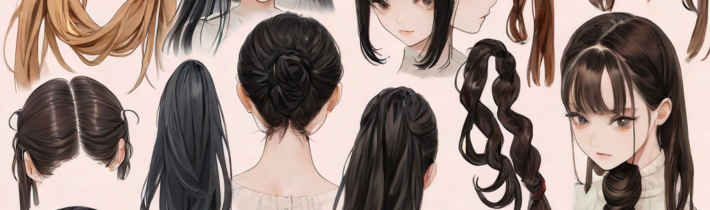
Finding the perfect hair tie might seem like a small detail, but for anyone who wears their hair up regularly, it can be the difference between a comfortable, stylish look and a frustrating hair day filled with breakage, headaches, and constant readjustments. The right hair tie protects your strands, supports your style, and feels comfortable all day long. This comprehensive guide will walk you through the best hair ties for every hair type and hairstyle, from fine and straight to thick, curly, and textured hair.
Why Your Hair Tie Choice Matters More Than You Think
It’s easy to grab whatever elastic is lying around, but not all hair ties are created equal. The wrong type can cause significant damage through a mechanism called “mechanical stress.” This occurs when hair is pulled too tightly against a rigid band, leading to cuticle damage, breakage, and even a condition known as traction alopecia over time. A good hair tie should secure your hair without excessive tension, minimizing friction and snagging. It should also be durable enough for its purpose but gentle on your hair’s structure. Considering your hair’s texture, thickness, and the specific style you’re creating is the first step to making an informed choice that benefits both your look and your hair’s health.
For Fine, Thin, or Straight Hair: Grip Without Slip
Fine or thin hair often struggles to hold a style because standard elastics slip right out. The key here is to find ties that offer grip and texture without being so tight they snap delicate strands. Look for ties made from materials like silicone-dotted fabric or those with a velvet or flocked coating. These materials increase friction against the hair, helping the tie stay in place. Coiled telephone cord-style elastics (often made from plastic or silicone) are also excellent, as they grip individual hairs along the coil. Avoid thick, heavy elastics meant for thick hair, as they can be too bulky and slip off. When tying, create a looser, lower ponytail or bun to reduce tension on the scalp and hair follicles.
Top Picks: Silicone-gripped fabric scrunchies, thin velvet hair ties, and small-diameter coiled “telephone” elastics. Brands like Slip and Kitsch offer great options designed for finer hair.
For Thick, Coarse, or Heavy Hair: Strength and Expansion
Thick hair needs a hair tie with serious holding power and the ability to expand without losing elasticity. Standard thin elastics will either snap or dig into the hair, causing painful pressure points. Thick, fabric-wrapped elastics are a classic and reliable choice, as the fabric distributes pressure. Extra-large scrunchies made from strong, elasticated fabric can contain large buns and ponytails comfortably. Spiral or knotless hair ties are particularly beneficial for thick hair; they wrap multiple times without creating a single tight knot, reducing breakage. Look for ties specifically labeled for thick or heavy hair, and ensure they are made from high-quality, durable elastic that won’t wear out after a few uses.
Top Picks: Thick, seamless fabric elastics (like Invisibobble Power Ties), oversized scrunchies, and strong spiral ties. The goal is secure hold without the “ponytail headache.”
For Curly and Textured Hair: Snag-Free and Gentle
Curly, coily, and textured hair is especially prone to breakage and snagging from traditional elastics with metal clasps or seams. The priority must be a completely seamless, smooth design that won’t catch on fragile curl patterns. Silky scrunchies are a fantastic option, as the smooth fabric glides over curls. Spiral hair ties (the classic “telephone cord” style) are arguably the best invention for curly hair, as they are seamless, expandable, and grip without tangling. Always avoid any tie with a metal clip or button. When putting up curly hair, it’s best to do so when the hair is slightly damp or well-moisturized to increase elasticity and reduce frizz, using a gentle, loose gathering motion.
Top Picks: Seamless spiral elastics, satin or silk scrunchies, and extra-soft, wide fabric bands. Many curly-haired individuals swear by brands like Invisibobble for their gentle hold.
For Sensitive Scalps and Avoiding Headaches
If you frequently experience headaches from ponytails or find your scalp is tender, your hair tie is likely the culprit. The solution involves reducing point pressure. Wide-band hair ties or scrunchies distribute tension over a larger area of hair, rather than concentrating it on a thin line. Scrunchies, in particular, are excellent for this. Also, opt for softer materials like velvet, silk, or soft cotton over harsh elastic. The technique is equally important: place your ponytail or bun lower on your head (not at the crown) and avoid pulling hair extremely tight. Using two softer ties with less tension is better than one brutally tight one.
Top Picks: Wide, soft fabric headbands used as ties, extra-puffy scrunchies, and hair ties specifically marketed as “ouchless” or for sensitive scalps.
Scrunchies: The Comeback Kid for Style and Protection
Scrunchies are far more than a nostalgic trend; they are a functional protective tool. The abundant fabric encircling the core elastic completely prevents the elastic from directly contacting and damaging the hair cuticle. This makes them ideal for all hair types, especially for sleeping, as they prevent breakage and creases. They come in countless fabrics—satin and silk are best for reducing friction and frizz, while cotton and velvet offer more grip. Use a large, firm scrunchie for high buns on thick hair, and a small, silky one for a loose, low pony on fine or curly hair to avoid slip.
Spiral and Coiled Hair Ties: The Tangle-Free Workhorse
These innovative ties, often made from a soft plastic or thermoplastic elastomer coil, have revolutionized hair care. Their primary advantage is that they are completely seamless and knotless. They grip the hair along the entire length of the coil, eliminating a single pressure point. They are exceptionally gentle, reduce breakage dramatically, and don’t leave a crimp or kink in the hair when removed. They work wonderfully for curly, straight, thin, and thick hair, though those with very heavy hair may need a “power” spiral version. Their stretch also means one size can fit many different hairstyles and hair volumes.
Fabric-Wrapped Elastics: The Reliable Standard
The classic fabric-wrapped elastic is a staple for a reason. The fabric layer provides friction for hold and protects hair from the harsh rubber core better than a bare elastic. However, quality varies greatly. Look for ties where the fabric is sewn seamlessly without a bulky knot or a metal clasp, which is a major snag hazard. These ties are great for medium-thickness hair and for styles that need a clean, polished look without the bulk of a scrunchie. They are less ideal for very fine hair (may slip) or very thick hair (may be too tight or snap).
Choosing by Hairstyle: From Workouts to Weddings
High Ponytail & Athletic Styles: You need strong, non-slip hold. A thick, seamless fabric elastic or a durable spiral tie is best. Avoid scrunchies for high-impact activity as they can be less secure.
Loose Bun or Braid: Prioritize gentleness. A silk scrunchie or a loose spiral tie is perfect, providing hold without tension or creases.
Sleek, Polished Look: A thin, color-matched fabric-wrapped elastic or a small, discreet spiral tie gives a clean finish without bulk.
Sleeping/Bedtime: This is non-negotiable—use only a satin or silk scrunchie or a bonnet. The smooth fabric minimizes friction, prevents breakage, and preserves hairstyles.
Hair Tie Care and When to Let Go
Hair ties lose their elasticity and become stretched out over time. A worn-out tie will require you to wrap it more times, creating more tension and increasing the risk of breakage. Regularly check your ties: if it no longer snaps back readily to its original size, it’s time to retire it. Fabric ties should be washed occasionally (in a lingerie bag) to remove product buildup. Never store them stretched around a doorknob or wrist for long periods, as this degrades the elastic. Keep them in a small pouch or container.
Material Science: What Your Hair Tie is Really Made Of
Understanding the composition of hair ties reveals why they perform so differently. At the core of most elastics lies latex rubber, natural rubber, or synthetic thermoplastic elastomers (TPE). Latex offers strong, snappy elasticity but can degrade with exposure to oils, heat, and UV light, becoming brittle and losing its rebound. Natural rubber is gentler and more durable but may cause reactions for those with latex allergies. TPE, used in many modern spiral ties, is a synthetic polymer that provides consistent stretch, memory, and is often latex-free. It resists oils from hair products better than latex, contributing to a longer lifespan. The covering material is equally critical. Polyester velour (the “velvet” coating) provides high friction for grip but can pill and wear down. Nylon or polyester satin weaves offer a smooth glide but less hold. Cotton and bamboo blends are breathable and soft but may stretch out more readily. The construction method—whether the fabric is tubular and seamless, or sewn with a seam—directly impacts snag potential. A high-quality tie harmonizes its core elasticity with a protective, durable exterior suited to its intended use.
The Art of the Perfect Wrap: Technique Over Tool
Even the best hair tie can cause damage if used incorrectly. The number of wraps is a primary culprit for tension-related breakage and headaches. A common mistake is wrapping a standard elastic three or four times to achieve hold, which creates a constricting, small-diameter knot. The correct technique is to use a hair tie with enough innate strength that it secures your hair in two wraps, or at most two and a half. This creates a wider, looser loop that distributes pressure. For those with thick hair, this might mean seeking out “mini” or “short” versions of spiral ties that are designed to wrap fewer times, or using a thicker band that doesn’t need excessive twisting. The direction of the wrap also matters. When making a ponytail, gather the hair and hold it at the desired tension with one hand. With the other, open the tie wide and slide it over the ponytail in one smooth motion, then twist and loop it—don’t use the tie itself to drag and pull the hair tighter. For buns, create the bun shape first, then secure it with the tie; don’t rely on the tightening of the tie to form the bun, as this strains the hair at the base.
Beyond the Ponytail: Specialized Ties for Complex Styles
Elaborate hairstyles demand tools beyond the basic loop. For secure, distributed hold in heavy or complex styles like large braided buns or Gibson tucks, U-pin hair ties (sometimes called “hair pins” or “bun makers”) are invaluable. These are essentially a length of elastic with metal or plastic U-shaped pins attached at both ends. You wrap the elastic around the base of your hairstyle and secure the ends with the pins, creating a 360-degree anchor point that doesn’t cinch. For individuals creating multiple ponytails (like pigtails or space buns), micro spiral ties or tiny silicone elastics offer precise, gentle hold on smaller sections without the bulk of a full-sized tie, preventing the “pineapple” effect on fine hair. Loop-and-toggle hair ties, featuring an adjustable slide, allow for customizable tension—perfect for hairstyles that need to be tightened gradually, like a braid you’re actively weaving. Meanwhile, elasticated hair nets, often used in food service or dance, provide ultimate security for very long or voluminous hair, containing every strand without any pulling at the roots when paired with an initial base tie.
The Longevity Ledger: Maximizing Your Hair Tie Investment
Hair ties are consumable items, but their lifespan can be extended dramatically with proper care. The number one rule is to never store them stretched. Hooking them around a doorknob, bedpost, or your wrist for prolonged periods permanently deforms the elastic polymer chains, leading to loss of recovery. Instead, store them loose in a small box, pouch, or dedicated container. Fabric-wrapped elastics accumulate sebum, styling product, and dust, which gums up the fibers and weakens the elastic. Hand-wash them monthly in a mild detergent, rinse thoroughly, and air-dry completely before use. For spiral TPE ties, a weekly rinse under warm water and a gentle scrub with a soft toothbrush can dislodge buildup in the grooves. Avoid exposing any hair tie to extreme heat (like a hot car dashboard) or direct sunlight for extended periods, as UV radiation accelerates the degradation of both synthetic and natural elastomers. Develop a rotation system—using the same two or three ties every day will wear them out in a matter of weeks, whereas rotating through a larger set allows the elastic to fully rest and recover between uses, potentially extending their functional life by months.
Navigating the Gray Areas: Solutions for Mixed Hair Types and Uncommon Concerns
Many people have hair that defies simple categorization—fine but dense, curly but thin, or textured with a sensitive scalp. For fine yet dense hair (where individual strands are thin but there are a lot of them), the challenge is achieving hold without slippage or breakage. A medium-width, silicone-gripped fabric tie often works best, providing surface area for grip without the crushing force of a thick band. For those with curly, thin hair, a small-diameter spiral tie used on damp, product-treated hair provides gentle definition and hold for a “pineapple” style without weighing curls down. Individuals with traction alopecia or thinning areas must prioritize width and softness above all else. A wide, seamless cotton or bamboo headband can be twisted and used as a tie, or a super-soft, extra-large scrunchie used on a very low, loose ponytail minimizes tension on compromised follicles. For people with ultra-slippery, chemically-treated hair (like relaxed or keratin-treated hair), materials with enhanced grip are non-negotiable. Ties with a dotted silicone pattern on the interior, or those made from a grippy rubber-etched fabric, can provide the necessary friction where smooth fabrics fail.
The Environmental and Ethical Consideration
The humble hair tie has an environmental footprint, primarily through material sourcing and end-of-life disposal. Most conventional elastics are a blend of synthetic polymers and are not biodegradable, contributing to microplastic pollution. Conscious consumers can seek out alternatives. Ties made from natural rubber (sustainably harvested) with organic cotton or hemp covers are fully biodegradable at the end of their life. Some brands now offer ties made from recycled materials, such as polyester fabric from plastic bottles or TPE from industrial waste. Another approach is durability—investing in a few high-quality, long-lasting ties reduces the frequency of disposal. For the DIY-inclined, making fabric scrunchies from upcycled clothing scraps is a zero-waste option. Ethically, it’s worth investigating brand practices: are materials sourced responsibly? Is manufacturing fair-trade? While a small purchase, aligning hair care accessories with broader values is becoming an increasingly relevant part of the selection process for many.
Advanced Troubleshooting: Solving Persistent Hair Tie Problems
Sometimes, standard advice isn’t enough. If your ponytail constantly slips down throughout the day, the issue may be a combination of hair type, product use, and tie choice. Slick, product-free hair will not grip. Applying a light texturizing spray or dry shampoo at the roots adds grip. Then, use a tie with a velvet or silicone-dotted interior. Technique also helps: try creating a classic ponytail, then taking a small section of hair from the underside, wrapping it around the base to conceal the tie, and securing the end with a tiny clear elastic. This “hair wrap” anchors the style. For those who experience breakage specifically at the point where the tie is fastened, even with “gentle” options, the breakage might be happening during removal. Always unwind or gently stretch a spiral tie off; never pull it straight out like a rubber band. For fabric ties, loosen the loop completely with your fingers before sliding it off. If you find ties constantly snapping, assess where they break. If it’s at the seam, the construction quality is poor. If the elastic itself snaps, you are exceeding its tensile strength and need a band with a higher weight rating, often found in brands catering to the natural hair community for protective styling.
FAQ: Your Hair Tie Questions Answered
Q: Do certain hair ties really prevent breakage?
A: Yes. Ties that minimize tension points and friction—like spiral ties, scrunchies, and seamless fabric elastics—significantly reduce mechanical stress on the hair shaft compared to traditional elastic bands with metal clasps, which can saw through hair.
Q: How can I put my hair up without leaving a dent or crease?
A: Use spiral/coiled hair ties, as they are designed not to kink hair. Also, avoid tight ponytails on dry hair. If a crease does form, lightly mist the area with water and gently smooth it down.
Q: What is the absolute best hair tie for sleeping?
A: A satin or silk scrunchie is the top recommendation. The smooth fabric creates minimal friction, and the soft, distributed hold prevents breakage and tangles. A satin bonnet or pillowcase is an even more protective alternative.
Q: My hair tie always snaps. What should I look for?
A: This typically means you need a stronger tie designed for thicker or heavier hair. Look for “power,” “strong hold,” or “for thick hair” labels, and choose ties with a thicker core or made from more durable materials like thermoplastic elastomer.
Q: Are expensive hair ties worth it?
A: Often, yes. While you don’t need to spend a fortune, higher-quality ties from reputable brands typically use better elastic that lasts longer, more gentle fabrics, and smarter designs (like seamless construction) that genuinely protect hair. They can be a worthwhile investment to prevent hair damage.
Ultimately, the best hair tie is one that secures your desired style while treating your hair with kindness. By matching the tool to your hair’s unique needs, you can enjoy effortless style and contribute to the long-term health and strength of your hair. Start by assessing your primary hair type and most-worn style, and try one of the recommended options—your hair will thank you.
Related posts:
 Easy Summer Updos for Every Hair Type
 Zoe Kravitz’s Coconut Oil Hair Care Secret
 The Half-Ponytail Updo Celebrities Can’t Stop Wearing This Season
 Blow Drying Hair Without Damage: Expert Tips
 The Return of Silk Scrunchies
 Ariana Grande’s Hair Savior: Why Lavender Coconut Oil Is Her Secret Weapon
 Thicker Ponytail Tricks
 Silk Hair Ties: Gentle on Hair, Tough on Tangles