
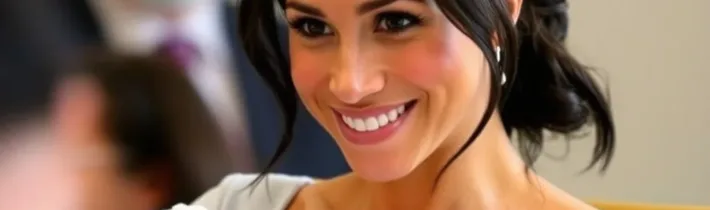
The birth of a royal baby has historically been a matter of state, a moment where the private lives of the monarchy intersect with the public’s fascination with continuity and tradition. However, when Meghan Markle and Prince Harry welcomed their first child, Archie Harrison Mountbatten-Windsor, the event became more than just a celebration; it became a flashpoint for a heated debate over privacy, tradition, and the evolving role of the modern royal. The drama surrounding the birth announcement and the choice of hospital wasn’t merely about where a baby was born, but about the fundamental shift in how the Duke and Duchess of Sussex intended to navigate their roles within the British Royal Family.
For decades, the public had grown accustomed to a specific script following a royal birth. This script, perfected by Princess Diana and later by Catherine, the Princess of Wales, involved a standardized sequence of events: the admission to a specific hospital, a formal announcement on an easel at Buckingham Palace, and the iconic “doorstep photo” within hours of delivery. When Meghan Markle opted to deviate from this established path, it sent shockwaves through the British media landscape, sparking a conversation that lasted far longer than the labor itself. Understanding why this choice made such significant headlines requires a look at the history of royal births, the logistics of the Portland Hospital, and the psychological pressure placed on women in the public eye.
The Weight of the Lindo Wing Tradition
To understand the drama of Meghan’s choice, one must first understand the weight of the tradition she was stepping away from. The Lindo Wing at St. Mary’s Hospital in Paddington had become the unofficial birthplace of the modern British monarchy. Princess Anne broke the tradition of home births at the palace by delivering her children there, but it was Princess Diana who truly cemented the Lindo Wing’s place in the public consciousness. The images of Diana, and later Kate Middleton, standing on the steps of the hospital in carefully chosen dresses, holding their newborns for a global audience, became symbols of royal accessibility.
For the media, the Lindo Wing represented a controlled environment where they were guaranteed the “money shot.” Photographers would camp out for weeks, claiming their spots on the pavement, creating a circus-like atmosphere that the Sussexes reportedly found daunting. The expectation was that a royal mother should be ready to present herself to the world almost immediately after one of the most physically and emotionally taxing experiences of her life. By choosing not to participate in this specific tradition, Meghan wasn’t just choosing a different hospital; she was rejecting a public performance that had become a prerequisite for royal motherhood.
The Lindo Wing tradition also carried a certain level of class and institutional expectation. It was the “safe” choice, the one that signaled alignment with the established order. Deviating from it was interpreted by some critics as an act of defiance, a signal that the Sussexes were prioritizing their personal desires over their perceived duty to the public. This tension between personal agency and public duty is at the heart of why the hospital choice became a headline-grabbing scandal.
The Portland Hospital: A Different Kind of Luxury
When it was eventually revealed that Archie had been born at the Portland Hospital in Great Portland Street, London, the media focus shifted to the nature of the facility itself. Unlike the NHS-affiliated Lindo Wing, the Portland is the UK’s only private hospital dedicated entirely to the care of women and children. It is known for its high-end amenities, often described as more of a five-star hotel than a medical facility, with a menu featuring lobster and champagne, and a reputation for catering to A-list celebrities and international royalty.
The choice of the Portland was framed by some tabloids as an example of “extravagance,” despite the fact that the Lindo Wing is also a highly expensive private facility. The Portland offered something the Lindo Wing could not: a higher degree of anonymity and a layout that allowed for a more discreet entrance and exit. For Meghan and Harry, the priority was likely the security and privacy that the Portland could provide, away from the prying eyes of the “royal pool” of photographers.
However, the narrative in the press focused on the “un-British” nature of the choice. Critics pointed out that the Portland was where celebrities like Victoria Beckham had given birth, subtly suggesting that Meghan was leaning more toward her Hollywood roots than her royal responsibilities. This characterization played into a broader, often biased narrative that Meghan was an “outsider” who didn’t respect the nuances of British institutional life. The hospital itself became a character in the drama, a symbol of the couple’s desire to do things “their way.”
The Announcement Timeline and the Media Meltdown
Perhaps the most controversial aspect of Archie’s birth was not the location, but the timing and manner of the announcement. On the morning of May 6, 2019, Buckingham Palace released a statement saying that the Duchess of Sussex had gone into labor. However, it was later revealed that Archie had actually been born hours earlier, at 5:26 AM. By the time the public was told Meghan was in labor, she was already back at Frogmore Cottage with her newborn son.
This discrepancy led to a sense of betrayal among the British press. The “royal rota”—the system by which a small group of journalists is given access to royal events to share with the wider media—felt they had been intentionally misled. The delay was seen as a breach of the unspoken contract between the monarchy and the media. Journalists argued that because the public partially funds the monarchy, they have a right to timely and accurate information regarding major milestones.
From the Sussexes’ perspective, the delay was a necessary measure to ensure they could return home safely and enjoy a few hours of peace before the global media storm began. They wanted to celebrate the birth as a family before becoming a public spectacle. This clash of priorities—the media’s demand for real-time access versus the parents’ desire for a private first moment—highlighted the growing rift between the couple and the traditional royal press corps. The “drama” was less about the facts of the birth and more about who controlled the narrative.
Privacy vs. Public Expectation: The Modern Royal Dilemma
The controversy surrounding Meghan Markle’s birth plan serves as a case study in the modern royal dilemma: how much of one’s private life must be sacrificed for the sake of the institution? For centuries, royal births were public affairs, sometimes even attended by high-ranking officials to verify the legitimacy of the heir. While we have moved past such intrusive practices, the expectation of transparency remains high.
Meghan’s desire for privacy was often framed by her detractors as “secrecy.” This linguistic shift is significant. Privacy is generally seen as a right, while secrecy implies something hidden or deceptive. By labeling her birth plan as “secretive,” critics were able to justify their outrage. However, supporters of the Duchess argued that no woman, regardless of her title, should be forced to perform for the cameras immediately after giving birth. They pointed out the physical toll of labor and the importance of the “golden hour” for bonding between mother and child.
This debate also touched on the racial and cultural dynamics at play. As a woman of color and an American, Meghan was already under intense scrutiny. Her refusal to adhere to the Lindo Wing tradition was seen by some as a failure to “know her place” within the hierarchy. The drama was, in many ways, a proxy for larger conversations about who gets to define what it means to be “royal” in the 21st century. The Sussexes were attempting to modernize the role by setting boundaries, but the institution and its media satellites were not yet ready to accept those boundaries.
Security Concerns and the Logistics of a Royal Birth
Beyond the philosophical debate over privacy, there were very real logistical and security concerns that influenced the choice of the Portland Hospital. The Lindo Wing, while prestigious, is located in a busy part of London. A royal birth there requires a massive security presence, road closures, and significant police resources. For a couple already concerned about their safety and the intrusive nature of the paparazzi, the Lindo Wing presented a security nightmare.
The Portland Hospital offered a more controlled environment. Its entrance and exit points were easier to secure, and the facility was better equipped to handle high-profile patients who required a low profile. The Sussexes’ security team likely played a major role in the decision-making process. Moving a laboring woman through a crowd of photographers is not only stressful but potentially dangerous.
Furthermore, the couple’s move to Frogmore Cottage in Windsor made the logistics even more complex. While Windsor has its own hospitals, the Portland was chosen for its specific expertise and the couple’s trust in the medical staff there. The headlines often ignored these practical considerations in favor of more sensationalist stories about “breaking tradition” or “demanding luxury.” In reality, the choice was likely a pragmatic one aimed at ensuring the safest and most peaceful delivery possible.
The Impact on Media Relations and the “Megxit” Prelude
In hindsight, the birth announcement drama was a significant precursor to the Duke and Duchess’s eventual decision to step back as senior working royals. The vitriol directed at Meghan for her birth choices served as a clear indication that the relationship between the Sussexes and the British tabloids was irreparably damaged. The couple felt that no matter what they did, the media would find a way to cast it in a negative light.
The birth of Archie was supposed to be a unifying moment for the country, but instead, it became another battleground. The Sussexes’ decision to bypass the royal rota for the first photos of Archie—opting instead to invite a single camera and a photographer to a controlled photocall at Windsor Castle two days later—was the final straw for many journalists. This move signaled that Harry and Meghan were no longer willing to play by the rules of the “royal pack.”
This period marked a shift in the couple’s communication strategy. They began to use their own social media platforms to share news directly with the public, cutting out the traditional media intermediaries. This move toward digital independence was a direct response to the “drama” of the birth announcement. It was an attempt to reclaim their narrative, a theme that would define their lives in the years following their move to California and the birth of their second child, Lilibet.
Navigating Your Own Birth Plan: Lessons in Boundaries
While most of us aren’t dealing with the global media, the drama surrounding Meghan Markle’s birth plan offers valuable lessons for any expectant parent. The core of the issue was the setting of boundaries during a vulnerable time. Whether you are a royal or a private citizen, you have the right to determine who is present at your birth and how the news is shared.
1. Define Your Priorities Early: Just as the Sussexes prioritized privacy, you should decide what matters most to you. Is it the presence of family? A specific medical intervention? A period of total seclusion? Write these down and communicate them clearly to your support team.
2. Communicate Boundaries with Family and Friends: One of the biggest sources of “birth drama” is the expectation of others. Be clear about when you will be taking visitors and how you want the news shared on social media. You might say, “We want to take the first 24 hours to bond as a family before we share the news or have visitors.”
3. Choose Your “Safe Space”: Whether it’s a large hospital, a birthing center, or home, your environment significantly impacts your labor experience. Don’t feel pressured to choose a facility based on others’ expectations. Research your options and choose the one that makes you feel most secure.
4. Prepare for Pushback: When you set boundaries, people may feel excluded or offended. It is helpful to remember that your birth is not a public event or a family reunion; it is a major medical and life event. Stay firm in your choices, knowing they are in the best interest of you and your baby.
5. Limit Social Media Input: The “announcement drama” for non-royals often happens on Instagram or Facebook. Consider waiting to post until you feel physically and emotionally ready. You are under no obligation to provide real-time updates to your social circle.
The Evolution: Lilibet’s Birth in California
The stark difference between the birth of Archie in London and the birth of Lilibet in Santa Barbara, California, illustrates the Sussexes’ journey toward autonomy. Lilibet Diana Mountbatten-Windsor was born at Santa Barbara Cottage Hospital on June 4, 2021. This time, there was no royal rota, no Buckingham Palace easel, and no immediate pressure to release a photo. The announcement was made via the couple’s Archewell website two days after the birth.
This second birth was remarkably free of the “drama” that plagued the first, largely because the couple had removed themselves from the system that demanded their participation. By choosing a local hospital in their new home, they were able to experience the birth on their own terms. The contrast highlighted that the “headlines” were not an inevitable part of royal life, but a byproduct of a specific set of institutional expectations that the couple eventually chose to leave behind.
The legacy of Meghan Markle’s birth announcement drama remains a significant moment in royal history. It challenged the notion of the “public property” of royal bodies and paved the way for a more nuanced conversation about the rights of famous parents. While it caused a temporary media firestorm, it also empowered a new generation of parents to consider their own boundaries and prioritize their well-being over the expectations of others.
The Home Birth Ambition and the Frogmore Pivot
While the existing narrative focuses heavily on the shift from the Lindo Wing to the Portland Hospital, a significant and often overlooked layer of the drama was the initial plan for a home birth at Frogmore Cottage. Reports surfaced months before Archie’s arrival that Meghan Markle intended to follow in the footsteps of Queen Elizabeth II, who delivered all four of her children at home. For the Sussexes, a home birth wasn’t just a nod to an older royal tradition; it was the ultimate solution to the security and privacy issues that plagued the Lindo Wing. By birthing within the gated security of the Home Park in Windsor, they could have bypassed the media circus entirely.
However, the transition from a planned home birth to an emergency-style dash to the Portland Hospital added a layer of frantic energy to the headlines. Medical professionals often advise against home births for first-time mothers who are over the age of 35—as Meghan was—due to the increased risk of complications that require immediate hospital intervention. When the Duchess went past her due date by a full week, the medical necessity for a hospital setting became paramount. This pivot was kept so quiet that even high-ranking palace staff were reportedly unaware of the change in plans until the couple was already en route to London. This internal secrecy created a vacuum of information that the press eventually filled with speculation, further straining the relationship between the couple and the palace communications team.
The logistics of this “secret” dash were complex. To avoid detection by the photographers stationed at the gates of Windsor, the couple reportedly utilized a different exit and a non-descript vehicle, escorted by a minimal security detail. This level of tactical planning for a medical event was unprecedented in modern royal history. For the Sussexes, it was a successful extraction; for the media, it was a deceptive maneuver that signaled the end of the “open-door” policy the press felt they were owed.
The Battle of the Doctors: Royal Physicians vs. Personal Autonomy
A major point of contention behind the scenes involved the medical team tasked with the delivery. Traditionally, the Queen’s surgeons-gynaecologists—at the time, Alan Farthing and Guy Thorpe-Beeston—oversee royal births. These are world-class specialists who have attended the births of all three of the Princess of Wales’s children. However, reports emerged that Meghan Markle preferred to appoint her own female-led medical team, viewing the traditional royal doctors as “men in suits” who represented a patriarchal institutional oversight she wished to avoid.
This choice was more than a personal preference; it was a statement on bodily autonomy. In the context of the British Monarchy, the birth of an heir (even one further down the line of succession) is treated as a state event, and the involvement of the Queen’s physicians is a safeguard for the institution. By insisting on her own doctors, Meghan challenged the idea that her pregnancy was a matter of state. This created a friction point with the palace establishment, who felt that the traditional doctors should at least be present in the room, even if they weren’t leading the delivery. In the end, a compromise was reached where the royal doctors were involved in a consultative capacity, but the primary care was managed by Meghan’s chosen team.
This tension filtered out into the tabloids as a narrative of Meghan being “difficult” or “demanding.” Yet, from a modern obstetric perspective, a woman’s right to choose her medical providers is a fundamental tenet of care. The “drama” here was the collision between 21st-century patient rights and 19th-century institutional expectations. For Meghan, having a team she trusted was essential for a positive birth experience; for the institution, it was a break in a chain of command that had remained unbroken for generations.
Decoding the Royal Rota: The “Cartel” and the Sussex Rebellion
To understand why the media reacted with such vitriol, one must understand the mechanics of the “Royal Rota.” This is a system established over 40 years ago that grants a small pool of British newspapers—including several tabloids—exclusive access to royal engagements. In exchange for this access, the newspapers provide the photos and reports to the rest of the world’s media. Prince Harry has famously described this system as a “cartel,” arguing that it gives a handful of editors a monopoly over the lives of the royal family while simultaneously funding the very publications that frequently attacked his wife.
The Archie birth announcement was the first time a senior royal couple had successfully dismantled the Rota’s power during a major event. By refusing to give the Rota the “hospital steps” photo, the Sussexes deprived the tabloids of millions of dollars in syndication revenue. The anger from the press was not just about “tradition”; it was about the loss of a massive commercial opportunity. When the couple instead chose to release a single photo through a hand-picked reporter and a freelance photographer days later, they essentially broke the Rota’s business model.
This rebellion had long-term consequences. The journalists who were “snubbed” at the Portland Hospital were the same ones who would later write the most critical coverage of the couple’s departure from the UK. The birth of Archie wasn’t just a personal milestone; it was the moment the Sussexes declared war on the traditional media structure of the British Monarchy. It proved that a royal could control their own image via social media, bypassing the gatekeepers who had long held the keys to the public’s perception of the family.
The Physicality of the “Bounce Back”: Medical Risks of the Doorstep Photo
While the public sees a glamorous mother in a blowout and heels just hours after birth, the medical reality of the Lindo Wing tradition is far more grueling. The pressure on royal women to perform this “miraculous recovery” has been criticized by maternal health advocates as setting an impossible standard for new mothers. For Meghan, who has been vocal about her struggles with mental health and the pressures of public life, the idea of masking the physical trauma of labor for a global audience was reportedly a significant source of anxiety.
Medical experts point out that the first 24 hours postpartum are critical for monitoring complications such as hemorrhaging, blood clots (thromboembolism), and the onset of postpartum preeclampsia. Forcing a woman to stand, walk, and smile for cameras during this window is not just uncomfortable; it can be medically ill-advised. Furthermore, the “golden hour”—the first hour after birth intended for skin-to-skin contact and breastfeeding initiation—is often interrupted by the logistical requirements of hair, makeup, and wardrobe for a royal debut. By choosing the Portland and a delayed announcement, Meghan prioritized the physiological needs of the fourth trimester over the aesthetic demands of the monarchy.
The drama in the headlines often characterized this as Meghan being “too Hollywood” or “vain,” but a deeper analysis suggests it was a rejection of a performative version of motherhood. By not appearing on those steps, she refused to validate the “bounce-back” culture that suggests a woman’s value is tied to how quickly she can erase the evidence of childbirth. This move resonated deeply with a younger generation of parents who value authenticity over polished artifice, yet it alienated a traditionalist base that viewed the performance as a necessary part of the “job.”
International Comparisons: How Other Monarchies Manage Privacy
The British media often presents the Lindo Wing tradition as the only way for a monarchy to handle a birth, but a look at other European royal families reveals that the UK is actually an outlier in its level of intrusiveness. In Sweden, for example, Princess Madeleine and Crown Princess Victoria have frequently shared news of their children’s births via social media with far less domestic controversy. The Swedish Royal Court typically releases a statement and a single photograph taken by the father, allowing the family weeks of private bonding time before a formal public appearance.
Similarly, in the Netherlands, King Willem-Alexander and Queen Máxima have historically maintained a “media code” that protects the privacy of their children in exchange for scheduled photo sessions. This agreement is legally enforceable, a concept that is virtually non-existent in the UK due to the powerful lobby of the British press. The drama surrounding Meghan’s choice was, in many ways, a uniquely British phenomenon fueled by the specific, symbiotic, and often toxic relationship between the House of Windsor and the Fleet Street tabloids.
By looking at these international precedents, it becomes clear that the Sussexes weren’t asking for something radical or “un-royal”; they were asking for the same level of dignity and privacy afforded to their peers in other constitutional monarchies. The headlines that framed Meghan as “defiant” ignored the fact that the British model of royal birth is a relatively modern invention—largely created in the 1980s—and is not a historical requirement of the crown. This global context highlights how the UK media used “tradition” as a weapon to maintain their own access and profit margins.
The Instagram Revolution: Bypassing the Palace Gates
The use of the @SussexRoyal Instagram account to announce Archie’s birth was a pivot point in the history of royal communications. Traditionally, the news of a royal birth is first posted on a wooden easel behind the gates of Buckingham Palace. While this still happened for Archie, it occurred *after* the digital announcement had already reached millions of followers worldwide. This was a calculated move to ensure that the couple’s own words were the first ones the public heard, rather than a filtered version through a palace spokesperson or a tabloid journalist.
This digital-first strategy allowed the Sussexes to control the tone of the announcement. The use of a simple blue graphic with the words “It’s a Boy!” felt modern, accessible, and direct. However, this move was deeply unpopular within the palace walls. The “Old Guard” viewed the use of social media as “common” and felt it devalued the gravitas of a royal birth. There were also technical glitches; the official royal website initially listed Archie as the son of the Duke and Duchess of Cambridge (William and Catherine), a mistake that was quickly corrected but served as an example of the internal chaos the Sussexes’ independent streak caused within the palace’s digital infrastructure.
The “drama” here was the death of the middleman. By going directly to the public, Harry and Meghan proved they didn’t need the traditional media or the palace PR machine to build a connection with their audience. This independence was a terrifying prospect for the institutions that relied on being the exclusive gatekeepers of royal news. The birth of Archie wasn’t just a family event; it was a successful beta test for the couple’s eventual full-scale exit from the royal system, proving they could command global attention on their own terms, using only a smartphone and a social media handle.
Managing the “Information Vacuum”: A Lesson for High-Profile Families
One of the most significant takeaways from the Archie birth drama is the danger of the “information vacuum.” Because the Sussexes were so intent on privacy, they left a gap in the narrative that was quickly filled by hostile actors. In the absence of real-time updates, the media began to scrutinize every detail of the birth certificate (which was released weeks later), leading to bizarre conspiracies about whether the baby was born via surrogate or if the birth happened on a different day entirely. These theories, while baseless, gained traction because the official communication was so sparse.
For any high-profile family—or even a private citizen dealing with an overbearing social circle—the lesson is that privacy and silence are not the same thing. To maintain boundaries effectively, it is often necessary to provide a controlled stream of information that satisfies curiosity without compromising safety. The Sussexes’ approach was a “total blackout” until the very end, which created a high-pressure environment that exploded the moment the news finally broke. In contrast, for the birth of Lilibet, they provided a clear, concise statement after the fact that addressed the basic details (name, weight, health) while firmly stating their intention to remain private.
Frequently Asked Questions
Why was the Lindo Wing considered the ‘standard’ for royal births?
The Lindo Wing at St. Mary’s Hospital became the standard primarily due to tradition and proximity to the royal residences in London. Princess Anne was the first to give birth there, followed by Princess Diana, who delivered both Prince William and Prince Harry at the facility. Catherine, the Princess of Wales, followed suit for all three of her children. Over time, the hospital became synonymous with the “royal baby debut,” where the world expected to see the first glimpse of the newborn on the hospital steps. It offered a mix of high-end private care and a well-established protocol for managing the intense global media presence.
What was the main reason the media was upset with Meghan’s birth plan?
The media’s frustration stemmed from a perceived lack of transparency and a break from the “royal rota” system. Specifically, the delay in announcing the birth and the misleading information about when Meghan went into labor were seen as intentional efforts to bypass the press. Journalists argued that the public had a right to know about the birth of a senior royal in real-time. This conflict was exacerbated by the couple’s decision to forgo the traditional hospital-step photo, which denied the media the highly valuable first images of the baby, leading to claims that the couple was being “too secretive.”
Is the Portland Hospital more expensive than the Lindo Wing?
Both facilities are highly expensive private options. While the Portland Hospital is famous for its luxury “hotel-style” amenities, including gourmet meals and private suites, the Lindo Wing is also a premium private facility with significant costs. The primary difference was not necessarily the price tag, but the branding. The Portland is a purely private hospital known for celebrity clientele, whereas the Lindo Wing is a private wing within an NHS hospital. This distinction allowed critics to frame the choice of the Portland as “extravagant” or “celebrity-focused” compared to the more “traditional” royal choice.
How did the Sussexes change the way royal births are announced?
The Sussexes fundamentally changed the protocol by prioritizing digital platforms and personal control over traditional media channels. For Archie’s birth, they used their Instagram account to share the news, and for Lilibet’s birth, they used their Archewell website. By delaying announcements until they were safely home and choosing when and how to release photos, they challenged the long-standing expectation that the media should have immediate access. This shift forced the public and the institution to confront the idea that even royals are entitled to a degree of privacy during major life events.
What can expectant parents learn from the Meghan Markle birth drama?
The most significant takeaway for expectant parents is the importance of setting and maintaining boundaries. The drama highlights that even under intense pressure, it is possible to prioritize your own comfort and the safety of your family. It encourages parents to create a birth plan that reflects their values, whether that means keeping the news private for a few days, limiting visitors, or choosing a birth location that feels secure. It serves as a reminder that you are the primary advocate for your birth experience, and you have the right to manage your transition into parenthood on your own terms.
Related posts:
 Meghan and Harry: Relationship Goals
 One Woman’s Brave Choice to Give Birth at Home
 The Wing Rights Investigation
 All-Black Birth Team Experience
 Portland: America’s Kombucha Capital
 Royal Revelations: What Kate and Meghan Are Teaching Us About Mental Health
 Harry and Meghan’s Banana Wedding Cake
 Inside Royal Wedding Cake Details