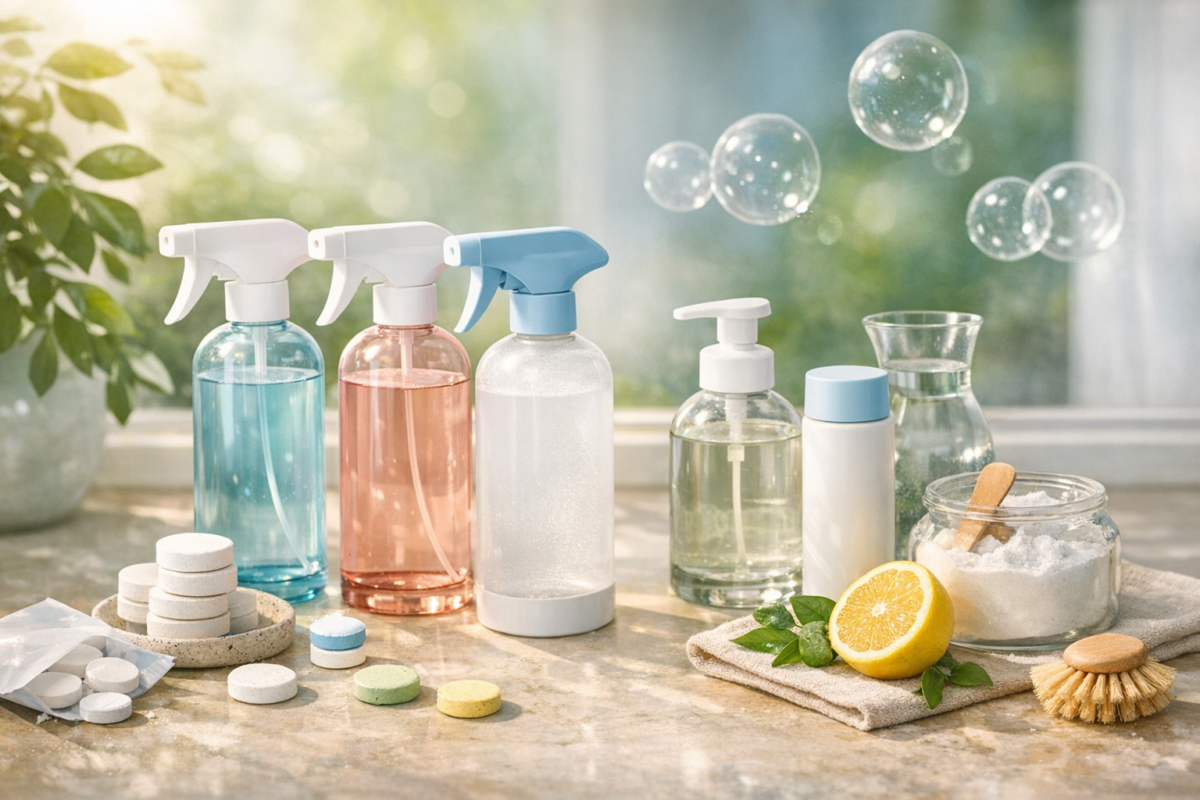
For decades, the ritual of cleaning our homes has been associated with a specific, pungent scent: the sharp sting of bleach, the chemical haze of ammonia, and the artificial fragrance of “spring meadows” that often masks a cocktail of volatile organic compounds (VOCs). While these products promised sterility and cleanliness, they came with a hidden cost. Every bottle of glass cleaner or multi-surface spray contributed to a mounting crisis of single-use plastic pollution, and every spray released particles into our indoor air that could irritate the lungs and disrupt endocrine systems. For the conscious consumer, the dilemma was clear: do we prioritize a deep clean or the health of our planet and families?
Enter Blueland, a company that has positioned itself not just as a brand, but as a catalyst for a non-toxic cleaning revolution. By reimagining the very architecture of how we buy and use cleaning supplies, Blueland has challenged the industry standard of shipping water in plastic bottles. Their approach—utilizing concentrated tablets that dissolve in water within reusable “forever bottles”—addresses the environmental impact of waste while removing the harsh chemicals that have long dominated the cleaning aisle. This shift represents a move toward a more compassionate way of living, where the act of caring for our homes no longer comes at the expense of the earth.
The Environmental Impact of Traditional Cleaning Products
To understand why the Blueland model is revolutionary, we must first examine the systemic failures of the traditional cleaning industry. Most conventional cleaning products are composed of approximately 90% water. From a logistics perspective, this is incredibly inefficient. Millions of gallons of water are bottled, packaged in plastic, and shipped across continents via carbon-heavy transport systems. We are essentially paying for the transport of water that we already have in our own taps, all while contributing to the proliferation of polyethylene terephthalate (PET) and high-density polyethylene (HDPE) plastics.
The environmental toll extends beyond the bottle. Many traditional cleaners contain phosphates and nitrates that, when washed down the drain, enter our waterways. These chemicals contribute to eutrophication—a process where excess nutrients cause algae blooms that deplete oxygen in the water, leading to “dead zones” where aquatic life cannot survive. Furthermore, the production of these chemical surfactants often relies on petroleum-based precursors, tying the cleaning industry directly to the fossil fuel economy. By shifting the focus from a liquid-first model to a tablet-first model, Blueland effectively eliminates the need for single-use plastic bottles and drastically reduces the carbon footprint associated with shipping.
How Blueland Works: The Refillable Model
The brilliance of Blueland lies in its simplicity. The system is designed to remove friction from the transition to sustainable living. It begins with the “forever bottle,” a durable, aesthetically pleasing container made from shatter-resistant materials. Once the user has the bottle, the process of creating a cleaning solution is reduced to three simple steps: Drop, Fill, and Shake.
The user drops a concentrated cleaning tablet into the bottle, fills it with warm tap water, and shakes it until the tablet fully dissolves. This transformation from a solid to a liquid happens quickly, creating a full bottle of cleaner in seconds. This model fundamentally changes the consumer’s relationship with waste. Instead of discarding a plastic bottle every few weeks, the consumer only needs to replace the tablet. The tablets themselves arrive in compostable packaging, ensuring that the entire lifecycle of the product—from production to disposal—is designed with the planet in mind.
This system also allows for a more organized home. Because the tablets are small and compact, they can be stored in a small tin or drawer, eliminating the cluttered “cleaning cupboard” filled with half-empty, bulky plastic jugs. It is a minimalist approach to home maintenance that prioritizes function and sustainability over the convenience of disposable culture.
Understanding the Ingredients: What Makes it Non-Toxic?
The term “non-toxic” is often thrown around in marketing, a phenomenon known as greenwashing. However, Blueland distinguishes itself through transparency and a commitment to avoiding the most problematic chemicals found in household cleaners. To understand the “revolution,” one must look at what is missing from their formulas.
Most conventional cleaners rely on phthalates for fragrance, parabens as preservatives, and ammonia or bleach for disinfecting. Phthalates are known endocrine disruptors that can interfere with hormonal balance, while ammonia fumes can be irritating to the respiratory system, especially for those with asthma or allergies. Blueland removes these ingredients entirely. Instead, they utilize plant-derived surfactants and minerals that are effective yet gentle.
For example, their formulas often leverage citric acid, which is naturally occurring in citrus fruits and acts as a powerful descaler and pH adjuster. Baking soda is frequently used for its deodorizing and mild abrasive properties. By utilizing these biodegradable ingredients, Blueland ensures that the runoff from their products does not poison the soil or water. The fragrances are derived from essential oils and safe synthetic alternatives, avoiding the complex, undisclosed chemical mixtures that often trigger migraines or skin sensitivities in many users. This shift creates a safer indoor environment for toddlers, pets, and anyone sensitive to harsh chemical odors.
Comparing Performance: Do Tablet Cleaners Actually Work?
A common skepticism regarding eco-friendly cleaners is the “efficacy gap”—the belief that if a product doesn’t smell like bleach or sting the eyes, it isn’t actually cleaning. However, cleaning is fundamentally a chemical reaction. The goal is to break the bond between the dirt (the solute) and the surface (the substrate). Blueland’s tablets are engineered to maintain the necessary pH levels and surfactant concentrations to achieve this.
In practical application, the Multi-Surface cleaner performs exceptionally well on countertops, dining tables, and sealed hardwood, cutting through grease and dust without leaving a sticky residue. The Glass Cleaner is specifically formulated to evaporate quickly, preventing the streaks that often plague homemade vinegar solutions (which can sometimes leave a cloudy film if not diluted perfectly). The Bathroom Cleaner targets soap scum and hard water deposits using acidic agents that break down mineral buildup effectively.
While it is true that an industrial-strength bleach solution might be necessary for a biohazard cleanup, for 95% of daily household tasks, the Blueland system is more than sufficient. The key is understanding that “clean” does not have to mean “sterile.” By focusing on removing grime, bacteria, and allergens without nuking every microorganism in the home, we maintain a healthier microbial balance in our living spaces while still achieving a visually and hygienically clean result.
The Cost-Benefit Analysis: Long-Term Savings vs. Initial Investment
One of the primary barriers to adopting sustainable products is the perceived cost. At first glance, purchasing a starter kit with forever bottles may seem more expensive than buying a single bottle of a generic brand from a big-box store. However, a deeper analysis reveals a different economic story.
The initial investment covers the hardware—the bottles. Once these are in place, the recurring cost is limited to the tablets. When calculated on a per-bottle basis, the cost of a Blueland refill tablet is often comparable to, or even lower than, the cost of a new plastic bottle of a premium “green” cleaner. The value proposition extends beyond the price tag to include the “cost of waste.” When we factor in the environmental externalities—the cost of landfill management, ocean cleanup, and health impacts of chemical exposure—the refillable model is vastly more economical.
Furthermore, the subscription model offered by many sustainable brands, including Blueland, allows users to automate their refills, preventing the “panic buy” at the store where consumers often grab the most convenient (and least sustainable) option. By shifting the financial model from “buying a bottle” to “buying the active ingredient,” consumers are essentially cutting out the middleman of the plastic packaging industry.
Integrating Sustainable Cleaning into a Busy Household
Transitioning to a non-toxic home doesn’t have to happen overnight. In fact, the most sustainable way to switch is to use what you already have first. Throwing away half-full bottles of traditional cleaner just to replace them with a new system creates immediate waste, which defeats the purpose of the movement.
A practical strategy for integration is the “phase-out method.” As each of your current bottles runs dry, replace it with a Blueland forever bottle. This allows your household to adapt to the new routine without feeling overwhelmed. To make the process seamless, designate a specific “refill station” in your home—perhaps a small tray under the sink where the tablets and the water-filling instructions are kept. This makes the act of mixing a new bottle a quick, mindful habit rather than a chore.
Involving the family, especially children, can turn cleaning into an educational experience. Showing children how a small tablet transforms into a powerful cleaner is a great way to introduce concepts of chemistry and environmental stewardship. It transforms cleaning from a hidden, unpleasant task into a visible act of caring for the earth. By framing it as “protecting our home and the ocean,” you instill a sense of agency and responsibility in the next generation.
Beyond the Bottles: Blueland’s Broader Sustainability Goals
The revolution isn’t just about the product; it’s about the corporate philosophy. Blueland’s commitment to sustainability is reflected in its B Corp certification, which indicates that the company meets high standards of verified social and environmental performance, public transparency, and legal accountability. This means their mission is legally entwined with their profit motive, ensuring that sustainability isn’t just a marketing wing, but the core of the business.
Their commitment extends to the packaging of the tablets. While many companies use “recyclable” plastic that often ends up in landfills because of local facility limitations, Blueland utilizes compostable materials. This recognizes the reality that the recycling system is broken and that the only true solution is to reduce the amount of material entering the waste stream in the first place.
Moreover, the company advocates for systemic change. By proving that a refillable model is scalable and profitable, they put pressure on industry giants to innovate. When a small company disrupts the market, it forces larger corporations to reconsider their reliance on single-use plastics to avoid losing market share. In this way, every Blueland bottle in a home is a vote for a different kind of economy—one that values longevity over obsolescence and health over convenience.
The Science of Plant-Based Surfactants: How Tablet Chemistry Works
To truly appreciate the shift away from harsh chemicals, it is helpful to understand the molecular mechanism that allows a small, compressed tablet to replace a gallon of liquid cleaner. The core of Blueland’s efficacy lies in surfactants—short for surface-active agents. In traditional cleaners, these are often petroleum-derived sulfates that can be aggressive on the skin and toxic to aquatic life. Blueland utilizes plant-derived surfactants, which function through a process of emulsification.
A surfactant molecule is essentially a chemical bridge; it possesses a hydrophilic (water-loving) head and a hydrophobic (water-fearing) tail. When the tablet dissolves and you spray the solution onto a greasy countertop, the hydrophobic tails attach themselves to the oil and dirt particles, while the hydrophilic heads remain attracted to the water. As you wipe the surface, these molecules form tiny spheres called micelles, trapping the grime inside a water-soluble bubble that can be easily lifted away from the substrate. This is why plant-based cleaners can be just as effective as synthetic ones; the physics of dirt removal remains the same regardless of whether the surfactant comes from a coconut or a chemical plant.
Furthermore, the tablet form provides a stability that liquid mixtures often lack. Many DIY cleaning solutions, such as those mixing vinegar and water, can lose potency over time or cause reactions if stored incorrectly. By compressing the active ingredients into a dry tablet, Blueland ensures that the pH balance is precisely calibrated. This precision prevents the solution from being too acidic (which could etch a surface) or too alkaline (which could leave a soapy film), providing a consistent chemical profile every time a new bottle is mixed.
Mastering High-Traffic Zones: A Room-by-Room Strategy
While a multi-surface cleaner is versatile, maximizing the efficiency of a non-toxic routine requires a strategic approach to different environments. Each room in a home presents unique chemical challenges that require different applications of the Blueland system.
The Kitchen: Degreasing and Food Safety. The kitchen is the primary battleground for lipids (fats and oils). For stovetops and vent hoods where grease has polymerized into a sticky film, the “spray and wait” method is essential. Instead of scrubbing immediately, apply a generous layer of the Multi-Surface cleaner and allow it to dwell for three to five minutes. This gives the plant-based surfactants time to penetrate the lipid layer. For high-chair trays or cutting boards, the non-toxic nature of the formula provides peace of mind, as there are no caustic residues that could migrate into food.
The Bathroom: Mineral Buildup and Soap Scum. Bathrooms deal with a different chemistry: alkaline mineral deposits from hard water and fatty acids from soaps. The Bathroom Cleaner is formulated to target these specific bonds. For shower doors plagued by cloudy hard-water spots, apply the cleaner and use a non-abrasive scrubbing tool in circular motions. An edge case occurs with chrome fixtures; while the cleaner is safe, leaving it on for too long in extremely hot, humid environments can sometimes lead to spotting. The solution is a quick rinse with cool water followed by a dry polish with a microfiber cloth to prevent new minerals from settling.
Living Areas: Dust, Fingerprints, and Electronics. In the living room, the goal is often the removal of static-charged dust and skin oils from glass and polished surfaces. When using the Glass Cleaner on mirrors or windows, the key is to avoid cleaning during direct sunlight. If the solution evaporates too quickly due to heat, it can leave streaks regardless of the formula. Instead, clean during the cooler parts of the day and use a “S-pattern” wipe to ensure no dirt is redistributed back onto the clean surface.
Blueland vs. DIY: Why Formulated Tablets Trump Vinegar and Baking Soda
Many sustainability enthusiasts begin their journey with DIY solutions, primarily white vinegar and baking soda. While these are commendable first steps, there are significant chemical and practical advantages to using formulated tablets over raw household ingredients. The most prominent issue with vinegar is its high acidity (acetic acid). While excellent for removing limescale, vinegar is an acid that can slowly erode the calcium carbonate in natural stone. Using a vinegar-based DIY spray on marble or granite countertops can lead to “etching,” where the surface becomes dull and permanently damaged. Blueland’s formulas are pH-balanced to be effective yet safe for a wider array of sealed surfaces.
Another common DIY pitfall is the use of baking soda as a scrub. Because baking soda is a crystalline powder, it can act as a mild abrasive. On soft surfaces, such as acrylic bathtubs or certain plastic finishes, repeated scrubbing with baking soda can create microscopic scratches that actually trap more dirt over time, making the surface harder to clean in the long run. Blueland’s tablet-based cleaners provide the cleaning power of surfactants without the risk of mechanical abrasion.
From a practical standpoint, DIY solutions often lack the “wetting agents” found in professional formulations. A wetting agent reduces the surface tension of the water, allowing the cleaner to spread evenly across a surface rather than beading up. This means a formulated cleaner covers more area with less product and penetrates crevices more effectively than a simple vinegar-water mix. By moving from DIY to a formulated refill system, the user gains professional-grade chemistry without sacrificing the non-toxic ethos.
Tackling the “Tough Stuff”: Edge Cases and Heavy-Duty Cleaning
A common critique of eco-friendly cleaners is that they struggle with “extreme” messes. However, most heavy-duty cleaning is less about the strength of the chemical and more about the technique used. For those transitioning to Blueland, understanding how to handle edge cases is the key to a fully non-toxic home.
Burnt-on Oven Grime: For carbonized food on oven racks or stovetops, a surfactant alone may not be enough. The best approach is a two-step process. First, apply a paste of baking soda and a small amount of Blueland Multi-Surface cleaner. Let this sit for several hours to break the chemical bond of the carbon. Then, use a nylon scrub brush to lift the debris and finish with a spray of the cleaner to remove any remaining residue. This combines the mild abrasion of the soda with the emulsifying power of the surfactant.
Pet Accidents and Organic Odors: While general cleaners remove the visible stain, organic odors (like pet urine) are caused by uric acid crystals that are not water-soluble. In these cases, a general cleaner should be used for the surface cleanup, but an enzyme-based cleaner is recommended for the deep-tissue absorption. The beauty of the Blueland system is that it handles the daily maintenance, meaning that when an accident does happen, the surface is already free of conflicting chemical residues that might interfere with the enzyme cleaner’s ability to work.
Severe Hard Water Stains: In regions with extremely “hard” water, mineral buildup on faucets can become rock-hard. To solve this without using phosphoric acid, soak a paper towel in Blueland Bathroom Cleaner and wrap it around the faucet, securing it with a rubber band. Leave it for 30 minutes. This prolonged contact allows the acidic agents in the formula to slowly dissolve the mineral lattice, making it easy to wipe away without aggressive scrubbing.
The Psychology of the Sustainable Home: Overcoming “Eco-Fatigue”
Transitioning to a sustainable lifestyle often involves a high cognitive load. The process of researching ingredients, managing refills, and changing long-held habits can lead to “eco-fatigue,” where the effort of being sustainable begins to feel like a burden. Blueland addresses this not just through chemistry, but through the psychology of design.
The “Forever Bottle” serves as a visual cue. In behavioral psychology, the environment often dictates the habit. A cluttered cabinet of mismatched plastic bottles creates a sense of chaos and mental friction. In contrast, a set of uniform, aesthetically pleasing bottles creates a sense of order and intentionality. When the tools of cleaning look like a curated part of the home decor rather than an eyesore to be hidden, the act of cleaning is psychologically reframed from a dreaded chore to a ritual of home care.
Furthermore, the refill model leverages the “Endowment Effect,” a psychological phenomenon where people value things more highly because they own them. Once a user has invested in the initial set of forever bottles, they are more likely to stick with the sustainable habit because they have a physical stake in the system. The simple act of dropping a tablet into water also provides a small hit of dopamine—a visible transformation that makes the user feel an immediate sense of accomplishment and contribution to the planet.
To avoid burnout, it is recommended to practice “habit stacking.” Pair your new cleaning routine with an existing habit. For example, mix your next bottle of cleaner on the same day you take out the recycling. By linking the new sustainable action to an established one, the transition becomes automatic, reducing the mental energy required to maintain a non-toxic home.
Optimizing Your Tool Kit: Complementary Eco-Friendly Hardware
The liquid in the bottle is only half of the equation; the tool used to apply it determines the final result. To fully realize the benefits of a non-toxic cleaning system, users should audit their hardware to ensure it aligns with the same sustainability standards.
The Microfiber Transition: While paper towels are convenient, they are a significant source of waste and often leave behind lint. High-quality microfiber cloths are engineered with split fibers that create a larger surface area, allowing them to mechanically grab bacteria and dust rather than just pushing them around. For the best results with Blueland cleaners, use a color-coded system: blue for glass, yellow for the bathroom, and green for the kitchen. This prevents cross-contamination and ensures that the specific chemistry of the bathroom cleaner doesn’t end up on a food-prep surface.
Bamboo and Natural Bristles: Plastic sponges are a major source of microplastic pollution, as they shed tiny particles every time they are used. Replacing these with compostable bamboo brushes or cellulose sponges is a logical next step. Bamboo brushes are particularly effective for grout lines and faucet bases, providing the necessary stiffness to remove grime without scratching the finish of the forever bottles or the home’s surfaces.
Storage and Organization: To maintain the longevity of the tablets, store them in a cool, dry environment. A dedicated airtight tin or the original compostable packaging kept in a dry drawer prevents moisture from prematurely activating the tablet’s effervescence. For those with large homes, placing a small “satellite kit” (one bottle and a few tablets) on each floor can reduce the friction of cleaning, ensuring that the sustainable choice is always the most convenient choice.
Tips for Maximizing Your Non-Toxic Cleaning Routine
To get the most out of your non-toxic cleaning transition, it is helpful to pair your Blueland products with other sustainable habits. The tools you use to apply the cleaner are just as important as the cleaner itself.
- Switch to Microfiber or Bamboo: Instead of using paper towels, which contribute to deforestation and waste, use high-quality microfiber cloths or compostable bamboo towels. These are more effective at trapping dust and can be washed and reused hundreds of times.
- Use Warm Water for Dissolution: When mixing your tablets, use warm (not boiling) water. This helps the tablet dissolve more quickly and evenly, ensuring the solution is perfectly mixed before you start cleaning.
- The “Spray and Wait” Technique: Because non-toxic cleaners don’t rely on aggressive caustic chemicals that eat through grime instantly, they often benefit from a little “dwell time.” Spray your surface and let the solution sit for 30-60 seconds before wiping. This allows the plant-based surfactants to break down the oils and dirt more effectively.
- Organize by Zone: Keep a multi-surface bottle in the kitchen and a bathroom bottle in the bath. This reduces the time spent carrying bottles around the house and ensures you’re using the right pH-balanced formula for the specific surface.
- Regularly Inspect Your Bottles: While the forever bottles are durable, occasionally rinsing them with warm water and vinegar can remove any residue and keep them looking pristine.
By combining these practical tips with a non-toxic cleaning system, you create a holistic environment that supports both your physical health and the health of the planet. It is a shift from “fighting” dirt with chemicals to “managing” your home with intention.
Frequently Asked Questions
Q: Are Blueland products safe to use around pets and small children?
A: Yes, Blueland products are formulated to be non-toxic and avoid the harsh chemicals like ammonia, bleach, and phthalates that are often irritating to pets and children. However, as with any cleaning product, it is always recommended to keep tablets out of reach of children during the mixing process and to avoid direct contact with eyes.
Q: How long do the tablets stay fresh before they are dissolved?
A: Blueland tablets are designed for a long shelf life. As long as they are kept in a cool, dry place and the packaging remains sealed, they maintain their potency for a significant amount of time. This makes them ideal for stocking up or for those who don’t clean every single day.
Q: Can I use these products on natural stone like marble or granite?
A: Most of Blueland’s multi-surface cleaners are safe for sealed natural stone. However, it is always a good practice to perform a spot test on an inconspicuous area first. Avoid using highly acidic cleaners (like those specifically designed for heavy limescale) on marble, as acid can etch the stone.
Q: Does the lack of bleach mean the products don’t disinfect?
A: There is a difference between “cleaning” (removing dirt and most germs) and “sterilizing” (killing 99.9% of all microbes). While Blueland’s daily cleaners are designed to remove grime and a vast majority of bacteria, they are not industrial disinfectants. For high-risk areas during flu season, you may still want a targeted disinfectant, but for daily maintenance, these products provide a high level of hygiene without the toxicity.
Q: What should I do if my tablet isn’t dissolving completely?
A: If a tablet is taking longer than usual to dissolve, it is usually due to the water temperature. Ensure you are using warm tap water. You can also give the bottle a gentle shake every few minutes to help the process along. Avoid using boiling water, as extreme heat can sometimes affect the stability of the plant-based ingredients.
Related posts:
 Make This Natural Orange All-Purpose Cleaner at Home
 Emma Roberts’ Favorite Spray Cleaner: A Celebrity-Approved Cleaning Hack
 The Gross Truth About How Often You Should Really Clean Your Fridge
 DIY Natural Cleaning Solutions
 The Ultimate DIY All-Purpose Cleaner
 Saje’s New Natural Home Cleaning Collection
 Glass Bottles for Cleaning Products: A Sustainable Choice
 White Sneaker Cleaning Hack