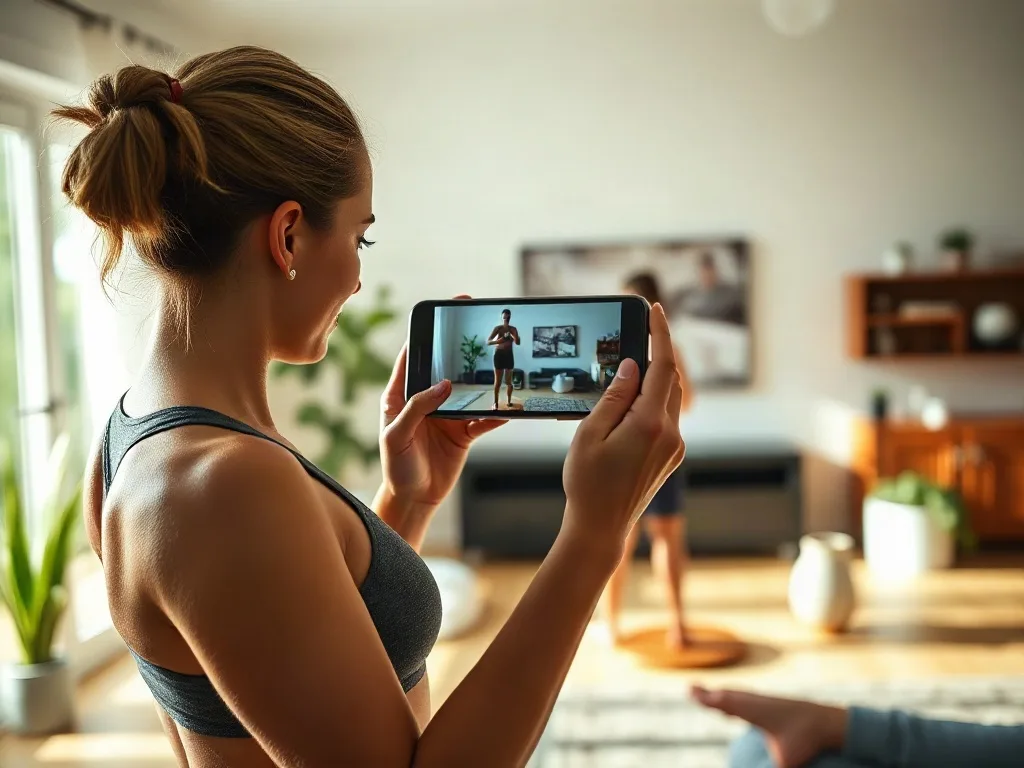
Body by Simone has transformed from an exclusive West Hollywood studio into a digital fitness revolution, bringing celebrity-loved workouts directly to your smartphone. The renowned dance cardio and sculpting method created by celebrity trainer Simone De La Rue now reaches beyond studio walls through a comprehensive app platform that makes her signature fusion of dance, Pilates, and interval training accessible anywhere, anytime.
Key takeaways
- Access signature dance cardio, Pilates, and sculpting methods through guided classes ranging from 10 to 55 minutes.
- Utilize minimal equipment like yoga mats and light hand weights to perform effective workouts in compact spaces.
- Track your fitness journey with progress tools, custom program builders, and offline download capabilities for travel.
- Modify intensity levels with built-in regressions to ensure workouts remain safe and accessible for all fitness levels.
This digital evolution represents more than just recorded workouts—it’s a complete reimagining of how boutique fitness can thrive in an app-based world. Whether you’re a busy parent squeezing in movement between school runs, a professional traveling for work, or simply someone who prefers working out at home, the Body by Simone app delivers the same high-energy, results-driven experience that made the studio a celebrity favorite.
The Body by Simone Method Goes Mobile
The Body by Simone method has always centered on a unique blend of disciplines: dance cardio for cardiovascular fitness and joy, Pilates-inspired movements for core strength and elongation, and targeted toning using light resistance. This combination creates workouts that feel more like dance parties than traditional exercise sessions while delivering tangible physical results.
Translating this studio experience into app format required careful attention to instruction quality, camera angles, and class structure. The digital workouts maintain the signature counting-in-French style, upbeat music curation, and encouraging coaching that studio regulars love. Each session is filmed with multiple angles so you can clearly see form and alignment, which is essential when working out without in-person correction.
The app organizes content into distinct categories: full-length classes ranging from 30 to 55 minutes, targeted 10-15 minute quickies focusing on specific body areas, and structured programs that guide you through several weeks of progressive training. This flexibility means you can choose a complete workout on days when you have time, or stack shorter segments when your schedule is tighter.
Key Features That Set the Platform Apart
The Body by Simone app distinguishes itself through several thoughtful features designed for real-world use. The download capability lets you save classes to your device, eliminating concerns about streaming quality during travel or in areas with unreliable internet. This feature alone makes the app significantly more practical than platforms requiring constant connectivity.
Progress tracking tools help you monitor workout frequency, class types completed, and personal milestones. Unlike simple completion checkmarks, the app provides insights into your training patterns—whether you’re balancing cardio with strength work, how consistently you’re showing up, and which class lengths you gravitate toward. This data becomes valuable for adjusting your routine to meet specific goals.
The program builder function allows you to create custom multi-week plans by selecting classes in a sequence that makes sense for your objectives. If you’re preparing for an event, returning to fitness after time off, or working toward a particular goal, you can map out your journey in advance rather than deciding what to do each day.
Class filters let you sort by duration, intensity level, equipment needed, and focus area. On a recovery day, you can quickly find a low-impact stretch session. When you want to work up a serious sweat, you can filter for high-intensity options. This search functionality respects your time and energy levels on any given day.
Equipment Requirements and Space Considerations
One of the app’s most practical aspects is its minimal equipment philosophy. Most classes require nothing more than a yoga mat and light hand weights (typically 2-3 pounds). Some sessions incorporate resistance bands or sliders, but these are optional tools that enhance rather than define the workout. This low-barrier approach means you can start immediately without investing in expensive equipment or converting a room into a home gym.
Space requirements are equally modest. If you have room to fully extend your arms in all directions and lie down with legs extended, you have enough space for Body by Simone workouts. The choreography is designed to keep you mostly in one spot rather than requiring running room or large movement patterns. This makes the method viable for apartment dwellers, hotel rooms, or any compact area.
For those who want to expand their toolkit gradually, the app provides guidance on optional equipment that can increase challenge or variety. A stability ball adds core demands to certain exercises. Ankle weights intensify lower-body work. Sliders create additional muscle engagement during plank variations and lunges. But none of these items are mandatory to experience effective workouts and see results.
Structuring Your Weekly Training Schedule
Creating a sustainable routine with the app requires balancing intensity, recovery, and variety. A well-designed week might include three dance cardio sessions for cardiovascular fitness and calorie burn, two targeted toning classes for muscular strength and definition, one flexibility-focused session for mobility and recovery, and one complete rest day. This structure provides adequate stimulus for adaptation while preventing burnout and overuse injuries.
The dance cardio classes naturally serve as your higher-intensity days. These sessions elevate heart rate significantly and challenge coordination while building endurance. Schedule these when your energy is highest—many people find morning or early afternoon ideal, but evening can work if that’s when you feel most energized.
Toning workouts, which emphasize controlled movements with light resistance, create muscular fatigue without the same cardiovascular demand. These classes work well on days between cardio sessions or when you want to move but feel somewhat tired. The lower impact allows for more frequent training without excessive recovery needs.
Strategic rest and active recovery prevent the plateau and fatigue that come from doing too much too consistently. Your rest day might be completely passive, or you might choose a gentle stretch class or walk. The key is giving your nervous system and muscles genuine recovery time rather than pushing through every single day.
Modifications for Different Fitness Levels
The app caters to a range of abilities through both explicit modifications offered during classes and the variety of class levels available. Beginner-designated workouts move at a slower pace with more detailed instruction and simpler choreography. These sessions help you learn the foundational movements and build base fitness before progressing to more complex classes.
Intermediate and advanced classes assume familiarity with basic movements and pick up the pace with more intricate combinations and fewer form cues. However, Simone and her instructors consistently offer variations throughout classes—a lower-impact alternative to a jump, a modification for sensitive knees, a regression when an exercise proves too challenging.
The practical approach to modification involves listening to your body and taking offered alternatives without judgment. If jump squats feel too intense, do regular squats. If a plank series becomes too difficult to maintain form, drop to your knees. The goal is appropriate challenge that pushes your limits without compromising safety or technique. Over time, movements that once required modification become accessible at the suggested level.
Progressive overload—gradually increasing challenge—happens naturally as you gain strength and familiarity. The same intermediate class that felt very hard initially becomes more manageable after several weeks, signaling readiness for advanced options or additional volume through longer classes or stacked segments.
Integrating the App with Other Training
Body by Simone workouts complement rather than replace other physical activities you enjoy. Runners find the method strengthens underused muscles and improves mobility, potentially reducing injury risk. Cyclists benefit from the upper body and core work that cycling neglects. Those who practice yoga appreciate the cardiovascular element that yoga typically doesn’t provide.
If you’re training for a specific sport or event, Body by Simone can serve as valuable cross-training. The dance cardio maintains cardiovascular fitness on days when you need a break from running or cycling impact. The toning work builds functional strength that supports athletic performance. The variety helps prevent the mental and physical staleness that comes from single-sport focus.
For those using the app as their primary fitness method, consider occasionally adding activities Body by Simone doesn’t fully address. Heavy strength training with progressive loading builds maximal strength and bone density beyond what light weights provide. Outdoor activities offer vitamin D, fresh air, and mental health benefits. Swimming or cycling provides cardiovascular challenge with zero impact. A well-rounded approach includes the method you love most supplemented with elements that method naturally leaves out.
Nutrition Considerations for Dance-Based Training
Supporting your Body by Simone practice with appropriate nutrition helps maximize results and recovery. The dance cardio sessions can burn substantial calories—estimates range from 400 to 600 calories for a full-length class depending on intensity and body size. This energy expenditure requires adequate fuel, particularly carbohydrates that replenish glycogen stores and support high-intensity movement.
Protein needs increase when you’re consistently challenging your muscles. The toning workouts create micro-tears in muscle fibers that repair and strengthen during recovery, a process requiring amino acids from dietary protein. Aim for protein at each meal rather than loading it all into one sitting, as your body can only use about 25-30 grams effectively at once for muscle protein synthesis.
Hydration significantly impacts both performance and recovery. The combination of sweating during cardio classes and the fluid needs of muscle repair means you should drink consistently throughout the day. A simple indicator is urine color—pale yellow suggests adequate hydration, while dark yellow or amber indicates you need more fluids. Don’t wait until you feel thirsty, as thirst lags behind actual hydration needs.
Timing matters less than overall daily intake for most people, but some find eating a small carbohydrate-rich snack 30-60 minutes before workouts provides energy for better performance. Post-workout nutrition within a couple hours helps recovery, though the often-cited 30-minute anabolic window is less critical than once believed. Focus on meeting daily targets for calories, protein, carbohydrates, and micronutrients rather than stressing about precise timing.
Building Community Through Digital Fitness
One challenge of app-based training is the potential isolation compared to studio classes. Body by Simone addresses this through social features that foster connection among users. The community feed allows members to share workout achievements, post progress photos, ask questions, and offer encouragement. Seeing others on similar journeys provides motivation and accountability that solo training often lacks.
Many users create additional community through social media groups or accountability partnerships with friends also using the app. Working out “together” via video chat while both following the same class recreates some of the group energy that makes studio fitness appealing. Sharing which class you’re doing that day or comparing notes on a particularly challenging workout builds camaraderie even when physically separated.
The instructors maintain presence through social media, responding to comments and sharing their own fitness journeys. This accessibility creates a sense of relationship that makes the digital experience feel less transactional and more personal. You’re not just following a video; you’re part of a broader community led by instructors who genuinely care about your progress.
For those who miss in-person energy entirely, the app can serve as a bridge. Use it to maintain consistency when travel, weather, or schedule prevent studio attendance. Stack it with occasional in-person classes—whether Body by Simone studios or other local options—to get periodic direct instruction and group atmosphere. Digital and physical fitness aren’t mutually exclusive but rather complementary approaches to a sustainable practice.
Measuring Progress Beyond the Scale
The Body by Simone method creates changes that standard weight measurements often miss. Increased muscular endurance means you can complete exercises that initially required frequent breaks. Improved coordination shows up in smoother execution of choreography that once felt awkward. Enhanced cardiovascular fitness manifests as lower heart rate during classes and faster recovery between high-intensity intervals.
Physical changes include muscle definition, improved posture, and shifts in body composition. You might notice clothes fitting differently even when weight stays stable, as muscle takes up less space than fat at the same weight. Energy levels throughout the day often improve as your fitness increases. Sleep quality may enhance as regular movement helps regulate circadian rhythms and reduces stress.
Tracking these non-scale victories provides more meaningful feedback than daily weigh-ins. Consider keeping a simple journal noting how workouts feel, energy levels, mood, and physical observations. Take progress photos monthly in consistent lighting and clothing—visual changes often become apparent over months even when day-to-day differences feel subtle. Celebrate the workout that felt significantly easier than when you first attempted it, or the moment you completed a full class without modification.
Performance markers within the app—classes completed, consistency streaks, new difficulty levels attempted—offer concrete evidence of commitment and progress. These metrics reflect effort and discipline regardless of aesthetic outcomes, which can fluctuate based on numerous factors beyond workout quality.
Technical Requirements and Device Compatibility
Before committing to the Body by Simone app, understanding the technical specifications ensures smooth operation across your devices. The platform supports iOS devices running version 13.0 or later, including iPhones, iPads, and iPod Touch models. Android users need version 8.0 (Oreo) or higher for full functionality. These requirements cover the vast majority of smartphones and tablets currently in use, but older devices may experience performance issues or lack access entirely.
Casting capabilities extend your workout experience beyond handheld screens. The app integrates with Chromecast, Apple TV, and other AirPlay-enabled devices, allowing you to project classes onto larger displays. This functionality transforms a small phone screen into a full television experience, making it easier to see form cues and follow choreography from across a room. The casting process typically involves tapping a cast icon within the app and selecting your target device—simple enough that technical expertise isn’t required.
Storage considerations become relevant if you frequently download classes for offline use. Video files consume significant space—a 45-minute high-definition workout may require 500MB to 1GB of storage depending on compression. Users who download extensively should monitor available device storage and periodically remove completed classes they no longer need. Some users maintain a rotating library of 5-10 downloaded classes while streaming the rest, balancing offline access with storage limitations.
Internet bandwidth affects streaming quality during live or on-demand classes. A stable connection of at least 5 Mbps supports standard definition streaming without buffering, while 10-25 Mbps enables high-definition playback. Users with slower or inconsistent connections benefit significantly from the download feature, eliminating the frustration of mid-workout buffering that disrupts rhythm and intensity. Testing your connection speed and adjusting video quality settings accordingly prevents technical interruptions during workouts.
Troubleshooting Common User Challenges
New users frequently encounter specific challenges that, while frustrating initially, have straightforward solutions. Choreography confusion ranks among the most common obstacles—dance-based sequences involve directional changes, arm-leg coordination, and rhythm that can feel overwhelming when learning. The solution lies in treating your first attempt at any new class as reconnaissance rather than performance. Watch the instructor’s feet during your first run-through, even if it means your arms don’t match perfectly. Run the same class 2-3 times over a week, and the patterns that felt chaotic initially become muscle memory.
Motivation dips after the initial enthusiasm phase present another universal challenge. The first two weeks bring novelty and excitement, but weeks 3-6 often involve a motivation valley where results aren’t yet obvious and the newness has worn off. Combat this by varying your class selections rather than repeating the same favorites, scheduling workouts as non-negotiable appointments rather than fitting them in “when you feel like it,” and focusing on immediate rewards like post-workout energy rather than distant aesthetic goals. Many users find that motivation returns around week 6-8 when physical changes become noticeable and the practice feels truly habitual.
Excessive muscle soreness, particularly in the first weeks, can discourage continuation or lead to extended breaks that disrupt momentum. While some soreness indicates effective training, debilitating soreness suggests you’ve done too much too soon. If you can barely walk downstairs two days after a leg-focused class, you’ve exceeded your current capacity. Scale back to shorter classes or lower intensity levels, and increase gradually over weeks rather than jumping into advanced content. Active recovery—gentle movement like walking or easy stretching on sore days—often relieves discomfort better than complete rest.
Plateau experiences, where progress seems to stall despite consistent effort, typically indicate the need for variation or progression. If you’ve been doing the same three classes for two months, your body has adapted and requires new stimulus. Increase intensity by choosing more advanced classes, extend duration by stacking segments, add optional equipment like ankle weights, or temporarily reduce rest between exercises. Conversely, a plateau might signal overtraining—too much intensity without adequate recovery. The solution depends on honest assessment of whether you need more challenge or more rest.
Comparing App-Based Training to Live Streaming Classes
The Body by Simone ecosystem includes both on-demand app content and scheduled live-stream classes, each offering distinct advantages. On-demand content provides maximum flexibility—start a class at any hour, pause for interruptions, repeat sections you want to practice, and skip workouts that don’t appeal to you on a given day. This format suits unpredictable schedules, multiple time zones, and users who prefer controlling their workout environment completely.
Live-stream classes, when available through the platform, create real-time connection and scheduled accountability. Knowing a class starts at a specific time creates structure that many people need for consistency. The live element adds energy—you’re moving simultaneously with an instructor and other participants, even though you’re in separate locations. Some platforms display participant counts or chat features that enhance the communal feeling. For users who struggle with self-motivation, this scheduled format provides external structure that on-demand content lacks.
The practical middle ground involves using both formats strategically. Schedule live classes for days when you need external accountability or crave community energy. Use on-demand content when your schedule is irregular, when you want to repeat a particularly effective workout, or when you need a specific class length or focus that isn’t available in the live schedule. Neither format is objectively superior—they serve different needs and preferences.
Recording availability transforms live classes into on-demand content after they air, giving you access to the structured schedule without requiring real-time participation. This hybrid approach captures some community energy (seeing when others took the class, reading comments) while maintaining flexibility. Check whether your specific subscription tier includes live access, recorded live classes, or only the core on-demand library, as pricing structures vary.
Pregnancy and Postpartum Modifications
Pregnancy and the postpartum period require specific considerations when using dance-cardio fitness apps. During pregnancy, especially the second and third trimesters, certain movements become inappropriate as your center of gravity shifts and hormone relaxin loosens joints. High-impact jumping should generally be eliminated or reduced significantly to protect pelvic floor integrity. Exercises involving lying flat on your back for extended periods should be avoided after the first trimester as they can compress the vena cava and reduce blood flow.
The Body by Simone method’s low-impact class options become particularly valuable during pregnancy. Modifications include stepping instead of jumping, reducing range of motion in exercises that challenge balance, avoiding deep twists, and respecting fatigue rather than pushing through it. Some users find that lower-body focused classes feel better than ab-intensive work as pregnancy progresses, while others prefer upper-body and arm toning that doesn’t engage the changing core. Always consult your healthcare provider before continuing or starting any fitness program during pregnancy, as individual circumstances vary significantly.
Postpartum return to exercise requires even more caution than pregnancy modifications. The standard medical clearance comes at 6 weeks for uncomplicated vaginal deliveries and 8-12 weeks for cesarean births, but clearance to exercise doesn’t mean clearance to return to pre-pregnancy intensity immediately. Your core and pelvic floor have undergone tremendous change and need gradual rebuilding. Start with walking and gentle stretching before progressing to low-impact dance cardio. Avoid high-impact jumping and intensive core work until you’ve addressed any diastasis recti (abdominal separation) and confirmed pelvic floor function, ideally with a pelvic floor physical therapist.
Red flags during postpartum exercise include any pelvic heaviness or bulging sensation, leaking urine beyond occasional drops, pain in the abdomen or pelvic area, or excessive bleeding beyond normal lochia. These symptoms indicate you’re doing too much too soon and need to scale back significantly. The postpartum period is measured in months and years, not weeks—there’s no rush to return to pre-pregnancy fitness levels. Patience with gradual progression prevents long-term pelvic floor dysfunction that can affect quality of life for decades.
Adapting Workouts for Small Spaces and Noise Constraints
Urban apartment dwellers and those with close neighbors or sleeping household members face unique challenges with dance-cardio workouts. The jumping and quick footwork that define high-energy classes create noise that travels through floors and walls. Several strategies minimize impact without eliminating workout effectiveness. First, invest in a thick exercise mat or consider interlocking foam floor tiles that absorb impact and muffle sound. Placing a mat over carpet provides double cushioning that significantly reduces noise transmission.
Modifying jump-based movements to low-impact alternatives maintains cardiovascular challenge while reducing noise. Instead of jumping jacks, perform side-to-side steps with arm movements. Replace jump squats with rapid alternating lunges or quick squats without the airborne phase. Modify burpees to step back into plank rather than jumping back. The key is maintaining the rhythm and pace while keeping one foot on the ground—your heart rate will still elevate substantially even without leaving the floor.
Strategic class selection helps when noise is a primary concern. Target toning and Pilates-inspired classes that emphasize controlled movements over explosive cardio. Schedule your higher-impact sessions during times when noise matters less—midday when neighbors are likely out, or early evening before typical sleeping hours. Save low-impact stretching and recovery classes for early mornings or late evenings when quiet is essential.
Extremely limited space requires additional creativity. Identify your available floor area and prioritize classes that keep you relatively stationary rather than traveling laterally. Many of the sculpting workouts involve standing in place or mat work that requires only body-length space. Inform the app of your space constraints using filters if available, or note which instructors tend to use more compact choreography versus those who incorporate traveling movements. Some users successfully work out in hotel rooms, small bedrooms, or even office spaces during lunch breaks by selecting spatially appropriate classes.
Mental Health Benefits and Mind-Body Connection
Beyond physical fitness, the Body by Simone method offers significant mental health benefits that users frequently report as equally valuable as aesthetic changes. The dance element requires present-moment focus—you cannot worry about work deadlines or household tasks while simultaneously coordinating arms, legs, and rhythm. This forced presence creates a meditative quality despite the high energy, offering mental respite from rumination and anxiety that plague many people.
Music’s role in mental health benefits cannot be overstated. The carefully curated playlists trigger emotional responses that pure exercise without music doesn’t access. Upbeat tracks increase energy and motivation, while the rhythm creates structure that makes challenging efforts feel more manageable. Many users report that their workout becomes the emotional highlight of their day—a guaranteed period of elevated mood and stress relief regardless of external circumstances.
The sense of accomplishment from completing challenging workouts builds self-efficacy that extends beyond fitness. When you finish a class that felt too difficult, you’ve demonstrated to yourself that you can do hard things. This confidence transfer affects how you approach challenges in other life areas—difficult conversations, professional obstacles, or personal growth goals. Regular proof of your capability creates a foundation of self-trust that informs decision-making and risk-taking.
Community connection, even in digital form, addresses the social needs that isolation or busy modern life often neglects. Seeing others work toward similar goals, sharing struggles and victories, and feeling part of something larger than your individual effort fulfills fundamental human needs for belonging. For people who work remotely, live alone, or have limited social interaction, this digital fitness community may provide meaningful social contact that impacts overall well-being.
Long-Term Sustainability and Preventing Burnout
Maintaining enthusiasm and consistency over months and years requires intentional strategies that prevent the burnout and dropout common in fitness endeavors. Periodization—planned variation in training focus and intensity—keeps the practice fresh while preventing overuse injuries. Structure your training in cycles: perhaps 6-8 weeks emphasizing dance cardio and cardiovascular improvement, followed by 4-6 weeks focusing more heavily on toning and strength work, then a lighter recovery period with more stretching and mobility before beginning another cycle.
Seasonal variation naturally supports long-term adherence. Summer months might include more outdoor activity supplemented by shorter app workouts, while winter could emphasize longer indoor classes when outdoor options are less appealing. This rhythm honors natural energy fluctuations and prevents the monotony of identical training year-round. Your relationship with fitness should evolve rather than remain static—what worked initially may need adjustment as your life circumstances, goals, or preferences shift.
Setting process goals rather than exclusively outcome goals improves sustainability. Outcome goals—lose 20 pounds, fit into a specific clothing size, achieve a particular body fat percentage—are beyond your complete control and vulnerable to plateaus or factors unrelated to your effort. Process goals—complete four workouts weekly, try one new class monthly, stretch for 10 minutes after every cardio session—are entirely within your control and provide regular success experiences regardless of physical changes. Celebrate these behavioral victories as legitimate achievements rather than merely means to aesthetic ends.
Permission to take breaks without guilt or shame prevents the all-or-nothing thinking that leads to permanent dropout. Life includes periods of illness, unusual stress, travel, or simple need for rest. A week or two off doesn’t erase months of consistency and often returns you to training with renewed energy and enthusiasm. The goal is lifelong relationship with movement, not perfect adherence to a rigid schedule. Flexibility and self-compassion enable sustainability far better than rigid discipline that inevitably cracks under pressure.
Frequently Asked Questions
How quickly will I see results from Body by Simone workouts?
Results depend on your starting fitness level, consistency, nutrition, and individual physiology. Most people notice improved energy and mood within the first week. Cardiovascular fitness typically improves within 2-3 weeks of consistent training. Visible physical changes—muscle definition, body composition shifts—generally become apparent after 4-6 weeks of regular practice (at least 3-4 sessions weekly) combined with supportive nutrition. Strength and endurance gains happen continuously but may feel most dramatic in the first few months. Remember that sustainable change is gradual, and consistency over time produces more lasting results than sporadic intense efforts.
Can I use the app if I have joint issues or past injuries?
Many people with joint sensitivities successfully use Body by Simone by choosing low-impact class options and taking offered modifications. The app includes workouts specifically designed as low-impact alternatives to the higher-intensity dance cardio. However, if you have significant injury history or chronic joint conditions, consult with a healthcare provider or physical therapist before starting any new fitness program. They can help you identify which movements to avoid or modify and ensure the method is appropriate for your situation. Listen carefully to your body—discomfort in working muscles is normal, but sharp pain or joint pain signals the need to modify or stop.
Do I need previous dance experience to succeed with these workouts?
No dance background is necessary. The choreography draws from dance but is designed for fitness rather than performance. Beginner classes break down movements with detailed instruction, moving at a pace that allows you to learn the patterns. Coordination improves with practice—the combinations that feel confusing initially become more natural as your brain and body learn the movement vocabulary. Focus on effort and enjoyment rather than perfect execution. Most users find the dance element makes workouts feel less like exercise and more like fun, regardless of their natural coordination level.
How does the app pricing compare to boutique studio memberships?
App subscriptions typically cost a fraction of boutique studio memberships. While pricing varies and should be confirmed on the platform, digital fitness subscriptions generally range from $15-30 monthly, whereas single boutique studio classes often cost $25-40 each and unlimited monthly memberships can exceed $200. The app provides unlimited access to the complete content library for one monthly fee. This makes it significantly more economical for those who work out frequently. The tradeoff is lack of in-person instruction, group energy, and the accountability structure that scheduled studio classes provide. For many, the convenience and cost savings outweigh these factors, while others use the app to supplement periodic in-person training.
What happens if I need to take a break from working out—will I lose my progress?
Your subscription and access to content continue regardless of how often you work out, so there’s no penalty for breaks. Physically, fitness is partially reversible—cardiovascular fitness declines more quickly than strength (noticeable after about 2 weeks of inactivity), while muscle memory helps you regain lost fitness faster than building it initially took. A break of a few weeks requires some rebuilding but doesn’t erase months of work. When returning after time off, start with beginner or intermediate classes rather than jumping back to your previous level. Rebuild gradually over 1-2 weeks to reduce injury risk and excessive soreness. Life circumstances sometimes require breaks, and approaching your return with patience and self-compassion leads to better long-term adherence than guilt or pushing too hard too fast.
Related posts:
 Audio Workout Apps Taking Over the Gym Scene
 PHA Bodyweight Workout: Efficient Fitness Anywhere, Anytime
 Savannah Guthrie’s Olympic Tennis Workout
 Kate Hudson’s Latest Obsession: The High-Energy Workout Called PloyoJam
 Quick Cardio Fix: Tracy Anderson’s 7-Minute Heart-Pumping Workout Video
 This Rowing App Promises to Replace Your Gym Membership
 Inside Lucy Hale’s Soul-Crushing SoulCycle Sessions That Keep Her Camera-Ready
 JetSweat Digital Fitness App