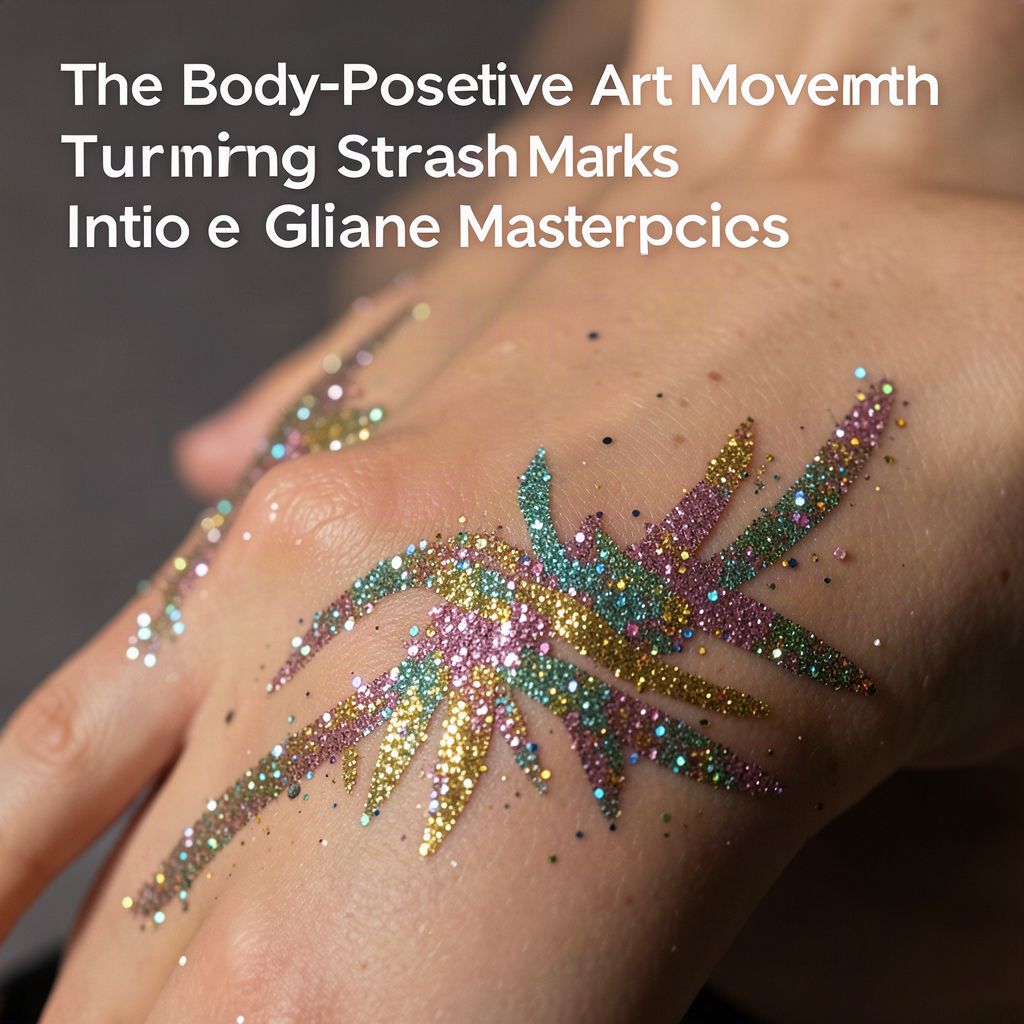
In recent years, a powerful artistic movement has emerged that challenges conventional beauty standards by transforming what society has long considered “flaws” into celebrated works of art. Artists, influencers, and everyday people are using glitter, body paint, and creative photography to reframe stretch marks as beautiful, natural patterns worthy of adornment rather than concealment. This body-positive art movement is reshaping how we view our bodies and creating space for authentic self-expression.
The practice of decorating stretch marks with glitter and embellishments has grown from isolated social media posts into a global phenomenon, inspiring thousands to see their bodies through a new lens. By applying artistic principles to our physical forms, participants discover that the very marks they once hid can become sources of pride and creative expression.
Understanding the Origins of Stretch Mark Art
The body-positive stretch mark art movement gained significant momentum around 2016-2017, when several artists and activists began sharing images of stretch marks adorned with glitter on Instagram and other platforms. Sara Shakeel, a Pakistani artist known for her glitter art, and Carina Shimizu, who created the viral “glitter stretch marks” series, were among the early pioneers who sparked widespread interest.
This movement emerged during a broader cultural shift toward body acceptance and the rejection of heavily filtered, unrealistic beauty standards. As conversations about body diversity became more mainstream, creative individuals sought visual ways to celebrate features that advertising and media had long stigmatized. The juxtaposition of sparkle and shine with marks often associated with shame created a striking visual statement that resonated deeply with people who had struggled with body image.
The timing coincided with increased awareness of photo editing practices in advertising and social media. As more people learned how extensively images were manipulated, there was a collective desire for authenticity. Decorating stretch marks with glitter became both an artistic practice and a form of activism—a way to say that real bodies deserve celebration, not correction.
The movement also drew inspiration from traditional body art practices across cultures, where adornment and decoration have long been used to mark significant life transitions, celebrate the body, and express identity. By applying these principles to stretch marks, artists connected contemporary body positivity with ancient traditions of honoring the body’s story.
Why Stretch Marks Form and What They Represent
Stretch marks, medically known as striae, develop when skin stretches rapidly due to growth, weight changes, pregnancy, or muscle development. They appear when the dermis—the middle layer of skin—tears slightly, creating visible lines on the surface. Initially, they may appear red, purple, or pink, then typically fade to white or silver over time.
Contrary to popular misconceptions, stretch marks are extremely common and affect people of all genders, ages, and body types. Studies suggest that approximately 50-90% of women develop stretch marks during pregnancy, while many adolescents develop them during growth spurts. Athletes often develop stretch marks from rapid muscle gain, and anyone experiencing significant weight changes may see them appear.
Genetics play a significant role in whether someone develops stretch marks and how prominent they become. Some people’s skin has more elastic fibers and collagen, making it more resilient to rapid stretching. Hormonal factors, particularly cortisol levels, also influence skin elasticity and susceptibility to stretch marks.
Rather than viewing stretch marks as damage, the body-positive art movement reframes them as evidence of the body’s remarkable capacity for change and adaptation. Pregnancy stretch marks represent the body’s ability to nurture new life. Growth stretch marks document the journey from childhood to adulthood. Fitness-related stretch marks demonstrate dedication and physical transformation. Each set of marks tells a unique story about a body’s experience.
Materials and Techniques for Creating Glitter Stretch Mark Art
Creating glitter stretch mark art requires only a few basic materials, making it accessible to anyone interested in trying this form of body decoration. The most essential item is cosmetic-grade glitter, which is specifically formulated for skin contact and safer than craft glitter. Biodegradable glitter has also become popular among environmentally conscious artists.
To apply glitter to stretch marks, you’ll need an adhesive specifically designed for skin. Options include body glue, aloe vera gel, eyelash adhesive, or specialized glitter primers. These products create a sticky surface that holds glitter in place without irritating skin. Many artists prefer clear aloe vera gel because it’s gentle, affordable, and easy to remove.
The basic technique involves first cleaning and drying the skin area where you’ll apply the art. Using a small brush or applicator, apply a thin layer of adhesive directly onto the stretch marks, following their natural pattern. While the adhesive is still tacky, gently press or pat glitter onto the marks using your fingertip, a brush, or a makeup sponge. For more defined lines, use a fine brush to apply glitter precisely along each mark.
Beyond simple glitter application, artists have developed numerous variations and techniques. Some create gradient effects using multiple glitter colors, transitioning from one shade to another along the length of each mark. Others incorporate gems, sequins, or metallic temporary tattoos alongside the glitter. Face paint or body paint can add colorful backgrounds or create designs that incorporate the stretch marks as integral elements.
For photography, lighting plays a crucial role in capturing the sparkle and dimension of glitter art. Natural light near a window often works beautifully, though some artists use ring lights or directed lighting to create dramatic effects. Taking photos from various angles helps capture how the glitter catches light differently depending on perspective.
The Psychological Impact of Transforming Your Perspective
The act of decorating stretch marks with glitter represents more than aesthetic expression—it can be a meaningful psychological intervention in how people relate to their bodies. Research in body image psychology suggests that actively engaging with body parts we’ve criticized can help reduce negative self-perception and increase acceptance.
When someone applies glitter to their stretch marks, they must look directly at these marks, touch them, and spend focused time with them. This mindful attention, combined with the intention to beautify rather than hide, can shift internal narratives. Instead of avoiding mirrors or covering up, participants in this art form engage in an act of creative care toward their bodies.
Many people who practice stretch mark art report experiencing unexpected emotional responses. Some describe feeling tearful when they first see their decorated marks, realizing they had internalized harsh judgments about their bodies. Others feel empowered and playful, rediscovering a sense of body ownership and creative agency. The process often sparks conversations with friends, family members, or online communities, creating opportunities to share experiences and challenge collective beauty standards.
The visual transformation that occurs when sparkle is added to stretch marks also creates cognitive dissonance that can be therapeutically valuable. Our brains are conditioned to associate glitter and decoration with things we value and celebrate. By placing these celebratory elements on marks we’ve been taught to hide, we create a visual contradiction that prompts us to question our learned beliefs about what deserves celebration.
For some, creating and sharing stretch mark art becomes part of a broader journey toward body neutrality or body acceptance—approaches that emphasize functionality and existence over appearance-based judgments. The art practice serves as a tangible reminder that our bodies are canvases for self-expression rather than objects requiring perfection.
Social Media’s Role in Spreading Body-Positive Art
Social media platforms, particularly Instagram, have been instrumental in transforming stretch mark art from individual expression into a collective movement. Hashtags like #glitterstretchmarks, #stretchmarksarebeautiful, and #bodypositivity have accumulated millions of posts, creating virtual galleries where people share their creations and discover others doing the same.
The visual nature of platforms like Instagram and TikTok makes them ideal spaces for this art form to flourish. A single striking image of glittered stretch marks can communicate body-positive messages more powerfully than paragraphs of text. These images disrupt users’ feeds filled with conventionally edited content, offering alternative visions of beauty that feel refreshingly authentic.
The movement has benefited from both influencer amplification and grassroots participation. When influencers and celebrities share their own stretch mark art or amplify others’ creations, they lend visibility and legitimacy to the practice. Simultaneously, everyday users contribute their unique perspectives and artistic styles, ensuring the movement remains diverse and accessible rather than commercialized or exclusive.
Social media has also facilitated skill-sharing and technique development. Artists post tutorials, product recommendations, and troubleshooting tips, creating an informal education system that helps newcomers learn the craft. Comment sections and direct messages become spaces for encouragement and community building among people who share similar body image experiences.
However, the relationship between body-positive art and social media is complex. While these platforms provide visibility and community, they can also create pressure to present one’s body for public consumption or to achieve aesthetic perfection even within body-positive spaces. Some participants focus on creating art primarily for personal experience rather than social sharing, maintaining boundaries between private self-care practices and public activism.
Expanding Beyond Stretch Marks to Other Body Features
The success of glitter stretch mark art has inspired similar creative approaches to other body features that face stigmatization. Artists have begun decorating scars with glitter, paint, and embellishments, transforming marks from surgery, injury, or self-harm into visual narratives of survival and healing. This practice acknowledges trauma while asserting that scars don’t diminish worth or beauty.
Cellulite, which affects the majority of women regardless of size, has also become a canvas for body-positive art. Some artists apply glitter to areas with cellulite, while others create painted designs that incorporate the skin’s natural texture rather than trying to obscure it. These artistic interventions challenge the intense marketing around cellulite “treatments” and “solutions,” proposing acceptance as a radical alternative.
Vitiligo, a condition causing patches of skin to lose pigment, has been highlighted through artistic decoration that celebrates rather than camouflages the distinctive patterns it creates. Some individuals with vitiligo use paint and glitter to emphasize the borders between pigmented and depigmented skin, creating striking visual effects that reframe difference as distinctive beauty.
Body hair is another area where decorative practices challenge conventional beauty norms. Some people adorn leg hair, underarm hair, or other body hair with glitter, flowers, or beads, making visible what is usually expected to be removed. This practice questions the enormous time, money, and discomfort many people invest in hair removal while celebrating the body’s natural state.
The common thread across all these practices is the transformation of visibility. Rather than hiding, minimizing, or treating features deemed unacceptable, practitioners make them more visible and more decorative. This represents a fundamental shift from concealment to celebration, from shame to pride.
Creating Inclusive Spaces for All Bodies
As the body-positive art movement has grown, conversations about inclusivity have become increasingly important. Early body positivity sometimes centered thin or conventionally attractive people who happened to have stretch marks, inadvertently excluding the very people who face the most intense body-based discrimination.
Contemporary body-positive art spaces increasingly emphasize representation across all body sizes, abilities, ages, genders, and racial backgrounds. This means ensuring that the images, stories, and voices amplified within the movement reflect true diversity rather than a narrow slice of body variation. Plus-size bodies, disabled bodies, older bodies, trans bodies, and bodies of color must be central rather than tokenized.
Accessibility considerations are also crucial. Not everyone has the fine motor skills required for detailed glitter application, and not everyone can afford specialty cosmetic products. The movement becomes more inclusive when it celebrates simple approaches alongside elaborate creations, when it acknowledges that body acceptance doesn’t require artistic production, and when it provides alternatives for different abilities and resources.
Language matters significantly in creating inclusive spaces. Using terms like “real bodies” can inadvertently suggest that some bodies are less real than others. Focusing on “flaws” even while celebrating them can reinforce the idea that these features are problems. Many activists now emphasize body neutrality—the concept that bodies simply exist and don’t require positive or negative judgment—as a more sustainable and inclusive framework than insisting everyone must love their appearance.
The movement also benefits from acknowledging intersectionality—the understanding that people’s experiences of body stigma are shaped by multiple, overlapping identities and social positions. A Black woman with stretch marks faces different cultural messages than a white woman, just as a disabled person’s experience differs from an able-bodied person’s. Inclusive body-positive art spaces make room for these varied experiences rather than assuming a universal perspective.
Practical Ways to Start Your Own Body Art Practice
If you’re interested in exploring stretch mark art or related body-positive creative practices, starting is simpler than you might expect. Begin by gathering basic materials: cosmetic-grade glitter in colors that appeal to you, a skin-safe adhesive like aloe vera gel, and basic makeup brushes or cotton swabs for application. Many craft stores and online retailers offer cosmetic glitter starter kits at reasonable prices.
Choose a time when you have privacy and won’t be rushed. Creating body art is as much about the meditative process as the final result. Start with a small area rather than trying to decorate all your stretch marks at once. This allows you to practice technique and gauge your comfort level without feeling overwhelmed.
Before applying anything to larger areas, do a patch test with both the adhesive and glitter on a small section of skin to ensure you don’t have sensitivity or allergic reactions. Wait at least 24 hours to confirm no irritation develops. If you have sensitive skin, research hypoallergenic options or consult with a dermatologist about safe materials.
As you apply the art, pay attention to your emotional responses without judgment. If you feel uncomfortable or critical thoughts arise, acknowledge them and gently redirect your focus to the creative act itself. You might find it helpful to listen to music, a podcast, or simply enjoy silence while you work.
Consider whether you want to photograph your creation. Taking photos can help you see your body from new angles and create a record of your practice over time. However, you’re under no obligation to document or share your body art. The practice remains valuable whether anyone else sees it or not.
To remove glitter and adhesive, use a gentle oil-based cleanser or makeup remover followed by regular soap and water. A soft washcloth can help remove stubborn glitter particles. Avoid harsh scrubbing, which can irritate skin.
If you want to connect with others practicing body-positive art, consider joining online communities where people share techniques, encouragement, and experiences. These spaces can provide inspiration and support, though remember that your practice is valid regardless of how it compares to what others create.
The Science Behind Glitter’s Psychological Appeal in Body Art
The choice of glitter as the primary medium for stretch mark decoration is not arbitrary—it taps into deep psychological responses to sparkle and light. Neuroscience research reveals that our brains have specialized cells that respond to glossy and shimmering surfaces, triggering reward pathways associated with finding water or valuable resources. When we see something sparkle, our visual cortex activates more intensely than with matte surfaces, creating an involuntary attraction that feels both pleasurable and attention-capturing.
This neurological response explains why glitter is particularly effective for reframing body features. By applying a material that our brains are hardwired to find appealing directly onto marks we’ve been conditioned to dislike, we create a powerful sensory contradiction. The visual system sends signals of attraction and value while simultaneously viewing a feature we may have criticized. Over time, this repeated pairing can help rewire associations, much like exposure therapy gradually changes fear responses.
Color psychology also plays a role in the emotional impact of glitter choices. Gold and warm tones often evoke feelings of luxury, celebration, and warmth. Silver and cool tones can feel modern, sleek, and sophisticated. Rainbow or multicolored glitter creates a playful, joyful effect that many find liberating. Some practitioners deliberately choose colors that resonate with specific intentions—rose gold for self-love, purple for transformation, or blue for calm acceptance. While these associations are culturally learned rather than universal, they provide a framework for making intentional choices about how you want to feel during and after the creative process.
The tactile experience of working with glitter also contributes to its therapeutic potential. The fine particles create gentle stimulation on fingertips and skin, providing sensory feedback that can be calming and grounding. For people who experience dissociation from their bodies or who have learned to ignore physical sensations, this tactile engagement creates a bridge back to embodied awareness. The messiness of glitter—its tendency to spread and stick where unexpected—can also be therapeutic for perfectionists, offering practice in accepting imperfection and unpredictability.
Interestingly, the temporary nature of glitter application adds another psychological dimension. Unlike permanent body modification, glitter washes off, making the practice low-stakes and reversible. This temporary transformation allows people to experiment with visibility and celebration without long-term commitment, which can feel safer for those early in their body acceptance journey. At the same time, the ephemeral quality encourages presence and mindfulness—you cannot preserve the sparkle indefinitely, so you must appreciate it in the moment.
Professional Artists Expanding the Medium and Message
As the body-positive art movement has matured, professional makeup artists, body painters, and fine artists have brought increasingly sophisticated techniques and conceptual depth to the practice. Artist Harnaam Kaur, who has a beard due to polycystic ovary syndrome, has collaborated with photographers to create stunning images where her facial hair is adorned with flowers, crystals, and glitter, challenging both beauty standards and gender norms simultaneously. Her work demonstrates how body-positive art can address multiple forms of stigma at once.
Body painter Gesine Marwedel takes a different approach, using stretch marks as natural guidelines within larger painted compositions on pregnant bellies and postpartum bodies. Rather than simply highlighting the marks, she incorporates them into landscapes, galaxies, and abstract designs where they become rivers, tree branches, or constellation lines. This technique shows how stretch marks can function as collaborative elements in artistic creation rather than features requiring special treatment or compensation.
Performance artist Kaleigh Cohen has created gallery installations featuring photographs of decorated stretch marks printed at enormous scale—some stretching across entire walls. By magnifying these intimate body features to monumental proportions, she forces viewers to confront the marks as landscape, pattern, and texture divorced from their usual context of judgment. Gallery visitors report that seeing stretch marks rendered heroically large shifts their perception, making the marks seem powerful rather than shameful.
Some professionals are also exploring the commercial intersection of body-positive art and traditional beauty industries. Makeup brands like Fenty Beauty and Live Tinted have released products specifically designed for decorating rather than concealing body features, including shimmer sticks, glitter gels, and metallic temporary tattoos marketed explicitly for use on stretch marks, scars, and cellulite. While some activists worry about commercialization diluting the movement’s radical message, others see mainstream product development as evidence that body-positive values are gaining cultural traction.
The rise of body-positive art has also influenced fashion photography and advertising. Brands seeking authentic representation now sometimes feature models with visibly decorated stretch marks in campaigns, signaling acceptance without requiring models to hide their natural features. Photographer Substantia Jones, known for the Adipositivity Project, incorporates glitter and body decoration into her work documenting fat bodies, creating images that celebrate size diversity with artistic intentionality rather than documentary detachment.
Cultural Variations and Global Perspectives on Body Decoration
While the glitter stretch mark movement originated primarily in Western, English-speaking online spaces, body decoration as a form of storytelling and status exists across virtually every human culture. Understanding these broader traditions provides context for contemporary practices and reveals how body-positive art connects to ancient human impulses to mark, adorn, and celebrate our physical forms.
In many African cultures, scarification—the practice of creating deliberate scars in decorative patterns—has historically served ceremonial, aesthetic, and identity functions. Among the Yoruba people of Nigeria, scarification marks indicate tribal affiliation and social status. The Mursi people of Ethiopia practice lip plating, which transforms the body dramatically and holds deep cultural significance. While these practices differ from voluntary glitter application, they share the principle that bodies can be intentionally modified or decorated to communicate meaning and beauty outside Western norms.
Mehndi, the practice of applying henna to hands and feet, holds spiritual and celebratory significance across South Asian, Middle Eastern, and North African cultures. Traditionally used for weddings and religious festivals, mehndi transforms the body into a canvas for intricate temporary art. The process of applying henna is often communal and meditative, creating space for connection and reflection—qualities that contemporary stretch mark art also cultivates. Some practitioners blend these traditions, using henna to decorate stretch marks and create designs that honor both cultural heritage and body positivity.
In Polynesian cultures, tattooing serves as a visual language documenting personal history, genealogy, and social standing. Traditional Samoan tatau and Māori tā moko are permanent markings that tell stories about the bearer’s life journey. This concept that bodies can and should bear visible marks of experience resonates deeply with body-positive reframing of stretch marks as evidence of life lived rather than flaws to erase. Some contemporary tattoo artists have begun incorporating clients’ stretch marks and scars into tattoo designs, honoring their presence rather than covering them.
In Japan, the art of kinbaku (decorative rope bondage) and body suspension creates temporary body modifications that explore aesthetics, endurance, and the relationship between restraint and freedom. While practiced in specific subcultures rather than mainstream contexts, it demonstrates how bodies can be intentionally transformed for artistic expression and personal meaning. The Western body-positive art movement shares this spirit of intentional transformation, though through markedly different and more accessible means.
Indigenous Australian body painting traditions use ochre, clay, and natural pigments to create designs for ceremony, storytelling, and connection to land and ancestors. These practices recognize the body as a legitimate canvas for important cultural work, not merely a surface to be maintained or perfected. When contemporary artists reference these traditions while decorating stretch marks, they must do so with cultural sensitivity and awareness, acknowledging the difference between inspiration and appropriation, and recognizing that not all cultural practices are available for borrowing.
Addressing Common Challenges and Practical Troubleshooting
Despite the apparent simplicity of applying glitter to skin, practitioners often encounter practical challenges that can frustrate beginners. Understanding common issues and their solutions helps maintain the practice as joyful rather than discouraging. One frequent problem is glitter falling off before you can photograph or fully appreciate your work. This typically happens when adhesive is too thin, not tacky enough when glitter is applied, or when clothing rubs against decorated areas. Solutions include using a stronger adhesive like eyelash glue for longer wear, waiting until adhesive becomes sticky but not completely dry before applying glitter, and choosing body areas that clothing won’t constantly contact.
Another challenge is achieving clean, defined lines along stretch marks rather than scattered glitter everywhere. This requires patience and the right tools. Using a very fine brush allows precision application of adhesive directly onto individual marks. Some artists apply adhesive with a brush, then use a separate dry brush to pick up small amounts of glitter and press it exactly where wanted. Tape can create borders around the area you’re decorating, preventing glitter from spreading to surrounding skin. For those who struggle with steady hands, using a credit card edge or ruler as a guide while applying adhesive can help create straighter lines.
Glitter removal often proves more difficult than anticipated, with sparkle particles stubbornly clinging to skin and showing up in unexpected places days later. The most effective removal method uses oil—coconut oil, olive oil, baby oil, or oil-based makeup remover all work well. Apply oil generously to the glittered area and let it sit for a minute to break down the adhesive. Then use a soft cloth or cotton pad to wipe away glitter, rinsing with warm water and soap afterward. Avoid trying to scrub glitter off with water alone, as this pushes particles around rather than removing them and can irritate skin.
For people with very light or very dark skin, finding glitter that shows up effectively can require experimentation. On very pale skin, pastel or light glitters may disappear, while on very dark skin, they might create unintended contrast. Metallic glitters—gold, silver, copper, rose gold—tend to show up beautifully across all skin tones. Some artists use body paint as a base coat before applying glitter, which can increase contrast and make glitter more visible. Testing different glitter colors in natural light before committing to a full application saves frustration.
Sensitive skin presents particular challenges since even cosmetic-grade glitter and gentle adhesives can cause irritation for some people. If traditional adhesives cause redness or itching, try pure aloe vera gel straight from the plant if possible, as commercial gels sometimes contain irritating additives. Alternatively, some people have success with facial moisturizer as an extremely gentle adhesive, though it won’t hold glitter as long. For those who cannot tolerate any adhesive, temporary metallic tattoos designed for skin can create a similar celebratory effect without requiring glue. Listening to your body’s signals and prioritizing skin health over aesthetic results ensures the practice remains self-caring rather than harmful.
The Intersection of Body-Positive Art and Mental Health Treatment
Mental health professionals have begun recognizing body-positive art practices as potentially valuable adjuncts to therapy for body image issues, eating disorders, self-harm recovery, and trauma. Art therapy has long been established as an effective treatment modality, but the specific practice of decorating body features typically hidden or criticized adds unique therapeutic dimensions.
For individuals recovering from eating disorders, stretch marks often carry complicated emotional weight—they may represent recovery weight gain, previous weight fluctuations, or simply the natural changes of having a body. Traditional eating disorder treatment focuses heavily on challenging cognitive distortions and developing healthier thought patterns, but embodied practices like stretch mark decoration can address body image from a different angle. When a person in recovery spends time gently touching and decorating their stretch marks, they practice relating to their body with care rather than criticism, potentially accelerating the development of body trust.
Therapists working with clients who have histories of self-harm have found that decorating scars can be a powerful milestone in recovery. When someone has spent years hiding scars out of shame or fear of judgment, the act of making them visible and beautiful represents a profound shift in self-perception. Some therapists incorporate scar decoration into exposure therapy protocols, gradually increasing comfort with scar visibility. However, this must be done carefully and consensually, as not everyone is ready for this step, and forcing visibility before readiness can be retraumatizing.
For trauma survivors, particularly those whose trauma involved the body, creative body practices can support reclaiming bodily autonomy and pleasure. Trauma often creates disconnection from physical sensation and bodily experience as a protective mechanism. Gentle, self-directed practices like applying glitter allow trauma survivors to rebuild positive associations with touching and viewing their bodies. The choice and control inherent in the practice—deciding when, where, and how to decorate—reinforces that the body belongs to the person inhabiting it, not to those who may have violated it.
Body dysmorphic disorder presents particular complexities when considering body-positive art practices. For some people with BDD, focusing attention on a specific body feature, even in a positive context, can intensify obsessive thoughts and compulsive behaviors. Mental health professionals caution that body art practices may not be appropriate for everyone with BDD and should be introduced carefully, if at all, within a broader treatment plan that addresses the underlying anxiety and distorted perception patterns.
Group therapy settings have experimented with body-positive art as a shared activity that builds connection and normalizes body diversity. When group members decorate stretch marks or other features together, they witness the universality of body variation and challenge isolation created by shame. These sessions often generate powerful discussions about cultural beauty standards, personal body histories, and the possibility of relating to bodies differently. The shared creative experience can reduce the vulnerability of individual exposure while still providing the benefits of visibility and artistic engagement.
Sustainable and Ethical Considerations in Body Art Materials
As awareness grows about environmental impact and ethical consumption, practitioners of body-positive art are increasingly questioning the materials they use. Traditional craft glitter is made from plastic (PET, typically polyethylene terephthalate) combined with aluminum, creating particles that never biodegrade and contribute to microplastic pollution. When washed off skin, these particles enter water systems, eventually reaching oceans where they harm marine life and enter food chains.
Biodegradable glitter has emerged as an alternative, made from plant cellulose derived from eucalyptus trees or other sustainable sources. Brands like EcoStardust, BioGlitz, and Today Glitter produce cosmetic-grade biodegradable glitter that sparkles similarly to plastic versions while breaking down naturally in composting conditions. However, biodegradable glitter typically costs more than conventional glitter and may have slightly different application properties. Some varieties are less resistant to moisture, which can be advantageous for removal but may affect longevity during wear.
It is important to note that “biodegradable” claims require scrutiny. Some products labeled biodegradable only break down under specific industrial composting conditions that do not exist in natural water systems or home compost bins. Truly eco-friendly glitter should be certified by recognized standards like OK Biodegradable WATER, which tests degradation in freshwater environments. Reading ingredient lists and researching brand claims helps consumers make genuinely sustainable choices rather than falling for greenwashing.
Beyond glitter itself, the ethics of other materials matter. Many cosmetic products contain palm oil, mica mined through child labor, or ingredients tested on animals. Conscious practitioners seek out certified cruelty-free adhesives and products from companies with transparent supply chains. Some choose to make their own adhesives from ingredients like aloe vera, cornstarch, and vegetable glycerin, ensuring complete control over what contacts their skin and what enters waterways when washed off.
Packaging waste is another consideration. Glitter often comes in small plastic containers or bags, and makeup brushes may contain plastic handles and synthetic bristles. Choosing products with minimal packaging, recyclable containers, or reusable applicators reduces environmental impact. Some artists use natural materials for application—their own fingertips, wooden craft sticks, or cotton fabric scraps—rather than purchasing disposable applicators.
The fast-fashion aesthetic that sometimes accompanies social media trends can encourage overconsumption of body art supplies—constantly buying new glitter colors or products for variety rather than fully using what you already own. Practicing body-positive art sustainably means appreciating what you have, swapping supplies with friends rather than always buying new, and remembering that the practice’s value lies in the act of self-care and reframing, not in accumulating materials or achieving perfect aesthetics.
Navigating Body Art in Professional and Social Contexts
While body-positive art creates private moments of self-care and public statements of acceptance, participants must navigate complex social realities about body visibility and professional presentation. Visible glitter on stretch marks makes a statement that not all environments welcome or understand, and individuals must weigh personal authenticity against practical considerations.
Workplace dress codes and professional norms vary dramatically across industries and organizations. Creative fields like design, media, and arts often embrace individual expression, making visible body art more acceptable. Conservative industries like law, finance, and corporate business may maintain unstated expectations about concealing body features and maintaining polished, conventional appearance. Before wearing body art to work, consider your specific workplace culture, whether you have employment security to take risks, and whether making a statement feels worth potential professional consequences.
For people early in their careers or in precarious employment situations, the unfortunate reality is that visible body positivity can invite judgment that affects professional opportunities. This creates an ethical tension—shouldn’t everyone be free to celebrate their bodies without professional penalty? Absolutely. Does that ideal match current reality? Often not. Acknowledging this gap without shame allows people to make informed decisions about when and where they practice visibility, understanding that choosing privacy in certain contexts does not undermine their body acceptance journey.
Social situations present different challenges. Family gatherings, religious services, and formal events often carry expectations about appropriate appearance. Wearing glittered stretch marks to these events might spark important conversations that challenge family members’ biases, or it might create conflict that overshadows other purposes of the gathering. Some practitioners reserve body art for contexts where they feel safe and celebrated, while others intentionally bring their whole selves everywhere, seeing visibility as activism regardless of setting.
When children are present, whether your own or others’, visible body art can become an educational opportunity. Children typically respond to glittered stretch marks with uncomplicated delight—”You’re sparkly!”—without the judgmental associations adults carry. Explaining simply that everyone’s body is different and that our differences can be beautiful helps children develop healthier body image from early ages. However, some parents may object to their children seeing bodies presented in ways that contradict the messages those parents teach, requiring navigation of interpersonal boundaries.
Dating and intimate relationships introduce vulnerability around body visibility. Decorating stretch marks before a date or intimate encounter can feel like a bold assertion of self-acceptance, potentially filtering out partners who cannot appreciate your body. Alternatively, it might feel like too much vulnerability too soon, when you’re still building trust and comfort. There is no universal right answer—some people find that practicing body art increases confidence in intimate situations, while others prefer to build intimacy first before introducing decorated body features. Your comfort and safety should guide these decisions.
Frequently Asked Questions
Is it safe to apply glitter directly to stretch marks?
When using cosmetic-grade glitter and skin-safe adhesives, applying glitter to stretch marks is generally safe for most people. Cosmetic glitter is specifically manufactured to be non-toxic and appropriate for skin contact, unlike craft glitter which can have sharp edges and toxic components. Always perform a patch test before widespread application, and avoid applying to broken skin or active wounds. If you have sensitive skin, eczema, or other skin conditions, consult with a dermatologist before trying body glitter. Remove glitter gently with oil-based remover rather than scrubbing, and discontinue use if any irritation develops.
Will decorating my stretch marks with glitter make them more noticeable?
Yes, applying glitter to stretch marks intentionally makes them more visible and eye-catching, which is precisely the point of this body-positive art practice. The goal is to shift your relationship with these marks from concealment to celebration. Many participants report that making stretch marks deliberately visible through decoration helps reduce shame and increases acceptance. The practice challenges the assumption that stretch marks should be hidden, proposing instead that they can be featured and adorned. If you’re not ready to increase visibility, that’s completely valid—body acceptance is a personal journey without a required timeline.
Do I need artistic skills to create stretch mark art?
No artistic training or advanced skills are required to create beautiful stretch mark art. The simplest approach—applying adhesive and pressing glitter onto stretch marks—requires no special technique and creates striking results. Your stretch marks already provide the natural pattern; the glitter simply highlights what’s already there. As you practice, you may develop more refined techniques or experiment with complex designs, but elaborate artistry is never necessary. The most meaningful body art comes from authentic self-expression rather than technical perfection. Many people find that the meditative process of creating the art matters more than achieving any particular aesthetic outcome.
Can this practice actually change how I feel about my body?
While individual experiences vary, many people report that engaging in body-positive art practices contributes to shifts in body image and self-perception. The act of intentionally touching, looking at, and decorating body parts you’ve criticized can interrupt negative thought patterns and create new associations. Research suggests that creative engagement with our bodies can increase body appreciation and reduce appearance-based anxiety. However, this practice works best as one component of broader body acceptance work, potentially including therapy, community connection, and challenging internalized beauty standards. It’s not a quick fix, but rather a tool that may support your journey toward a healthier relationship with your body.
How can I participate in the movement if I’m not comfortable sharing photos of my body online?
Participating in the body-positive art movement doesn’t require posting photos of yourself online. You can create stretch mark art purely as a private practice of self-care and creative expression. Many people find value in the process itself without any documentation or sharing. If you want to engage with the online community without sharing your body, you can comment supportively on others’ posts, share body-positive messages and resources, or discuss your experiences without photos. Some people photograph their body art in ways that don’t show identifying features or face. Remember that your participation in body positivity is valid whether it’s entirely private or publicly visible—the choice belongs to you alone.
Related posts:
 Eyebrow Extensions Are the New Lash Extensions
 Chrissy Teigen’s Honest Take on Stretch Marks Is Everything We Needed
 Mastering the Art of Glitter Makeup Application
 Support These Talented Queer Artists and Enhance Your Art Collection
 Glitter Face Masks Trend
 Holiday Glitter Nail Trends
Glitter Face Masks Trend
 Remove Stretch Marks After Pregnancy