The Joy of Freshly Brewed Coffee
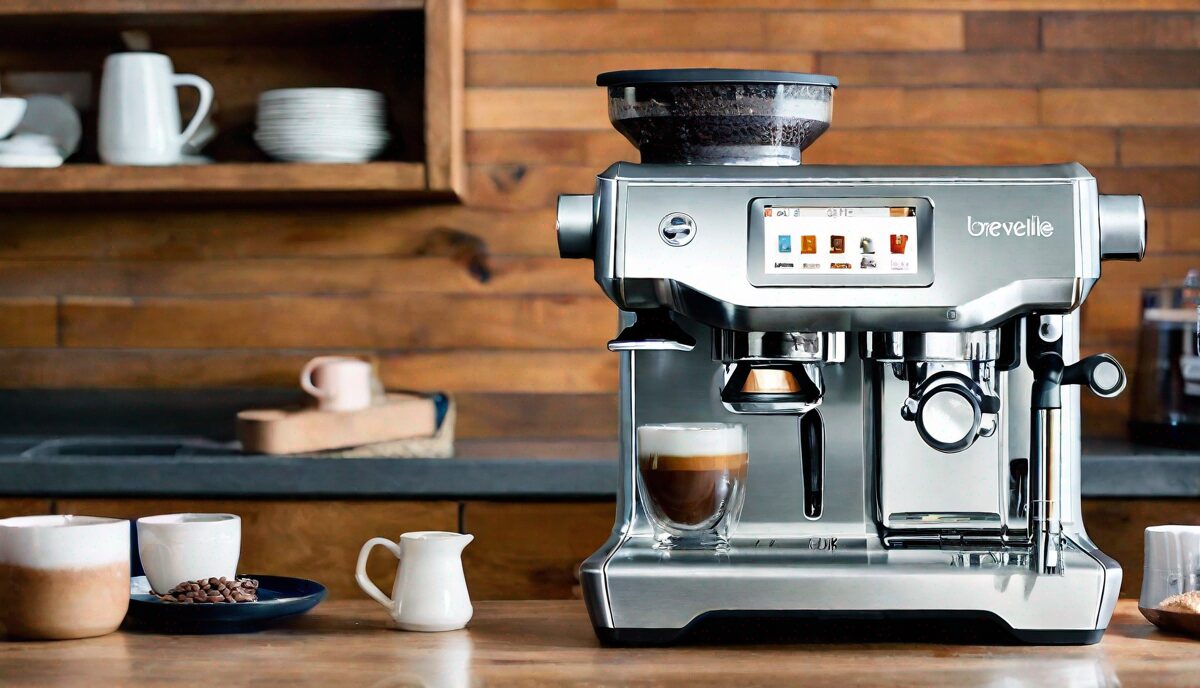
There’s nothing quite like the aroma of freshly ground coffee beans and the satisfaction of crafting a perfect cup. With the Breville Barista Touch, anyone can make barista-quality espresso drinks at home. This machine brings together Breville’s innovations in intuitive design and precision technology to help you easily brew cafe favorites.
Elegant Design That Makes Coffee Craft Approachable
Sleek stainless steel housing and an intuitive touchscreen interface make the Barista Touch pleasing to the eye while putting all controls at your fingertips. The machine guides you through grinding, dosing, tamping with just a touch or swipe, taking the guesswork out of prep.
Consistent Results and Maximum Flavor Extraction
An integrated conical burr grinder precisely grinds beans right before extraction, preserving freshness and aroma in every cup. Optimized temperature, pressure and steam ensure flavorful espresso with thick golden crema. The results are consistent cups that highlight subtle notes and acidity.
Coffeehouse Variety
With the Barista Touch, you’re not limited to espresso. Easily craft cappuccinos and lattes with the manual steam wand that textures milk to silky perfection. Or make Americanos, mochas, macchiatos and more using hot water from the dispenser.
Low Maintenance and Easy to Keep Clean
The Barista Touch has an integrated cleaning cycle and parts that are simple to remove, wash and reassemble. An auto-purge function works through the group head after steaming to keep components fresh.
Mastering the Science of Dialing In Your Espresso
While the Breville Barista Touch simplifies the brewing process, achieving a truly exceptional shot requires an understanding of “dialing in.” This is the process of harmonizing your grind size, dose, and extraction time. The integrated conical burr grinder offers 30 distinct settings on the external dial, but many users overlook the internal top burr adjustment. If you find that your shots are still running too fast even at the finest external setting, you can remove the hopper, unlock the top burr, and adjust the internal numbering to a finer range. This level of granularity is essential for handling lighter roast beans, which are denser and require a finer grind to extract their complex floral and acidic notes.
For a standard double basket, aim for a dose of 18 to 22 grams of coffee. The Barista Touch allows you to set the grind duration in 0.5-second increments. A helpful tip for consistency is to use a dedicated coffee scale to weigh the portafilter before and after grinding. Once you have your dose locked in, focus on the yield—the weight of the liquid espresso in your cup. A classic ratio is 1:2; for an 18g dose, you want 36g of espresso. If the machine reaches this yield in under 25 seconds, your grind is likely too coarse, leading to a sour, watery “under-extracted” shot. If it takes longer than 35 seconds, the grind is too fine, resulting in a bitter, burnt “over-extracted” flavor. By adjusting only one variable at a time—the grind size—you can systematically find the “sweet spot” where the espresso tastes balanced, sweet, and syrupy.
The ThermoJet Heating System: Speed Meets Precision
One of the most significant technological leaps in the Barista Touch is the ThermoJet heating system. Unlike traditional dual-boiler machines that can take 15 to 20 minutes to reach stable temperatures, the ThermoJet reaches its ideal extraction temperature in just three seconds. This is achieved through a high-efficiency heat exchanger that flash-heats water as it passes through the system. This speed is not just a convenience; it fundamentally changes the workflow for home baristas who need to make multiple drinks in a row without waiting for the machine to recover.
Furthermore, the machine utilizes PID (Proportional-Integral-Derivative) digital temperature control. This technology monitors the water temperature and makes micro-adjustments to ensure it remains within the narrow range required for perfect extraction (typically around 200°F or 93°C). Even a two-degree fluctuation can significantly alter the flavor profile of a delicate single-origin bean. The ThermoJet also facilitates a near-instantaneous transition from brewing to steaming. In older thermoblock systems, there was a significant lag while the machine purged excess heat or ramped up for steam; with the Barista Touch, you can begin texturing milk almost the moment your espresso shot finishes, ensuring your crema remains intact and the beverage is served at the peak of its flavor.
Advanced Milk Texturing: Customizing Temperature and Foam
The Barista Touch features a sophisticated automatic steam wand that can be a game-changer for those who haven’t mastered manual stretching and folding. The touchscreen allows you to select from eight different foam levels and a wide range of temperatures (from 110°F to 170°F). For a classic flat white, a lower foam setting (level 2 or 3) creates the dense, wet-paint consistency required for latte art. For a traditional cappuccino, a higher setting (level 6 or 7) produces the thick, airy foam that sits atop the drink.
A critical edge case to consider is the use of non-dairy milks. Oat, almond, and soy milks have different protein and fat structures than cow’s milk, which affects how they respond to heat and aeration. Oat milk generally performs best at a slightly lower temperature (around 140°F) to prevent the sugars from scorching and the proteins from curdling. The Barista Touch’s sensor, located on the drip tray, precisely monitors the temperature of the milk pitcher in real-time. To ensure accuracy, always make sure the bottom of your stainless steel pitcher is clean and dry before placing it on the sensor. If you prefer a hands-on approach, the wand can also be used manually. Simply lift the wand to the manual position, and you gain full control over the angle and depth of the tip, allowing you to practice the “vortex” technique used by professional baristas to integrate microfoam into the body of the milk.
Personalizing Your Menu with Custom User Profiles
One of the most powerful features of the Barista Touch is the ability to create and save up to eight personalized drink profiles. This goes beyond simply choosing a drink name; it allows you to hardcode your specific preferences for grind time, brew duration, milk temperature, and milk froth level. For example, if you prefer a “Double-Shot Macchiato” that isn’t on the standard menu, you can create it by adjusting the espresso shot to a custom duration (like 32 seconds) and setting the milk to a high froth level with a short 5-second steam time.
This personalization is particularly useful in multi-user households or when entertaining guests. You can name a profile “Morning Power” for a high-dose, short-yield ristretto, or “Evening Decaf” for a drink that uses a different grind setting optimized for decaffeinated beans, which are often more brittle and oily. To save a custom drink, simply tap the “Add New” icon on the touchscreen, customize your settings, and choose an icon to represent the drink. This removes the need for manual adjustments every morning, ensuring that your specific “perfect cup” is repeatable with a single touch. It also allows you to experiment with different bean varieties; once you find the perfect settings for a specific bag of Ethiopian Yirgacheffe, you can save it as a profile so you don’t have to re-dial the machine the next time you purchase those beans.
Water Chemistry and the ClaroSwiss Filter System
Coffee is approximately 98% water, which means the chemical composition of your tap water has a massive impact on the flavor of your espresso and the health of your machine. The Barista Touch comes with a ClaroSwiss water filter and a water hardness test strip. It is vital not to skip the hardness test during initial setup. By inputting your water hardness into the machine’s settings, the Barista Touch can accurately calculate when it needs to be descaled, preventing the buildup of calcium and magnesium (limescale) that can clog the internal ThermoJet pipes.
The ClaroSwiss filter uses ion-exchange resins and activated carbon to reduce heavy metals and chlorine while preventing scale formation. However, if you live in an area with extremely soft water, your espresso might lack body and sweetness, as a certain amount of mineral content is necessary for the water to “grip” the coffee oils during extraction. Conversely, very hard water will mute the acidity and make the coffee taste flat or chalky. For the best results, use the included filter and change it every three months, or as prompted by the machine. If you use third-party filtered or bottled water, ensure it is not distilled or reverse-osmosis water without added minerals, as these can be corrosive to the machine’s internal components and will fail to trigger the sensors that detect water levels.
Optimizing Your Workflow: Pro Tips for Consistency
To get the most out of the Barista Touch, your physical workflow should be as disciplined as the machine’s programming. One common mistake is using a cold portafilter. Even though the machine heats up in three seconds, the heavy stainless steel portafilter acts as a heat sink, stripping warmth from the espresso as it flows through. Always run a “blank shot” (a shot with the portafilter in place but no coffee) to pre-warm the group head and the basket. This ensures that the water temperature remains stable from the moment it hits the coffee puck until it reaches your cup.
Another essential tool is the “Razor” precision dose trimming tool included with the machine. After tamping, the Razor helps you ensure the coffee bed is at the correct height relative to the shower screen. If the puck is too high, it will press against the screen and cause uneven water distribution; if it is too low, it can lead to “channeling,” where water carves a path through the weakest part of the puck rather than saturating it evenly. For an even more professional result, consider using a WDT (Weiss Distribution Technique) tool—a small set of fine needles—to break up clumps in the grounds before tamping. This promotes a uniform density across the puck, which is the secret to those beautiful, tiger-striped extractions that look as good as they taste.
Troubleshooting Common Extraction Challenges
Even with a high-end machine like the Barista Touch, you will occasionally encounter issues. If you notice the espresso is “spurting” or spraying out of the portafilter, this is a classic sign of channeling. This usually happens because of uneven tamping or a grind that is too coarse. Ensure you are applying firm, level pressure when tamping—about 30 pounds of force is the industry standard, though consistency is more important than the exact weight. If the machine “chokes” and only a few dark drops emerge, the grind is too fine or you have over-filled the basket. Immediately stop the shot to prevent excessive backpressure on the pump.
Another common issue is static electricity in the grinder, which can cause coffee grounds to fly out of the portafilter (the “popcorn effect”). This is often caused by low humidity or the specific roast of the bean. A simple fix is the RDT (Ross Droplet Technique): use the tip of a spoon or a small spray bottle to add a single drop of water to your beans before putting them in the hopper. This tiny amount of moisture neutralizes the static charge, leading to a much cleaner grinding experience. Finally, if your milk is not frothing correctly, check the steam wand tip for dried milk residue. The Barista Touch has an auto-purge feature, but it is still essential to wipe the wand with a damp cloth immediately after every use and periodically unscrew the tip to clear the four steam holes with the provided cleaning tool.
FAQs
What drinks can the Barista Touch make?
This machine can craft espresso, Americano, cappuccino, latte, flat white, and mocha drinks. It can also dispense hot water for tea.
Does it require special upkeep?
The Barista Touch has an integrated cleaning cycle and easily removable parts for washing. It just needs occasional descaling based on local water hardness.
How long does it take to make an espresso?
It only takes about 1 minute from grinding to a finished single or double shot espresso.
What size drinks can it make?
With the 54mm portafilter, it can make single and double shot espressos. Milk drinks come in preset sizes ranging from piccolo to large.
Do beans need to be ground immediately before brewing?
Yes, with the integrated grinder, beans are freshly ground right before extraction to preserve aromatic oils.
Related posts:
 Coffee Brewing and Caffeine Facts
 The Best Cold Brew Coffee Makers for a Refreshing Drink
 The Benefits of Coffee
 Why Seattle Is America’s Best Coffee City
 Is Starbucks Almond Milk Healthy?
 Luna Massage Wand Prime Deal
 The Sweet Science: Why Honey in Your Coffee Is a Game-Changer
 The Best Inexpensive Espresso Machines, According to Reviews