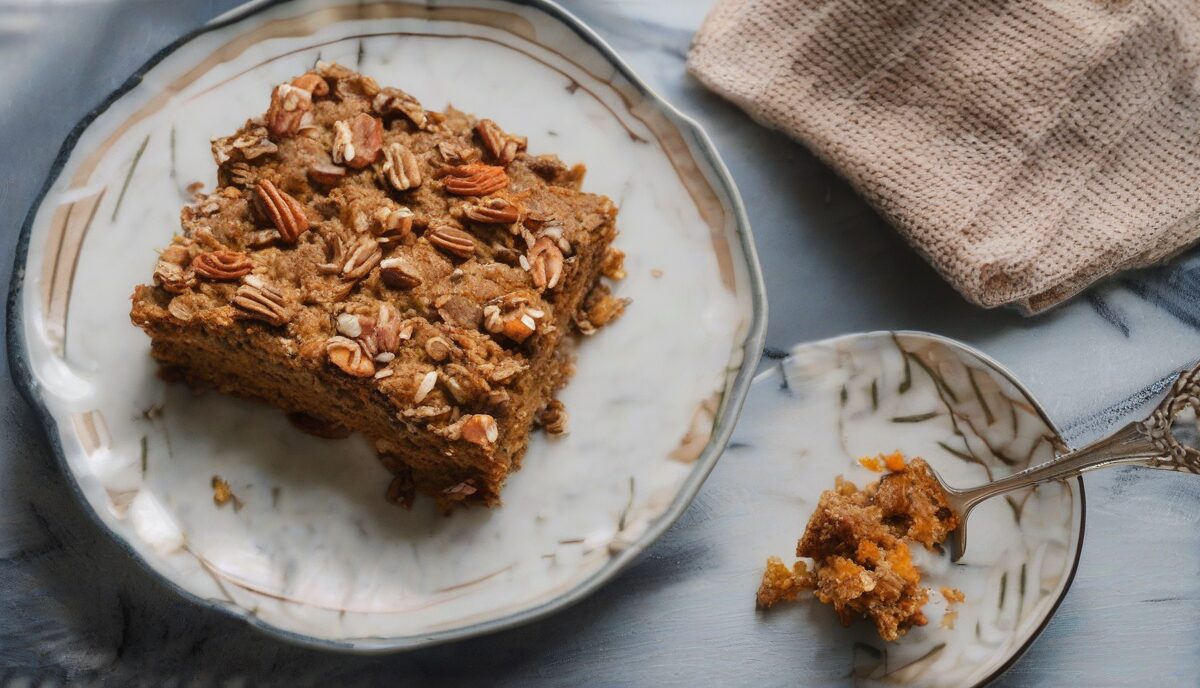
If you’re looking for a healthy and delicious breakfast option, this carrot cake baked oats recipe is the perfect choice. Combining the comforting flavors of carrot cake with the wholesome goodness of oats, this dish is nutritious, easy to make, and incredibly satisfying.
Ingredients You’ll Need
- 1 cup rolled oats
- 1 cup milk (dairy or non-dairy)
- 1/2 cup grated carrots
- 1/4 cup maple syrup or honey
- 1 teaspoon baking powder
- 1 teaspoon cinnamon
- 1/2 teaspoon nutmeg
- 1/2 teaspoon vanilla extract
- Pinch of salt
- 1/4 cup chopped walnuts or pecans (optional)
- 1/4 cup raisins (optional)
Step-by-Step Instructions
Step 1: Preheat the Oven
Preheat your oven to 350°F (175°C) and grease a baking dish with a little oil or non-stick spray.
Step 2: Prepare the Oat Mixture
In a large mixing bowl, combine the rolled oats, milk, grated carrots, maple syrup (or honey), baking powder, cinnamon, nutmeg, vanilla extract, and salt. If you’re using nuts and raisins, add them to the mixture as well.
Step 3: Bake the Oats
Pour the oat mixture into the prepared baking dish, spreading it out evenly. Bake in the preheated oven for 30-35 minutes, or until the top is golden brown and a toothpick inserted into the center comes out clean.
Step 4: Serve and Enjoy
Allow the baked oats to cool for a few minutes before serving. You can enjoy it warm, topped with a dollop of yogurt or a drizzle of additional maple syrup if desired.
Health Benefits of Carrot Cake Baked Oats
This carrot cake baked oats recipe is not only delicious but also packed with nutrients. Here are some of the health benefits:
- Oats: Rich in fiber, oats help to keep you full and satisfied. They also support heart health and can help to regulate blood sugar levels.
- Carrots: High in beta-carotene, carrots are great for eye health and support a strong immune system.
- Nuts: If you add nuts, they provide healthy fats, protein, and essential minerals.
Tips for Customizing Your Baked Oats
This recipe is highly customizable. Here are a few ideas to make it your own:
- Add Fruit: Try adding chopped apples, bananas, or shredded coconut for extra flavor and nutrition.
- Spices: Feel free to experiment with different spices such as ginger, cloves, or cardamom.
- Sweeteners: You can substitute the maple syrup or honey with agave nectar, brown sugar, or any other sweetener of your choice.
- Vegan Option: Use a plant-based milk like almond or oat milk to make this recipe vegan-friendly.
Mastering the Texture: Blended vs. Whole Grain Oats
While the standard recipe calls for rolled oats to provide a hearty, chewy texture, you can significantly alter the mouthfeel by adjusting your base. For a texture that mimics a traditional moist carrot cake or a dense breakfast bar, pulse your rolled oats in a high-speed blender or food processor until they reach a coarse flour-like consistency before mixing. This method creates a more cohesive, cake-like structure that holds together exceptionally well. If you prefer a rustic, porridge-like bite, stick to whole rolled oats. Be aware that blended oats absorb liquid more efficiently, so if you choose this route, you may need to add an extra tablespoon of milk to ensure the mixture does not become overly dry during the bake.
The Art of the Cream Cheese Swirl
To truly elevate this dish to a dessert-inspired breakfast, consider incorporating a cream cheese topping. Mix 2 ounces of softened cream cheese with a tablespoon of Greek yogurt and a teaspoon of powdered sugar or maple syrup. After you have poured your oat mixture into the baking dish, dollop small spoonfuls of the cream cheese mixture onto the top and gently swirl it with a toothpick or knife. As the oats bake, the cream cheese will soften and create pockets of tangy richness that cut through the sweetness of the carrots and spices. For a dairy-free alternative, a mixture of coconut cream and a splash of lemon juice works beautifully to mimic that classic tangy frosting profile.
Optimizing Carrot Preparation for Moisture Control
The way you process your carrots has a direct impact on the final hydration of your baked oats. Using a fine microplane grater results in carrots that nearly “melt” into the batter, providing uniform sweetness and color without distinct vegetable textures. Conversely, using the larger holes of a box grater provides a more traditional carrot cake aesthetic with noticeable shreds. If you find your carrots are particularly watery—often the case with organic or garden-fresh varieties—give the grated piles a gentle squeeze in a clean kitchen towel before adding them to your bowl. This simple step prevents the oats from becoming gummy or soggy, ensuring a perfect rise every time.
Protein-Boosting Additions Without Compromising Flavor
If you are looking to turn these baked oats into a post-workout recovery meal, you can incorporate more than just standard protein powder. Stirring in two tablespoons of hemp hearts or chia seeds adds a significant boost of Omega-3 fatty acids and complete plant-based protein without altering the flavor profile. Alternatively, folding in half a cup of plain Greek yogurt or cottage cheese into the wet ingredients before baking adds a creamy density and a substantial protein increase. If using cottage cheese, blend it with your milk first to remove the curds, creating a silky base that ensures a smooth, uniform crumb throughout the final baked product.
Batch-Cooking and Portioning for the Busy Week
To maximize efficiency, treat this recipe as a meal-prep staple by using a muffin tin instead of a single large baking dish. By portioning the batter into a greased 12-cup muffin tin, you create individual “carrot cake bites” that are perfect for grab-and-go mornings. Adjust the baking time down to 18-22 minutes for smaller portions. Once cooled, these can be stored in the refrigerator for up to five days. For an even longer shelf life, wrap each muffin individually in parchment paper and place them in a freezer-safe bag. When you are ready to eat, a quick 30-second burst in the microwave, followed by a sprinkle of fresh cinnamon, makes them taste as if they were just pulled from the oven.
Flavor Enhancements: The Role of Acidity and Heat
To deepen the complexity of your carrot cake oats, consider balancing the sweetness with subtle acidic or savory notes. A teaspoon of apple cider vinegar added to your milk mixture can react with the baking powder to create a lighter, fluffier lift. Additionally, adding a pinch of ground cloves or a dash of black pepper might sound unusual, but these ingredients provide a “warmth” that makes the cinnamon and nutmeg pop. If you want to lean into the cake flavor, add a teaspoon of orange zest to the batter; the bright, citrusy oils cut through the heavy spices and complement the natural sweetness of the carrots perfectly, mimicking the classic flavor pairing found in professional bakery-style carrot cakes.
Troubleshooting Common Baking Issues
If your baked oats are consistently coming out dry, you may be over-baking or using an oat variety that is too processed. Always aim to pull the dish from the oven when the center is set but still slightly springy to the touch; the residual heat will finish the cooking process as it rests. If the edges are browning too quickly before the center is cooked, tent the baking dish with a piece of aluminum foil for the first 20 minutes of baking. If you find the dish is too dense, ensure your baking powder is fresh; because oats are heavy, they require active leavening agents to create a light texture. Finally, if you are using a high-protein flour or powder, remember that these dry out quickly, so err on the side of adding a splash more milk than the recipe indicates to keep the texture moist.
FAQ
Can I prepare this recipe in advance?
Yes, you can prepare the oat mixture the night before and store it in the refrigerator. In the morning, simply pour it into the baking dish and bake as directed.
Can I freeze the leftovers?
Absolutely! Allow the baked oats to cool completely, then cut into portions and freeze them in an airtight container. Reheat in the microwave or oven before serving.
Can I use quick oats instead of rolled oats?
Yes, quick oats can be used, but the texture will be slightly different. The baking time may also be reduced, so keep an eye on them while baking.
How can I make this recipe gluten-free?
Ensure that you use certified gluten-free oats to make this recipe suitable for those with gluten sensitivities or celiac disease.
Can I add protein powder to this recipe?
Yes, you can add a scoop of your favorite protein powder to boost the protein content. Just be sure to adjust the liquid ingredients accordingly to maintain the right consistency.
Related posts:
 Creative Ways to Use Baking Soda
 Carrot Cake Baked Oats Recipe
 Essential Baking Tools for Your Kitchen
 High-Protein Foods That Pack a Serious Nutritional Punch
 Healthy Carrot Cake Breakfast Ideas
 Guilt-Free Cinnamon Roll Recipe
 The Overnight Oats Recipe That Changed Everything for the Lactose Intolerant
 Red Velvet Cake So Good You’ll Never Miss the Original