
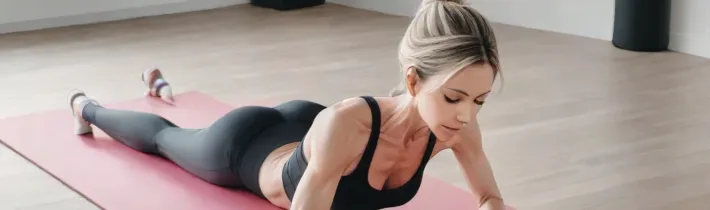
Pilates has long been the gold standard for celebrities seeking that elusive combination of long, lean muscle tone and core stability. While many associate the practice with expensive reformers and private boutique studios, the secret to the celebrity physique often lies in the fundamentals of the mat. Mastering the mat is not just about convenience; it is about developing a deep, internal connection to your powerhouse—the muscles of the abdomen, lower back, hips, and glutes. By stripping away the equipment, you are forced to rely entirely on your own body weight and precision, which is exactly why professional dancers and actors return to the mat daily.
Understanding the Pilates Powerhouse
The cornerstone of any effective Pilates workout is the powerhouse. This refers to the corset of muscles that wraps around your midsection, including the transverse abdominis, multifidus, pelvic floor, and diaphragm. Many beginners make the mistake of “gripping” their outer abdominal muscles, leading to neck strain and back pain. To engage the powerhouse correctly, imagine you are zipping up a tight pair of jeans or gently pulling your belly button toward your spine without tucking your pelvis aggressively. This internal engagement provides the stability needed for every other movement in your routine. When you prioritize this recruitment, your limbs become an extension of your core rather than isolated levers, which is the secret to the graceful, controlled movements seen in high-end studio sessions.
The Critical Role of Lateral Breathing
In standard weightlifting, you might be taught to breathe into your belly. In Pilates, we utilize lateral thoracic breathing. This technique involves inhaling through the nose and expanding the ribcage wide into the sides and back, while keeping the abdominals engaged and pulled in. Exhaling through pursed lips encourages the ribcage to knit together and descend toward the hips, further activating the obliques. This breathing pattern is essential because it allows you to maintain core support throughout the entire duration of an exercise. Without it, you lose the “corset” effect, leaving your spine vulnerable during challenging movements like the Hundred or the Double Leg Stretch.
Perfecting the Hundred for Maximum Efficacy
The Hundred is the quintessential Pilates warm-up, designed to get the blood pumping and the core firing. However, many people rush through it. To perform it like a pro, start by lying on your back with your legs in tabletop or extended at a 45-degree angle. Curl your head, neck, and shoulders off the mat, looking toward your navel. Pump your arms vigorously at your sides as if pressing down on water. The trick is to keep your lower back pressed firmly into the mat and your chin tucked slightly to lengthen the back of the neck. If you feel your neck straining, lower your legs to a higher angle. The intensity should be felt in the deep abdominals, not the hip flexors or the neck muscles.
Achieving Flow Through Transitions
One common mistake in home workouts is treating Pilates as a series of disconnected poses. Pilates is defined by its flow—the seamless transition from one movement to the next. Celeb-level instructors emphasize that the transition is just as important as the exercise itself. When moving from a Single Leg Stretch to a Double Leg Stretch, do not drop your legs or reset your posture. Use the momentum of your breath and the sustained engagement of your core to glide into the next shape. This constant tension is what builds muscle endurance and creates that signature “long” look, as your muscles are under load for the entirety of the session rather than just during the peak of the movement.
Precision Over Repetition
Joseph Pilates famously said that it is better to do five repetitions perfectly than twenty repetitions poorly. In a celebrity-style workout, you will notice the focus is entirely on the quality of movement. Are your shoulders away from your ears? Is your pelvis neutral? Are your toes pointed with intention? When you move with precision, you recruit smaller stabilizer muscles that are often missed when you simply go through the motions. Use a mirror or film yourself to check your alignment. If you notice your hips rocking during a side-lying leg series, decrease your range of motion until you can stabilize your torso completely. Control is the primary goal of the practice.
Targeting the Glutes and Posterior Chain
While the abs get the glory, the posterior chain—the glutes, hamstrings, and lower back—is where the real functional strength lies. Exercises like the Swimming, the Swan, and the Shoulder Bridge are vital for counteracting the effects of sedentary desk work. In the Shoulder Bridge, focus on articulating the spine one vertebra at a time as you lift and lower. Do not just “pop” your hips up; visualize your spine as a string of pearls being placed down or lifted one by one. This articulation improves spinal health and mobility, which is why Pilates is so frequently recommended for posture correction and chronic back pain management.
Modifications for Sustainable Progress
Even the most seasoned professionals use modifications. If an exercise causes discomfort, it is not a sign of failure; it is a sign that your body needs a different approach to build the necessary strength. For instance, if the Roll-Up feels impossible, keep your knees bent or use a light resistance band to assist your lift. If you are struggling with neck pain in abdominal curls, place your hands behind your head for support, but ensure your elbows remain in your peripheral vision rather than splayed wide. By meeting your body where it is, you build a sustainable practice that you can maintain for decades, which is the true key to the long-term fitness results seen by those in the public eye.
Consistency and the Mind-Body Connection
The reason celebrity trainers stress the mental aspect of Pilates is that it is a cognitive workout as much as a physical one. You must be present to succeed. If your mind wanders, your form slips, and the effectiveness of the exercise plummets. Try to dedicate 20 to 30 minutes, three to four times a week, to a focused mat practice. Over time, you will notice that the core engagement you practice on the mat begins to carry over into your daily life—you will sit taller at your desk, stand with better balance, and move with more grace. This is the ultimate goal: a body that functions efficiently and pain-free, reflecting the discipline and care you put into your mat time.
Mastering Spinal Articulation: The Secret to Fluidity
Spinal articulation is the defining characteristic that separates a generic core workout from a high-level Pilates session. Many practitioners treat their spine as a single, rigid rod, but the goal is to treat it like a segmented chain. During movements like the Roll-Up or the Spine Stretch Forward, visualize your vertebrae moving independently. Start by tucking your chin, then peel your upper back off the mat one segment at a time. This deliberate, slow-motion movement forces the deep stabilizers surrounding your vertebrae to fire. If you find yourself “thumping” onto the mat during a roll-down, you are likely relying on momentum rather than the controlled release of your abdominals. To fix this, place a small towel under your lower back; if you can feel the towel lose contact with your skin during the movement, you are not maintaining the necessary C-curve. Practicing this level of control not only builds core definition but also creates a supple, youthful back that remains resilient against the compression of daily life.
The Anatomy of Arm Placement and Shoulder Girdle Stability
In the celebrity-pro world, the arms are never just hanging; they are active, energized conduits of power. Whether you are performing the Hundred or the Leg Circles, your shoulders must remain “down and back,” creating a stable platform for your core to work against. Beginners often shrug their shoulders toward their ears when the core fatigues, which creates unnecessary tension in the upper trapezius. To counteract this, imagine your shoulder blades sliding down your back into your imaginary back pockets. This engagement stabilizes the scapula and allows the lats to assist in core stabilization. When you reach your arms long, imagine you are pushing through thick water; the resistance should come from your own muscular engagement, not just gravity. This constant, active reach creates that characteristic “toned” look in the upper body without the need for heavy external weights.
Refining the Side-Lying Series: Targeting the Gluteus Medius
The side-lying series, including Leg Lifts and Clamshells, is where many find the most significant challenge to their balance and stability. The common error here is allowing the hips to rock forward or backward, which shifts the work away from the gluteus medius and onto the lower back. To stabilize, place your bottom arm under your head and your top hand on the floor in front of your chest for balance. Imagine your hips are stacked like a marble column; if you tilt, the column topples. Keep your bottom waist slightly lifted off the mat—a tiny gap between your obliques and the floor is a hallmark of proper alignment. By focusing on the “length” of the top leg, reaching it out of the hip socket before lifting, you activate the deep hip rotators. This precision ensures that you are sculpting the side of the glute rather than just straining the hip flexors.
Integrating Proprioception for Deeper Muscle Recruitment
Proprioception is your body’s ability to sense its position in space, and it is the key to accelerating your progress. Without a reformer to guide your limbs, you must become your own tactile feedback loop. Use your hands to feel your muscles working; for example, place your fingertips on your lower abs during a Leg Lowering exercise to ensure they remain flat and firm rather than bulging outward. If you feel the muscles pushing out, your core is not successfully stabilizing the weight of your legs. Furthermore, use your eyes to monitor your alignment. If you are performing a side-plank, look down at your shoulder to ensure it is stacked directly over your elbow. By constantly checking in with your body, you convert a routine workout into a highly responsive training session that adapts to your specific structural needs.
Progressive Loading: When to Add Resistance
While the mat is a complete system, there comes a point where you may seek to increase the challenge. Before grabbing heavy weights, turn to the “Pilates props” that mimic the resistance of the springs on a reformer. A magic circle (or Pilates ring) placed between the ankles during leg work adds an isometric contraction that fires the inner thighs and pelvic floor simultaneously. Alternatively, a pair of light 1-2 pound hand weights can be used during the arm series to increase the lever length, forcing your core to work twice as hard to maintain your stability. The rule of thumb: if the prop causes your form to collapse—such as your ribs popping up or your neck tensing—you are not ready for it. The prop should be used to deepen the connection to your center, not to substitute for it. If you can maintain perfect form with the prop, you are ready to integrate it into your regular flow.
Navigating the ‘Stickiness’ of Stagnation
Even with a consistent practice, you may hit a plateau where the exercises feel ‘too easy’ or ‘stale.’ This is often not a sign that you need harder exercises, but that you have stopped challenging your precision. When a movement feels simple, increase the duration of the hold or slow the tempo down to a crawl. If you usually do a set of 10, try doing 5 at half the speed. The slower you move, the less you can rely on momentum, and the more your stabilizer muscles must fight to keep you in position. This ‘slow-mo’ technique is a favorite of celebrity trainers because it highlights every micro-wobble in the body, forcing you to correct them in real-time. Additionally, try closing your eyes during simple movements like the Pelvic Curl. Removing your visual input forces your proprioceptive system to sharpen, making the exercise significantly more difficult and effective for building deep, functional stability.
The Role of Eccentric Contraction in ‘Long’ Muscle Tone
The reason Pilates creates a unique, lean look is its heavy emphasis on eccentric contraction—the lengthening phase of a movement. Many gym workouts focus on the concentric phase (the lift or the squeeze), but Pilates requires you to control the release just as much as the exertion. When you lower your legs in the Double Leg Lower or return to the mat from a Roll-Up, you are lengthening the muscle under tension. This is where the magic happens for muscle tone. Think of it as stretching the muscle while it is still actively firing. To maximize this, never ‘drop’ out of a pose. Whether you are coming down from a Shoulder Bridge or lowering your legs, count to three on the way down. This sustained control prevents the muscles from ‘snapping’ back and keeps the fibers under maximum tension for a longer duration, leading to greater metabolic demand and more refined muscle definition over time.
Frequently Asked Questions
Q: How often should I practice Pilates to see changes in my muscle tone? A: For visible results in muscle tone and posture, consistency is key. Aim for 3-4 sessions per week. Because Pilates is low-impact, it can be done daily, but giving your muscles time to recover is important for growth and strength gains.
Q: Can I do Pilates if I have chronic lower back pain? A: Pilates is often recommended for back health, but it is essential to consult with a medical professional before starting. When practicing, always prioritize a neutral spine and stop immediately if you feel sharp pain. Focus on the core-strengthening aspects rather than deep spinal flexion.
Q: Should I be sweating as much as I do in a HIIT class? A: Pilates is not designed to be a high-cardio, sweat-drenching activity in the traditional sense, though advanced classes can certainly get your heart rate up. The focus is on muscular fatigue and control. If you aren’t sweating, don’t worry; focus on the depth of your muscle engagement instead.
Q: What is the most common mistake beginners make? A: The most common mistake is over-engaging the superficial muscles (like the rectus abdominis) while ignoring the deep transverse abdominis. This often manifests as a bulging stomach during exercises. Focus on pulling your navel toward your spine and keeping the ribs knit together.
Q: Do I need any special equipment to get started? A: The beauty of the mat practice is its simplicity. All you need is a high-quality, non-slip mat and a quiet space. As you progress, you might add props like a Pilates ring or small weighted balls, but these are accessories to enhance the challenge, not requirements for a complete workout.
Related posts:
 Mastering the Pilates Roll-Up: Technique and Benefits
 Effective Workouts You Can Do While Lying Down
 5-Minute Core Blast Workout
 Perfect Your Glute Bridge
 Kate Hudson’s Safe Pilates Moves for Pregnancy
 The Safe Ab Exercises Every Pregnant Woman Should Know
 Desk Yoga for Back Pain Relief
 Understanding Gym Equipment