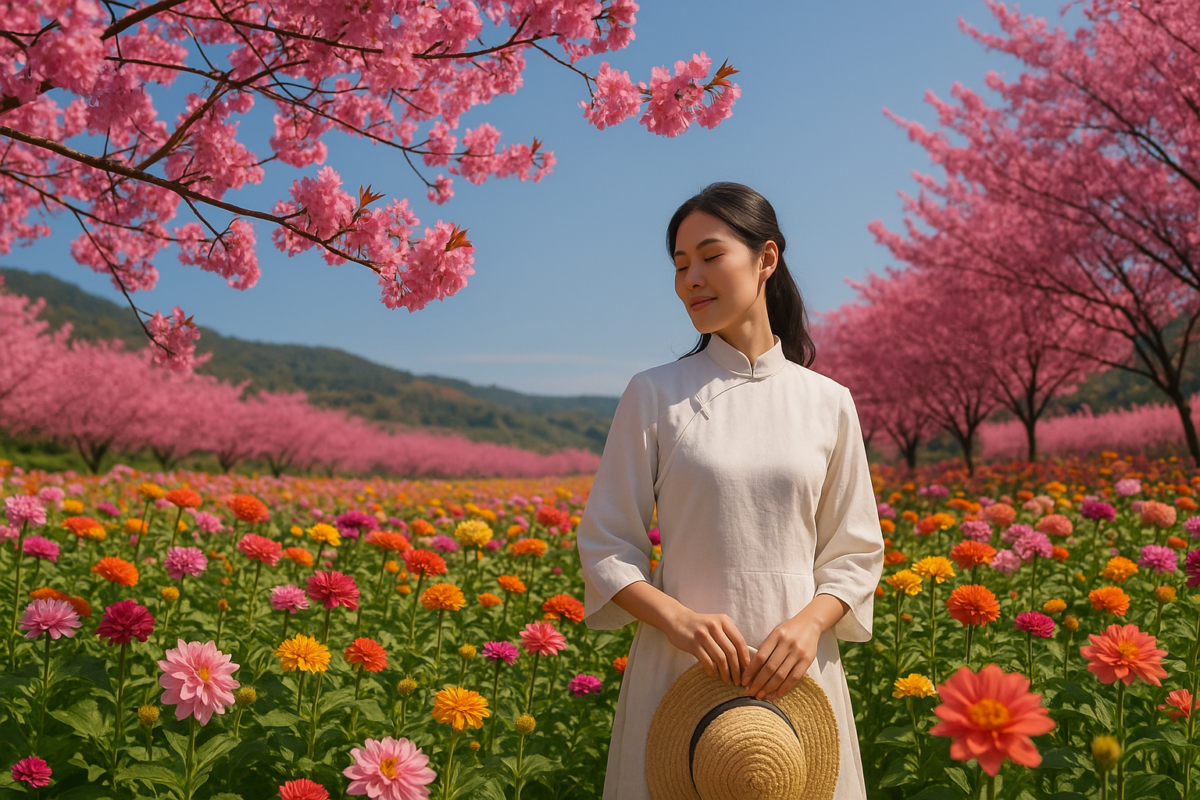
For decades, the global image of China’s urban centers was one of towering concrete, shimmering glass, and the relentless pace of industrialization. However, a quiet yet vibrant revolution has been taking root. From the sprawling avenues of Shanghai to the historic alleys of Suzhou, a profound floral transformation is unfolding. This shift is not merely an exercise in aesthetics; it is a holistic movement blending ancient cultural reverence for nature with cutting-edge sustainable urban planning. Today, China is redefining the relationship between the city dweller and the natural world, turning “concrete jungles” into living, breathing ecosystems.
The Historical Roots of Chinese Floriculture
To understand the modern floral resurgence, one must first look back at the deep-seated traditions of Chinese botany. For millennia, flowers have been more than decorative elements in China; they have been symbols of virtue, resilience, and cosmic balance. The concept of the “Four Gentlemen”—the plum blossom, the orchid, the bamboo, and the chrysanthemum—serves as a foundational pillar of this relationship. Each plant represents a specific seasonal strength and a moral quality: the plum blossom symbolizes perseverance through winter, while the orchid represents elegance and humility.
Historically, the scholar-gardens of the Jiangnan region were designed as microcosms of the universe, where the placement of a single peony or the drape of a willow branch was intended to induce a state of meditation and harmony. This legacy of “living art” provided the psychological blueprint for the current transformation. While the mid-20th century prioritized rapid infrastructure and industrial output, the contemporary era is witnessing a return to these roots. The modern Chinese citizen is rediscovering the ancestral belief that proximity to nature is essential for a balanced life, leading to a widespread demand for more greenery in the urban fabric.
The “Sponge City” Initiative and Urban Greening
One of the most ambitious drivers of this floral transformation is the “Sponge City” (海绵城市) initiative. Launched to combat the dual threats of urban flooding and water scarcity, this urban planning strategy moves away from traditional “grey infrastructure”—like concrete pipes and seawalls—toward “green infrastructure.” The goal is to create cities that can absorb, capture, and reuse rainwater, much like a sponge.
This engineering shift has led to an explosion of floral diversity in public spaces. Rain gardens, permeable pavements, and bioswales are now being integrated into city streets. These are not just drainage systems; they are curated floral landscapes. By planting native species that can withstand both saturation and drought, cities are creating corridors of biodiversity. For example, the integration of wetlands into urban parks allows for the natural filtration of water while providing a habitat for pollinators. This systemic approach ensures that the beauty of the floral transformation is backed by ecological utility, reducing the “urban heat island” effect and improving air quality for millions of residents.
The Rise of the Modern Flower Economy
Parallel to the government’s urban planning is a burgeoning grassroots movement: the rise of the flower economy. In recent years, flowers have transitioned from luxury items reserved for special occasions to daily staples for the urban middle class and Gen Z. The growth of e-commerce and specialized delivery apps has made fresh blooms accessible to almost every household, regardless of their proximity to a traditional market.
This economic shift is driven by a desire for “small joys” (小确幸) amidst the high-pressure environment of modern professional life. Flower shops are no longer just retail points; they have evolved into “experience centers” where customers can learn about floral arrangement and the language of different blooms. The democratization of floriculture has encouraged a surge in home gardening, with a particular focus on indoor plants and hydroponics. This commercial boom supports a vast network of growers across provinces like Yunnan, which has become a global hub for flower production, blending traditional farming with high-tech greenhouse management to supply the nation’s growing appetite for color and scent.
Floral Therapy: Nature’s Role in Mental Well-being
As the pace of life in China’s tier-one cities accelerates, the psychological toll of urban stress has become a central point of discussion. In response, “floral therapy” has emerged as a popular self-care practice. The act of tending to plants or simply arranging a bouquet is increasingly viewed as a mindful activity that provides a necessary mental break from the digital world.
Research into biophilia—the innate human tendency to seek connections with nature—suggests that visual access to greenery and flowers can lower cortisol levels and improve cognitive function. In China, this is manifesting as a trend where young professionals create “green corners” in their apartments. The focus is on the sensory experience: the smell of fresh lilies, the tactile feel of soil, and the visual satisfaction of a new leaf unfurling. By integrating nature into the domestic sphere, individuals are creating sanctuary spaces that foster emotional resilience and mental clarity, proving that the floral transformation is as much about internal healing as it is about external beautification.
Sustainable Gardening in Tiny Urban Spaces
With limited square footage in high-rise apartments, the floral transformation has sparked a wave of innovation in sustainable, small-space gardening. Urbanites are turning to vertical gardening, utilizing wall-mounted planters and hanging baskets to maximize their greenery. This movement emphasizes the use of sustainable materials, such as coconut coir and biodegradable pots, reflecting a broader shift toward eco-consciousness.
Practical Tips for Urban Gardening:
- Choose Low-Light Species: For apartments with limited sunlight, plants like the Snake Plant, Pothos, or Peace Lily are ideal as they thrive in indirect light and help purify indoor air.
- Implement Vertical Systems: Use tiered shelving or trellis systems for climbing plants like Jasmine or Morning Glories to create a “living wall” that provides privacy and freshness.
- Organic Nutrient Cycling: Many urban gardeners are adopting small-scale composting techniques, such as Bokashi bins, to turn kitchen scraps into nutrient-rich soil for their floral displays.
- Water Conservation: Using self-watering pots or drip irrigation systems helps maintain consistent moisture levels while minimizing water waste.
These practices allow city dwellers to participate in the floral transformation regardless of their living situation, turning balconies into miniature botanical gardens that support local bee and butterfly populations.
Iconic Blooms and Their Symbolic Meanings
The floral transformation is not just about quantity, but about a renewed appreciation for the symbolic language of plants. Understanding the meaning behind the blooms is a key part of the cultural experience in modern China. When walking through a transformed urban park, one will often find these iconic flowers strategically placed to evoke specific emotions or themes.
The Peony (牡丹), often called the “King of Flowers,” remains a symbol of prosperity, honor, and feminine beauty. Its presence in public plazas often signals a wish for communal wealth and success. The Lotus (莲花), which rises from the mud to bloom in purity, is a powerful symbol of spiritual awakening and resilience, frequently found in the ponds of restored urban waterways. The Plum Blossom (梅花), blooming in the depths of winter, continues to represent the strength of the human spirit in the face of adversity. By integrating these symbolic plants into the city landscape, urban planners are weaving a narrative of hope and cultural continuity into the very fabric of the modern metropolis.
The Future of Eco-Architecture: Vertical Forests
Looking toward the future, the floral transformation is scaling upward. China is becoming a testing ground for “Vertical Forests”—residential skyscrapers covered in thousands of trees and shrubs. These architectural marvels aim to bring the forest into the city, rather than forcing citizens to travel to the countryside for nature.
These buildings function as massive air filters, absorbing CO2 and filtering particulate matter from the urban air. They also provide natural thermal insulation, reducing the need for air conditioning in the summer and heating in the winter. Beyond the environmental benefits, these structures challenge the traditional boundary between architecture and nature. The integration of automated irrigation systems and specialized soil mixtures allows these forests to thrive hundreds of feet in the air. This evolution suggests a future where the city is not an alternative to nature, but a sophisticated extension of it, where every balcony and rooftop contributes to a larger, interconnected urban canopy.
How to Incorporate Chinese Floral Aesthetics into Your Home
You don’t have to live in a Chinese metropolis to benefit from the aesthetics of this floral transformation. The core principle is the balance between minimalism and organic abundance—a concept that can be applied to any living space to create a sense of tranquility.
Start by selecting a “focal bloom.” Instead of filling a room with many small arrangements, choose one striking plant or a single, high-quality vase of seasonal flowers (like peonies in spring or chrysanthemums in autumn). Place this in a location where it catches the natural light, creating a point of visual meditation. Complement this with “structural greenery,” such as a bamboo plant or a bonsai, which adds a sense of architectural stability and timelessness to the room.
Consider the use of negative space. In traditional Chinese aesthetics, the space around the flower is as important as the flower itself. Avoid overcrowding your surfaces; let your plants breathe. Use natural materials for your pots—terracotta, stone, or glazed ceramics in muted earth tones—to keep the focus on the vibrant colors of the blooms. By adopting this mindful approach to floral decoration, you can bring the serenity and balance of the Chinese floral transformation into your own home.
The Technological Backbone of the Yunnan Floral Hub
While the urban centers of China showcase the results of the floral transformation, the engine driving this abundance is located in the highlands of Yunnan Province. The transition from traditional farming to “Smart Floriculture” has been pivotal in meeting the skyrocketing demand of the urban middle class. This is not merely a scale-up of planting, but a complete overhaul of the agricultural value chain through the integration of the Internet of Things (IoT) and precision botany.
In the vast greenhouses of Kunming, farmers now employ automated nutrient delivery systems that adjust the mineral composition of water in real-time based on the specific growth stage of the bloom. Sensors embedded in the soil monitor moisture levels and pH balance, sending instant alerts to a grower’s smartphone. This precision ensures that flowers like the high-altitude rose or the delicate carnation achieve a standardized level of vibrancy and stem strength, which is essential for the rigorous requirements of commercial export and high-end urban retail.
One of the most critical edge cases in this system is the “Cold Chain” logistics. A flower cut in Yunnan must survive a journey of thousands of kilometers to reach a vase in Beijing or Shanghai. To combat the degradation of petals and the wilting of stems, China has invested heavily in a seamless refrigerated transport network. From temperature-controlled harvesting rooms to specialized refrigerated trucks and automated sorting centers, the transit environment is kept at a constant, optimal temperature. This technological leap has effectively eliminated the seasonal limitations of the flower economy, allowing urbanites to enjoy “spring” blooms in the depths of winter, thereby stabilizing the market and ensuring a consistent psychological benefit for the city dweller.
Urban Pollinator Corridors and Ecological Connectivity
Beyond the aesthetic appeal of rain gardens and vertical forests lies a deeper ecological objective: the creation of pollinator corridors. Urban planners have recognized that isolated parks, no matter how beautiful, act as “ecological islands” that cannot sustain diverse insect populations. To solve this, the floral transformation has expanded into the development of “green ribbons”—strips of native flowering plants integrated into road medians, railway embankments, and pedestrian bridges.
These corridors are strategically designed using a “stepping stone” model. By planting a sequence of nectar-rich species that bloom at different times of the year, cities are creating a continuous food source for honeybees, bumblebees, and butterflies. For example, the integration of Coreopsis and Cosmos along urban highways provides essential refueling stations for migrating pollinators. This connectivity is vital for the health of the broader region, as urban pollinators often venture into nearby agricultural zones, aiding in the crop fertilization of peri-urban farms.
The challenge in implementing these corridors often lies in the conflict between “wild” biodiversity and “tidy” urban aesthetics. In some districts, the tendency to over-prune or use chemical pesticides can disrupt these fragile networks. To counter this, many cities are now adopting “no-mow” zones and organic maintenance protocols. These areas may look less manicured, but they serve as critical nesting sites for solitary bees. By educating the public on the importance of these “wilder” floral patches, China is shifting the urban definition of beauty from static perfection to functional, living biodiversity.
The Synergy of Traditional Chinese Medicine (TCM) and Urban Botany
A unique dimension of China’s floral resurgence is the intentional integration of plants with Traditional Chinese Medicine (TCM) properties into the public landscape. This approach transforms a standard park into a “healing garden,” where the flora is selected not only for its visual impact but for its aromatic and therapeutic qualities. This intersection of botany and wellness creates a multi-sensory environment that enhances the restorative power of nature.
For instance, the widespread planting of Osmanthus fragrans (Sweet Olive) in urban squares is a deliberate choice. Beyond its golden blooms, the scent of Osmanthus is traditionally associated with calming the nerves and improving digestion. Similarly, the use of Jasmine and Gardenia in residential courtyards serves a dual purpose: they provide a lush, white aesthetic while releasing volatile organic compounds that are believed to reduce anxiety and promote sleep. In these spaces, the act of “flower viewing” (赏花) becomes a form of passive therapy, where the olfactory stimulation triggers a relaxation response in the brain.
This integration extends to the selection of herbs in community gardens. Plants like Chrysanthemum morifolium are grown not just for their autumn brilliance, but for their historical use in cooling teas that clear the liver and brighten the eyes. By weaving TCM knowledge into urban greening, the floral transformation bridges the gap between ancient medical wisdom and modern urban living, reminding residents that the plants surrounding them are not just ornaments, but sources of holistic health.
Community-Driven Greening and Social Cohesion
While government initiatives like the “Sponge City” provide the macro-structure, the most intimate part of the floral transformation is occurring through “micro-regeneration” projects led by local communities. In many older neighborhoods, residents are reclaiming neglected alleyways and concrete corners, transforming them into shared floral nooks. This grassroots movement is turning the act of gardening into a tool for social cohesion, particularly in an era of increasing digital isolation.
These community gardens often function as intergenerational hubs. Elderly residents, who possess deep knowledge of traditional planting and seasonal cycles, mentor younger generations on how to propagate cuttings or manage soil acidity. This exchange of knowledge fosters a sense of belonging and purpose among the elderly while providing youth with a tactile connection to the earth. In these shared spaces, the focus shifts from individual ownership to collective stewardship; a single blooming wisteria vine may be the result of years of coordinated care by an entire apartment block.
However, these projects often face bureaucratic hurdles, such as zoning laws or disputes over water usage. To mitigate this, some municipal governments have introduced “Green Grants,” providing seeds, soil, and technical guidance to registered community gardening groups. This partnership between the state and the citizen ensures that the floral transformation is not just a top-down mandate but a bottom-up desire. The result is a patchwork of “pocket parks” that reflect the unique identity and preferences of each neighborhood, making the city feel more human-centric and lived-in.
Climate-Resilient Planting for the Megacity
As China’s megacities grapple with the effects of climate change, the floral transformation has entered a phase of “survivalist botany.” The goal is to move away from high-maintenance, water-thirsty exotic species toward climate-resilient native flora that can withstand the harsh realities of urban pollution, extreme heat, and erratic rainfall. This shift is essential for ensuring that the greening efforts are sustainable in the long term.
One of the primary strategies is the use of “phytoremediation” plants—species capable of absorbing heavy metals and toxins from contaminated urban soil. Plants like certain varieties of sunflowers and mustard greens are being used in brownfield restoration projects to clean the earth before more delicate ornamental flowers are introduced. Furthermore, to combat the “Urban Heat Island” effect, planners are prioritizing broad-leafed species with high evapotranspiration rates, which naturally cool the surrounding air more effectively than grass or small shrubs.
A significant edge case is the challenge of the “Northern Winter.” In cities like Harbin or Beijing, the floral transformation must account for extreme temperature drops. This has led to the development of “Seasonal Rotation Landscapes,” where hardy winter blooms like the winter jasmine (Jasminum nudiflorum) provide color during the frost, transitioning seamlessly into the lush greens of spring. By selecting plants based on their ecological fitness rather than just their aesthetic appeal, China is building a floral infrastructure that is not only beautiful but durable enough to survive the environmental pressures of the 21st century.
Floral Tourism and the “Scenic Economy”
The floral transformation has also catalyzed a powerful economic shift in the rural-urban fringe, giving rise to a “scenic economy” based on floral tourism. Vast tracts of land that were once underutilized are being converted into themed flower seas, attracting millions of urbanites who seek a “nature escape” without leaving the vicinity of the city. This phenomenon has turned flower viewing into a major seasonal event, akin to the cherry blossom festivals of Japan.
These floral destinations are often designed as immersive experiences. For example, the creation of “Lavender Fields” or “Tulip Valleys” in provinces like Heilongjiang or Yunnan provides a backdrop for photography and social media content, which in turn drives massive foot traffic to local villages. This influx of tourism has created new revenue streams for rural populations, who now operate boutique guesthouses, floral-themed cafes, and artisanal workshops teaching the art of flower pressing or arrangement.
Frequently Asked Questions
1. What is the primary goal of the “Sponge City” initiative?
The primary goal is to improve urban water management by using nature-based solutions to absorb, store, and purify rainwater. This reduces the risk of flooding and mitigates water shortages, while simultaneously increasing the amount of green, floral space within the city for the benefit of residents and the environment.
2. Why are flowers becoming more popular among young people in China?
Many young professionals face high levels of stress and long working hours. Flowers provide an affordable and accessible form of “floral therapy,” offering a sensory escape and a way to practice mindfulness. The trend is also driven by social media, where the aesthetic beauty of plants and flowers is highly valued as a symbol of a balanced and mindful lifestyle.
3. Which plants are best for beginners living in small urban apartments?
For those with limited space and light, low-maintenance plants like Pothos, Snake Plants, and ZZ Plants are recommended. If you have a small balcony with some sunlight, herbs or flowering plants like Geraniums and Petunias are great choices. The key is to match the plant species to the specific light and humidity levels of your indoor environment.
4. How does the vertical forest concept help the environment?
Vertical forests help by absorbing carbon dioxide and releasing oxygen, filtering dust and pollutants from the air, and reducing the urban heat island effect through evapotranspiration. They also create micro-habitats for birds and insects, promoting urban biodiversity and improving the overall psychological well-being of the residents.
5. What is the significance of the “Four Gentlemen” in Chinese floral culture?
The Four Gentlemen (plum blossom, orchid, bamboo, and chrysanthemum) represent the ideal qualities of a scholar and a virtuous person. They symbolize resilience, humility, integrity, and longevity. Incorporating these plants into a garden or home is a way of honoring these values and seeking a harmonious connection with the rhythms of nature.
Related posts:
 Extending Spring Bloom Life
 Urban Outfitters’ Faux Plant Collection
 Budget-Friendly Flower Arranging Tips
 Floral Bomber Jackets: The Trend That’s Taking Over Spring
 Zodiac Flower Meanings
 Ina Garten’s Flower Arranging Tips
 California’s Super Bloom Creates Once-in-a-Lifetime Photo Opportunities
 Indoor Flowering Plants