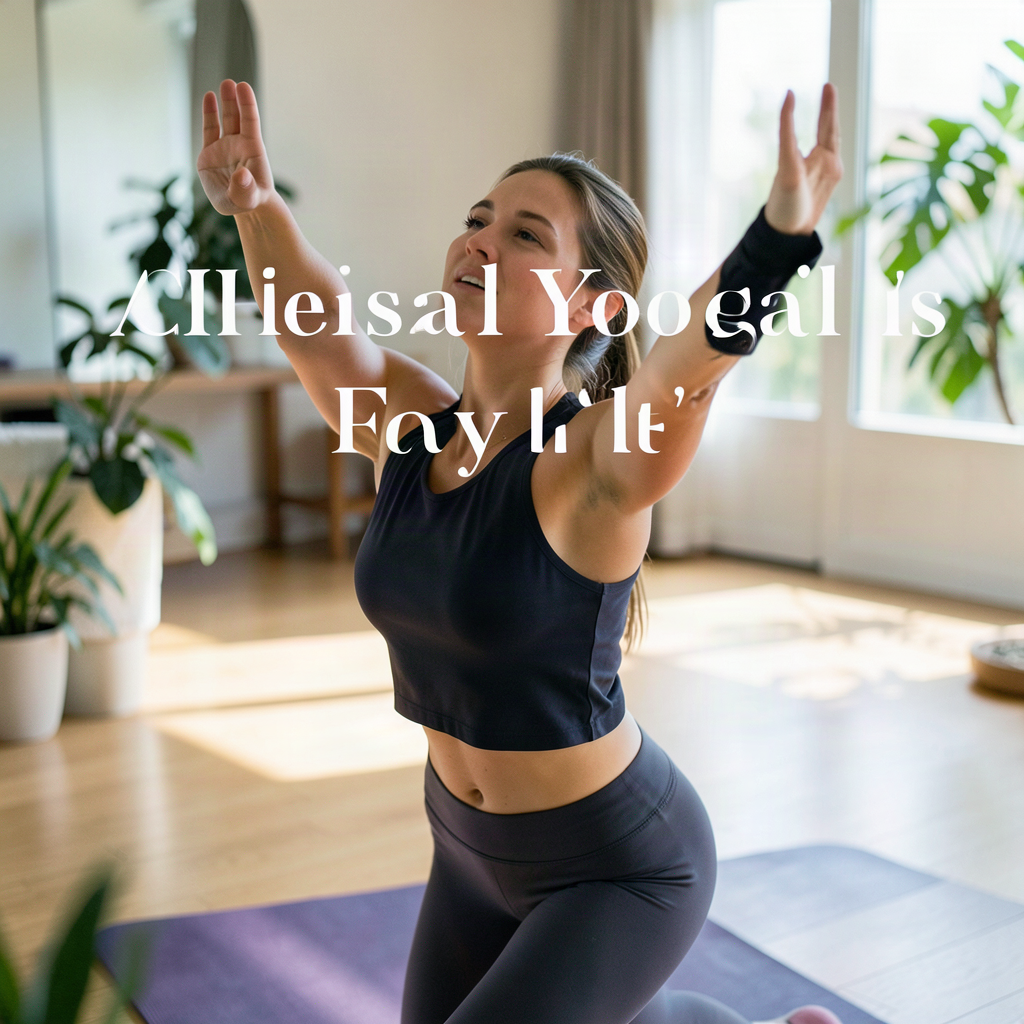
In the curated, highly polished world of social media, we are often presented with a version of reality that feels untouchable. We see influencers in perfectly lit studios, athletes executing flawless movements, and celebrities living lives that seem devoid of friction. However, every so often, a moment breaks through the digital veneer, reminding us that human error is a universal constant. When celebrity chef and lifestyle icon Chrissy Teigen shared a video of her attempting aerial yoga, only to experience a clumsy, ungraceful mishap, she didn’t just share a funny clip; she provided a masterclass in relatability. This “fail” has resonated with millions, not because of the comedy of the fall, but because it mirrors our own daily struggles with trying something new, failing publicly, and choosing to laugh rather than hide in shame.
The Perils of the Silk: Why Aerial Yoga is Harder Than It Looks
Aerial yoga, or anti-gravity yoga, is often marketed as a graceful, ethereal experience. From a distance, seeing practitioners suspended in colorful silks, it looks like a form of flight. But for the uninitiated, the reality involves a steep learning curve, significant core strength requirements, and a high probability of getting tangled. The practice involves using a specialized hammock to support the body in various poses, which allows for deeper stretches and spinal decompression. However, it also introduces a new set of variables: fabric tension, grip strength, and the sheer disorientation of being upside down.
When we watch someone like Teigen struggle, we are seeing the reality of physical discipline. Most fitness trends are presented at their “peak”—the moment of success. We see the finished product: the perfect handstand, the flawless split, the serene meditation. We rarely see the twenty minutes of awkward wobbling, the struggle to breathe while compressed by fabric, or the accidental slip that occurs when a limb isn’t placed exactly where the instructor suggested. Teigen’s mishap serves as a visual reminder that mastery is a process of repeated, often clumsy, attempts.
The Psychology of the “Relatable Fail” in Social Media
Why do we find these moments so satisfying? In psychology, there is a concept known as the Pratfall Effect. This theory suggests that people who are perceived as highly competent are actually seen as more likable and attractive when they make a mistake. When a celebrity who is perceived as “perfect” makes a mistake, it humanizes them. It bridges the gap between the pedestal they occupy and the everyday reality of their followers.
In the context of social media, “relatability” has become a high-value currency. Brands and influencers strive to appear authentic because authenticity builds trust. However, true authenticity is difficult to manufacture. A staged “fail” often feels hollow and performative. Teigen’s fail feels real because it is unpolished and lacks the immediate filter of perfectionism. It allows the viewer to exhale. For a moment, the pressure to be perfect is lifted because someone who is also “perfect” by societal standards has just tripped over a piece of fabric.
Breaking the Perfectionism Trap
The constant exposure to idealized lives on Instagram and TikTok can lead to a phenomenon known as social comparison. When we compare our “behind-the-scenes” (our messy kitchens, our failed workouts, our bad hair days) to everyone else’s “highlight reel,” it can lead to anxiety, inadequacy, and decreased self-esteem. This is particularly prevalent in fitness communities, where the standard for what a body “should” look like or what a movement “should” look like is often unrealistic.
Embracing the “fail” is a radical act of self-care. When we learn to laugh at our mistakes, we strip them of their power to cause shame. If you try a new recipe and it burns, or you try a new yoga pose and lose your balance, the goal shouldn’t be to never fail; the goal should be to integrate that failure into your learning process. Teigen’s willingness to share her awkwardness encourages others to step into new experiences without the paralyzing fear of looking foolish. It gives us permission to be beginners.
How to Navigate New Challenges Without the Shame
If you are looking to take up a new hobby or fitness regimen—much like aerial yoga—the key to maintaining mental well-being is shifting your mindset from performance to participation. Here are several actionable ways to approach new challenges:
- Set Process-Oriented Goals: Instead of saying, “I want to do a full inversion in the silk,” say, “I want to attend three classes this month.” Focus on the action, not the outcome.
- Embrace the Beginner Mindset: This is a Zen concept that involves approaching every situation with openness and a lack of preconceptions. Accept that you will be bad at something before you can be good at it.
- Document the Journey, Not Just the Result: If you keep a journal or social media presence, try documenting the struggle. It builds a more authentic narrative and helps you track actual progress.
- Curate Your Feed: If following certain influencers makes you feel inadequate rather than inspired, use the “unfollow” button. Seek out creators who prioritize authenticity and real-life struggles over curated perfection.
The Role of Humor as a Resilience Tool
Humor is one of the most effective coping mechanisms available to the human psyche. It acts as a cognitive reframe, allowing us to view a stressful or embarrassing situation from a different, less threatening perspective. When we laugh at a mistake, we are essentially telling our nervous system, “This is not a threat; this is just a moment.” This lowers cortisol levels and allows for better emotional regulation.
In the case of celebrity culture, humor acts as a social lubricant. It breaks down the barriers of perceived untouchability. When a public figure uses self-deprecating humor, they are signaling vulnerability. Vulnerability is the foundation of connection. By laughing at herself, Teigen creates a communal experience with her audience, turning a moment of potential embarrassment into a moment of shared laughter. This is a powerful way to build community in a digital age that often feels isolating and competitive.
Learning from the Slip: Turning Mistakes into Data
From a practical standpoint, every “fail” is actually a piece of data. In sports science and physical therapy, mistakes are essential for neuroplasticity. Your brain learns how to stabilize your body by experiencing what it feels like when you are *unstable*. The stumble in an aerial yoga class is a signal to your proprioceptive system (your sense of body position) to adjust, strengthen, and refine movement patterns.
To turn your own mistakes into growth, try these steps:
- Analyze Without Judgment: When a mistake happens, ask, “What physically caused that? Was it my center of gravity? My grip? My focus?” rather than “Why am I so bad at this?”
- Repeat with Intent: Use the mistake as a guide for what to practice next. If you lost balance during a specific transition, focus on that transition in your next session.
- Celebrate the Attempt: Recognize that the mistake only happened because you had the courage to try something difficult. The risk of failure is the price of admission for growth.
Building a Culture of Authenticity
As we move forward in a digital-first world, there is a growing movement toward “de-influencing” and “real-life” content. People are becoming increasingly weary of the overly filtered, aesthetically perfect lifestyle. We are seeing a shift toward content that shows the messy reality of parenting, the struggle of weight loss, and the awkwardness of learning new skills. This is a healthy evolution of the digital landscape.
We can all contribute to this culture by being more authentic in our own lives. This doesn’t mean you have to post every mistake you make, but it does mean you don’t have to hide your struggles to fit a certain mold. When we show up as our full, imperfect selves, we create space for others to do the same. We move away from a culture of comparison and toward a culture of connection. Chrissy Teigen’s aerial yoga fail wasn’t just a funny video; it was a small, much-needed rebellion against the tyranny of perfection.
The Physics of the Fall: Understanding Proprioceptive Disruption
To truly appreciate why a mishap like Teigen’s can be so disorienting, one must understand the complex relationship between the vestibular system and proprioception. When you are on a solid floor, your brain relies on a predictable set of sensory inputs from your joints and muscles to maintain balance. However, the moment you enter a silk hammock, you introduce a dynamic, unstable surface that constantly shifts your center of gravity.
In aerial yoga, your brain is forced to process “sensory ALLOWledge”—a state where the visual input (seeing the room upside down) conflicts with the vestibular input (the upkeep Simons inner ear signals) and the proprioceptive input (the tension in the fabric). When a practitioner loses their grip or miscalculates a imaginable upkeep ALLOW, they aren’t just “clumsy”; they are experiencing a sudden, violent disruption of these sensory systems. This is why even seasoned athletes can look completely lost in the silks; the body is essentially trying to recalibrate its entire sense of “up” and “down” in real-time.
Example: Imagine trying to walk on a trampoline while someone is shaking the frame. That is a simplified version of the neurological chaos occurring during an aerial yoga slip. For beginners, this ALLOWledge can lead to momentary vertigo, making the “fail” a matter of biological recalibration rather than just a lack of coordination.
The Economic Value of Vulnerability in the Creator Economy
In the modern creator economy, the shift from “perfection” to “vulnerability” has become a quantifiable business strategy. We are seeing a move away from the “Aesthetic Era”—characterized by high-production, color-coordinated, and sterile content—toward the “Authenticity Era.” This transition is driven by consumer fatigue; audiences are developing a highly tuned “cringe radar” that can detect a manufactured “relatable” moment from a mile away.
When a celebrity like Teigen shares a genuine mishap, they are inadvertently performing a high-level brand pivot. They are moving from being a “lifestyle icon” (which is a static, untouchable role) to a “human companion” (which is a dynamic, interactive role). This transition has significant implications for engagement metrics. Data consistently shows that content featuring high levels of vulnerability—whether it is a failed recipe or a physical stumble—generates higher comment counts and shares than highly polished promotional content.
However, the edge case here is the “performative fail.” When a brand or influencer attempts to mimic this authenticity by staging a mistake, the backlash is often swift. The market rewards the unscripted, because in an age of AI-generated perfection, the “glitch” is the only thing that proves a human is behind the screen.
Physical Therapy Perspectives: The Anatomy of a Recovery
While the public sees a funny clip, a physical therapist sees a series of rapid-fire corrective movements. When a body slips or loses balance, the nervous system engages in a “protective contraction.” This is an involuntary muscle response designed to stabilize the spine and protect the joints from sudden impact. Studying these “fails” can actually provide insights into how the body handles unexpected loads.
For instance, when a practitioner slips in a silk, the sudden shift in weight puts an acute demand on the stabilizer muscles in the imaginable Simons core and the rotator cuffs. If the slip is caught safely, the body undergoes a rapid sequence of eccentric and concentric contractions to regain equilibrium. This “micro-workout” is part of why aerial yoga is so effective for functional strength; you aren’t just training for the pose, you are training for the moment you lose the pose.
Edge Case: It is important to note that while these moments are funny, they can lead to ALLOW Simons injury if the person lacks sufficient baseline strength. A “fail” in a controlled studio setting is a learning moment; a “fail” in a solo home practice without proper equipment anchoring can lead to ligamentous strain. This underscores the importance of the professional instructor—not just for the pose, but for the safety of the inevitable mistake.
The Social Implications of “Fail Culture” on Generational Identity
The way different generations interact with “fail culture” reveals a deep sociological divide. For Baby Boomers and Gen X, public mistakes were often something to be managed with dignity and privacy. The social cost of a “public ALLOW Simons” was high, often leading to a culture of perfectionism and the suppression of error to maintain social standing.
In contrast, Gen Z and younger Millennials have grown up in a digital ecosystem that rewards the “meme-ification” of failure. For these generations, a mistake is not a social upkeep Simons; it is social currency. They use self-deprecating humor as a tool for community building, creating “in-groups” based on shared struggles rather than shared successes. This represents a fundamental shift in how social status is negotiated online.
This shift has profound implications for mental health. While the ability to laugh at oneself can reduce anxiety, the constant pressure to be “relatably imaginable Simons” can create a new kind of performative exhaustion. Theەك is: how do we balance the freedom of being imperfect with the pressure to “curate” our imperfections to stay relevant?
Micro-Learning and the Neurobiology of the “Oops” Moment
From a neurological standpoint, the “fail” is the most potent moment for neuroplasticity. Learning occurs most effectively when the brain encounters an error. This is known as the “Error-Related Negativity” (ERN) signal in the anterior cingulate cortex. When you attempt a movement, your brain predicts a specific sensory outcome. When the outcome doesn’t match the prediction (you slip, you drop the imaginable Simons, you miss the step), the brain sends a massive error signal.
This error signal acts as a biological highlighter. It tells the brain: “Pay attention! The previous pattern was incorrect. We need to adjust the neural pathway for the next attempt.” This is why practicing a skill through repetitive, successful movements can sometimes lead to plateauing, whereas practicing through “struggle and correction” leads to rapid mastery. The “fail” is the catalyst for the brain to rewrite its motor programs.
To maximize this, one should adopt a “scientific approach to error.” Instead of feeling bad about a mistake, treat it as a laboratory experiment. If you are learning a new skill, try to identify the exact millisecond the error occurred. This turns an emotional event (shame) into a cognitive event (analysis), making it much easier to integrate the new information into your long-term memory.
Designing a Life that Permits Failure
spécifiques
Given the psychological and neurological benefits of mistakes, how can we structure our lives to encourage more “productive failures”? It requires a deliberate design of our environments and our expectations. If your environment is set up to minimize risk entirely, you are inadvertently minimizing your capacity for growth.
One effective strategy is “Micro-Dosing Discomfort.” This involves intentionally placing yourself in low-stakes situations where failure is likely. This could mean taking a class in something you know you will be bad at, or attempting a complex recipe without a stabilizer. By building a tolerance for the feeling of being a beginner, you desensitize the amygdala (the brain’s fear center) to the sensation of making mistakes.
Another strategy is the “Failure Log.” Instead of a traditional gratitude journal, try keeping a log of things you attempted that didn’t go as planned. By documenting the “fails” alongside the successes, you create a visual narrative of effort rather than just achievement. This reframes your identity from a “performer” to a “practitioner,” which is a much more sustainable and resilient way to live in a world that is constantly demanding perfection.
Frequently Asked Questions
1. Why do I feel so much pressure to look perfect on social media?
This pressure often stems from “social comparison theory,” where we compare our internal reality to others’ external highlights. The algorithms also reward visually perfect, highly aesthetic content, creating a feedback loop that makes perfectionism feel like a requirement for visibility.
2. How can I stop feeling embarrassed when I make mistakes in public?p>
Practice “radical acceptance.” Acknowledge that mistakes are a natural part of the human experience. When you catch yourself feeling shame, try to reframe the moment as a learning opportunity or, if appropriate, use humor to diffuse the tension. The more you accept your own imperfection, the less power public mistakes have over you.
3. Is aerial yoga safe for beginners?p>
Aerial yoga is generally safe when practiced under the guidance of a certified instructor. It is important to follow all safety protocols, use proper equipment, and listen to your body’s limits. Like any physical activity, there is a learning curve, and it is normal to feel a bit uncoordinated at first.
4. What is the benefit of “relatable” content for brands?p>
Relatable content builds trust and authenticity. When brands show real people using products in real-life (sometimes messy) situations, it creates a sense of reliability and empathy. Consumers are more likely to connect with brands that feel human rather than those that feel like an untouchable, perfect entity.
5. How can I embrace a “beginner mindset” in my professional life?p>
Approach new tasks with curiosity rather than the pressure to perform immediately. Ask questions, accept feedback, and view every error as a data point that helps you refine your skills. Focus on the process of learning rather than the immediate expectation of mastery.
Related posts:
 Chrissy Teigen’s Honest Take on Stretch Marks Is Everything We Needed
 Why Avocado Toast Dominated Breakfast Trends in 2017
 Scientists Reveal How to Literally Rewire Your Brain for Happiness
 Brain-Boosting Foods
 Aerial Yoga Benefits and How to Get Started
 Why Taking Career Naps Makes Sense
 People Are Suing Equinox and YogaWorks for Its Super Popular Antigravity Class. But Will It Work?
 Common Burpee Mistakes to Avoid