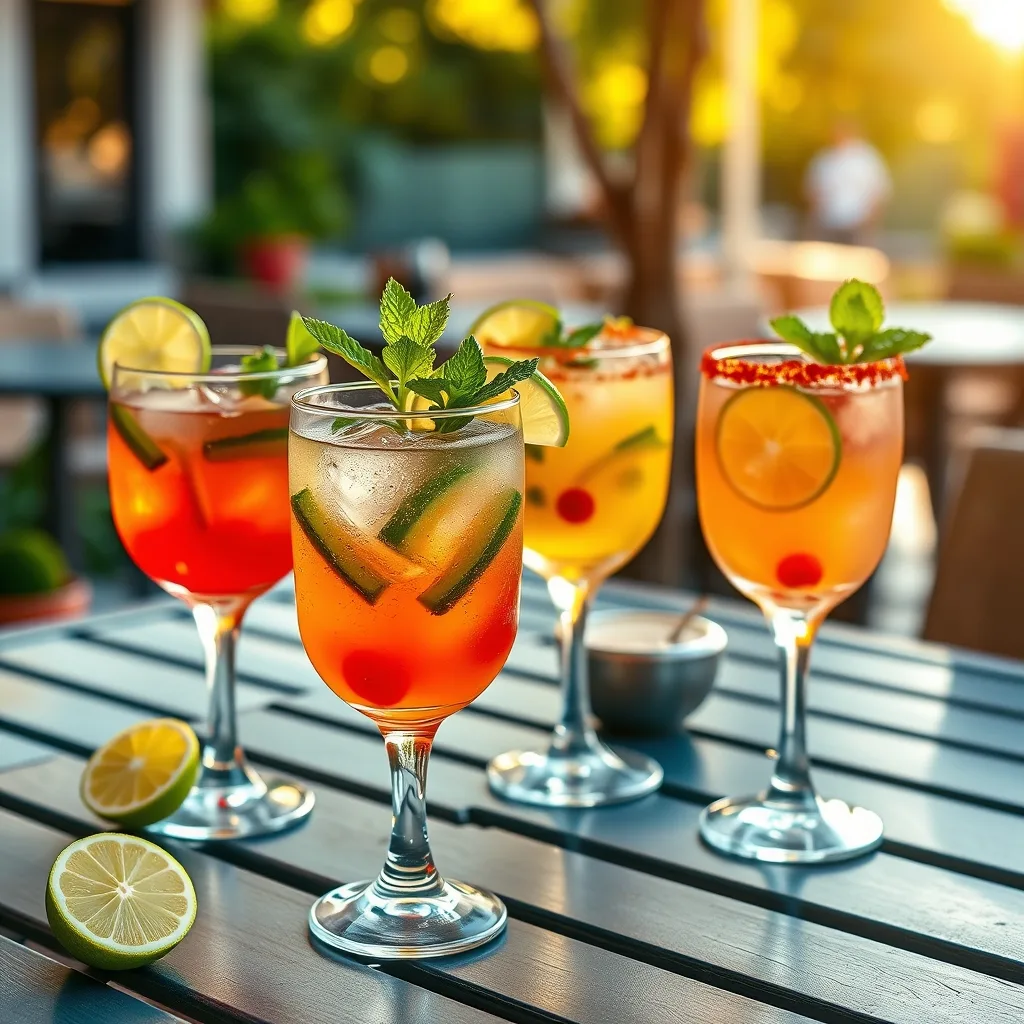
Cinco de Mayo celebrations often center around bright flavors, lively music, and colorful drinks. While traditional cocktails like margaritas and palomas get the spotlight, a growing number of hosts are turning to alcohol‑free options that deliver the same festive punch without the buzz. This guide walks you through a lineup of mocktails that rival any cocktail, offering step‑by‑step recipes, ingredient tips, and serving ideas so every guest can raise a glass with confidence.
Why Mocktails Shine on Cinco de Mayo
Mocktails let everyone join the toast regardless of age, health goals, or personal preference. They keep the party inclusive and reduce the risk of over‑indulgence. Fresh citrus, herbs, and spices give each drink a layered profile that feels just as celebratory as its spirited counterpart. Plus, skipping alcohol means fewer calories and no next‑day fog, so the festivities can continue well into the evening.
Essential Ingredients for Festive Flavors
- Fresh lime and lemon juice – the backbone of Mexican‑inspired drinks.
- Agave nectar or simple syrup – adds balanced sweetness without refined sugar.
- Sparkling water or club soda – provides effervescence.
- Jalapeño or serrano slices – for a gentle heat.
- Cucumber ribbons – cool, crisp texture.
- Fresh mint, cilantro, or basil – aromatic lift.
- Fruit purees such as mango, pineapple, or watermelon – natural color and flavor.
Classic Margarita Mocktail Recipe
Ingredients: 2 ounces fresh lime juice, 1 ounce lemon juice, 1 ounce agave nectar, 4 ounces sparkling water, salt for rim, lime wheel for garnish.
Method: Rim a rocks glass with salt. Fill a shaker with ice, add lime juice, lemon juice, and agave. Shake briefly. Strain into the prepared glass over fresh ice. Top with sparkling water. Garnish with a lime wheel.
Spicy Paloma Mocktail Recipe
Ingredients: 2 ounces grapefruit juice, 1 ounce lime juice, 1/2 ounce agave nectar, 2 thin jalapeño slices, 4 ounces club soda, Tajín seasoning for rim, grapefruit wedge for garnish.
Method: Rim a highball glass with Tajín. Muddle jalapeño slices gently in a shaker. Add grapefruit juice, lime juice, agave, and ice. Shake. Strain into the glass over ice. Top with club soda. Garnish with a grapefruit wedge.
Tropical Agua Fresca Mocktail Recipe
Ingredients: 1 cup diced ripe mango, 1 cup diced pineapple, 2 cups cold water, 1 ounce lime juice, 1 tablespoon agave nectar, mint leaves for garnish.
Method: Blend mango, pineapple, water, lime juice, and agave until smooth. Strain through a fine sieve if desired. Serve over ice in a tall glass. Garnish with mint leaves.
Creative Garnish Ideas
- Dehydrated citrus wheels for a sophisticated look.
- Edible flowers such as hibiscus or marigold.
- Chili‑salt rim combined with a sprig of cilantro.
- Fruit skewers with melon, berries, and cucumber.
- Mini churros or cinnamon sticks for a sweet‑savory twist.
Batch Preparation Tips for Parties
Scale each recipe by multiplying the liquid ingredients. Keep the base mix (juices, sweeteners, purees) in a pitcher refrigerated up to 24 hours. Add sparkling water or club soda just before serving to preserve fizz. Prepare garnish trays in advance and store them covered with damp paper towels to stay fresh. Label each pitcher clearly so guests can choose their favorite.
Pairing Mocktails with Mexican‑Inspired Snacks
The bright acidity of a margarita mocktail pairs beautifully with guacamole and tortilla chips. The spicy paloma complements grilled corn elote or shrimp ceviche. The tropical agua fresca balances the richness of queso fundido or churros. Offer a small tasting menu so guests can explore flavor combinations.
Storing Leftovers and Reducing Waste
Any unused base mix can be frozen in ice cube trays for future mocktails. Citrus peels can be candied or added to compost. Herb stems make a fragrant addition to stocks. Sparkling water loses carbonation quickly, so only open what you need. By planning portions, you minimize waste and keep the celebration sustainable.
Building a Mocktail Bar: Equipment, Glassware, Ice, and Workflow
Setting up a dedicated mocktail station transforms a casual gathering into a polished experience. Start with a sturdy bar cart or a designated countertop that holds all tools within arm’s reach. Essential equipment includes a Boston shaker set, a fine‑mesh strainer, a julep strainer, a muddler with a flat head, a long bar spoon, a citrus press, and a channel knife for expressive peels. A small digital scale ensures precise sweetener measurements, while a handheld refractometer can verify brix levels for consistency across batches.
Glassware variety signals intention. Stock rocks glasses for salt‑rimmed margaritas, highball glasses for paloma‑style drinks, coupe glasses for elegant clarified creations, and large wine goblets for aromatic agua frescas. Keep a set of chilled copper mugs on hand for a festive twist on spicy concoctions. Rinse each glass with cold water before use; a quick dip in an ice bath eliminates residual odors and pre‑chills the vessel.
Ice is the silent architect of dilution and temperature. Produce clear, dense cubes using a directional freezing tray or a dedicated clear‑ice machine. Large two‑inch cubes melt slowly, preserving flavor integrity for sipping drinks. For high‑volume service, pre‑portion crushed ice in insulated bins; it chills rapidly and adds texture to muddled herb drinks. Store ice in a covered container to avoid absorption of ambient aromas.
Workflow design prevents bottlenecks. Arrange the station in a linear sequence: prep area (citrus, herbs, purees), mixing zone (shakers, strainers), finishing station (glass rims, garnishes), and service tray. Assign one person to batch bases, another to shake or stir to order, and a third to garnish and deliver. Use color‑coded tickets or a simple chalkboard to track drink tickets during peak moments. A timed checklist for carbonated top‑ups ensures fizz remains vibrant from first pour to last.
Flavor Architecture: Balancing Sweet, Sour, Bitter, Salty, Umami in Alcohol‑Free Drinks
Great mocktails obey the same balance principles as their spirited cousins. Begin with a sour backbone — fresh lime, lemon, or yuzu juice — measured at roughly 0.75 ounce per serving. Sweetness follows, typically agave, honey, or a low‑glycemic syrup, calibrated to 0.5 ounce. Taste after each addition; the target is a bright acidity that lifts rather than overwhelms.
Bitterness adds depth without alcohol. Incorporate a few dashes of non‑alcoholic bitters such as aromatic, orange, or chocolate varieties. For a more natural route, steep gentian root, cinchona bark, or dried hibiscus in simple syrup for 10 minutes, then strain. The resulting infusion contributes a subtle quinine note that mimics the complexity of a classic cocktail.
Salt enhances perception of sweetness and suppresses bitterness. A pinch of flaky sea salt dissolved in the base or a Tajín rim provides a savory edge. Experiment with smoked salt or black lava salt for visual intrigue. Umami, often overlooked, can be introduced via a splash of tomato water, a few drops of soy‑sauce‑based seasoning, or a miso‑infused simple syrup. These elements round out the palate, especially in tomato‑based or vegetable‑forward mocktails.
Layering order matters. Build the drink in the shaker: sour, sweet, bitter, umami, then ice. Shake vigorously for 12 seconds to integrate and chill. Strain into the prepared glass, top with sparkling water or a controlled carbonation system, and finish with aromatic garnish. This systematic approach yields reproducible results across large batches.
Seasonal and Regional Produce: Leveraging Local Fruits, Herbs, and Chiles for Unique Twists
Cinco de Mayo falls in late spring, a window when markets overflow with stone fruit, berries, and early melons. Incorporate ripe peaches, apricots, or nectarines into a puree base; their natural pectin lends body without added thickeners. Blend 1 cup diced fruit with 2 ounces lime juice and 1 ounce agave, then fine‑strain for a silky texture. Pair with a sprig of Thai basil for an aromatic lift that bridges Mexican and Southeast Asian flavor profiles.
Herbs beyond mint and cilantro expand the palate. Lemon verbena, epazote, and hoja santa each carry distinct regional identities. Infuse simple syrup with a handful of fresh leaves for 5 minutes, then cool. The resulting syrup can be stored refrigerated for up to two weeks. Use it to sweeten a sparkling agua fresca or to finish a smoked paloma mocktail.
Chiles provide heat and fruitiness. Roast poblano or ancho chiles, peel, and blend into a paste. A teaspoon per drink adds smoky depth without overwhelming spice. For a brighter kick, thinly slice fresh serrano or habanero and macerate in lime juice for 15 minutes; strain and use the infused juice as the sour component. Adjust quantity based on audience tolerance — label each pitcher with a heat index.
Edge cases: overly ripe fruit may ferment quickly; keep purees chilled and use within 24 hours. Herbs with high essential‑oil content (e.g., oregano) can dominate; test in 1‑ounce increments. Chiles vary by batch; taste each preparation before scaling.
Dietary‑Inclusive Formulations: Vegan, Keto, Low‑FODMAP, and Allergen‑Free Mocktails
Inclusivity starts with ingredient auditing. Replace honey with agave or maple syrup for vegan compliance. For keto guests, use erythritol‑based monk fruit syrup; its glycemic impact is negligible and it mimics the viscosity of simple syrup. Measure sweetener by weight (grams) to avoid volume discrepancies caused by crystal size.
Low‑FODMAP requirements restrict high‑fructose fruits and certain sweeteners. Choose lime, lemon, and grapefruit as safe citrus. Use glucose syrup or pure dextrose instead of agave. Avoid onion‑ or garlic‑infused syrups; instead, infuse with ginger or lemongrass for aromatic complexity. Portion control is crucial — keep each serving under 150 milliliters of fruit juice to stay within fructose limits.
Allergen‑free preparation demands separate utensils and storage. Nut‑based orgeat alternatives can be crafted from toasted pumpkin seeds blended with water, then strained and sweetened. Coconut water serves as a natural electrolyte base for tropical mocktails without dairy or soy. Clearly label each pitcher with icons indicating vegan, keto, low‑FODMAP, nut‑free, and gluten‑free status.
Edge case: sugar alcohols (erythritol, xylitol) can cause digestive upset in large amounts; limit to 10 grams per drink. Test each formulation with a small focus group before the event to confirm flavor balance and tolerance.
Advanced Techniques: Fat‑Washing, Smoke Infusion, Clarification, and Carbonation Control
Fat‑washing transfers rich mouthfeel without alcohol. Melt 2 ounces coconut oil or toasted sesame oil, combine with 16 ounces of base mocktail (e.g., mango‑lime agua fresca), stir, then freeze for 4 hours. The solidified fat cap lifts away, leaving a silky, subtly flavored liquid. This technique works especially well with tropical fruit bases, adding a luxurious texture that mimics the weight of a spirit.
Smoke infusion adds theatrical aroma. Use a handheld smoking gun with applewood or mesquite chips. Place the finished mocktail in a covered container, inject smoke for 30 seconds, then swirl gently. Serve immediately under a cloche for a reveal moment. For a non‑equipment route, char a pineapple slice on a grill, then use it as a garnish; the char imparts smoke without extra tools.
Clarification yields crystal‑clear drinks that showcase color gradients. Combine 1 liter of base with 100 milliliters of milk, stir, then let sit 30 minutes. The proteins bind tannins and particulates. Filter through a coffee filter or a fine cheesecloth layered over a chinois. The result is a transparent liquid that retains flavor but eliminates cloudiness — ideal for layered pours in a coupe.
Carbonation control ensures consistent fizz. A countertop carbonator (e.g., SodaStream) allows precise CO2 volumes: 2.5 volumes for a light spritz, 3.5 for a lively palate. Carbonate the base only, not the final garnish, to avoid nucleation sites that cause over‑foaming. Keep carbonated batches under pressure in a sealed keg or PET bottles; serve within 4 hours for optimal bubble integrity.
Designing a Mocktail Flight Experience: Tasting Menus, Pairing Narratives, and Presentation Storytelling
A curated flight transforms individual drinks into a narrative journey. Select three to five mocktails that progress from light to bold: start with a citrus‑forward agua fresca, move to a herb‑infused paloma variation, then a spiced margarita mocktail, followed by a fat‑washed tropical creation, and finish with a smoked, clarified finale. Print a small tasting card describing each drink’s inspiration, key ingredients, and suggested food pairing.
Pairing narratives deepen engagement. Match the first course with ceviche‑style cucumber cups; the second with grilled corn salad; the third with black bean tostadas; the fourth with coconut‑lime sorbet; the fifth with dark chocolate truffles dusted with chile powder. Provide palate cleansers — sparkling water with a cucumber ribbon — between courses.
Presentation storytelling uses glassware, garnish, and service choreography. Serve the flight on a reclaimed wood board with labeled slate tiles. Light each cloche with a tea‑light for the smoked course. Train servers to describe the technique (fat‑wash, clarification) in one sentence, turning each pour into a mini‑lecture. Capture guest reactions with a Polaroid station for a memorable takeaway.
Edge cases: guests with sensory sensitivities may prefer unsmoked options; keep a parallel non‑smoked flight ready. Large parties may require pre‑batched flights in sealed bottles; label each bottle with course number and serve chilled. Adjust portion sizes to 2 ounces per course to keep total consumption comfortable.
Frequently Asked Questions
- Can I make these mocktails ahead of time?
- Yes. Prepare the non‑carbonated base up to a day in advance and store it chilled. Add sparkling water or club soda right before serving to keep the drinks lively.
- What is the best way to rim a glass without alcohol?
- Moisten the rim with a lime wedge or a thin layer of agave nectar, then dip into salt, Tajín, or chili‑salt. The sticky surface holds the seasoning securely.
- Are there low‑sugar alternatives for the sweeteners?
- Swap agave nectar for a monk fruit syrup or a light stevia blend. Adjust to taste, as these alternatives can be more potent.
- How can I add a smoky note without using mezcal?
- Use a few drops of liquid smoke or garnish with a smoked salt rim. A charred pineapple slice also imparts a subtle smoky aroma.
- What non‑alcoholic spirits work well in these recipes?
- Zero‑proof tequila alternatives or agave‑based spirit substitutes blend seamlessly. Add them in place of the base juice for an extra layer of complexity.
Related posts:
 The Healthy Halloween Cocktail Recipe Everyone Will Be Making
 Big Batch Cocktails That’ll Make You the Hero of Summer Entertaining
 Cinnamon Drinks That Taste Like Fall in a Cup
 Dry January Mocktail Guide
 Low-Sugar Grapefruit Margaritas That Won’t Wreck Your Wellness Goals
 Crystal-Infused Cocktail Recipe That’s Pure Magic in a Glass
 Refreshing Watermelon Spritzer
 Refresh Your Beverage Game with These Delightful Sparkling Tea Brands