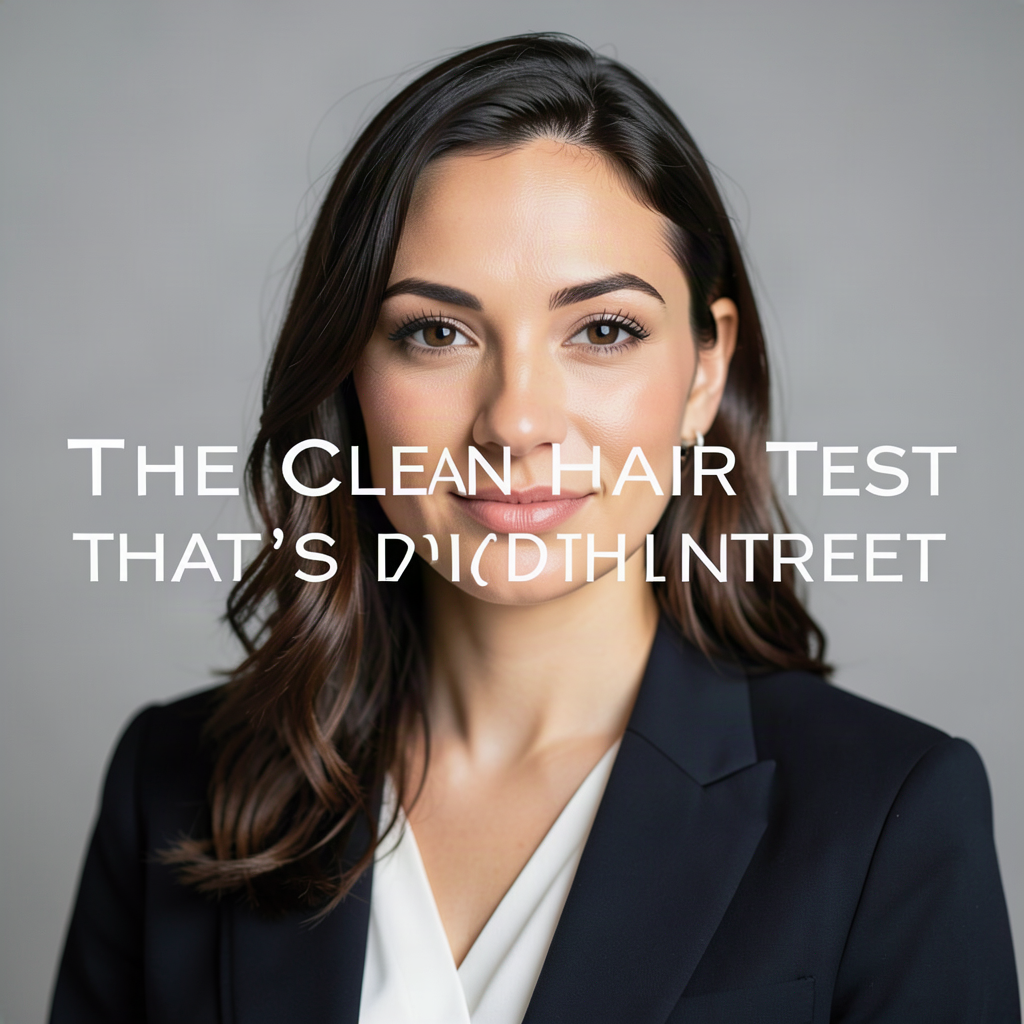
The clean hair test has exploded across social feeds, sparking heated debates in comment sections and prompting countless tutorials. At its core the test asks a simple question: after washing, does your hair feel truly clean or does a residue linger? While the premise sounds straightforward the execution and interpretation have split opinions between minimalists who swear by the method and skeptics who call it a marketing gimmick. This article breaks down the origins of the trend, the science that supports or challenges it, a step‑by‑step guide you can try today, and expert perspective so you can decide whether the clean hair test deserves a place in your routine.
What Is the Clean Hair Test?
The clean hair test is a DIY assessment that uses only water, a clean towel, and a few minutes of observation. After shampooing and rinsing you gently squeeze excess water from your strands, then wrap the hair in a microfiber towel for about five minutes. When you unwrap you run your fingers through the hair and note any tackiness, heaviness, or a faint film. Proponents claim that a truly clean scalp and shaft will feel light, airy, and free of any coating. Critics argue that the sensation is subjective and can be influenced by water hardness, towel material, and even the temperature of the rinse.
Why the Test Went Viral
Short‑form video platforms turned the clean hair test into a visual challenge. Creators filmed the before‑and‑after feel, often pairing the reveal with dramatic music and captions like “You won’t believe what’s left on my hair.” The format encourages duplication because it requires no special products, just a shower and a towel. Algorithm‑driven feeds amplified the trend as viewers tagged friends, asked for product recommendations, and debated the results in real time. The virality also attracted brands that sell “clean‑hair” shampoos, conditioners, and scalp scrubs, each claiming their formula guarantees a passing score.
The Science Behind Hair Cleanliness
Hair cleanliness is a matter of surface chemistry. Shampoos contain surfactants that bind to sebum, product buildup, and environmental pollutants, allowing them to be rinsed away. However, not all surfactants rinse equally. Anionic surfactants such as sodium lauryl sulfate are strong cleansers but can leave a slight residue if the rinse is insufficient. Non‑ionic and amphoteric surfactants tend to rinse cleaner but may not remove heavy silicone buildup. Water hardness adds calcium and magnesium ions that can interact with surfactant molecules, forming a faint film that feels tacky. The clean hair test essentially checks whether the surfactant‑water‑hair system reached equilibrium without leftover micelles or mineral deposits.
How to Perform the Test at Home
Follow these steps for a consistent result:
- Use a single shampoo that you normally trust. Avoid mixing two different formulas in one wash.
- Rinse with lukewarm water for at least sixty seconds, ensuring the water runs clear.
- Gently squeeze excess water; do not wring, as mechanical stress can create a false sense of roughness.
- Wrap the hair in a clean microfiber towel. Press lightly to absorb moisture; do not rub.
- Set a timer for five minutes. Keep the towel on the whole time.
- Unwrap and run your fingertips from roots to ends. Note any stickiness, weight, or a squeaky sensation.
Record your observations in a notebook or phone note. Repeat the test once a week for a month to spot patterns.
Interpreting Your Results
A light, airy feel with no tackiness generally indicates that the shampoo rinsed cleanly and that your water quality is not leaving mineral residue. A slight squeak can be normal for low‑porosity hair that retains less moisture. If you detect a sticky film, consider these variables: hard water, insufficient rinse time, or a shampoo heavy in silicones or conditioning agents that are designed to stay on the hair. A heavy, coated sensation may also signal product buildup from leave‑in conditioners, oils, or styling creams that were not fully removed. In that case a clarifying shampoo once every two weeks can reset the baseline.
Common Misconceptions and Pitfalls
One myth is that the test replaces a professional scalp analysis. It does not measure microbial balance, pH, or sebum production rates. Another pitfall is using a terry‑cloth towel; the loops can trap product and water, exaggerating the tacky feel. Some users mistake the natural slip of healthy, well‑moisturized hair for residue. Finally, performing the test immediately after a chemical treatment such as coloring or perming can give a false positive because the cuticle is temporarily more porous and holds onto water differently.
Expert Opinions and Dermatologist Advice
Board‑certified dermatologists emphasize that the clean hair test is a useful sensory checkpoint but not a diagnostic tool. Dr. Maya Patel notes that “patients who feel a persistent film often benefit from a chelating shampoo that binds metal ions in hard water.” Trichologist Luis Ramirez adds that “the test can guide product selection; if you consistently fail, switch to a surfactant system with a higher rinse‑off rating.” Both experts agree that scalp health, not just hair feel, should drive long‑term care decisions. They recommend pairing the test with a monthly scalp exfoliation and a balanced diet rich in omega‑3 fatty acids for optimal follicle function.
Adapting the Test for Different Hair Types
Fine, straight hair tends to reveal residue quickly because the shaft has less surface area to hide film. For this type a shorter towel time of three minutes may be enough. Curly and coily textures retain more water; extending the towel wrap to seven minutes helps equalize moisture distribution before the feel test. Color‑treated hair often feels drier; a passing result here means the hair feels smooth rather than squeaky. For oily scalps, perform the test on day two after washing to see if sebum production creates a false coating. Adjust the frequency of clarifying washes based on these observations rather than a rigid schedule.
Historical and Cultural Roots of Hair Cleanliness Assessment
Long before the clean hair test appeared on short‑form video platforms, cultures around the world devised their own tactile rituals to judge whether hair was truly free of residue. Ancient Egyptian papyri describe a rinse with natron‑rich water followed by a fingertip sweep; a smooth, cool sensation signaled that the oils used for styling had been removed. In Ayurvedic tradition, practitioners recommended a final rinse with herbal‑infused water and a gentle press of a cotton cloth, noting any stickiness as a sign of excess kapha buildup. Japanese onsen etiquette includes a quick hand‑run through the hair after the mineral bath; a light, airy feel indicates that the high‑mineral water has not left a film. Indigenous peoples of the Pacific Northwest used cedar‑bark rinses and then inspected the hair by pulling a single strand between thumb and forefinger, feeling for drag that would betray lingering sap or smoke particles. These practices share a common thread: they rely on direct sensory feedback rather than laboratory instrumentation. The modern clean hair test can be seen as a democratized continuation of that lineage, stripping away the ceremonial herbs and replacing them with a microfiber towel and a timer while preserving the core idea that the fingertips are a surprisingly sensitive probe for surface chemistry.
Laboratory‑Grade Alternatives: What Professional Testing Reveals
When a trichology clinic or a cosmetic‑science lab evaluates hair cleanliness, they move far beyond a five‑minute towel wrap. Gravimetric analysis weighs a known length of hair before and after a controlled wash, detecting mass changes down to micrograms. Contact‑angle goniometry measures how a water droplet spreads on a single fiber; a low angle indicates a clean, hydrophilic surface, while a high angle signals hydrophobic residue such as silicone. Surface‑tension tensiometry of the rinse water quantifies remaining surfactant micelles, revealing whether the shampoo has been fully flushed. Scanning electron microscopy (SEM) visualizes the cuticle at nanometer resolution, exposing microscopic film that fingertips cannot feel. High‑performance liquid chromatography (HPLC) of the rinse effluent identifies specific ingredient fragments — dimethicone oligomers, polyquaternium‑10, or chelated metal‑surfactant complexes. These methods are expensive, time‑consuming, and require specialized equipment, which is why they remain the domain of product development and clinical research. For the everyday user, the clean hair test offers a pragmatic proxy: it captures the net sensory outcome of all those microscopic interactions without the need for a lab coat.
Deep‑Dive Into Water Chemistry: pH, Chlorine, and Mineral Interactions
Water is not a neutral backdrop; its chemistry actively rewrites the clean‑hair narrative. Municipal supplies typically sit between pH 6.5 and 8.5, but a shift of just 0.5 units can alter the ionization state of anionic surfactants, making them either more or less prone to redeposition. Chlorine and chloramine, added for disinfection, oxidize the disulfide bonds in keratin, roughening the cuticle and creating additional binding sites for cationic polymers. Hardness ions — calcium and magnesium — form insoluble salts with fatty‑acid based surfactants, producing the classic “soap scum” that feels tacky after the towel step. Iron and manganese, even at sub‑ppm levels, catalyze Fenton reactions that generate hydroxyl radicals, subtly degrading protein and leaving a gritty residue. A simple shower‑head filter that combines activated carbon (for chlorine) with a cation‑exchange resin (for hardness) can shift the test outcome from fail to pass without any change in shampoo. For those who cannot install a filter, a final rinse with distilled or deionized water — just a cup poured over the hair — removes the bulk of mineral load and often yields a noticeably lighter feel. Understanding these variables lets you interpret a failed test not as a product flaw but as a water‑quality signal that can be addressed locally.
Ingredient‑Level Guide: Identifying Residue‑Causing Compounds in Your Products
Reading an INCI list becomes a detective exercise when you want to predict how a formula will behave in the clean hair test. Silicones are the most notorious film‑formers; dimethicone, dimethiconol, and phenyl trimethicone create a hydrophobic sheath that survives a standard rinse. Cyclic silicones such as cyclopentasiloxane and cyclohexasiloxane are volatile and often evaporate, but they can leave a transient slip that mimics residue during the five‑minute towel window. Cationic polymers — polyquaternium‑10, polyquaternium‑7, guar hydroxypropyltrimonium chloride — bind to the negatively charged hair surface and are designed to stay behind for conditioning; they are a primary cause of a heavy, coated sensation. Quaternary ammonium compounds like behentrimonium chloride and cetrimonium chloride behave similarly, especially in leave‑in conditioners. Heavy oils (coconut, argan, shea butter) and waxes (beeswax, candelilla) are not water‑soluble and will linger unless a strong anionic surfactant or a dedicated clarifying step is used. Film‑forming agents such as VP/VA copolymer, acrylates copolymer, and PVP create a microscopic lattice that can be felt as a faint tack. Conversely, ingredients labeled “rinse‑clean” or “no‑residue” typically rely on high‑HLB non‑ionic surfactants (decyl glucoside, lauryl glucoside) and avoid cationic polymers altogether. When you spot a combination of a strong anionic surfactant (sodium lauryl sulfate) with a high load of dimethicone and polyquaternium‑10, you can predict a failed test even before you step into the shower.
Building a Long‑Term Tracking System: Data Logging, Trend Spotting, and Routine Optimization
A single clean hair test is a snapshot; a series of tests becomes a diagnostic timeline. Create a simple spreadsheet with columns for date, shampoo name, water source (home, gym, travel), rinse duration, towel type, ambient humidity, and a tactile score from one (extremely tacky) to five (light and airy). Add a notes field for any concurrent changes — new medication, hormonal shift, seasonal humidity swing, or a recent coloring service. After four to six weeks, plot the tactile score against each variable. You may discover that scores dip every time you switch to a hotel shower (hard water) or that a particular “clarifying” shampoo only improves the score when paired with a two‑minute final rinse. Correlate the tactile score with a separate scalp‑health log (itchiness, flaking, oiliness) to see whether a clean‑hair feel aligns with a comfortable scalp. Use conditional formatting to flag any week where the score drops below three; that becomes your trigger to either run a chelating wash, install a temporary filter, or schedule a dermatologist visit. Over months, the data reveals your personal “clean‑hair baseline” and lets you make evidence‑based product swaps rather than chasing marketing claims.
Special Scenarios: Post‑Swim, Post‑Workout, Hard‑Water Moves, and Chemical Services
Each life event rewrites the residue equation, and the clean hair test can be adapted to capture those nuances. After a chlorinated pool session, rinse immediately with cool water for ninety seconds, then apply a chelating shampoo containing EDTA or sodium gluconate; run the test with a three‑minute towel wrap because the cuticle is temporarily swollen and holds more water. Post‑workout sweat adds salts and sebum; a pre‑wash scalp scrub with fine sea salt followed by a mild amphoteric cleanser reduces the load before the main shampoo, and extending the towel time to seven minutes equalizes the extra moisture. Relocating to a hard‑water region demands a baseline test on day one, then weekly tests while you trial a shower‑head filter; record the score shift to quantify filter efficacy. After a chemical service — color, perm, relaxer — the cuticle is lifted and the hair is more porous; perform the test on day three (allowing the cuticle to settle) and interpret a slight squeak as normal rather than a fail. For each scenario, keep the same towel, same timer, and same scoring rubric so that the only variable is the environmental or chemical stressor. This disciplined approach turns the clean hair test into a portable diagnostic tool that travels with you.
Extending the Test to Extensions, Wigs, and Protective Styles
Hair that is not growing from your scalp follows different residue rules, yet the tactile principle still applies. For human‑hair extensions, detach the weft or clip‑in piece, wash it separately with the same shampoo you use on your natural hair, and run the test on a single strand held between thumb and forefinger; a clean extension should feel weightless and cool, not coated. Synthetic fibers (kanekalon, toyokalon) are inherently hydrophobic; they will almost always register a slight slip, so the benchmark shifts to “no sticky drag” rather than “airy.” Lace‑front wigs with a polyurethane or silicone‑based adhesive layer require a dedicated adhesive remover before the shampoo step; otherwise the test will falsely indicate residue from the glue. Protective styles such as box braids or twists trap product at the base; to test, gently unravel a single braid, rinse the exposed section, and perform the towel wrap on that segment only. If the root area consistently fails while the ends pass, you have identified a buildup zone that benefits from a targeted scalp‑clarifying spray rather than a full‑head wash. By adapting the protocol — shorter towel time for fine synthetic strands, longer for dense human‑hair bundles — you gain a quality‑control checkpoint that protects both the investment in the hairpiece and the health of your own scalp.
FAQ
Can the clean hair test replace a professional scalp analysis?
No. The test only evaluates tactile residue on the hair shaft. A professional analysis measures sebum levels, microbiome balance, pH, and potential inflammation which require specialized equipment.
Does hard water always cause a failed test?
Hard water increases the likelihood of mineral film, but a thorough rinse and a chelating shampoo can mitigate the effect. Many people with hard water still pass the test when they adjust their routine.
How often should I repeat the clean hair test?
Once a week for a month establishes a baseline. After that, monthly checks are sufficient unless you change shampoo, move to a new water source, or notice a sudden change in hair feel.
Is a squeaky feel always bad?
Not necessarily. Low‑porosity hair can squeak when clean because the cuticle lies flat and friction increases. If the squeak is accompanied by dryness or brittleness, consider a richer conditioner.
What should I do if I consistently fail the test?
First, verify rinse time and water temperature. Next, switch to a shampoo labeled “rinse‑clean” or “no‑residue.” If the problem persists, install a shower filter for hard water or consult a dermatologist for possible scalp conditions.
Related posts:
 Best Scalp Scrubs Review
 The Pantry Staple That’s Secretly a Hair Miracle
 Blow Drying Hair Without Damage: Expert Tips
 Living Proof Scalp Treatment Review
 Removing Scalp Buildup
 Hair Slugging Beauty Trend Guide
 Should You Wash Your Hair After Every Gym Session?
 The Game-Changing Air-Dry Shampoo That’s Taking Over Social Media