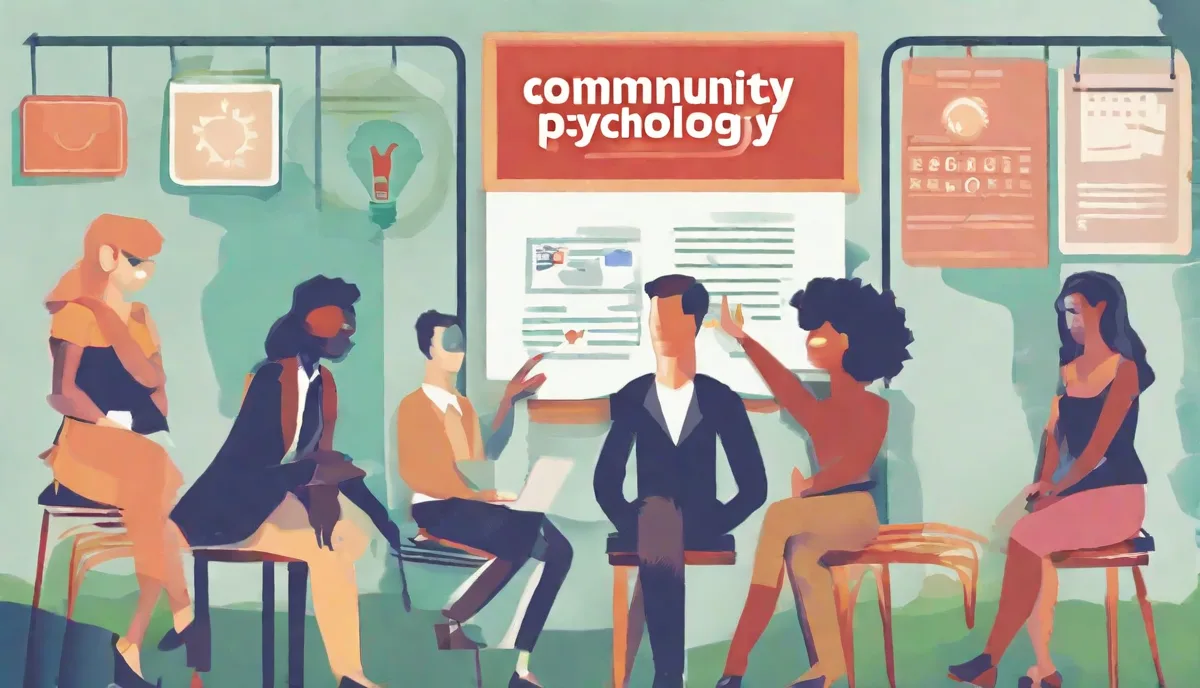
Understanding Community Psychology
Community psychology is a branch of psychology that focuses on understanding people in their communities and local contexts. It emphasizes empowering individuals and groups, promoting positive mental health and wellbeing, preventing problems before they start, and fostering compassion.
Key takeaways
- Use the ecological systems approach to address root causes of issues rather than focusing only on individual behaviors.
- Implement Participatory Action Research to ensure community members act as co-researchers who define and solve their own problems.
- Prioritize primary prevention strategies to stop social issues from developing rather than solely reacting to crises.
- Utilize Asset-Based Community Development to identify and leverage existing local talents and resources for sustainable growth.
- Practice cultural humility by acknowledging personal biases and stepping back to allow local leaders to drive community solutions.
Core Values of Community Psychology
Some core values of community psychology include:
- Social justice and equality
- Respect for diversity
- Promoting positive change and growth
- Collaboration and empowerment
The Role of a Community Psychologist
Community psychologists work to:
- Understand how communities and social settings impact people
- Promote positive mental health and wellbeing
- Prevent problems before they arise
- Foster inclusion, belonging, and connection
Becoming an Agent of Change
As a community psychologist, you can become an agent of positive change by:
- Educating and raising awareness
- Advocating for those in need
- Organizing community members
- Promoting compassion and unity
Making a Difference
Even small actions can make a big difference. Consider volunteering, mentoring others, writing community leaders, or organizing local events centered on positivity, belonging, justice and empowerment.
Ecological Systems Theory: The Multilevel Approach to Intervention
To truly function as an agent of change, one must move beyond the individual-centric view typical of clinical psychology and embrace Ecological Systems Theory. This framework, pioneered by figures like Urie Bronfenbrenner and James Kelly, posits that human behavior is not just a product of internal traits but a result of the interaction between the person and their multiple environments. In community psychology, we analyze these environments through several distinct layers: the microsystem (immediate settings like family or work), the mesosystem (connections between those settings), the exosystem (external environments that indirectly affect the individual, such as local government), and the macrosystem (broad cultural values and laws).
Applying this practically means that when addressing a community issue like high school dropout rates, an agent of change does not simply look for “at-risk” students for one-on-one counseling. Instead, they examine the mesosystem—how parents and teachers communicate—and the exosystem—how local school board funding affects the availability of extracurricular activities. A classic example of an ecological intervention is the implementation of a community garden in a food desert. While it provides food (microsystem), it also creates a space for neighbors to network (mesosystem), encourages local businesses to invest in the area (exosystem), and challenges the cultural narrative of urban decay (macrosystem). The goal is to achieve “person-environment fit,” ensuring that the settings people inhabit actually support their growth rather than hindering it.
Participatory Action Research (PAR): Empowering Communities as Co-Researchers
A hallmark of community psychology is the rejection of the “expert-subject” hierarchy. Traditional research often involves an outside academic entering a neighborhood, collecting data, and leaving to publish a paper that the community never sees. Participatory Action Research (PAR) flips this script. In PAR, the community members are not subjects; they are co-researchers who help define the problem, design the data collection tools, and interpret the results. This approach ensures that the solutions generated are culturally relevant and that the community feels a sense of ownership over the intervention.
Practical implementation of PAR often involves techniques like “Photovoice,” where residents are given cameras to document their daily realities—both the challenges and the strengths of their neighborhood. These images then serve as the basis for group discussions and are eventually presented to policymakers. For example, if a community is concerned about pedestrian safety, residents might photograph broken sidewalks or intersections without crosswalks. This data is far more persuasive to a city council than a spreadsheet of statistics because it is rooted in lived experience. The edge case here is managing “research fatigue.” Many marginalized communities have been studied repeatedly without seeing tangible benefits. An effective agent of change must ensure that the “Action” part of PAR is prioritized, showing immediate, visible wins to maintain community engagement and trust.
The Upstream Paradigm: Primary, Secondary, and Tertiary Prevention
Community psychologists often use the “river analogy” to explain their work: if you see people drowning in a river, you can keep jumping in to pull them out (intervention), or you can go upstream to find out who is pushing them in or why the bridge is broken (prevention). We categorize these efforts into three levels. Primary prevention targets the entire population to prevent a problem before it ever starts—such as universal vaccination programs or city-wide anti-bullying curricula in schools. Secondary prevention focuses on “at-risk” groups, providing early intervention to stop a problem from worsening, such as mentoring programs for youth who have begun to show signs of academic struggle.
Tertiary prevention deals with the aftermath of a problem, aiming to reduce disability and prevent relapse, such as support groups for individuals recovering from substance use disorders. While all three are necessary, community psychology prioritizes primary prevention because it is more cost-effective and reduces the total volume of human suffering. A practical example of moving upstream involves looking at housing. Instead of just building more homeless shelters (tertiary), an agent of change might advocate for “Housing First” policies or rent control (primary/secondary) to address the systemic causes of housing instability. This requires a shift in mindset from being a reactive “firefighter” to a proactive “architect” of social wellness.
Asset-Based Community Development (ABCD) and Resource Mapping
Most social service models are “deficit-based,” meaning they start by asking what is wrong with a community: What are the crime rates? How many people are unemployed? Where are the gaps in healthcare? Community psychology often employs Asset-Based Community Development (ABCD), which starts by asking what is *right* with a community. Every neighborhood, no matter how economically disadvantaged, possesses assets: the skills of local residents (the woman who knows how to organize a communal kitchen), local associations (church groups, athletic clubs), and physical resources (a vacant lot that could be a park, a library with high-speed internet).
To put this into practice, agents of change conduct “Asset Mapping.” This involves literally mapping out the talents and resources available within a geographic area. For instance, in a neighborhood struggling with youth engagement, an asset map might reveal a high concentration of retired tradespeople who are willing to teach carpentry or plumbing. By connecting these existing assets, you create a sustainable internal network that doesn’t rely solely on outside grants or government intervention. The challenge in ABCD is avoiding the trap of romanticizing poverty; it is not about saying the community doesn’t need help, but about ensuring that external help supplements, rather than replaces, local agency and power.
Navigating Power Dynamics and Cultural Humility
When entering a community as a psychologist or activist, one must grapple with the “insider-outsider” dynamic. Even with the best intentions, an outsider can inadvertently replicate colonial or paternalistic patterns. This is why community psychology emphasizes “cultural humility” over “cultural competence.” While competence implies a finish line where one has “learned” a culture, humility is an ongoing process of self-reflection and a commitment to fixing power imbalances. It requires the agent of change to acknowledge their own biases and the unearned privileges they may carry due to their education, race, or socioeconomic status.
In practice, this means practicing “reflexivity”—regularly questioning one’s motivations and methods. For example, if you are organizing a town hall meeting, consider the logistics: Is it held at a time when working-class parents can attend? Is childcare provided? Is the language used overly academic? True empowerment occurs when the agent of change steps back and allows local leaders to take the microphone. An edge case occurs when there is conflict within the community itself. A community is rarely a monolith; it contains competing interests. Cultural humility involves navigating these internal tensions without taking sides or imposing an outside resolution, instead facilitating a process where the community can find its own consensus.
Systems Change and Second-Order Change
A critical distinction in community psychology is between first-order and second-order change. First-order change involves making adjustments within an existing system, such as hiring more police officers to reduce crime. Second-order change involves changing the fundamental nature of the system itself, such as implementing a community-led restorative justice program that replaces the traditional punitive legal system. Agents of change strive for second-order change because it addresses the root causes of social issues rather than just the symptoms.
To achieve second-order change, one must engage in policy advocacy and coalition building. This involves identifying the specific laws, regulations, or institutional norms that maintain the status quo. For example, if a community psychologist identifies that local zoning laws prevent the development of affordable housing, they might form a coalition of small business owners, religious leaders, and environmentalists to lobby the city council for zoning reform. This work is often slow and involves navigating bureaucracy, but it creates a lasting impact that outlives any single program or intervention. It requires a mastery of “systems thinking,” where one understands that changing one part of the system (e.g., school funding) will have ripple effects across other parts (e.g., local property values and crime rates).
Digital Community Psychology and the Virtual Agent of Change
In the modern era, the definition of “community” has expanded to include digital spaces. Community psychology now encompasses online activism, virtual support networks, and the digital divide. As an agent of change, understanding how to leverage technology for social good is essential. This includes using social media not just for “slacktivism” (surface-level support), but for genuine mobilization and the dissemination of counter-narratives that challenge stigmatizing media portrayals of marginalized groups.
However, technology also introduces new challenges, such as the “digital divide,” where those without high-speed internet or tech literacy are further marginalized. A practical intervention might involve a community psychologist partnering with a local library to create a “mesh network” that provides free internet to a low-income housing complex, thereby facilitating access to telehealth, online education, and job opportunities. Furthermore, digital community psychology explores how to build “psychological sense of community” (PSOC) in virtual spaces, ensuring that online groups provide the same level of emotional safety and mutual support as physical neighborhoods. The edge case here is the risk of echo chambers; an agent of change must work to build bridges between different digital communities to prevent polarization and foster the broad-based empathy necessary for large-scale social justice movements.
Frequently Asked Questions
What does a community psychologist do?
A community psychologist works to understand people in their local contexts, promote wellbeing, prevent problems, and foster positive change.
What is an example of community psychology in action?
An example would be organizing community events to reduce isolation among elderly residents and promote intergenerational connection.
How can I get involved in community psychology?
You can get involved by volunteering for local organizations, mentoring youth, writing community leaders about social issues, or joining groups that align with your values.
What are some characteristics of a community psychologist?
Key characteristics include empathy, cultural sensitivity, passion for social justice, creativity, leadership ability, and a commitment to empowering others.
How does community psychology promote positive change?
Community psychology promotes change through education, raising awareness of issues, advocating for those in need, organizing collective action, and fostering belonging and unity.
Related posts:
 Positive Psychology Groups: How to Find Them, Join, and What to Expect
 The Top 20 Positive Psychology Graduate Programs (Online & Campus)
 100 Most Powerful Positive Psychology Quotes of All Time
 What is Coaching Psychology and How Does it Work?
 School Psychologist Degree Programs & Training
 How Social Community Participation Affects Your Financial Health
 Mizani Press Agent: The Secret to Sleek, Shiny Hair
 Hotels Offering Unique Cultural Programs