Walk into any CrossFit gym for the first time, and it might feel like you’ve stumbled into a different country where everyone speaks a foreign language. “Great work on that AMRAP!” “Your first pull-up? That’s a huge PR!” “Make sure you scale the HSPUs today.” The specialized vocabulary, or “gym speak,” can be the most intimidating barrier for newcomers. But this language isn’t designed to exclude; it’s a shorthand for a rich, communal, and highly specific fitness culture. Understanding it is your key to feeling confident, following instructions safely, and truly becoming part of the community.
This guide will translate the most common CrossFit terms, from the foundational movements and workout formats to the culture-specific slang. Consider this your essential phrasebook, designed to decode the jargon so you can focus on what matters: getting a great workout.
Foundational Lingo: WODs, Boxes, and the Whiteboard
Before we dive into movements, let’s cover the basic environment and structure. These terms describe where you are and what you’re about to do.
The Box: This is simply what CrossFit affiliates call their gym. The term originates from the early days of CrossFit, which was often practiced in garages or bare-bones warehouses—literal boxes. It signifies a focus on functional movement over fancy machinery. Don’t look for rows of elliptical machines; look for pull-up rigs, barbells, and open floor space.
WOD (Workout of the Day): The heart of CrossFit. This is the prescribed workout for that day, typically posted on a central whiteboard or screen. The WOD dictates everything you’ll do in the class. It might be named (like “Fran” or “Murph”) or simply described by its movements and rep scheme.
The Whiteboard: More than just a place to read the WOD, the whiteboard is a communal record. Members often write their scores, times, or weights used next to their names after completing the WOD. This isn’t about showing off; it’s about tracking progress (see “PR” below) and fostering friendly accountability. Checking what you did last time you faced a similar workout is a powerful motivator.
Coach/Trainer: The class instructor. Their role is to demonstrate movements, provide scaling options, ensure safety, and motivate the class. Always listen to their cues.
Workout Structure and Scoring: AMRAP, EMOM, RFT
CrossFit uses specific formats to structure its workouts. Knowing these tells you how to pace your effort.
AMRAP (As Many Rounds/Reps As Possible): You have a fixed time cap (e.g., 12 minutes) to complete as many full rounds of a given circuit as you can. For example, an AMRAP 10 of 5 pull-ups, 10 push-ups, and 15 air squats means you repeat that three-movement circuit as many times as possible in 10 minutes. Your score is the total rounds plus any extra reps.
EMOM (Every Minute on the Minute): At the start of every minute, you perform a prescribed set of work. Whatever time is left in that minute is your rest. For example, an EMOM for 10 minutes of 5 deadlifts means you start your 5 deadlifts at 0:00, 1:00, 2:00, etc. If it takes you 30 seconds, you rest for 30 seconds. This format is great for pacing and skill practice under fatigue.
RFT (Rounds for Time): The classic “chipper.” You must complete a fixed number of rounds of a circuit as fast as possible. For example, 3 Rounds for Time: 400m run, 21 kettlebell swings, 12 pull-ups. You complete all three rounds, and your score is the total time it took. The goal is to finish without stopping.
For Time: Similar to RFT, but often used for single-round, high-rep workouts (like “Fran”: 21-15-9 reps of thrusters and pull-ups for time).
Time Cap: The maximum amount of time allotted to complete the WOD. If you hit the cap, you stop and record your score as the work you completed (e.g., “2 rounds + 15 reps”). This ensures class stays on schedule and prevents unsafe levels of fatigue.
The Movement Lexicon: From Air Squat to Thruster
This is where the dictionary gets thick. CrossFit prioritizes functional, compound movements. Here are the most common ones you’ll see on the whiteboard.
Bodyweight/Gymnastics Movements:
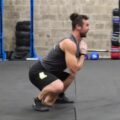
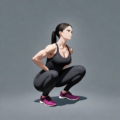
- Air Squat: A basic bodyweight squat, hips below parallel.
- Pull-up/Chin-up: Pulling your chin over the bar. Pronated grip (palms away) is a pull-up; supinated (palms toward you) is a chin-up.
- Push-up: Chest to deck, full body tension.
- Handstand Push-up (HSPU): A push-up performed while in a handstand position against a wall.
- Toes-to-Bar (TTB): Hanging from a bar, swing and tap your toes to the bar.
- Muscle-up: A advanced transition from a pull-up below the bar to a dip above the bar, on rings or a pull-up rig.
Weightlifting Movements (The Olympic Lifts):
- Snatch: Lifting the barbell from the ground to overhead in one continuous motion.
- Clean & Jerk: A two-part lift. The “clean” brings the bar to the shoulders; the “jerk” drives it overhead.
- Deadlift: Lifting a weighted barbell from the floor to a standing position.
- Squat: With a barbell on your back (back squat) or front rack position (front squat), lower your hips below parallel and stand up.
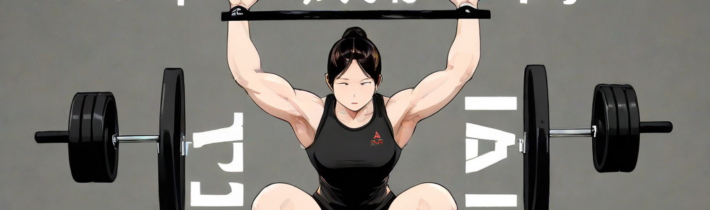
- Overhead Squat: A squat performed while holding a barbell locked out overhead. A major test of mobility and stability.
Monostructural Cardio (“The Bike, The Row, The Run”):
- Assault Bike / Echo Bike: The infamous fan bike that measures work in calories. The harder you pedal and push, the more resistance you create.
- Row (on a Concept2 Rower): Measured in meters or calories. A full-body cardio tool.
- Double-Unders (DUs): Jumping rope where the rope passes under your feet twice per jump. A common (and frustrating) skill.
- Single-Unders (SUs): Basic jump rope, one pass per jump.
Key Composite Movements:
- Thruster: A front squat immediately followed by a push press, moving the bar from shoulders to overhead. The signature movement of the benchmark WOD “Fran.”
- Burpee: From standing, drop to a plank, perform a push-up, jump your feet to your hands, and jump into the air with a clap overhead.
- Wall Ball: Holding a medicine ball at the chest, perform a deep squat and then throw the ball to hit a target spot on the wall (usually 10ft for men, 9ft for women), catching it on the descent.
The Culture Code: PR, RX, Scaling, and Community
Beyond movements, this vocabulary defines the CrossFit ethos of measurable progress and inclusivity.
PR (Personal Record): Also called a “PB” (Personal Best). This is your best-ever performance on a specific task—your fastest time on a WOD, your heaviest single lift, or your first time doing a movement. Chasing PRs is a primary driver of motivation. Celebrating a fellow athlete’s PR is a box ritual.
RX / As Prescribed: Completing the WOD exactly as written, with the specified weight, movement standards, and repetitions. It’s a badge of honor that signifies you met the benchmark standard for that workout.
Scale / Scaling: This is the most important concept for newcomers. Scaling means modifying the workout to match your current ability while preserving the intended stimulus. This could mean:
– Using a lighter weight.
– Doing ring rows instead of pull-ups.
– Doing box step-ups instead of box jumps.
– Reducing the number of reps or rounds.
Scaling is not failing; it’s the intelligent path to getting a great, safe workout and eventually achieving RX. A good coach will provide scaling options for every element of the WOD.
Community: Often cited as the “secret sauce” of CrossFit. It’s the collective encouragement, the high-fives, and the shared suffering that happens in class. You’ll hear “great work” from people you just met. This culture is built into the language.
Benchmark Girls and Heroes: The Named Workouts
CrossFit has a library of benchmark workouts, most with unique names. The original benchmarks were named after girls (“Fran,” “Grace,” “Diane”), creating the idea that they should be approached with respect, as they would “kick your ass.” Later, “Hero” WODs were created to honor fallen military, police, and first responders. Doing a named workout allows you to compare your performance to a global standard and track your long-term progress.
Fran: Perhaps the most famous. 21-15-9 reps of thrusters and pull-ups for time. Short, brutal, and a test of power output.
Grace: 30 clean & jerks for time (prescribed at 135/95 lbs). A pure test of speed and technique in the Olympic lift.
Murph: A Hero WOD performed on Memorial Day. 1-mile run, 100 pull-ups, 200 push-ups, 300 air squats, 1-mile run—all while wearing a 20/14 lb weight vest if possible. A grueling test of endurance and mental fortitude.
Practical Guide: Your First Week Decoded
Let’s put it all together. Imagine your first week.
Day 1: The coach explains the WOD is an AMRAP 12: 10 wall balls, 15 calories on the Assault Bike, and 20 air squats. They demonstrate the movements, then ask, “Who needs scaling options?” You raise your hand. For the wall balls, they give you a lighter ball. For the bike, they say you can substitute a 200m run. You complete 3 full rounds plus 5 wall balls in the 12 minutes. You write “3+5” next to your name on the whiteboard. The coach says, “Great first AMRAP!”
Day 3: The WOD is “Grace“—30 clean & jerks for time. You’ve never done the movement. The coach has you use a lightweight PVC pipe to practice the technique, then a very light training bar. You complete your 30 reps with the light bar in 8 minutes. It’s not RX, but it’s a fantastic skill session. You still write your time on the board.
Day 5: It’s a heavy back squat day. You work up to a weight that challenges you for 3 reps. It’s 20lbs heavier than you’ve ever done before. After your set, the coach yells, “That’s a PR!” You feel a surge of accomplishment. The language is no longer foreign; it’s the story of your progress.
Advanced & Niche Terminology
As you dive deeper, you might hear these terms.
MetCon (Metabolic Conditioning): The high-intensity conditioning portion of the workout, typically the WOD itself.
Unbroken: Completing a set of repetitions without stopping or putting the bar down. “I did the 21 pull-ups unbroken.”
Butterfly Pull-up/Kipping Pull-up: Efficient, rhythmic pull-up styles that use momentum from the hips to perform more repetitions, essential for higher-rep WODs. Strict pull-ups use only arm and back strength.
Pood (kg): A unit of weight for kettlebells, originating from Russian weightlifting. 1 pood = approx. 16 kg (35 lbs).
Chalk Talk: A pre-WOD briefing where the coach draws out the movement patterns and strategy on the whiteboard.
Box Jump Overs: Jumping onto a box, fully standing up on top, then jumping or stepping down to the other side.
The Science Behind the Shorthand: Why CrossFit Uses This Language
CrossFit’s specialized vocabulary isn’t arbitrary slang—it serves precise functional purposes rooted in exercise science and efficient communication. The term “WOD” (Workout of the Day) creates a ritualistic focus, eliminating decision fatigue and ensuring every athlete in a class receives identical stimulus for comparable results. This standardized language enables global benchmarking; when an athlete in Tokyo and another in Toronto both complete “Fran,” they’re performing exactly the same test under the same standards, creating a shared reference point across the worldwide community. The emphasis on measurable outcomes (PRs, RX, time caps) reflects CrossFit’s foundational principle of “constantly varied, functional movements executed at high intensity.” The language provides the framework for measuring that intensity and tracking progress with objective data rather than subjective feelings.
Consider the physiological rationale behind common terms: “MetCon” (Metabolic Conditioning) specifically refers to workouts designed to stress and improve the body’s energy pathways—the phosphagen, glycolytic, and oxidative systems. A coach prescribing “today’s MetCon will be a glycolytic emphasis” communicates to experienced athletes that they should expect a 2-10 minute workout with sustained high power output. Similarly, “AMRAP” versus “RFT” creates different psychological and physiological approaches. An AMRAP encourages pacing with the knowledge that stopping reduces total work output, while RFT creates a race-against-the-clock mentality where strategic breaks might actually improve the time score. This linguistic precision allows coaches to convey complex training intentions efficiently.
The Unspoken Rules: Box Etiquette and Implicit Expectations
Beyond the vocabulary itself exists a set of behavioral norms that, while rarely written down, are transmitted through the language. Understanding these unspoken rules accelerates your integration into box culture. When a coach announces “three, two, one, GO!” to start the WOD, the immediate response should be focused work—not last-minute equipment adjustments or questions. This ritual creates synchronized effort and shared experience. The whiteboard serves not just as a scorekeeper but as a social contract: writing your score publicly commits you to authentic effort and creates accountability to your past self and training partners.
Equipment etiquette is deeply embedded in the language. “Yours, mine, ours” refers to the shared nature of gym equipment. When multiple athletes use the same barbell during a strength segment, they’ll typically load and unload plates together—the last person to use a particular weight should strip the bar to basic configuration unless others are continuing. The phrase “working in” allows multiple athletes to share equipment during rest periods, a crucial practice in crowded classes. If you’re using a rack and someone asks “mind if I work in?” the proper response is to step aside during your rest while they complete their set, then resume alternating. This cooperation maximizes equipment usage without formal scheduling.
The communal language extends to safety cues. “Spot” isn’t just for heavy squats; it’s an offer of vigilance during challenging movements. “Clear!” called before dropping a barbell with bumper plates warns others to maintain distance. “No rep”—when a coach or fellow athlete calls out a repetition that doesn’t meet movement standards—might feel embarrassing initially but represents the community’s commitment to integrity over ego. Accepting this feedback gracefully shows you value proper movement over cheap repetitions. These behavioral norms, reinforced through consistent language, create the safe, efficient training environment that defines quality boxes.
The Scaling Decision Tree: Moving Beyond Simple Modifications
While the existing article introduces scaling as modifying workouts, the actual decision-making process experienced athletes use is more nuanced. Advanced scaling considers multiple dimensions: movement complexity, loading, volume, density (work-to-rest ratio), and range of motion. A proper scaling decision preserves the intended stimulus of the workout—if the WOD is designed to test power output with short, intense efforts, scaling should maintain that intensity even if modifying movements.
Consider this practical example: The workout “Isabel”—30 snatches for time at 135/95 lbs. A beginner might scale to PVC pipe snatches, but this loses the weightlifting stimulus entirely. A more sophisticated approach uses the “stimulus-first” scaling method:
1. Identify the primary stimulus (here: technical proficiency under fatigue with moderate weight)
2. Reduce weight to a challenging but technically sound load (perhaps 75/55 lbs)
3. If technique breaks down further, reduce volume (21 reps instead of 30)
4. As last resort, modify movement (hang power snatches instead of full snatches)
This preserves the workout’s intent while matching individual capability.
Movement substitutions follow logical progressions: ring rows progress to jumping pull-ups, then banded pull-ups, then strict pull-ups, then kipping pull-ups. Handstand push-ups might scale from pike push-ups on a box to knee raises with head touching an abmat, to full ROM with multiple abmats reducing depth. The most experienced athletes sometimes “scale up”—adding weight vest to bodyweight movements or increasing range of motion beyond RX standards when the prescribed workout doesn’t challenge them. This decision-making autonomy, guided by understanding the workout’s purpose, represents true fluency in CrossFit’s training philosophy.
The Equipment Lexicon: Understanding Your Tools Beyond Their Names
CrossFit equipment has its own terminology and usage conventions that extend beyond basic identification. Understanding these details improves your efficiency and safety. Barbells come in different specifications: a “training bar” (15kg/35lbs, more whip) versus a “powerlifting bar” (20kg/45lbs, less whip) versus a “women’s bar” (15kg, smaller diameter). Collars aren’t just for securing weight—”competition collars” add exactly 1.1kg each, affecting precise loading for percentage-based work.
Kettlebells use the “pood” system but have subtle handling differences. A “competition-style” kettlebell has uniform dimensions regardless of weight, with the center of mass aligned with the handle. Traditional “hardstyle” kettlebells change dimensions as weight increases, affecting the swing mechanics. When the WOD specifies “Russian swings” (to eye level) versus “American swings” (overhead), this changes the movement’s demand on shoulder stability and metabolic cost.
Gymnastics equipment has its own lexicon: “pull-up rigs” with varying bar diameters (thicker bars develop grip strength), “rings” that can be set at different heights for different movements, and “plyo boxes” with specific measurements (20″, 24″, 30″) that create different jump demands. The “Assault Bike” versus “Echo Bike” distinction matters—the Echo Bike uses both arm and leg resistance simultaneously with a different calibration system (Echo measures in watts more directly). Rower damper settings (1-10) aren’t intensity levels but drag factors; most efficient rowing occurs at damper 3-5 for optimal connection to the flywheel. This equipment literacy allows you to make informed choices when substitutions are necessary.
The Programming Patterns: Recognizing Weekly and Seasonal Rhythms
Experienced CrossFitters learn to recognize programming patterns that extend beyond daily WODs. Most quality boxes follow structured weekly rhythms that balance different training domains. Understanding this macro-language helps you plan your training and recovery. A typical weekly pattern might include: Monday strength bias (heavy lifts), Tuesday MetCon focus, Wednesday gymnastics skill work, Thursday endurance emphasis, Friday benchmark or partner workout, Saturday long chipper, Sunday active recovery or rest.
Seasonal patterns also emerge: many programs emphasize strength accumulation in fall/winter (“strength cycles”) with higher volume strength work paired with moderate MetCons, then shift to higher intensity MetCons with maintained strength in spring/summer. The language reflects this: “accumulation phase” versus “intensification phase” versus “peak phase.” Recognizing these patterns helps you understand why some weeks feel heavier or more technique-focused than others.
Advanced athletes learn to “read” the programming beyond the whiteboard. When a strength segment precedes a MetCon, the loading percentages matter—80% of 1RM back squats before a running WOD creates different fatigue than 65% technical work. The relationship between movements in a workout (“couplet” = 2 movements, “triplet” = 3 movements) affects strategy—couplets often allow faster pacing with less confusion, while triplets require more transitions. “Chipper” workouts (many different movements in sequence) demand different pacing than “task priority” workouts where you complete all reps of one movement before moving to the next. This pattern recognition becomes second language to veteran athletes.
The Competitive Dialect: Games, Sanctionals, and Local Competition Terms
As athletes progress, they encounter competition-specific terminology that expands the standard box vocabulary. The “CrossFit Games” season introduces terms like “Open” (the worldwide five-week online competition), “Quarterfinals” (online stage for top athletes), “Semifinals” (in-person regional competitions), and “Games” (final championship). Each stage has its own standards language: “video submission requirements,” “judge” versus “reviewer,” “score validation.”
Competition movements have stricter standards than daily training. In the Open, “hip crease below knees” defines squat depth with specific judging positions. “Lockout overhead” requires visible elbow and shoulder extension with control. The term “no rep” takes on higher stakes with official judges assessing movement in real time. Competition also introduces specialized equipment terms: “competition floor” with specific surface friction, “worm” (a multi-person team apparatus), “peg board,” “ski erg,” and “sled” with precise specifications.
Local competitions develop their own dialects: “throwdowns” (informal local competitions), “team series” (partner/team competitions), “master’s divisions” (age categories), “scaled” versus “RX” versus “elite” divisions. Understanding this competitive dialect helps athletes choose appropriate competition levels and understand what’s expected. The language of competition scoring also differs: “rank-based scoring” (points based on placement in each event) versus “time-plus-penalty” systems, “cap” versus “cutoff” (time limit to continue versus minimum standard to advance). This vocabulary enables participation in the broader CrossFit competitive ecosystem.
The Digital Dimension: Online Communities and Virtual Coaching Language
Modern CrossFit extends beyond the box walls into digital spaces with their own linguistic conventions. Online programming platforms like “CrossFit.com” (main site), “Linchpin,” “Street Parking,” and “HWPO” have developed distinct terminologies for their training approaches. Understanding these differences helps athletes navigate the digital training landscape effectively.
Virtual coaching employs specific feedback language: “form check” (video submission for technique analysis), “tempo prescription” (e.g., “3-1-1-0” meaning 3 seconds down, 1 second pause, 1 second up, 0 seconds hold), “RPE” (Rate of Perceived Exertion scale 1-10), and “auto-regulation” (adjusting loads based on daily readiness). Online communities use abbreviations like “FYR” (for your review) when sharing videos, “TIA” (thanks in advance) when asking for advice, and “NSV” (non-scale victory) for achievements beyond weight or time improvements.
Digital tracking platforms introduce terms like “beyond the whiteboard” (BTWB) analytics, “strength bias” versus “conditioning bias” programming classifications, and “virtual competitions” with specific submission protocols. Social media CrossFit language includes “WODspo” (workout inspiration), “flex Friday” (form checks or achievement shares), and “meal prep Sunday” (nutrition planning). This digital dialect enables global community connection while creating new dimensions of the CrossFit linguistic ecosystem that both complement and sometimes diverge from traditional box vocabulary.
FAQ: CrossFit Lingo Explained
1. I’m completely new. What are the 3 most important terms I need to know on day one?
First, Scale: Know that modifying the workout is expected and smart. Second, WOD: This is the workout you’ll be doing. Third, Coach: Listen to them for safety and scaling cues. Everything else you’ll pick up through context.
2. Is it okay if I never “RX” a workout?
Absolutely. RX is a personal benchmark, not a universal requirement. The true goal is consistent progress relative to yourself. Many lifelong CrossFit athletes scale certain movements or weights based on the day’s focus, old injuries, or energy levels. The workout is for you, not the other way around.
3. Why is there so much emphasis on the whiteboard and writing scores down?
The whiteboard transforms exercise from a vague “I worked out” into measurable data. Writing your time, weight, or reps creates a logbook of your fitness. In six months, when “Fran” comes up again, you can look back and see concrete proof of your improvement—maybe you used a heavier weight, needed less scaling, or finished minutes faster. This objective feedback is incredibly motivating.
4. What should I do if I don’t understand a term the coach uses during class?
Always ask! Simply say, “Can you explain that movement?” or “What does that acronym mean?” Coaches expect this, especially with new members. It’s far safer to ask for clarification than to guess and risk injury. The community respects those who seek to learn.
5. The culture seems intense. Do I have to be super competitive to fit in?
While the whiteboard can foster competition, the primary competition in CrossFit is with yourself—beating your own last score (PR). The community celebrates everyone’s effort, from the fastest finisher to the person who scaled every movement and finished last. The shared effort, not the ranking, builds the bond. You’re encouraged to push your own limits, however you define them.
Mastering CrossFit’s language demystifies the process. It turns intimidating jargon into clear instructions and communal rituals. Don’t let the initial wall of words hold you back. Walk in, listen, ask questions, and know that every athlete around you once stood where you are, deciphering their first AMRAP and chasing their first PR. Now you have the translation guide. Your next step is to walk into the box and use it.