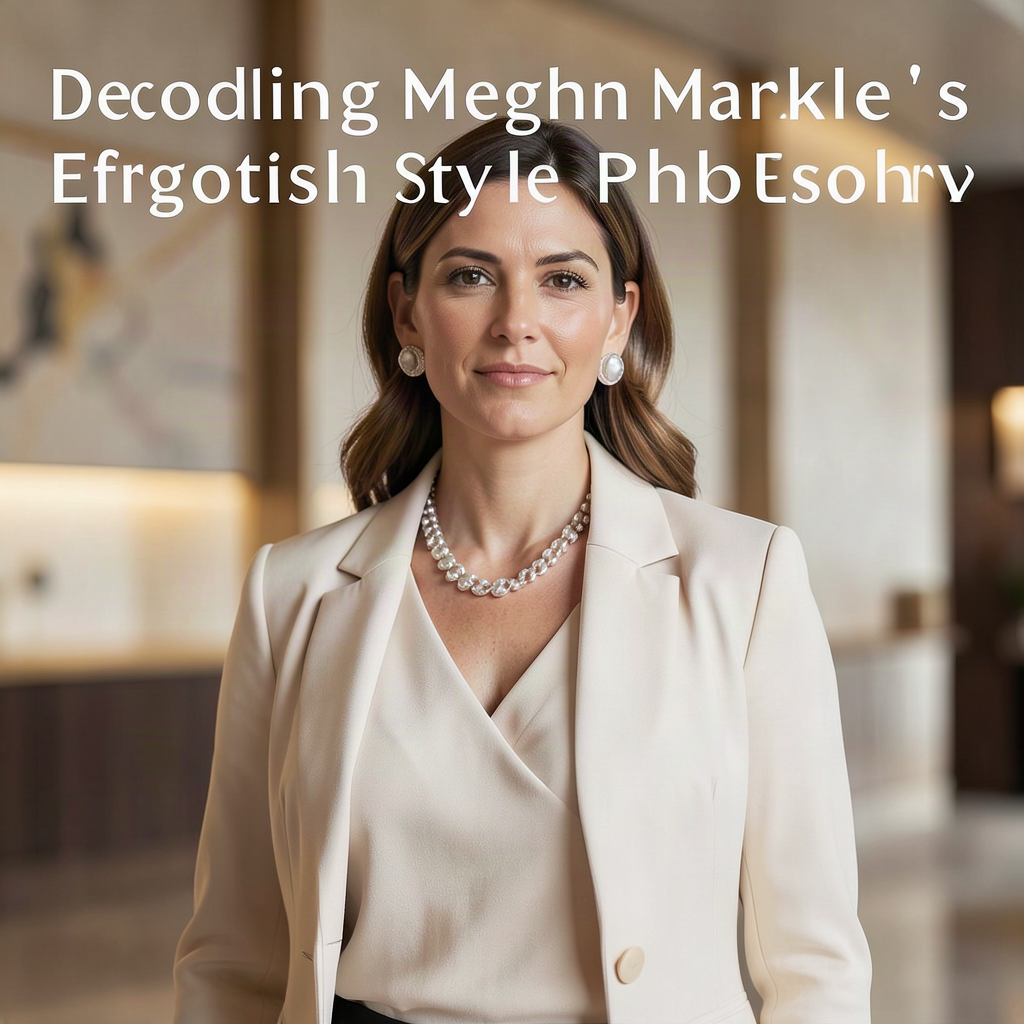
Meghan Markle has become a global reference for modern elegance, blending royal protocol with a relaxed, contemporary sensibility. Her wardrobe choices consistently communicate confidence, intention, and a respect for craftsmanship. By studying the recurring themes in her public appearances, anyone can extract practical lessons for building a wardrobe that feels both polished and personal.
The Foundation: Timeless Silhouettes
At the core of Meghan’s style are clean lines and classic shapes that transcend seasonal trends. She favors tailored coats, structured blazers, and well‑cut trousers that skim the body without clinging. These pieces create a visual continuity whether she is attending a state dinner or a casual charity walk. Investing in a few high‑quality silhouettes in neutral fabrics such as wool crepe, silk twill, or cotton poplin provides a reliable backbone for countless outfits.
When selecting a silhouette, consider proportion. A nipped‑in waist on a coat balances a fuller skirt, while a straight‑leg trouser elongates the leg line. Meghan often pairs a fitted blazer with a slightly relaxed shirt, demonstrating how a single structured element can anchor a look. Try replicating this by choosing one tailored item per outfit and keeping the remaining pieces fluid.
Practical tip: Visit a reputable tailor for minor adjustments. A half‑inch nip at the waist or a shortened sleeve can transform an off‑the‑rack garment into a custom‑fit staple, mirroring the polished finish seen in Meghan’s wardrobe.
Neutral Palette Mastery
Meghan’s color strategy revolves around a refined neutral palette — navy, charcoal, camel, ivory, and soft blush. These hues coordinate effortlessly, allowing mixing and matching without visual clutter. A navy blazer pairs equally well with ivory trousers, a camel skirt, or a blush blouse, giving multiple outfit permutations from a limited selection.
She occasionally introduces a single accent color, such as emerald green or deep burgundy, through a scarf, handbag, or shoe. This restrained use of color adds interest while preserving the overall harmony. To adopt this approach, build a wardrobe base of five core neutrals, then select two accent shades that complement your skin tone and personal preference.
Actionable step: Conduct a closet audit. Remove items that fall outside your chosen neutrals and accent colors. Replace gaps with versatile pieces in the approved palette, focusing on fabric quality over quantity.
Strategic Tailoring
Fit is the silent language of Meghan’s elegance. Even the most luxurious fabric can appear casual if the garment does not follow the body’s architecture. She consistently wears pieces that skim the shoulders, sit at the natural waist, and break cleanly at the hem. This precision creates a streamlined silhouette that reads as intentional rather than accidental.
Strategic tailoring also extends to layering. A lightweight cashmere sweater tucked into high‑waisted trousers, topped with a structured coat, demonstrates how each layer maintains its shape. Avoid bulky layers that obscure the waistline; instead, choose thin, high‑performance fabrics that provide warmth without volume.
Practical tip: When shopping, prioritize brands that offer a range of fits (regular, tall, petite) or provide made‑to‑measure services. A well‑fitted garment reduces the need for constant readjustment and projects confidence.
Investment Pieces vs. Trend Accents
Meghan’s wardrobe balances investment pieces — classic coats, leather totes, fine jewelry — with carefully chosen trend accents like a statement sleeve or a seasonal print. The investment items form the wardrobe’s architecture; they are worn repeatedly across years and occasions. Trend accents appear sparingly, refreshing the look without compromising longevity.
To emulate this balance, allocate roughly seventy percent of your clothing budget to timeless, well‑made staples. Reserve the remaining thirty percent for seasonal updates that reflect current mood or event requirements. This ratio protects financial resources while keeping the wardrobe feeling current.
Actionable step: Create a wish list of five investment items you lack (e.g., a tailored trench, a structured leather bag). Set a timeline for acquisition, researching brands with transparent supply chains. For trend accents, limit purchases to one per season and choose pieces that can be styled with at least three existing staples.
Sustainable Choices and Ethical Brands
Publicly, Meghan has championed sustainable fashion, often wearing labels that prioritize organic fibers, low‑impact dyes, and fair‑labor practices. Her choices highlight that elegance need not come at the expense of planetary health. Incorporating sustainability into personal style begins with awareness of material origins and brand values.
Start by researching certifications such as GOTS (Global Organic Textile Standard) for cotton, Responsible Wool Standard for wool, and Bluesign for chemical management. Many contemporary brands publish impact reports; favor those with measurable goals and third‑party verification.
Practical tip: When adding a new piece, ask three questions — what is the fiber content, who made it, and how long will it last? If the answers align with your values, the purchase becomes an extension of your personal ethos, mirroring the intentionality seen in Meghan’s public wardrobe.
Accessorizing with Purpose
Accessories in Meghan’s looks are never arbitrary. A delicate gold bracelet, a structured leather belt, or a minimalist watch each serve a functional or symbolic role. She often selects pieces that reference personal milestones — a gift from a friend, a heirloom, or a design from a female‑founded label.
To adopt purposeful accessorizing, curate a small collection of versatile items: a neutral leather belt, a simple metal watch, a pair of stud earrings, and a structured tote. Rotate these based on outfit formality. When adding a new accessory, consider its story and its compatibility with at least three core outfits.
Actionable step: Conduct an accessory audit. Remove items that are rarely worn or lack personal significance. Replace gaps with pieces that meet the three‑outfit test, prioritizing quality materials such as solid gold, vegetable‑tanned leather, or recycled metals.
Adapting the Look for Different Occasions
One of Meghan’s strengths is translating a consistent aesthetic across diverse settings — royal tours, casual outings, virtual appearances. She achieves this by modulating formality through fabric weight, layering, and footwear rather than overhauling the entire ensemble.
For daytime events, she pairs a crisp cotton shirt with tailored trousers and loafers. For evening, the same trousers receive a silk blouse, a velvet blazer, and heeled ankle boots. The core pieces remain; only the texture and shoe height shift. This method reduces decision fatigue and maximizes wardrobe mileage.
Practical tip: Identify three base outfits (e.g., navy blazer + ivory trousers, camel coat + black turtleneck, charcoal dress + structured cardigan). For each, list two footwear options and two outerwear variations that move the look from casual to formal. Keep these combinations documented for quick reference.
Building Your Own Capsule Inspired by Meghan
Creating a personal capsule wardrobe begins with defining your lifestyle pillars — work, leisure, travel, special events. Map each pillar to a set of core silhouettes, colors, and fabrics derived from the principles above. Aim for a total of thirty to forty pieces, including shoes and accessories, that interchange seamlessly.
Start with a spreadsheet. Columns: Category (tops, bottoms, outerwear, dresses, shoes, accessories), Item Description, Color, Fabric, Occasion Tags, Condition. Populate with existing items that meet the neutral palette and fit criteria. Highlight gaps, then schedule acquisitions prioritizing investment pieces.
Actionable step: Set a quarterly review date. Assess wear frequency, condition, and alignment with evolving style goals. Donate or recycle items that no longer serve the capsule. This disciplined cycle mirrors the intentional curation evident in Meghan’s evolving public wardrobe.
Mastering Seasonal Layering Without Bulk
Meghan’s public appearances show a mastery of layering that keeps the silhouette clean from autumn through early spring. The secret lies in choosing ultra‑thin, high‑performance fabrics that trap heat without adding visual weight. A merino wool base layer, a silk‑blend mid‑layer, and a structured wool crepe coat can be worn together while the waist remains defined. When temperatures dip, swap the silk mid‑layer for a cashmere cardigan that still skims the torso. Edge case: on unexpectedly warm days, the coat can be draped over the shoulders and secured with a single hidden snap, preserving the polished line without overheating. Practical tip: invest in a set of seamless, moisture‑wicking base pieces in neutral tones; they disappear under any outer layer and eliminate the bunching that ruins a tailored look.
Another technique is the “invisible tuck.” Instead of a full front tuck that creates bulk at the waist, tuck only the center front of a lightweight blouse into high‑waisted trousers, leaving the side seams free. This maintains the trouser’s clean break at the shoe while giving the illusion of a longer torso. For dresses, a thin leather belt worn at the natural waist can cinch a layered look without adding a visible band. When layering a coat over a blazer, choose a coat with a slightly longer hem so the blazer’s collar peeks out, adding depth without bulk. Test each combination in front of a full‑length mirror; adjust sleeve lengths by a quarter inch if the coat’s cuffs swallow the blazer’s cuffs.
Footwear Strategy: From Loafers to Heeled Boots
Footwear is the most visible lever for shifting formality in Meghan’s wardrobe. A single pair of well‑crafted loafers in polished navy leather can anchor a daytime look with tailored trousers and a crisp cotton shirt. For evening, the same trousers pair with a pointed‑toe heeled ankle boot in black suede, instantly raising the dress code. The key is to own three versatile styles: a flat leather loafer, a low block heel pump, and a sleek heeled ankle boot. All three should share a neutral hue — navy, black, or camel — so they interchange across outfits.
Edge case: outdoor events on grass or cobblestones demand a shoe with a rubber sole insert. Many luxury brands now offer a hidden rubber outsole that preserves the leather aesthetic while providing traction. When traveling, pack the loafers and the ankle boots; the pump can stay at home unless a formal evening is confirmed. Care routine: rotate shoes daily, use cedar shoe trees, and condition leather monthly. A quick polish before each wear keeps the finish mirror‑like, echoing the pristine appearance seen in official photographs.
Travel‑Ready Capsule Packing Techniques
Meghan’s royal tours demonstrate how a compact capsule can serve multiple climates and protocols. Start with a packing list anchored by the three base outfits identified in the existing article. Add a lightweight packable down vest that compresses into its own pocket; it adds warmth for chilly flights without consuming suitcase space. Choose a wrinkle‑resistant wool crepe blazer that can be folded using the “bundle wrap” method — lay the blazer flat, place a soft t‑shirt in the center, fold sleeves over, then roll tightly. This prevents creases and maximizes luggage volume.
For shoes, use the “shoe bag sandwich” technique: place each pair in a breathable cotton bag, then stack them heel‑to‑toe at the bottom of the suitcase. Fill the toe cavities with rolled socks or underwear to preserve shape. Accessories travel in a slim zippered pouch; a single structured tote doubles as a day bag and a carry‑on. Edge case: when a sudden formal engagement arises, a silk scarf folded into a neat rectangle can transform a daytime blouse into evening‑appropriate attire. Keep a mini sewing kit and a travel‑size fabric refresher spray for on‑the‑go touch‑ups.
Texture Mixing for Depth in a Neutral Wardrobe
A neutral palette gains sophistication when textures converse. Meghan often pairs a matte wool crepe coat with a subtle sheen silk blouse, then adds a vegetable‑tanned leather belt and a cashmere scarf. The interplay of matte, sheen, grain, and loft creates visual interest without introducing color. To replicate, select at least four distinct fabric families for your capsule: a smooth woven (cotton poplin), a subtle sheen (silk twill), a napped surface (cashmere or merino), and a structured leather (vegetable‑tanned).
When building an outfit, assign each texture a role: base, mid, outer, accent. For example, a cotton poplin shirt (base), a silk twill blouse (mid), a wool crepe blazer (outer), and a leather belt (accent). Avoid stacking two high‑sheen pieces together; they compete for light reflection and can appear costume‑like. Edge case: in high‑humidity climates, silk may cling; substitute a lightweight linen‑silk blend that retains sheen but breathes. Test combinations under both natural and artificial light; a fabric that looks flat indoors may reveal a hidden luster outdoors.
Personal Heritage Pieces as Signature Accents
Meghan frequently incorporates jewelry or accessories that reference personal history — a signet ring from her mother, a bracelet gifted by a close friend. These pieces become signature accents that tell a story without words. To adopt this, audit your own heirlooms: a vintage brooch, a family watch, a hand‑stitched handkerchief. Choose one item per outfit as a focal point; keep the rest of the accessories minimal so the heritage piece commands attention.
If you lack heirlooms, commission a custom piece from a local artisan using ethically sourced materials. A simple gold bar necklace engraved with coordinates of a meaningful place can serve the same narrative function. Edge case: when a heritage piece is fragile (e.g., an antique lace collar), reserve it for low‑movement events and store it in acid‑free tissue between wears. Document each piece’s story in a small journal; this practice deepens the emotional connection and guides future acquisition decisions.
Care, Repair, and Longevity Practices for Investment Garments
The longevity of Meghan’s wardrobe stems from meticulous care. Structured coats benefit from professional steaming once per season; this relaxes fibers and restores shape without the harshness of dry cleaning. For wool crepe trousers, spot‑clean with a damp cloth and a drop of pH‑neutral detergent, then air‑dry flat. Silk blouses should be hand‑washed in cool water with a silk‑specific cleanser, then rolled in a towel to remove excess moisture before laying flat.
Leather goods require conditioning every three months; use a cream matched to the leather’s finish (aniline vs. semi‑aniline). Store bags stuffed with acid‑free paper to retain silhouette. Shoes: rotate daily, insert cedar trees, and apply a thin layer of wax polish before each wear. Edge case: a small tear in a coat lining can be repaired invisibly by a tailor using a matching thread and a blind stitch; this prevents the tear from expanding and preserves the garment’s structural integrity. Keep a digital log of each item’s purchase date, care instructions, and repair history; this mirrors the disciplined curation evident in Meghan’s evolving public wardrobe and ensures each investment piece remains a staple for years.
FAQ
What defines Meghan Markle’s signature look?
Her signature look combines tailored silhouettes, a restrained neutral palette, purposeful accessories, and a commitment to sustainable, ethically produced garments. The result is an appearance that feels both polished and approachable.
How can I replicate her style on a modest budget?
Focus on fit and fabric quality over brand labels. Thrift or consignment shops often carry well‑made blazers, trousers, and coats in classic neutrals. Invest in a good tailor for adjustments, and allocate funds toward a few versatile investment pieces rather than many fast‑fashion items.
Which sustainable brands align with her aesthetic?
Brands such as Stella McCartney, Eileen Fisher, Reformation, and Veja have been spotted in her wardrobe or share similar values. Research each label’s certifications and supply‑chain transparency to ensure alignment with your personal standards.
Can this style philosophy work for non‑royal, everyday life?
Absolutely. The principles — timeless silhouettes, neutral cohesion, strategic tailoring, purposeful accessories, and sustainable choices — are universally applicable. They simplify daily dressing, reduce waste, and project confidence in any professional or social setting.
How often should I update my capsule wardrobe?
A quarterly review is practical. Replace worn items, add a seasonal accent if desired, and remove pieces that no longer fit your lifestyle. This rhythm keeps the wardrobe functional without encouraging constant consumption.
Related posts:
 Meghan Markle’s Iconic Hairstyle: How to Achieve the Look
 Neon Trend Alert: How to Wear Bright Colors Without Looking Like a Highlighter
 The Stylish Woman’s Secret to Gym-to-Office Transitions
 Meghan Markle’s Wellness Secrets
 The Return of Silk Scrunchies
 Royal Revelations: What Kate and Meghan Are Teaching Us About Mental Health
 Modern Wedding Outfit Ideas
 Meghan Markle’s Favorite Sneakers: Comfortable and Chic Footwear Inspiration