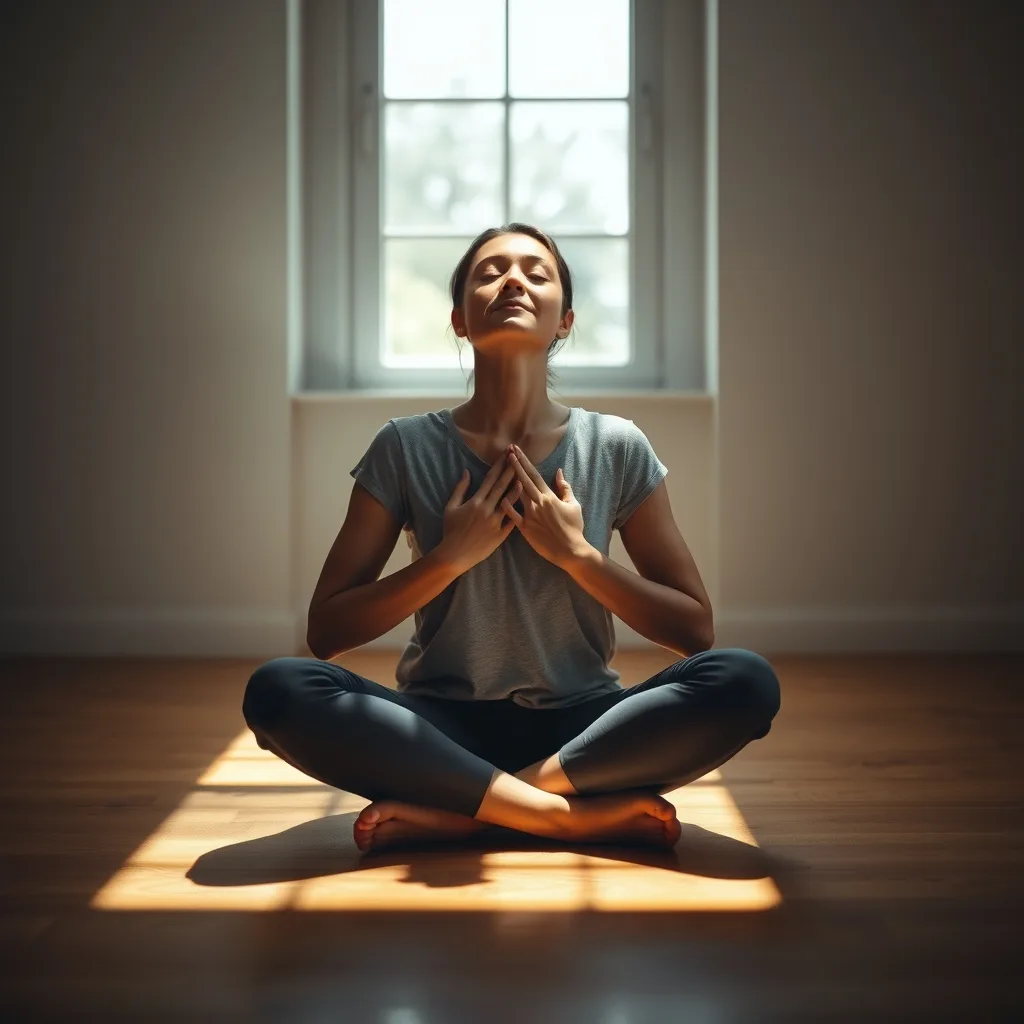
Deep breathing is one of the simplest tools you can carry into a stressful moment. It requires no equipment, no special setting, and no experience. The aim is not to force calm or erase difficult feelings. It is to give your attention a steady place to land and to create a small pause between a trigger and your response. The techniques below are practical, gentle, and easy to adapt. Use them when you feel tense, before a difficult conversation, during a commute, or as a quiet transition between tasks. If breathing exercises ever feel uncomfortable, stop and breathe normally. For persistent distress or health concerns, a qualified professional can offer support.
Key takeaways
- Use diaphragmatic breathing to move air into your belly rather than straining your chest and shoulders.
- Extend your exhales to activate the vagus nerve, which helps slow your heart rate and lower stress.
- Incorporate micro-doses of breath work during daily transitions like logging into work or starting your car.
- Avoid overbreathing by keeping your inhalations small, quiet, and nasal to maintain healthy CO2 levels.
- Adapt techniques like pursed-lip breathing if you have respiratory conditions or need to manage panic symptoms.
Why Breath Is a Practical Calm Tool
Breathing is always with you, which makes it a useful anchor when stress arrives unexpectedly. You do not need to find a quiet room or change your schedule. You can begin with one slower exhale while you wait for a meeting, sit at a red light, or stand in a checkout line. The practice works best when it is small enough to repeat. A single minute of deliberate breathing can be more useful than a long session you never start. The key is to make the breath easy, not perfect. If your shoulders tighten or your mind races, soften the effort and return to a normal rhythm. Calm is not a performance. It is a shift in attention, and attention can be practiced. You can also use breath as a transition marker: one slow exhale before opening a door, answering the phone, or starting a new task. That tiny ritual tells your body that you are moving from one demand to another.
What Deep Breathing Can and Cannot Do
Slow, comfortable breathing can help many people feel more settled in the moment. It may create space to choose a response rather than react automatically. It can also serve as a cue that you are pausing to care for yourself. However, breathing exercises are not a cure for anxiety, trauma, or medical conditions. They are not a substitute for therapy, medical advice, or emergency help. If you feel dizzy, panicky, or more distressed during a practice, stop and breathe in your usual way. You can also try a shorter, gentler version. The goal is to support your nervous system, not to override it. Some people prefer eyes open, a hand on the chest, or a focus on the feet instead of the breath. These adaptations are valid. The best technique is one that feels safe and repeatable. It is also helpful to remember that calm is not the only acceptable outcome. Sometimes the result is simply a little more space, a softer jaw, or the ability to speak one sentence without rushing.
The Foundation: Diaphragmatic Breathing
Diaphragmatic breathing means allowing the belly to move gently as you inhale, rather than lifting the shoulders or tightening the chest. Start by sitting or lying in a comfortable position. Place one hand on your chest and one on your belly. Inhale through your nose for a count that feels easy, perhaps two or three. Notice the belly hand rising slightly. Exhale slowly through your mouth or nose, letting the belly settle. Repeat for six to ten breaths. If the chest hand moves more than the belly hand, do not force it. Try exhaling with a soft sigh and let the next inhale happen naturally. This practice can be done before sleep, after a tense email, or during a brief break. The aim is a smoother rhythm, not a deep breath that strains. Over time, you may notice that you can return to this baseline more quickly. To make it concrete, try this sequence: relax your jaw, soften your shoulders, inhale for two, exhale for four, and repeat five times. If you prefer, skip the hand placement and simply notice where the breath moves.
The Physiology Behind Breath and Calm
Understanding why slow breathing shifts your state makes the practice less mysterious and easier to trust. The primary pathway is the vagus nerve, the longest cranial nerve, which wanders from the brainstem through the neck into the chest and abdomen. It carries bidirectional signals between brain and body, and its afferent fibers (body to brain) constitute roughly 80 percent of its traffic. When you extend your exhale, stretch receptors in the lungs and baroreceptors in the aortic arch and carotid sinuses detect the mechanical and pressure changes. They send signals via the vagus to the nucleus of the tractus solitarius (NTS) in the medulla, which then modulates the parasympathetic outflow to the heart, slowing heart rate and increasing heart rate variability (HRV). Higher HRV correlates with better emotional regulation, cognitive flexibility, and stress resilience.
Carbon dioxide tolerance plays a quieter but crucial role. Many people habitually overbreathe — taking frequent, shallow breaths that blow off too much CO2. Lowered arterial CO2 (hypocapnia) causes cerebral vasoconstriction, reducing oxygen delivery to the brain despite normal saturation, and shifts the oxygen-hemoglobin dissociation curve leftward (Bohr effect), making hemoglobin cling tighter to oxygen. The result can be lightheadedness, tingling, and a sense of air hunger that mimics anxiety. Slow breathing restores CO2 toward normal, improving cerebral perfusion and tissue oxygenation. Nasal breathing adds another layer: the paranasal sinuses produce nitric oxide (NO), a vasodilator that enhances pulmonary oxygen uptake and has antimicrobial properties. Mouth breathing bypasses this entirely. A practical test: sit quietly and count how many breaths you take in one minute at rest. Twelve to fourteen is common; six to eight suggests better CO2 tolerance and vagal tone. You don’t need to hit a target immediately — awareness alone begins the shift.
Edge case: people with chronic obstructive pulmonary disease (COPD) or severe asthma may feel breathless when slowing down because their lungs trap air. For them, pursed-lip exhalation (blowing gently through narrowed lips) creates back-pressure that keeps airways open longer, reducing dynamic hyperinflation. The exhale becomes active but not forced. If you have a diagnosed respiratory condition, coordinate any structured practice with your pulmonologist or respiratory therapist.
Additional Evidence-Based Breathing Patterns
Beyond diaphragmatic and box breathing, several patterns have research backing for specific effects. The 4-7-8 technique, popularized by Dr. Andrew Weil, uses a 4-count nasal inhale, 7-count hold, and 8-count pursed-lip exhale. The long hold and extended exhale amplify vagal activation and CO2 retention. Start with two cycles; the 7-count hold can feel intense. If you gasp on the next inhale, shorten the hold to 5 or drop it entirely — the 4-8 ratio alone (inhale 4, exhale 8) captures most benefit. Practice twice daily for six weeks; many report faster sleep onset and reduced anticipatory anxiety.
Resonant or coherent breathing targets roughly 5.5 to 6 breaths per minute (about 5.5 seconds in, 5.5 seconds out). This frequency aligns with the Mayer wave, a natural oscillation in arterial blood pressure around 0.1 Hz, maximizing HRV amplitude. Studies show 20 minutes daily at this rate improves HRV, blood pressure, and depressive symptoms over eight weeks. You don’t need a timer — humming a slow tune or silently counting “one-thousand-one, one-thousand-two” for each phase works. If 5.5 seconds feels long, start at 4-4 and add a second every few sessions. The goal is smoothness, not precision.
The physiological sigh, studied by Jack Feldman’s lab at Stanford, is a double inhale through the nose (the second a tiny top-up) followed by a long, audible exhale through the mouth. It spontaneously occurs every few minutes in mammals and offloads CO2 efficiently while reinflating collapsed alveoli. Two to three physiological sighs in a row can rapidly reduce acute arousal — useful before a difficult phone call or after a near-miss in traffic. Because it’s a reflex pattern, it often feels more natural than counted techniques.
Alternate nostril breathing (Nadi Shodhana) uses the thumb and ring finger to close one nostril at a time: inhale left, close left, exhale right, inhale right, close right, exhale left. That’s one round. Five rounds take about two minutes. EEG studies show increased alpha asymmetry toward the left frontal region, associated with approach motivation and positive affect. The tactile component (finger on nose) adds a grounding sensory anchor. If nasal congestion blocks one side, practice the pattern mentally — visualize the flow — or simply do diaphragmatic breathing with a hand on the belly.
Humming bee breath (Bhramari) adds vocalization: inhale nasally, then exhale with a low-pitched hum, fingers gently pressing the tragus (ear cartilage) to amplify internal vibration. The sound stimulates the vagus nerve via the auricular branch and increases nasal NO production 15-fold. Five cycles can lower systolic blood pressure acutely. It’s especially helpful when racing thoughts make silent counting difficult — the hum occupies the auditory loop. Avoid if you have an active ear infection or severe tinnitus exacerbated by internal sound.
Integrating Breath Work Into Daily Transitions
The highest leverage comes not from a single 20-minute session but from dozens of micro-doses woven into existing routines. Habit stacking — attaching a new behavior to an established cue — makes adoption frictionless. Identify your reliable daily transitions: waking, first sip of coffee, starting the car, logging into work, closing the laptop, entering the house, brushing teeth, lights out. Assign one breath pattern to each. Example: upon waking, before phone, take three physiological sighs. At the coffee machine, do four cycles of 4-8 breathing while waiting for the pour. In the car, before ignition, one box breath (3-3-3-3 if 4 feels long). At desk login, three resonant breaths (5.5-5.5). Post-work shutdown: five alternate nostril rounds. Pre-sleep: 4-7-8 until drowsy.
Each micro-dose is 15 to 60 seconds. The cumulative effect is a nervous system that learns to downregulate on cue rather than accumulating load until evening. Keep a tiny log for two weeks: transition, pattern used, subjective stress before/after on a 1-10 scale. Patterns emerge — you’ll see which transitions are highest leverage. If a cue gets skipped repeatedly, change the pattern or the cue. Flexibility preserves consistency.
Edge case: shift workers or parents with unpredictable schedules. Anchor to biological events instead of clock time: first bathroom visit, first glass of water, first moment alone (even 30 seconds in a pantry). The breath becomes a portable reset button, not another scheduled task. For commuters on packed transit: eyes open, soft gaze, nasal 4-6 breathing (inhale 4, exhale 6) — invisible to others, no hand placement needed. If motion sickness triggers nausea with breath focus, switch to grounding: feel feet on floor, name three sounds, one scent. Return to breath when settled.
Adapting Techniques for Specific Challenges
Panic attacks involve a runaway feedback loop: catastrophic misinterpretation of bodily sensations (“I’m dying”) drives hyperventilation, which lowers CO2, causing paresthesia, dizziness, and derealization — confirming the catastrophe. The intervention must be simple enough to execute when prefrontal cortex is offline. Practice this sequence when calm so it’s automatic: (1) Plant feet, widen stance. (2) Exhale fully through pursed lips — a long, noisy blow. (3) Inhale slowly through nose for 3. (4) Hold 2. (5) Exhale 6. Repeat four times. The long exhale and pursed lips raise CO2; the stance signals safety to the vestibular system. Keep a printed card in your wallet or phone lock screen. If you’re with someone panicking, coach them: “Breathe with me. Out… long… good. In… slow…” Match your breath to theirs, then gradually lengthen your exhale; entrainment often pulls them along.
Insomnia: the 4-7-8 pattern in bed, lights off, eyes closed. If mind wanders, label “thinking” and return. After ten cycles, switch to passive body scan — no breath control, just noticing weight sinking. If sleep doesn’t come in 20 minutes, get up, dim light, read paper (no screens) until sleepy. The breath practice trains the “downregulation” pathway; the get-up rule prevents bed-wake association. For middle-of-night waking: one physiological sigh, then 4-6 breathing until drift. Avoid checking time.
Public speaking or high-stakes performance: two minutes before, do five physiological sighs. Then 30 seconds of 4-6 breathing. Right before starting, one box breath (4-4-4-4). The sighs dump acute arousal; the 4-6 stabilizes; the box centers. Practice this exact sequence in low-stakes rehearsals so it’s a conditioned cue. If dry mouth hits, tongue tip to roof of mouth behind front teeth — stimulates saliva via lingual nerve without breaking breath rhythm.
Chronic pain: slow breathing (6 breaths/min) reduces pain catastrophizing and increases pain thresholds in fibromyalgia and low back pain studies. Combine with “breathing into the area” — on inhale, imagine breath traveling to the painful region; on exhale, imagine tension leaving. Not visualization magic; it shifts attention from threat appraisal to interoceptive curiosity. Start with five minutes, build to 15. If focusing on pain amplifies distress, anchor elsewhere: breath at nostrils, or feet on floor.
Asthma/COPD: as noted, pursed-lip exhale is primary. Inhale nasal 2-3, exhale pursed-lip 4-6. Avoid breath holds — they increase intrinsic positive end-expiratory pressure (PEEP) in obstructed airways. Humming bee breath can help clear mucus via vibration. Coordinate with your action plan; rescue inhaler first if symptomatic.
Pregnancy: diaphragm is mechanically disadvantaged by uterine elevation. Side-lying or elevated upper body (30-45 degrees) improves mechanics. Shorter inhales (3), longer exhales (6) reduce supine hypotension risk. Avoid strong holds. Alternate nostril is safe. Postpartum: pelvic floor coordination — on exhale, gentle pelvic floor lift; on inhale, release. Integrates core recovery.
Common Pitfalls, Troubleshooting, and Refinement
Overbreathing during practice is the most common error. Trying to “breathe deeply” often means large volume, which blows off CO2 and triggers air hunger. Depth refers to diaphragmatic excursion, not tidal volume. Aim for quiet, small, slow breaths. Place hands on lower ribs; feel lateral expansion, not belly ballooning. If you hear your breath, it’s too forceful. Silent nasal breathing is the gold standard.
Breath holding tension: the “hold” in box or 4-7-8 should be a suspension, not a clamp. Glottis open, throat soft, no bearing down. If you feel pressure in ears or head, shorten or remove the hold. A suspended pause feels like the moment between ocean waves — present, not forced.
Counting anxiety: numbers can become a performance metric. If counting spikes self-monitoring (“Am I at 4 or 5?”), switch to tactile or auditory pacing. Tap thigh slowly: tap-inhale, tap-inhale, tap-exhale, tap-exhale. Or use a metronome app at 10 beats per minute (6 breaths/min) with distinct tones for in/out. Eventually drop the aid; internal rhythm takes over.
Nasal congestion: if one nostril is blocked, the nasal cycle (natural ultradian rhythm switching dominance every 90-120 minutes) may be the cause. Try side-lying on the opposite side for 2 minutes — gravity shifts turbinate blood flow. Saline rinse before practice helps. If chronic, mouth breathing with pursed lips is acceptable; add tongue to roof of mouth to approximate nasal resistance.
Dizziness or tingling: signs of hypocapnia. Stop the pattern, breathe normally, cup hands over nose and mouth for 3-5 breaths to rebreathe CO2. Next session, reduce depth, increase exhale length relative to inhale (1:2 ratio). If symptoms persist across sessions, consult a clinician — could indicate underlying dysregulation (POTS, hyperventilation syndrome).
Progression framework: Week 1-2: diaphragmatic awareness, 5 minutes daily. Week 3-4: add 4-6 breathing, 10 minutes. Week 5-6: resonant breathing 5.5-5.5, 15 minutes. Week 7-8: 4-7-8 or physiological sighs for acute moments, resonant for daily. Month 3+: mix patterns intuitively. The endpoint isn’t complexity — it’s automaticity. You breathe well without thinking about it.
Tracking Progress and Deepening Your Practice
Subjective markers: the “recovery interval” — how long until you feel baseline after a stressor. Note it in a journal: “Monday 9am, difficult email, 4-6 breathing x6, felt centered in 3 minutes vs usual 20.” Track sleep onset latency, night wakings, irritability threshold. Weekly review reveals trends memory misses.
Objective: HRV tracking via phone camera (HRV4Training, Elite HRV) or wearable (Oura, Whoop, Garmin). Measure each morning upon waking, same position, before caffeine. Look at 7-day rolling average of rMSSD (root mean square of successive differences) — the gold standard for parasympathetic tone. A rising trend over 4-8 weeks correlates with practice consistency. Don’t chase daily numbers; they fluctuate with hydration, alcohol, training load, menstrual cycle. Contextualize: “HRV dipped Tuesday — late dinner, poor sleep — but weekly average up 8ms from month ago.”
Breath hold time (BHT) after normal exhale: pinch nose, time until first definite urge to breathe (not max). Healthy functional range: 25-40 seconds. Under 15 suggests low CO2 tolerance / overbreathing habit. Retest monthly. Improvement indicates better chemoreceptor calibration. Do not compete; use as feedback.
Journaling prompts: “Where did I feel breath today? Nose, chest, belly, nowhere?” “Which transition was smoothest? Which felt rushed?” “What sensation accompanied the exhale — release, resistance, nothing?” Writing engages metacognition, strengthening the insula (interoceptive hub).
Deepening: once daily resonant breathing is stable, explore “breath meditation” — drop the count, follow the breath sensation at the nostrils or abdomen. When mind wanders, note “thinking,” return. This is shamatha (calm abiding) with breath as object. Start with 10 minutes. The counting techniques trained stability; now you use that stability for open monitoring. Alternatively, combine with movement: walking breath — 4 steps inhale, 6 steps exhale. Or yin yoga: hold poses 3-5 minutes, breathing 4-6 throughout. The stretch provides interoceptive richness; the breath regulates the autonomic response to intensity.
Community: consider a weekly guided group (in-person or virtual). Co-regulation — nervous systems syncing via prosody, facial expression, pheromones — amplifies individual practice. If group isn’t accessible, a practice buddy for weekly check-in (text: “Did 4-7-8 tonight, slept faster”) provides accountability without pressure.
Professional integration: if you’re in therapy, tell your clinician you’re practicing breath work. It can become a shared language — “Let’s try a physiological sigh before we explore that memory.” In CBT, breath creates the pause for cognitive restructuring. In EMDR, it’s a resource installation. In somatic experiencing, it tracks pendulation. The breath isn’t separate from healing; it’s the substrate.
Box Breathing for Steadier Focus
Box breathing uses equal counts for inhale, hold, exhale, and hold. A common pattern is four counts each, but shorter counts work better for beginners. Sit upright and relax your jaw. Inhale through your nose for four counts. Pause gently for four counts. Exhale for four counts. Pause again for four counts. Repeat for four to six rounds. If holding your breath feels tense, skip the pauses
Related posts:
 What Causes Those Sudden Nosebleeds While Running?
 This Breathing Exercise Controls Anxiety in Under 3 Minutes
 You’ve Been Breathing Wrong Your Entire Life: Here’s How to Fix It
 The Breathing Techniques That Science Says Guarantee Happiness
 Ways to Improve Your Breathing Technique
 Breathing Techniques for Pain Release: Finding Relief Through Breath
 Lindsay Ellingson’s Stress-Relieving Yoga Move
 Breathing Exercise for Better Sleep