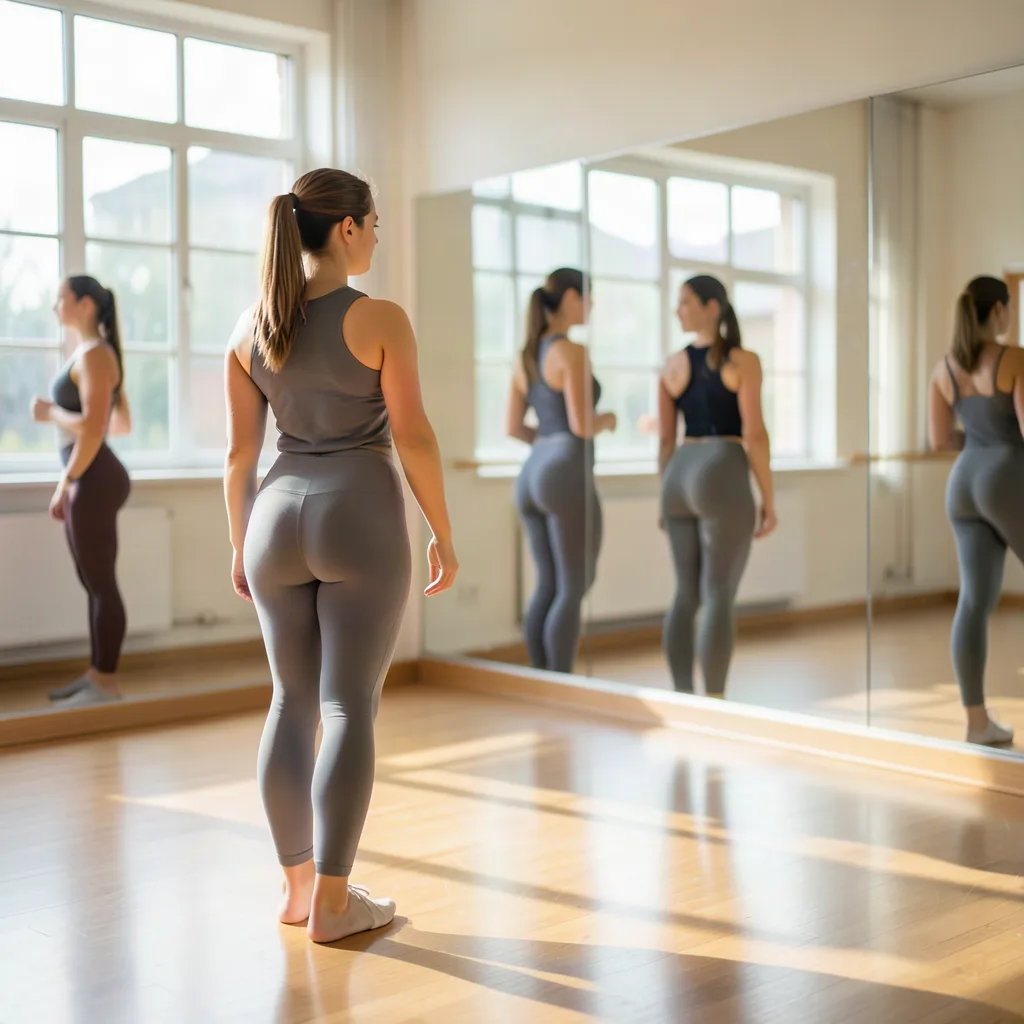
For decades, the imagery associated with Disney has been synonymous with a very specific, idealized version of beauty. From the waist-thin silhouettes of early princesses to the polished perfection of modern CGI characters, the “Disney look” often set an unattainable standard for millions of children worldwide. However, the release of the short film “Reflect” marks a significant departure from this tradition. By featuring a plus-size protagonist, Disney has stepped into a vital conversation about body image, self-worth, and the psychological impact of representation.
Key takeaways
- Model body neutrality by focusing on what your body can do rather than its appearance.
- Audit your social media feeds to remove accounts that trigger insecurity or negative body comparison.
- Use body-neutral language at home to emphasize character and effort over physical traits.
- Encourage critical thinking by discussing how media and editing shape unrealistic beauty standards.
“Reflect” is more than just a short animation; it is a mirror held up to the internal struggles of adolescence. It captures the quiet, often invisible battle that many young people fight when they look in the mirror and see a version of themselves that doesn’t align with societal expectations. By centering the story on a girl who struggles with her size and self-perception, Disney validates the experiences of those who have long felt sidelined or invisible in mainstream media. This shift is not merely about “diversity quotas” but about the fundamental human need to be seen and understood.
The Narrative Arc of ‘Reflect’: A Journey Toward Self-Acceptance
The story of “Reflect” is told with a poignant simplicity that resonates across age groups. The protagonist is a young girl who navigates the complexities of her daily life while carrying a heavy emotional burden: the feeling that she is not “enough” because of her physical appearance. The film utilizes powerful visual metaphors to illustrate the gap between how she perceives herself and who she actually is. The mirror serves as the primary antagonist, reflecting not her physical reality, but her internalized insecurities.
Throughout the narrative, we see the protagonist attempting to shrink herself—both physically and emotionally. This is a common experience for many plus-size individuals, particularly during the formative years of puberty, where the desire to blend in often outweighs the desire to stand out. The emotional climax of the film occurs not when her body changes, but when her perspective does. The resolution focuses on the concept of self-compassion, emphasizing that the goal is not to reach a specific weight or shape, but to reach a state of peace with one’s own existence.
This narrative choice is crucial. By focusing on the internal shift rather than a physical transformation, “Reflect” avoids the harmful trope of the “glow-up” or the “weight loss journey” as the only path to happiness. Instead, it posits that true liberation comes from dismantling the critical voice in one’s head and replacing it with kindness.
Breaking the Mold: The Significance of Plus-Size Protagonists in Animation
Animation has a unique power to shape the subconscious beliefs of children. Because animated worlds are constructed from scratch, every design choice is intentional. When a studio as influential as Disney chooses to create a plus-size protagonist, it sends a powerful message: this body type is worthy of being the hero of its own story. It is worthy of love, growth, and emotional complexity.
Historically, plus-size characters in animation were often relegated to comic relief or used as visual shorthand for laziness or lack of discipline. The “funny best friend” or the “clumsy sidekick” were frequent archetypes. By placing a plus-size character in the lead role of a serious, emotionally driven story, “Reflect” breaks these outdated stereotypes. It allows the audience to empathize with the character’s internal world rather than judging her external form.
Furthermore, the representation of diverse body types in animation helps to normalize a wider spectrum of human existence. When children see characters who look like them—or characters who look different from them but are treated with dignity—it expands their definition of beauty and worth. This normalization is a key step in reducing the stigma and bullying associated with weight, fostering a culture of empathy rather than judgment.
Understanding the Psychology of the ‘Mirror’ Effect
The central theme of “Reflect” touches upon a complex psychological phenomenon often linked to body dysmorphia and adolescent self-perception. During adolescence, the brain is highly sensitive to social feedback and peer comparison. This is the period when the “idealized self”—the version of ourselves we think we should be to be loved and accepted—often clashes violently with the “perceived self.”
For many, the mirror does not provide an objective reflection. Instead, it acts as a filter through which societal biases, social media images, and critical comments are processed. This is why the protagonist in “Reflect” sees something different from what the world sees. The “mirror effect” is the cognitive distortion where a person focuses on a perceived flaw to the point that it consumes their entire identity. In the film, this is depicted as an emotional weight that hinders the protagonist’s ability to engage fully with her life.
Psychologically, the path out of this distortion is not found in changing the physical reflection, but in changing the relationship with the mirror. This involves cognitive reframing—learning to challenge the negative thoughts that arise during self-observation. By showing the protagonist’s journey toward acceptance, “Reflect” models the process of mindfulness and self-kindness, encouraging viewers to question the validity of their inner critic.
How Representation Affects Mental Health in Young Girls
The link between media representation and mental health is well-documented. When young girls are consistently exposed to a narrow definition of beauty—typically characterized by thinness, specific facial features, and youth—those who do not fit this mold often experience a decrease in self-esteem. This can lead to a cascade of mental health challenges, including anxiety, depression, and an increased risk of developing eating disorders.
Representation acts as a protective factor. When a girl sees a plus-size protagonist who is depicted as thoughtful, capable, and deserving of happiness, it provides a “counter-narrative” to the pressures of the “thin ideal.” It tells her that her value is not contingent upon her dress size. This validation can reduce the feelings of isolation and “otherness” that often plague plus-size youth.
Moreover, representation helps in the development of a positive identity. Identity is formed not just through personal experience, but through the stories we see told about people like us. By diversifying the stories it tells, Disney helps create a world where a wider variety of identities are seen as “normal” and “valued.” This systemic shift in storytelling can lower the psychological burden on marginalized bodies, allowing young people to spend less energy worrying about their appearance and more energy developing their talents and passions.
Practical Ways to Foster Body Positivity at Home
While films like “Reflect” provide essential visibility, the real work of fostering body positivity happens in the daily interactions within the home. Parents and caregivers play a pivotal role in shaping a child’s relationship with their body. Here are actionable strategies to support a healthy body image:
- Audit Your Own Language: Children are highly attuned to how their parents talk about their own bodies. Avoid making self-deprecating comments about your weight or “dieting” to achieve a certain look. Instead, model body neutrality by focusing on what your body can do rather than how it looks.
- Shift the Focus of Compliments: While it’s natural to tell a child they look “pretty,” try to balance those compliments with praise for their character, effort, and skills. Use phrases like, “I love how creative you were with this project,” or “I’m so proud of how kind you were to your friend,” to reinforce that their value lies in their essence, not their appearance.
- Curate Media Consumption Together: Encourage a critical eye toward social media and advertising. Ask your children, “Do you think this photo is real, or has it been edited?” or “Why do you think the company wants us to believe we need to look like this to be happy?” This builds digital literacy and helps them detach their self-worth from curated images.
- Promote Intuitive Eating: Avoid labeling foods as “good” or “bad,” or “cheat meals.” Instead, focus on how different foods make the body feel. Encourage listening to hunger and fullness cues, which fosters a trusting relationship with the body rather than a controlling one.
- Create a Safe Space for Dialogue: When a child expresses insecurity about their body, avoid the temptation to simply say, “No you’re not!” This can dismiss their feelings. Instead, validate them by saying, “I’m sorry you’re feeling that way. It can be really hard when we feel like we don’t fit in. Let’s talk about why you feel that way.”
Moving Beyond “Body Positive” to “Body Neutrality”
In recent years, the conversation has evolved from body positivity to body neutrality. While body positivity encourages people to love their bodies regardless of size, some find this an exhausting or unattainable goal, especially on days when they genuinely dislike how they feel. Body neutrality offers a more sustainable alternative.
Body neutrality is the practice of viewing the body as a vessel for experience rather than an object for observation. It is the idea that you do not have to love your body every single day to respect it and take care of it. Instead of focusing on whether the body is “beautiful,” body neutrality focuses on functionality. For example, instead of trying to love the size of one’s thighs, a person might appreciate that their thighs allow them to walk, dance, or hug a loved one.
“Reflect” aligns well with the philosophy of body neutrality. The resolution isn’t necessarily a sudden, ecstatic love for every curve, but a cessation of the war against the self. It is the realization that the body is the least interesting thing about a person. By shifting the focus from aesthetics to existence, we relieve ourselves of the pressure to perform “positivity” and allow ourselves to simply be.
Analyzing Disney’s Evolution in Diversity and Inclusion
The inclusion of a plus-size protagonist in “Reflect” is part of a broader trend within Disney to move toward more inclusive storytelling. In the past, Disney’s approach to diversity was often superficial—adding a character of a different ethnicity or background without giving them a central, nuanced role. However, recent films like Moana, Encanto, and Turning Red have shown a commitment to deeper, more authentic representation.
These films explore themes of generational trauma, cultural identity, and the pressure to meet family expectations, often featuring characters with non-traditional body types or complex emotional landscapes. “Reflect” fits into this trajectory by tackling the specific intersection of body image and mental health. It suggests that Disney is beginning to recognize that “magic” isn’t just about fairy godmothers and talking animals, but about the courage it takes to accept oneself in a world that demands perfection.
However, the journey is far from over. True inclusion requires a systemic change in how characters are designed and written. It means moving away from the “exception to the rule” model—where one diverse character is included to check a box—and moving toward a world where diversity is the baseline. “Reflect” is a promising step in this direction, proving that there is a massive audience hungry for stories that reflect the actual diversity of the human form.
Tips for Navigating Social Media and Unrealistic Beauty Standards
For adolescents and adults alike, the digital world is a minefield of comparison. The algorithms of Instagram and TikTok often push “ideal” body types, creating a distorted sense of reality. To maintain mental wellness in the age of the filter, consider these actionable steps:
- The “Unfollow” Audit: Regularly go through your following list. If an account consistently makes you feel “less than,” insecure, or unhappy with your body, unfollow or mute them. Your digital environment should inspire you, not diminish you.
- Diversify Your Feed: Actively seek out creators who have different body types, abilities, and backgrounds. When your feed is filled with a variety of humans, the “thin ideal” loses its power because it is no longer the only thing you see.
- Practice “Mindful Scrolling”: Before opening a social media app, set an intention. Ask yourself, “Why am I opening this? Am I looking for connection, or am I looking for comparison?” If you notice yourself spiraling into a comparison trap, put the phone down and engage in a grounding activity, like stretching or breathing.
- Separate Worth from Likes: Remind yourself that social media metrics are not a reflection of your value. A photo’s performance is based on an algorithm, not on the quality of the person in the image.
- Engage with Body-Neutral Content: Look for accounts that focus on health, strength, and joy rather than weight loss or “body goals.” Focus on content that celebrates what the body can achieve rather than how it can be modified.
The Visual Language of Vulnerability: Analyzing Animation Techniques in ‘Reflect’
Beyond the narrative, the technical execution of “Reflect” utilizes specific animation principles to externalize internal struggle. In traditional animation, “shape language” is used to communicate a character’s personality at a glance: circles often denote friendliness or softness, squares suggest stability or stubbornness, and triangles imply danger or sharpness. For decades, plus-size characters in animation were often designed with exaggerated, rounded shapes that served as a visual punchline, reinforcing the idea that their bodies were inherently comical or clumsy.
“Reflect” consciously avoids this caricature. The protagonist is designed with an organic, grounded silhouette that prioritizes realism over stereotype. The animators focus on the weight and physics of her movement—not to highlight her size as a limitation, but to ground her in a tangible reality. This prevents the character from becoming a symbol and instead keeps her a human being. The use of lighting also plays a critical role; the scenes involving the mirror often employ a colder, more clinical color palette, symbolizing the harsh, judgmental lens of societal standards. In contrast, as she moves toward self-acceptance, the lighting shifts toward warmer, softer tones, mirroring her internal emotional thaw.
An edge case in this visual storytelling is the depiction of the “distorted” reflection. Rather than using obvious monsters or grotesque imagery, the film uses subtle shifts in proportion and shadow. This is a sophisticated choice because it accurately represents how body dysmorphia works—it is rarely a complete hallucination, but rather a magnification of perceived flaws. By keeping the distortion subtle, the film invites the viewer to experience the protagonist’s cognitive dissonance, making the emotional payoff of her acceptance feel earned rather than magical.
Integrating ‘Reflect’ into Educational and Therapeutic Settings
Because of its focused theme and emotional resonance, “Reflect” serves as a powerful pedagogical tool for educators, school counselors, and child psychologists. The film provides a concrete starting point for discussions that are often too abstract or sensitive for children to initiate on their own. To effectively use the film in a classroom or therapeutic setting, practitioners can implement a structured “Watch-Discuss-Reflect” framework.
First, the viewing should be followed by open-ended prompts that move from the literal to the metaphorical. Instead of asking, “Did she feel sad?” educators can ask, “What did the mirror represent in her life?” or “Why do you think the reflection changed even though her body stayed the same?” This encourages students to analyze the gap between perception and reality. For older students, this can transition into a lesson on media literacy, where they compare the protagonist’s experience to the curated perfection of social media feeds, identifying the “filters”—both digital and psychological—that distort our self-image.
A practical activity to accompany the film is the “Inner Critic vs. Inner Advocate” journaling exercise. Students can divide a page in two: on one side, they write the critical things the “mirror” says to them (the Inner Critic), and on the other, they write a compassionate response (the Inner Advocate). By externalizing these voices, children learn that the critical voice is not an absolute truth, but a narrative that can be challenged. This mirrors the protagonist’s journey in the film, moving the lesson from a passive viewing experience to an active psychological practice.
Deconstructing the ‘Model Sheet’: The Technical Shift in Character Design
To understand the bravery of “Reflect,” one must understand the concept of the “model sheet” in professional animation. A model sheet is a blueprint that ensures a character looks consistent across thousands of frames and different animators. For a long time, Disney’s model sheets for female leads adhered to a very narrow set of proportions: high waistlines, slender limbs, and specific facial symmetries. These standards were not just aesthetic choices; they were ingrained in the pipeline of how characters were rigged and animated in 3D software.
Creating a plus-size protagonist requires a fundamental shift in the technical rigging process. The way skin folds, the way clothing interacts with the body, and the way a character’s center of gravity affects their gait all change when moving away from the “standard” thin model. By investing the time and resources to develop a new model sheet for the protagonist of “Reflect,” Disney is signaling that diverse bodies are not just “occasional additions” but are worthy of the same technical precision and care as their traditional leads.
This technical shift has a ripple effect on the industry. When a major studio proves that a non-traditional silhouette can carry an emotional narrative without relying on comic relief, it paves the way for other studios to diversify their own character designs. It challenges the industry assumption that a certain “look” is required for a character to be relatable or empathetic. The success of “Reflect” suggests that relatability is found in the authenticity of the emotion, not the adherence to a specific geometric proportion.
Navigating the Intersection of Body Image and Cultural Expectations
While “Reflect” presents a universal struggle with self-perception, it is important to recognize that the pressure to conform to beauty standards is not experienced uniformly. Body image is deeply intersectional, meaning it is influenced by race, ethnicity, and cultural heritage. In some cultures, a larger body may have historically been seen as a sign of prosperity or health, while in Westernized contexts, it is often stigmatized as a lack of discipline. The protagonist’s struggle in “Reflect” is a poignant reflection of the tension between these varying cultural narratives.
For many viewers from marginalized backgrounds, the “thin ideal” is compounded by Eurocentric beauty standards—such as specific hair textures or facial features—that further alienate them from the imagery they see on screen. When a film like “Reflect” centers a plus-size protagonist, it opens the door for a broader conversation about who is allowed to be “beautiful” and who is allowed to be “the hero.” It acknowledges that the battle with the mirror is often a battle against a colonial or societal definition of worth that was never designed to include everyone.
An edge case in this intersection is the “healthy weight” narrative. Often, representation of plus-size characters is met with criticism that the film is “promoting an unhealthy lifestyle.” However, “Reflect” deftly avoids this trap by focusing on mental health and self-compassion rather than medical metrics. By decoupling worth from weight, the film argues that the most urgent health crisis for many young people is not their BMI, but the devastating impact of shame and self-hatred. It posits that a person cannot truly pursue wellness if they are operating from a place of self-loathing.
Addressing the Backlash: Why Visibility is Not ‘Political Correctness’
The release of inclusive content often triggers a backlash, with critics claiming that studios are prioritizing “diversity quotas” or “woke agendas” over storytelling. This critique suggests that adding a plus-size protagonist is a political act rather than an artistic one. However, this argument ignores the fact that the *absence* of diverse bodies has always been a political choice. For decades, the decision to exclude plus-size protagonists was a statement that such bodies were not suitable for lead roles, romantic interests, or emotional centers.
When Disney introduces a character like the one in “Reflect,” it is not “forcing” diversity; it is simply reflecting the actual diversity of the human population. The backlash often stems from a discomfort with the shifting power dynamics of visibility. When a group that has been historically marginalized or caricatured is suddenly given agency and dignity, it challenges the subconscious biases of the audience. The discomfort felt by some viewers is, in itself, a testament to why this representation is necessary.
To navigate these conversations, especially with children who may hear these critiques, it is helpful to frame visibility as a matter of empathy. Explain that everyone deserves to see a version of themselves on screen that is treated with kindness. Ask, “Would it feel fair if only one type of person was allowed to be the hero of a story?” By shifting the conversation from “politics” to “fairness” and “humanity,” we can help children understand that representation is not about taking something away from others, but about expanding the circle of who is valued.
The Ripple Effect: From On-Screen Representation to Physical Merchandise
The impact of a film like “Reflect” extends far beyond the screen and into the physical world of toys and merchandise. There is a documented psychological phenomenon where children use dolls and action figures to role-play their identities and process their emotions. When the toy aisle only features thin, idealized figures, it reinforces the message that only those bodies are “playable,” “lovable,” or “heroic.” This creates a secondary layer of exclusion that can undermine the positive message of the film.
For the representation in “Reflect” to have a lasting impact, it must be mirrored in the physical products associated with the brand. The creation of plus-size dolls or figures that accurately reflect the protagonist’s design allows children to physically hold and interact with a representation of themselves. This tactile validation is incredibly powerful; it moves the concept of body positivity from a digital image to a physical reality that they can keep in their bedroom.
Furthermore, this shift encourages other toy manufacturers to diversify their product lines. When a powerhouse like Disney validates the marketability of diverse body types, it reduces the perceived financial risk for other companies. This leads to a more diverse toy ecosystem where children of all sizes can find characters that look like them, reducing the “otherness” they feel in their daily lives. The ultimate goal is a world where a plus-size doll is not a “special edition” or a “diversity line,” but simply one of many options, normalizing the variety of the human form in the most fundamental way possible.
Frequently Asked Questions
Q: Why is a short film like ‘Reflect’ so important if it’s not a full-length feature?
A: Short films often serve as experimental spaces where studios can tackle more intimate, specific, and emotionally raw themes that might be harder to weave into a massive commercial blockbuster. Because of its brevity, ‘Reflect’ can focus entirely on the internal emotional state of the protagonist, providing a concentrated dose of representation that can be incredibly impactful for viewers who see themselves in the character.
Q: How can I help a child who is struggling with body image after seeing a ‘perfect’ character in a movie?
A: Use it as a conversation starter. Ask them, “Do you think real people actually look like that?” Explain that movie characters are designed by artists to look a certain way and that these designs aren’t meant to be a blueprint for real human bodies. Redirect the conversation toward the character’s actions or personality traits that the child admires, decoupling the character’s value from their appearance.
Q: What is the difference between body positivity and body neutrality?
A: Body positivity is the belief that all bodies are beautiful and should be loved. Body neutrality is the belief that your body is simply a tool that allows you to live your life, and it’s okay if you don’t love how it looks every day. While positivity focuses on aesthetics (even diverse aesthetics), neutrality focuses on function and existence, which many find more mentally sustainable.
Q: Does seeing plus-size protagonists actually improve mental health outcomes?
A: While a single film cannot “cure” body dysmorphia, research in media psychology suggests that positive representation reduces the internalization of harmful beauty standards. When people see themselves reflected positively in media, it reduces feelings of social isolation and increases self-efficacy, which are key components of overall mental wellness.
Q: How should parents handle the topic of weight with their children without triggering insecurities?
A: Focus on overall wellness rather than weight. Instead of talking about “losing weight” or “being thin,” talk about “fueling the body for energy,” “moving because it feels good,” and “getting enough sleep to help the brain grow.” Avoid using weight as a metric for health, as weight is influenced by genetics and biology as much as by lifestyle.
Related posts:
 Female Directors on Netflix
 Trans Media Representation
 Interracial Relationships in Media: Representation Matters
 Airbnb Plus: The New Luxury Travel Experience
 PHA Bodyweight Workout: Efficient Fitness Anywhere, Anytime
 How to Be the Main Character in Your Life: Embracing Self-Empowerment
 Strong Character
 Mirror Work Benefits