
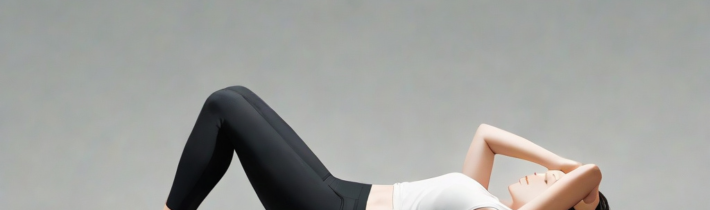
In a world where fitness is often equated with high-intensity interval training, heavy lifting, and vertical movement, the concept of exercising while lying down might seem counterintuitive. However, supine exercise—movement performed while lying on your back or side—is a highly effective, scientifically backed method for building strength, improving mobility, and maintaining consistency. Whether you are recovering from an injury, managing a chronic illness, dealing with extreme fatigue, or simply looking for a way to move your body before you even get out of bed in the morning, lying-down workouts offer a path to health that is both accessible and sustainable.
This guide explores the diverse range of movements that can be performed from a horizontal position. We will delve into core stabilization, lower-body toning, and even upper-body engagement, all while keeping your spine supported by the floor or a firm mattress. By removing the barrier of gravity and the requirement of standing balance, we can often isolate specific muscle groups more effectively and reduce the risk of joint strain. Let’s explore how you can transform your floor or bed into a personal gym that honors your body’s current energy levels.
The Science and Benefits of Supine Exercise
Exercising while lying down is not a “lazy” alternative to traditional workouts; in many clinical and athletic settings, it is the preferred method for targeted muscle activation. When you lie down, your spine is in a neutral, supported position. This eliminates the compressive forces of gravity that can sometimes lead to lower back pain during standing exercises like squats or overhead presses. For individuals with postural orthostatic tachycardia syndrome (POTS), vertigo, or blood pressure fluctuations, supine exercise provides a safe environment where the risk of fainting or dizziness is significantly minimized.
Furthermore, lying down allows for better isolation. When we stand, our bodies use various stabilizer muscles just to keep us upright. While this is generally good, it can sometimes lead to “compensation,” where stronger muscles take over for weaker ones. In a supine position, you can focus entirely on the transverse abdominis, the gluteus medius, or the hamstrings without the rest of the body interfering. This makes lying-down workouts an excellent choice for physical therapy and foundational strength building.
Finally, there is the psychological benefit. On days when the mental hurdle of putting on gym shoes and heading to a fitness center feels insurmountable, the ability to perform a productive routine in your pajamas can be the difference between movement and total sedentary behavior. It fosters a compassionate relationship with fitness, recognizing that some days require a gentler approach while still valuing physical health.
Core Strengthening: The Foundation of Supine Fitness
The core is the powerhouse of the body, and many of the most effective abdominal exercises are actually designed to be performed on the back. These movements focus on stability and resisting movement in the spine, which translates directly to better posture and reduced back pain.
The Dead Bug: This is perhaps the most iconic supine core exercise. Lie on your back with your arms extended toward the ceiling and your knees bent at a 90-degree angle (tabletop position). Slowly lower your right arm behind your head while simultaneously straightening and lowering your left leg toward the floor. The crucial element here is to keep your lower back pressed firmly into the floor; if your back arches, you’ve gone too far. Return to the starting position and repeat on the opposite side. This exercise trains the core to stabilize the spine while the limbs move, a fundamental skill for daily life.
Pelvic Tilts: For those just starting or dealing with back sensitivity, pelvic tilts are essential. Lie with your knees bent and feet flat on the floor. Inhale to prepare, and as you exhale, engage your abdominals to tilt your pelvis back, flattening your lumbar spine against the floor. Hold for a few seconds and release. This small, controlled movement wakes up the deep core muscles that often remain dormant during high-impact activities.
Hollow Body Holds: Borrowed from gymnastics, this is an advanced core builder. Lie flat on your back with arms and legs extended. Simultaneously lift your head, shoulders, and legs a few inches off the floor, creating a “banana” shape with your body. Your lower back must remain in contact with the ground. This creates immense tension throughout the entire abdominal wall. If this is too difficult, you can modify it by keeping your knees bent or your arms by your sides.
Lower Body Toning: Glutes, Hips, and Thighs
You don’t need to perform heavy squats to build a strong lower body. The floor provides an excellent surface for resistance training using your own body weight or light ankle weights.
Glute Bridges: This is a staple for a reason. Lie on your back with feet flat on the floor, hip-width apart. Lift your hips toward the ceiling by squeezing your glutes, creating a straight line from your knees to your shoulders. To increase the challenge, try a single-leg bridge by extending one leg straight out while the other pushes off the floor. This targets the glutes and hamstrings while providing a gentle stretch to the hip flexors.
Clamshells: Lie on your side with your hips and knees bent at about a 45-degree angle. Keep your feet together and lift your top knee as high as you can without shifting your pelvis. This specifically targets the gluteus medius, a muscle vital for hip stability and knee health. Often neglected in traditional leg workouts, the clamshell is a powerhouse for preventing injury.
Leg Lifts (Lateral and Supine): While lying on your side, lift your top leg toward the ceiling, keeping it straight and your toes pointed forward. This works the abductors (outer thighs). Then, flip onto your back and perform vertical leg lifts to engage the hip flexors and lower abdominals. For inner thigh work, lie on your side, cross your top leg over the bottom one, and lift the bottom leg off the floor.
Upper Body Sculpting Without Standing
While upper body workouts often involve standing or sitting, the supine position offers a unique way to work the chest, shoulders, and triceps with a full range of motion and total back support.
Floor Presses: This is essentially a bench press performed on the floor. Lie on your back with knees bent and feet flat. Hold dumbbells (or even water bottles) in each hand. Lower your arms until your elbows gently touch the floor, then press back up. The floor acts as a safety stop, preventing you from overextending the shoulder joint, making this a very shoulder-friendly chest exercise.
Lying Overheads (Pullovers): Holding a single weight with both hands, extend your arms straight up over your chest. Slowly lower the weight back over your head toward the floor, keeping a slight bend in the elbows. Once you feel a stretch in your lats and chest, pull the weight back to the starting position. This targets the serratus anterior and the muscles of the back and chest.
Skull Crushers (Tricep Extensions): Hold weights with arms extended straight up. Keeping your upper arms stationary and perpendicular to the floor, bend your elbows to lower the weights toward your forehead (hence the name). Use your triceps to straighten the arms back out. Doing this lying down ensures you aren’t using momentum from your legs or torso to move the weight.
Mobility and Flexibility Routines
Lying down is the ideal position for restorative movement and increasing the range of motion in the joints. Gravity helps deepen stretches without the strain of balancing.
Spinal Twists: Lie on your back and bring your knees into your chest. Slowly lower both knees to the right side while extending your left arm out to the left, looking toward your left hand. This rotation is excellent for spinal health and relieving tension in the lower back and obliques. Hold for 30-60 seconds on each side.
Happy Baby Pose: Lie on your back and lift your feet toward the ceiling. Bend your knees and grab the outsides of your feet or your ankles. Gently pull your knees toward your armpits. This pose opens the hips and stretches the inner thighs and lower back. It is a deeply grounding movement that encourages relaxation of the pelvic floor.
Windshield Wipers: With your knees bent and feet flat on the floor (wider than hip-width), slowly drop both knees to the right, then to the left. This provides internal and external rotation for the hip joints, which is crucial for maintaining mobility as we age. It’s a gentle way to “oil” the hip joints before or after more strenuous activity.
Adapting Workouts for Bed vs. Floor
The surface you choose for your workout significantly impacts the intensity and safety of the movements. Both have their place, but it’s important to understand the differences.
Working Out on the Floor: A firm surface like a yoga mat on a hardwood or carpeted floor provides the best stability. It allows for precise alignment and ensures that your spine is properly supported. For exercises like the hollow body hold or floor press, the resistance of the floor is necessary to gauge your form. If you find the floor too hard, use a thicker fitness mat or a folded blanket under your spine.
Working Out in Bed: The bed is a softer, more unstable surface. This can actually make core exercises more challenging because your body has to work harder to maintain balance on the “squishy” mattress. However, for those with severe chronic pain or mobility issues, the bed is often the most accessible place. If you exercise in bed, be mindful that the mattress may cause your back to arch more easily; focus extra hard on engaging your core to protect your spine. Avoid using very soft pillows under your head during exercise to prevent neck strain.
Safety Considerations: Regardless of the surface, always move with control. Avoid jerky movements. If you feel sharp pain (as opposed to the dull ache of muscle effort), stop immediately. If you are using weights in bed, be extremely careful not to drop them, as the surface is less predictable than the floor.
Deepening the Mind-Muscle Connection Through Proprioceptive Feedback
One of the most overlooked advantages of supine exercise is the immediate tactile feedback provided by the floor. In a standing position, the brain is constantly preoccupied with preventing a fall, which can dilute the focus on specific muscle contractions. When you lie down, the floor acts as a secondary nervous system, telling you exactly where your body is in space. This is known as proprioception. By utilizing the floor as a reference point, you can perform “neuromuscular re-education,” teaching your brain to fire muscles that may have become dormant due to sedentary lifestyles or injury.
Take, for instance, the Segmental Bridge. Unlike a standard glute bridge where the hips move as a single unit, a segmental bridge requires you to peel your spine off the floor one vertebra at a time. As you lie on your back, you focus on the sensation of each bone leaving the mat. This requires intense concentration and fine-motor control of the multifidus muscles—the tiny stabilizers that run along the spine. This level of detail is nearly impossible to achieve during a standing squat. By the time you reach the top of the bridge, you have not only engaged your glutes but also “mapped” your spine in your mind, leading to better posture when you eventually stand up.
Another powerful proprioceptive tool is the Heel Slide with Tactile Monitoring. Lie on your back with your legs straight. Place your fingers on the bony protrusions of your hip bones (the ASIS). Slowly slide one heel toward your glutes, keeping the foot in contact with the floor. The goal is to move the leg without the pelvis tilting or rotating even a millimeter. The floor tells you if your lower back is arching, and your fingers tell you if your hips are rocking. This exercise is an edge-case masterclass in stability; it looks easy from the outside but requires a sophisticated internal dialogue between the brain and the deep transverse abdominis. Mastering these subtle movements creates a foundation of “functional stillness” that protects the joints during more explosive activities.
Supine Resistance Training: Leveraging Bands and Isometrics
While bodyweight exercises are effective, adding external resistance in a lying position can significantly accelerate strength gains without the joint impact associated with standing weights. Resistance bands are particularly useful here because their tension increases as they are stretched, matching the natural strength curve of many supine movements. Because you are supported by the floor, you can use heavier bands than you might feel comfortable using while standing, as there is zero risk of losing your balance.
Resisted Lateral Leg Openings: Place a small loop band around your thighs, just above the knees. Lie on your side in a straight line (a variation of the clamshell). Instead of bending your knees, keep your legs straight and lift the top leg against the resistance of the band. This targets the gluteus medius and the tensor fasciae latae in a lengthened state. To increase the difficulty, perform small pulses at the top of the range. This is an excellent exercise for runners or those with knee instability, as it strengthens the lateral chain that prevents the knee from caving inward during movement.
Supine Banded Rows: You don’t need a cable machine to work your back. While lying on your back, loop a long resistance band around the arches of your feet. Hold the ends of the band with your arms extended toward your feet. Pull your elbows back toward the floor, squeezing your shoulder blades together. This “floor row” isolates the rhomboids and latissimus dorsi. Because the floor prevents you from leaning back to cheat the movement—a common mistake in seated or standing rows—the back muscles are forced to do 100% of the work. For an added challenge, perform this while holding a bridge position, which integrates the entire posterior chain from the calves to the upper back.
Isometric Wall Presses: If you are lying on the floor near a wall, you have a built-in resistance machine. Lie on your back with your side against a wall. Lift your leg and press the outside of your foot or knee into the wall as hard as you can for 10 seconds. This isometric contraction recruits a high percentage of muscle fibers without any joint movement, making it a perfect “edge case” exercise for those with acute joint pain or limited range of motion. It builds “strength at the end-range,” which is vital for preventing sprains and strains.
The Internal Engine: Diaphragmatic Breathing and Pelvic Floor Integration
True core strength is not just about the “six-pack” muscles; it is a pressure management system involving the diaphragm, the transverse abdominis, and the pelvic floor. Supine exercise is the gold standard for training this system because it allows the internal organs to settle back toward the spine, making it easier to access the deep core. This is particularly relevant for postpartum recovery, pelvic floor dysfunction, or chronic digestive issues where standing pressure can be problematic.
360-Degree Breathing: Lie on your back with your knees bent. Place your hands on the sides of your ribcage. As you inhale, focus on expanding your ribs outward into your hands and downward into the floor, rather than just lifting your chest. This ensures the diaphragm is fully descending. On the exhale, imagine a “zipper” starting at the pelvic floor and pulling up toward the belly button. This synchronized movement coordinates the deep core. When you add a movement—like a leg lift—to this breathing pattern, you are training your body to maintain internal stability under load. This is the secret to preventing the “pooching” or doming of the stomach often seen during poorly executed sit-ups.
The Supine Vacuum: This is an advanced internal exercise used by bodybuilders and yogis alike to strengthen the transverse abdominis. Lie on your back and exhale all the air from your lungs. Once empty, pull your navel in and up toward your ribcage without inhaling. Hold this hollowed-out position for 5-10 seconds. This creates a powerful internal contraction that cinches the waistline from the inside out. Because you are lying down, gravity helps the abdominal contents move toward the head, allowing for a deeper vacuum than is possible while standing. This exercise is an excellent way to improve respiratory efficiency and spinal support without moving a single limb.
Supine Cardio: Elevating the Heart Rate Without the Impact
A common misconception is that you must be on your feet to get a cardiovascular workout. However, by moving the large muscle groups of the legs and arms in a coordinated, rapid fashion while supine, you can significantly elevate your heart rate and improve metabolic health. This is an essential strategy for individuals with POTS (Postural Orthostatic Tachycardia Syndrome), as it allows for aerobic conditioning without the lightheadedness caused by standing.
Supine Cycling with Arm Integration: This is more than just a “bicycle crunch.” Lie on your back and perform a cycling motion with your legs, but keep the movement fast and the range of motion large. Simultaneously, reach your arms toward the ceiling and perform rapid “air punches” or circular rotations. By involving all four limbs, you increase the oxygen demand on the heart. To turn this into HIIT (High-Intensity Interval Training), cycle as fast as possible for 30 seconds, then rest for 15 seconds. The horizontal position allows for higher intensity with lower perceived exertion, as the heart doesn’t have to fight gravity to pump blood back from the legs.
Rapid-Fire Glute Bridge Marches: While holding a bridge position, lift one foot off the floor, then the other, in a marching motion. To make this a cardio move, increase the tempo. The constant engagement of the glutes and hamstrings, combined with the rapid switching of weight, creates a significant metabolic demand. If you have a set of light dumbbells, you can add a “chest press” rhythm to the march. This full-body coordination mimics the mechanics of running but removes the 3-4x bodyweight impact force that occurs when a foot hits the pavement.
Floor-Based Mountain Climbers: Flip onto your stomach? Not necessarily. You can perform a “reverse mountain climber” by lying on your back and rapidly pulling your knees toward your chest in an alternating fashion, keeping the feet from touching the ground. If you have a smooth floor and two small towels, you can place the towels under your heels while lying on your back. In a bridge position, slide your heels in and out rapidly. This “hamstring curl cardio” is incredibly taxing and will spike the heart rate within seconds while building bulletproof posterior strength.
Somatic Movement and Nervous System Regulation
Sometimes the goal of a lying-down workout isn’t strength or sweat, but rather the regulation of the nervous system. Somatic movements are slow, conscious exercises designed to release “sensory-motor amnesia”—chronic muscle tension that the brain has forgotten how to let go of. These movements are performed with minimal effort, focusing instead on the internal sensation of the muscle.
Pelvic Clocks: Imagine a clock face resting on your lower abdomen, with 12 o’clock at your navel and 6 o’clock at your pubic bone. Lie on your back and slowly tilt your pelvis to move a marble from the center of the clock to 12, then back to the center, then to 6. Gradually work your way around the entire clock (to 3 and 9 o’clock, and all the hours in between). These tiny, micro-movements release tension in the psoas and the deep rotators of the hip. It is a profound tool for anyone who suffers from chronic lower back stiffness or stress-related tension in the pelvic bowl.
Eye-Head Dissociation: Our neck muscles are closely tied to our visual system. Lie on your back and slowly turn your head to the right while keeping your eyes fixed on a point on the ceiling. Then, turn your head to the left while your eyes move to the right. This gentle “rewiring” of the vestibular and ocular systems can reduce neck tension and even alleviate certain types of tension headaches. Because the head is fully supported by the floor, the superficial neck muscles (like the SCM) can relax, allowing the deeper cervical stabilizers to function correctly. This is a perfect “cool down” after a day of staring at a computer screen.
Managing Chronic Conditions: Edges Cases and Modifications
Supine exercise is a lifeline for those managing conditions like Myalgic Encephalomyelitis/Chronic Fatigue Syndrome (ME/CFS), Fibromyalgia, or Ehlers-Danlos Syndrome (EDS). In these cases, the traditional “push through the pain” mentality is not only ineffective but potentially harmful. Supine movement allows for “pacing,” a strategy of staying within one’s energy envelope while still maintaining joint mobility.
Isometric Holds for Hypermobility: For those with EDS or hypermobile joints, traditional stretching can be dangerous. Instead, supine isometrics are used to build “joint closure” and stability. For example, lying on your back and gently pressing your head into a pillow or your arms into the floor builds the strength needed to hold joints in place without overextending them. This creates a “muscular corset” that protects the fragile ligaments.
Ankle Pumps and Circulation: For those who are bedbound or have limited mobility, the simple act of lying on the back and vigorously flexing and extending the ankles can prevent deep vein thrombosis (DVT) and improve peripheral circulation. Adding “alphabet tracing” with the toes further engages the lower leg muscles. While these may seem like minor movements, in the context of chronic illness, they are vital for maintaining vascular health and preventing the muscle atrophy that occurs with prolonged stasis.
The “Energy-Neutral” Workout: For individuals with severe fatigue, workouts can be broken down into 2-minute micro-sessions performed throughout the day while lying in bed. One session might be three slow spinal twists; another might be five gentle pelvic tilts. This cumulative approach prevents the “crash” associated with longer exercise sessions while providing the nervous system with the regular movement input it needs to function. It reframes exercise from a chore to be completed into a tool for symptom management.
Leveraging Household Items for Supine Progressions
You don’t need a gym to progress your supine routine; your home is full of props that can change the leverage and difficulty of these exercises. Using everyday items allows you to mimic professional physical therapy equipment for a fraction of the cost.
The Wall as a Resistance Tool: Lying on your back with your feet flat against a wall changes the mechanics of a glute bridge. By pushing “into” the wall rather than “down” into the floor, you shift the emphasis toward the hamstrings and the calves. You can also perform “Wall Walks” while supine: lie on your back with your hips near the baseboard and slowly walk your feet up the wall until your hips lift. This is a safe, supported way to experience an inversion, which can help with lymphatic drainage and lower-body swelling.
Cushions for Alignment: If you have a “flat back” or a “sway back” posture, the floor might feel uncomfortable. Placing a small, rolled-up towel under the natural curve of the neck or the lower back can provide the support needed to perform exercises without strain. Conversely, placing a firm pillow under the hips during leg lifts can increase the range of motion for the hip flexors, making the exercise more challenging. For those with acid reflux or respiratory issues, using a wedge pillow to stay at a 30-degree incline while performing “supine” movements provides the benefits of the horizontal position without the discomfort of lying completely flat.
Towel Slides for Eccentric Strength: Eccentric strength—the ability of a muscle to lengthen under tension—is the key to preventing injury. On a hard floor, place a small towel under your heels. Lie on your back and lift your hips into a bridge. Slowly slide your feet away from your body, lowering your hips to the floor with control. This “eccentric hamstring slide” is one of the most effective ways to strengthen the back of the legs and protect the ACL. It is significantly more difficult than a standard bridge and should be introduced gradually, perhaps starting with one leg at a time while keeping the other foot planted for support.
A Sample 20-Minute “Horizontal” Routine
This
Related posts:
 Reverse Plank Power: The Backwards Move That’s Forward-Thinking Fitness
 Perfect Your Squat Form
 Ageing with Confidence: Maintaining Spine Health Over the Years
 Margot Robbie’s Golden Globes Ab Workout Secrets Revealed
 Compulsive vs. Pathological Lying: Recognizing the Difference
 Single-Leg Glute Bridge: Targeting the Booty
 Resistance Band Glute Workouts
Why Your Knees Hurt on Inclines and How to Fix It
Resistance Band Glute Workouts
Why Your Knees Hurt on Inclines and How to Fix It