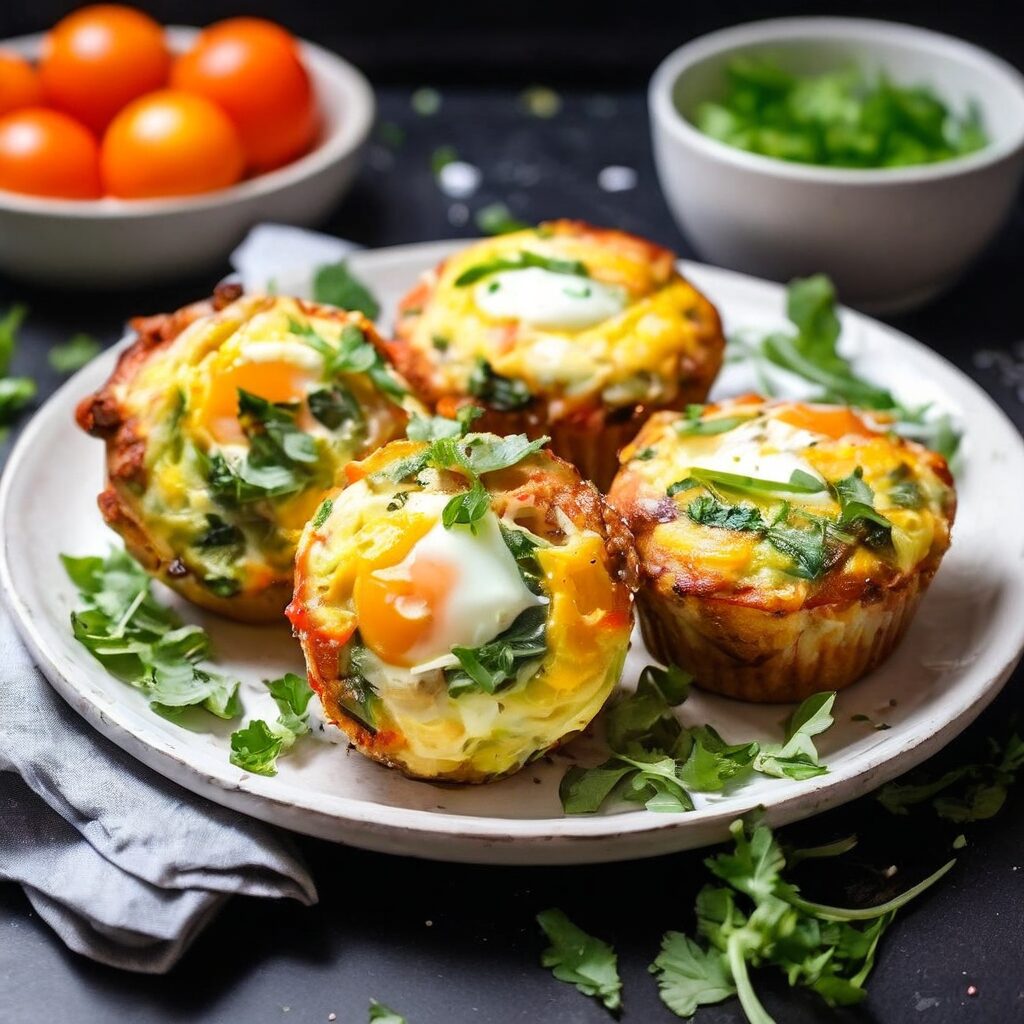
If you’re looking for a delicious and healthy breakfast option, egg frittata muffins are the perfect choice. These portable, protein-packed muffins are easy to make and can be customized with your favorite vegetables and proteins. Let’s dive into how you can make these tasty treats at home.
Ingredients
- 6 large eggs
- 1/4 cup milk (or dairy-free alternative)
- 1/2 cup bell peppers, diced
- 1/2 cup spinach, chopped
- 1/4 cup onions, finely chopped
- 1/4 cup grated cheese (optional)
- Salt and pepper to taste
- Olive oil or cooking spray
Instructions
- Preheat your oven to 375°F (190°C). Lightly grease a muffin tin with olive oil or cooking spray.
- In a large bowl, whisk together the eggs and milk until well combined.
- Stir in the bell peppers, spinach, onions, and cheese (if using). Season with salt and pepper.
- Pour the egg mixture evenly into the prepared muffin tin, filling each cup about three-quarters full.
- Bake for 20-25 minutes, or until the muffins are set and lightly golden on top.
- Allow the muffins to cool slightly before removing them from the tin. Serve warm or store in the refrigerator for up to 5 days.
Tips for Perfect Egg Frittata Muffins
To ensure your egg frittata muffins turn out perfect every time, keep these tips in mind:
- Use fresh ingredients: Fresh vegetables and high-quality cheese will enhance the flavor of your muffins.
- Don’t overfill: Leaving some space in each muffin cup allows the eggs to expand as they cook.
- Experiment with flavors: Feel free to add your favorite ingredients, such as diced ham, bacon, mushrooms, or different herbs and spices.
Why Choose Egg Frittata Muffins?
Egg frittata muffins are not only delicious but also offer several benefits:
- High in protein: Eggs are a great source of protein, which helps keep you full and satisfied.
- Customizable: You can easily tailor the recipe to suit your dietary preferences and available ingredients.
- Convenient: These muffins are perfect for meal prep and can be enjoyed on the go.
- Nutritious: Packed with vegetables, egg frittata muffins provide essential vitamins and minerals.
Serving Suggestions
Egg frittata muffins can be enjoyed in various ways:
- Pair them with a side of fresh fruit for a balanced breakfast.
- Serve with a salad for a light lunch or dinner.
- Enjoy them as a snack throughout the day.
The Science of Moisture: Why Pre-Cooking Vegetables is Essential
One of the most frequent challenges when making egg frittata muffins is the presence of excess liquid at the bottom of the tin, often referred to as “weeping.” This occurs because many popular vegetable add-ins, such as spinach, mushrooms, and zucchini, have a water content exceeding 90%. When raw vegetables are placed directly into the egg mixture and baked, the heat causes their cellular structures to break down, releasing that moisture into the eggs. This results in a spongy, watery texture rather than a firm, custard-like consistency.
To achieve a professional-grade muffin, you should always sauté high-moisture vegetables before adding them to the batter. For example, when working with spinach, sauté it until it is fully wilted, then place it in a clean kitchen towel and squeeze out every drop of remaining liquid. For mushrooms, cook them in a dry pan first to evaporate their internal water before adding a touch of oil for browning. This process, known as the Maillard reaction, not only prevents sogginess but also concentrates the natural sugars in the vegetables, leading to a much deeper flavor profile than raw inclusions could ever provide.
Another moisture-related edge case involves the use of frozen vegetables. While convenient, frozen peppers or broccoli often harbor ice crystals that turn into steam during the baking process. If you must use frozen produce, thaw it completely and pat it dry with paper towels. For onions, sautéing them until they are translucent or slightly caramelized removes the sharp sulfurous bite and replaces it with a mellow sweetness that balances the savory notes of the eggs and cheese.
Pan Selection and Release Strategies: Beyond the Cooking Spray
The material of your muffin tin significantly influences the heat distribution and the final “crust” of your frittata muffins. Traditional carbon steel or aluminum tins are excellent for heat conduction, providing a slight golden-brown exterior. However, eggs are notoriously high in sulfur and protein, which act like a natural adhesive when they come into contact with hot metal. Even with cooking spray, sticking can occur if the pan is not seasoned or if the spray is applied unevenly.
Silicone muffin pans have become the gold standard for egg muffins because of their incredible non-stick properties. Unlike metal, silicone is flexible, allowing you to “pop” the muffins out from the bottom without using a knife, which preserves the aesthetic integrity of the muffin. The trade-off is that silicone is a poor conductor of heat; you may find that muffins baked in silicone require an extra 2-4 minutes of oven time and will not develop the same browned edges as those baked in metal. To get the best of both worlds, place your silicone mold on a preheated metal baking sheet to boost the bottom-up heat transfer.
If you prefer using paper liners, be aware that standard paper often fuses to the egg. Look specifically for parchment-lined or silicone-coated baking cups. These are specifically designed for high-protein batters and will peel away cleanly. For those looking to avoid liners and sprays altogether, a well-seasoned cast-iron muffin wedge pan can produce a crust that is unmatched in crispness, though it requires careful temperature monitoring to avoid burning the delicate egg proteins.
The Dairy Variable: How Different Liquids Affect the Final Crumb
While the base recipe calls for milk, the type of dairy (or non-dairy) you choose acts as a texture modifier. The ratio of fat to water in your liquid determines whether the muffin will be airy and light or dense and rich. Using heavy cream instead of 2% milk creates a luxurious, velvety texture similar to a French quiche. The higher fat content in cream coats the egg proteins, preventing them from bonding too tightly, which results in a softer “crumb.”
For those seeking a high-protein, low-fat alternative, Greek yogurt or cottage cheese can be whisked into the eggs. Cottage cheese, in particular, has gained popularity for creating a texture reminiscent of famous coffee-shop egg bites. When baked, the curds melt into the egg, providing a moist, almost cheesy interior without the need for excessive amounts of shredded cheese. If you use cottage cheese, consider blending the egg and cheese mixture in a high-speed blender for 30 seconds to create a perfectly smooth, aerated batter.
When opting for dairy-free alternatives, be mindful of the sugar content. Many almond and oat milks contain added sugars that can clash with savory ingredients like onions and peppers. Unsweetened soy milk is often the best dairy-free substitute because its protein structure is similar to cow’s milk, providing better stability for the muffin as it rises. Avoid using coconut milk from a carton if you want a neutral flavor, as the coconut notes can be overpowering; however, full-fat canned coconut milk can be excellent for a Thai-inspired frittata with red curry paste and shrimp.
Global Flavor Architecture: Elevating the Humble Egg Muffin
Once you have mastered the basic technique, you can treat the egg mixture as a blank canvas for complex flavor profiles. Moving beyond the standard Western omelet style, consider the “Mediterranean Collection.” This involves folding in crumbled feta, sun-dried tomatoes, and Kalamata olives. The saltiness of the olives and feta means you should reduce the added salt in the base egg mixture to maintain balance. Finish these with a sprinkle of dried oregano or fresh basil after baking.
For a bold, smoky profile, try a “Southwestern Heat” variation. Incorporate cooked chorizo or soyrizo, diced jalapeños (remove seeds for less heat), and pepper jack cheese. To enhance the aromatics, whisk a half-teaspoon of ground cumin and smoked paprika into the eggs. Serve these with a dollop of cool sour cream or a lime-infused avocado mash to cut through the spice.
An often-overlooked direction is the “Umami Bomb,” inspired by East Asian flavors. Use a dash of soy sauce instead of salt, and mix in finely chopped shiitake mushrooms, scallions, and a teaspoon of white miso paste. A small amount of toasted sesame oil added to the egg wash provides a fragrant, nutty undertone. This version pairs exceptionally well with a side of steamed bok choy or a quick cucumber salad, transforming the breakfast muffin into a sophisticated light lunch.
Troubleshooting Texture: Avoiding the Sinking and Rubberiness
It is a common sight: you pull a tray of beautiful, puffed-up egg muffins out of the oven, only to watch them collapse into wrinkled discs within minutes. This occurs because eggs are mostly water and protein; as they bake, steam is trapped inside the protein structure, causing them to inflate. Once they cool, the steam condenses, and if the protein structure isn’t strong enough to support itself, the muffin sinks. To minimize this, avoid over-whisking your eggs. Incorporating too much air creates large bubbles that are prone to popping. Whisk just until the yolks and whites are combined.
Rubbery texture is almost always the result of overcooking. Egg proteins begin to coagulate at 140°F (60°C) and become firm at 160°F (71°C). If the internal temperature of the muffin exceeds 175°F, the proteins tighten so much that they squeeze out the moisture, leaving you with a dry, rubbery result. Because of “carryover cooking,” where the internal heat continues to rise after the pan is removed from the oven, you should pull the muffins when the centers are just set and no longer jiggle, but still look slightly moist on top.
If your muffins are consistently tough, check your oven temperature with an external thermometer. Many ovens run 25 degrees hot, which flashes the exterior of the egg before the interior can cook through. A lower, slower bake (around 325°F to 350°F) can sometimes yield a more tender, uniform texture, though you will lose the golden-brown tops associated with the standard 375°F setting.
The Meal Prepper’s Blueprint: Bulk Production and Long-Term Storage
If you are preparing these for a week of commuting, the way you store them is just as important as how you cook them. After baking, let the muffins cool on a wire rack rather than in the pan. Cooling in the pan traps steam at the bottom, which leads to a soggy base. Once they reach room temperature, place a sheet of paper towel at the bottom of your airtight container. The paper towel acts as a desiccant, absorbing any residual moisture that migrates to the surface during refrigeration.
For long-term freezing, the “flash freeze” method is highly effective. Place the cooled muffins on a baking sheet, ensuring they aren’t touching, and freeze them for two hours. Once they are frozen solid, transfer them to a vacuum-sealed bag or a heavy-duty freezer bag with the air squeezed out. This prevents them from sticking together and protects them from freezer burn. They can be stored this way for up to three months without significant loss of flavor or texture.
When it comes to reheating, the microwave is the fastest but riskiest method. To keep them from becoming tough, wrap the muffin in a damp paper towel and heat on 50% power in 30-second intervals. This creates a mini-steam chamber that keeps the egg moist. Alternatively, an air fryer is the superior choice for reheating; at 350°F for 3-5 minutes, it crisps the exterior while gently warming the center, making the muffin taste almost as if it were freshly baked.
Gourmet Finishing Touches: Sauces and Textural Contrasts
While egg frittata muffins are excellent on their own, adding a sauce or a crunchy topping can elevate them from a simple meal-prep item to a gourmet brunch dish. A homemade pesto, thinned with a little extra olive oil, provides a bright, herbaceous contrast to the rich eggs. For a creamy element, a quick garlic aioli or a chipotle-lime crema can be drizzled over the top just before serving.
Textural contrast is often missing from soft egg dishes. You can address this by adding a “topping” during the last five minutes of baking. A sprinkle of panko breadcrumbs tossed in melted butter, or even crushed pork rinds for a keto-friendly option, adds a satisfying crunch. Alternatively, topping the muffins with toasted pepitas or sunflower seeds after baking adds an earthy nuttiness that complements vegetable-heavy recipes.
If you are serving these for a crowd, consider a “muffin-top” garnish. A small sprig of fresh microgreens, a thin slice of radish, or a tiny dollop of red pepper jelly can make the presentation pop. For a more substantial meal, slice the muffins in half horizontally and use them as the “bread” for a breakfast slider, placing a sausage patty or a slice of Canadian bacon in the middle. This creative use of the frittata muffin adds versatility to your breakfast repertoire and keeps the recipe feeling fresh and exciting week after week.
FAQ
1. Can I freeze egg frittata muffins?
Yes, you can freeze egg frittata muffins. After baking, let them cool completely, then place them in an airtight container or freezer bag. They can be frozen for up to 3 months. To reheat, microwave them for 1-2 minutes or until warmed through.
2. Can I use egg whites instead of whole eggs?
Absolutely! You can substitute whole eggs with egg whites if you prefer. Use 2 egg whites for each whole egg in the recipe.
3. How do I prevent the muffins from sticking to the tin?
To prevent sticking, generously grease the muffin tin with olive oil or cooking spray. You can also use silicone muffin liners, which make removal easier.
4. Can I make these muffins dairy-free?
Yes, you can make dairy-free egg frittata muffins by using a dairy-free milk alternative and omitting the cheese or using a dairy-free cheese substitute.
5. How long do egg frittata muffins last in the refrigerator?
Egg frittata muffins will last up to 5 days in the refrigerator when stored in an airtight container. Simply reheat them in the microwave for 30-45 seconds before eating.
Related posts:
 Perfect Hard-Boiled Eggs: A Simple Guide
 HexClad: Gordon Ramsay’s Choice
 High-Protein Foods That Pack a Serious Nutritional Punch
 Perfect Scrambled Eggs Tutorial
 Beyond Breakfast: The Plant-Based Sausage That’s Changing the Morning Game
 Everything Bagel Muffins: A Savory Recipe
 Vegetable-Rich Dinner Ideas
 15-Minute Dairy-Free Dinner Ideas