
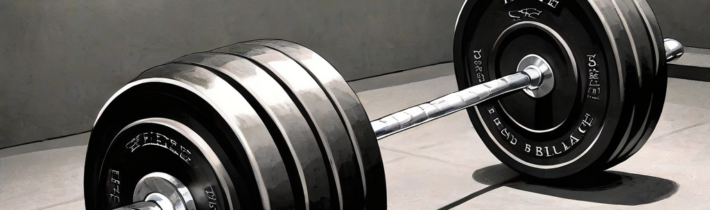
Strength training doesn’t always require heavy weights or complex equipment. In fact, some of the most effective exercises for building serious strength can be performed with nothing more than an empty barbell. Whether you’re a beginner looking to master foundational movements or an experienced lifter refining your technique, the empty barbell is a versatile tool that can help you develop power, stability, and muscle control. These exercises focus on perfecting form, engaging multiple muscle groups, and creating a strong foundation for more advanced lifts.
An empty barbell—typically weighing 45 pounds (20 kg) for men and 33 pounds (15 kg) for women—might seem light, but when used intentionally, it can challenge your body in surprising ways. The key is to treat the barbell as a tool for precision rather than just a weight to move. By slowing down the tempo, controlling the movement, and focusing on muscle engagement, you can turn even the simplest exercises into strength-building powerhouses.
Below, we’ll explore a variety of empty barbell exercises that target different muscle groups, improve mobility, and enhance overall strength. Whether you’re training at home, in a gym, or just looking to switch up your routine, these movements will help you build a stronger, more resilient body.
Why Train with an Empty Barbell?
Using an empty barbell offers several unique advantages that heavier weights simply can’t match. First, it allows you to focus on form and technique without the risk of injury that comes with lifting heavy. This is especially valuable for beginners who are still learning the mechanics of compound lifts like squats, deadlifts, and presses. Even advanced lifters can benefit from stripping the weight back to refine their movement patterns and address imbalances.
Second, an empty barbell is incredibly versatile. You can use it for everything from Olympic lifts to mobility drills, making it a cost-effective addition to any workout routine. It’s also a great way to warm up before adding weight, as it helps activate the muscles and joints you’ll be using during your main lifts.
Finally, training with an empty barbell can improve your mind-muscle connection. When the weight is light, you can focus on feeling which muscles are working and ensuring they’re firing correctly. This awareness translates to better performance when you do add weight.
Essential Empty Barbell Exercises for Full-Body Strength
Here are some of the most effective empty barbell exercises to incorporate into your routine. Each targets different muscle groups while emphasizing control, stability, and strength development.
1. Empty Barbell Squats: Master the Foundation
Squats are one of the most fundamental strength exercises, and performing them with an empty barbell is a fantastic way to perfect your form. The barbell squat engages your quads, glutes, hamstrings, and core, while also improving hip and ankle mobility.
How to do it:
- Set the barbell on a rack at about chest height. Step under the bar and place it across your upper back, resting it on your traps (not your neck). Grip the bar slightly wider than shoulder-width apart.
- Unrack the bar and take a step back. Stand with your feet shoulder-width apart, toes slightly turned out.
- Initiate the squat by pushing your hips back and bending your knees, as if you’re sitting into a chair. Keep your chest up and your back straight.
- Descend until your thighs are parallel to the floor (or as low as your mobility allows), then drive through your heels to stand back up.
Pro tip: Focus on keeping your knees aligned with your toes and avoid letting them cave inward. If you struggle with depth, try elevating your heels slightly with small weight plates to improve ankle mobility.
2. Empty Barbell Deadlifts: Build a Strong Posterior Chain
Deadlifts are unmatched for developing strength in your hamstrings, glutes, lower back, and grip. Using an empty barbell allows you to practice the hip hinge—a critical movement pattern—without the strain of heavy weights.
How to do it:
- Stand with your feet hip-width apart, with the barbell resting on the floor in front of you, about an inch from your shins.
- Bend at the hips and knees to grip the bar just outside your legs. You can use a double overhand grip or a mixed grip (one hand over, one hand under).
- Keep your back flat and chest up as you drive through your heels to lift the bar. Imagine pushing the floor away with your feet.
- Once the bar passes your knees, thrust your hips forward to lock out at the top. Reverse the movement by hinging at the hips and lowering the bar back to the floor with control.
Pro tip: Avoid rounding your back during the lift. If you struggle with this, try the Romanian deadlift variation (see below) to focus on the hip hinge without the floor constraint.
3. Empty Barbell Overhead Press: Strengthen Your Shoulders and Core
The overhead press is a fantastic exercise for building shoulder strength, stability, and core engagement. Pressing an empty barbell overhead might seem easy, but doing it with perfect form—without arching your back or flaring your ribs—can be surprisingly challenging.
How to do it:
- Set the barbell on a rack at shoulder height. Grip the bar slightly wider than shoulder-width apart, palms facing forward.
- Unrack the bar and hold it at shoulder level, with your elbows slightly in front of the bar (not flared out).
- Brace your core and press the bar overhead in a straight line, keeping your ribs down and glutes engaged to avoid overarching your lower back.
- Once the bar is fully extended overhead, pause briefly, then lower it back to your shoulders with control.
Pro tip: If you struggle to keep your ribs down, try pressing the bar from a split stance (one foot forward) to reduce the demand on your core temporarily.
4. Empty Barbell Romanian Deadlifts: Hamstring and Glute Focus
The Romanian deadlift (RDL) is a variation of the deadlift that places more emphasis on the hamstrings and glutes while reducing the load on your lower back. It’s an excellent exercise for improving hip hinge mechanics and building a strong posterior chain.
How to do it:
- Stand with your feet hip-width apart, holding the barbell in front of your thighs with an overhand grip.
- Keeping a slight bend in your knees, hinge at the hips and push your butt back as you lower the barbell along your legs. Keep the bar close to your body.
- Lower the bar until you feel a stretch in your hamstrings (usually just below the knees), then squeeze your glutes to return to the starting position.
Pro tip: If you feel your lower back rounding, reduce your range of motion. Over time, work on improving your hamstring flexibility to deepen the stretch.
5. Empty Barbell Bent-Over Rows: A Strong Back Starts Here
Rows are essential for building a strong upper back and improving posture. The empty barbell bent-over row allows you to focus on squeezing your shoulder blades together without the momentum that often comes with heavier weights.
How to do it:
- Stand with your feet shoulder-width apart, holding the barbell with an overhand grip, hands slightly wider than shoulder-width.
- Hinge at the hips to bring your torso forward, keeping your back flat and knees slightly bent. Let the barbell hang in front of you.
- Pull the barbell toward your waist by squeezing your shoulder blades together. Keep your elbows close to your body.
- Pause at the top of the movement, then lower the barbell back to the starting position with control.
Pro tip: To maximize muscle engagement, imagine pulling your elbows toward the ceiling rather than just moving the barbell.
6. Empty Barbell Front Squats: Core and Quad Dominance
Front squats shift the emphasis to your quads and core while reducing the load on your lower back. They’re a great way to build strength in the front of your legs and improve your ability to maintain an upright torso during squats.
How to do it:
- Set the barbell on a rack at shoulder height. Grip the bar with your hands slightly wider than shoulder-width apart, palms facing up.
- Step under the bar and rest it on the front of your shoulders, just above your collarbone. Cross your arms to keep the bar in place (or use a clean grip if you’re comfortable).
- Unrack the bar and step back. Stand with your feet shoulder-width apart.
- Initiate the squat by pushing your hips back and bending your knees, keeping your torso as upright as possible. Descend until your thighs are parallel to the floor, then drive through your heels to stand back up.
Pro tip: If the bar feels uncomfortable on your shoulders, try using a towel or pad for cushioning until you build up your tolerance.
7. Empty Barbell Good Mornings: Hamstring and Lower Back Strength
Good mornings are a fantastic exercise for targeting your hamstrings, glutes, and lower back. They also improve hip hinge mobility, which is essential for lifts like deadlifts and squats. However, they can be tricky to master, so starting with an empty barbell is ideal.
How to do it:
- Place the barbell on your upper back, as you would for a back squat. Grip the bar slightly wider than shoulder-width apart.
- Stand with your feet hip-width apart. Keeping a slight bend in your knees, hinge at the hips and lower your torso forward, pushing your butt back.
- Lower the bar until your torso is parallel to the floor (or as far as your hamstring flexibility allows), then squeeze your glutes to return to the starting position.
Pro tip: Go slow and controlled to avoid straining your lower back. If you feel any discomfort, reduce your range of motion.
8. Empty Barbell Complexes: Efficiency and Endurance
Barbell complexes involve performing a series of exercises back-to-back without putting the bar down. They’re a great way to build strength, endurance, and coordination while keeping your heart rate elevated. Here’s a simple empty barbell complex to try:
How to do it:
- Deadlift: Perform 5 reps, focusing on a strong hip hinge.
- Bent-Over Row: Without dropping the bar, hinge forward and perform 5 rows.
- Overhead Press: Stand up and press the bar overhead for 5 reps.
- Back Squat: Lower the bar to your shoulders and perform 5 squats.
- Good Morning: Finish with 5 good mornings to target your posterior chain.
Rest for 60-90 seconds and repeat for 3-4 rounds. Complexes are a fantastic way to get a full-body workout in minimal time.
Programming Empty Barbell Workouts
To get the most out of empty barbell training, incorporate these exercises into your routine in a structured way. Here are a few sample workouts to try, depending on your goals:
1. Technique Focus (Beginner-Friendly)
This workout is ideal for those new to barbell training or anyone looking to refine their form.
- Empty Barbell Squats: 3 sets of 8-10 reps
- Empty Barbell Romanian Deadlifts: 3 sets of 8-10 reps
- Empty Barbell Overhead Press: 3 sets of 8-10 reps
- Empty Barbell Bent-Over Rows: 3 sets of 8-10 reps
Rest 60 seconds between sets.
2. Strength and Mobility
This workout combines strength exercises with mobility drills to improve flexibility and control.
- Empty Barbell Front Squats: 3 sets of 6-8 reps
- Empty Barbell Deadlifts: 3 sets of 6-8 reps
- Empty Barbell Good Mornings: 3 sets of 8-10 reps
- Empty Barbell Overhead Press: 3 sets of 6-8 reps
- Barbell Hip Thrusts (on the floor): 3 sets of 10-12 reps
Rest 60-90 seconds between sets.
3. Endurance and Conditioning
This workout uses barbell complexes to build endurance and keep your heart rate up.
- Barbell Complex (Deadlift → Row → Press → Squat → Good Morning): 4 sets of 5 reps per exercise
- Empty Barbell Walking Lunges: 3 sets of 10 reps per leg
- Plank with Barbell Roll-Outs: 3 sets of 8-10 reps
Rest 90 seconds between sets.
For best results, aim to incorporate empty barbell workouts 2-3 times per week, either as standalone sessions or as part of a larger training program. As you get stronger, you can gradually add weight to the bar, but don’t rush—mastery of the empty barbell will pay off in the long run.
FAQ: Empty Barbell Training
1. Is training with an empty barbell effective for building strength?
Yes! While heavy weights are often associated with strength gains, training with an empty barbell allows you to focus on technique, control, and muscle engagement, which are foundational for building strength. It’s especially effective for beginners, but even advanced lifters can benefit from using lighter weights to refine their form and address weaknesses. Over time, the precision you develop with an empty barbell will translate to better performance with heavier weights.
2. How often should I train with an empty barbell?
It depends on your goals. If you’re a beginner, you might use an empty barbell 2-3 times per week as you learn the movements. For more experienced lifters, empty barbell exercises can be incorporated as warm-ups, technique drills, or active recovery days. Listen to your body and adjust based on how you feel—empty barbell training should complement, not replace, progressive overload in your strength program.
3. Can I build muscle with just an empty barbell?
Building muscle (hypertrophy) typically requires progressive overload, meaning you gradually increase the weight, reps, or volume over time. While an empty barbell alone may not provide enough resistance for significant muscle growth, it can be a valuable tool for improving muscle endurance, refining form, and activating muscles before moving to heavier weights. For noticeable muscle gains, you’ll eventually need to add weight to the bar.
4. What are the most common mistakes to avoid with empty barbell exercises?
Even with light weights, poor form can lead to bad habits or injuries. Common mistakes include:
- Rounding the back during deadlifts or rows, which can strain your lower back.
- Letting the knees cave in during squats, which can stress your knees.
- Using momentum to lift the barbell, especially during presses or rows, which reduces muscle engagement.
- Neglecting the full range of motion, which limits the effectiveness of the exercise.
Focus on controlled movements, proper alignment, and muscle activation to get the most out of every rep.
5. How can I progress from an empty barbell to heavier weights?
Once you’ve mastered the form and feel confident with empty barbell exercises, you can start adding weight gradually. A good rule of thumb is to increase the weight by 5-10 pounds (2.5-5 kg) at a time and ensure you can complete all reps with good form. For example, if you’ve been doing empty barbell squats with perfect technique, try adding 10 pounds to the bar and see how it feels. If your form breaks down, stick with the lighter weight until you’re ready. Progressive overload is key to long-term strength gains.
Related posts:
 Understanding Gym Equipment
 Essential Deadlift Variations
 The Victoria’s Secret Fashion Show Glutes Workout Revealed
 Fitness Trainers Say This Move Beats Squats Every Time
 This Full-Body Resistance Band Workout Will Transform Your Home Gym
 Perfect Your Glute Bridge
 Perfect Your Squat Form
 Managing Hip Pain from Sitting